

Meknes
About Meknes
Description
Meknes doesn't get the same tourist buzz as Marrakech or Fez, and honestly, that's part of its charm. When I first heard about this imperial city tucked away in northern Morocco, I'll admit I had to look it up on a map. But after spending time there, I realized this place deserves way more attention than it gets. The city served as Morocco's capital during the reign of Sultan Moulay Ismail in the 17th century, and boy, did this guy have grand ambitions. He transformed Meknes into an imperial powerhouse that rivaled the great cities of Europe. Walking through the medina today, you can still feel that ambition in the massive gates, sprawling palaces, and architectural wonders scattered throughout the city. What strikes most visitors immediately is the scale of everything. The fortifications stretch for kilometers, the gates tower overhead like giants frozen in stone, and the granaries could have fed an army for years. Because that's exactly what they did. Moulay Ismail commanded tens of thousands of soldiers, and Meknes was built to support that kind of power. The old imperial city sits comfortably among hills and fertile plains, surrounded by olive groves and vineyards. It's this agricultural abundance that made Meknes such a strategic choice for a capital. The land here is generous, and the climate is Mediterranean enough to grow practically anything. Modern Meknes has grown around its historical core, creating an interesting blend of ancient imperial grandeur and contemporary Moroccan life. The newer ville nouvelle sits adjacent to the old medina, offering tree-lined boulevards and French colonial architecture that contrasts sharply with the ancient Islamic structures just a short walk away.Key Features
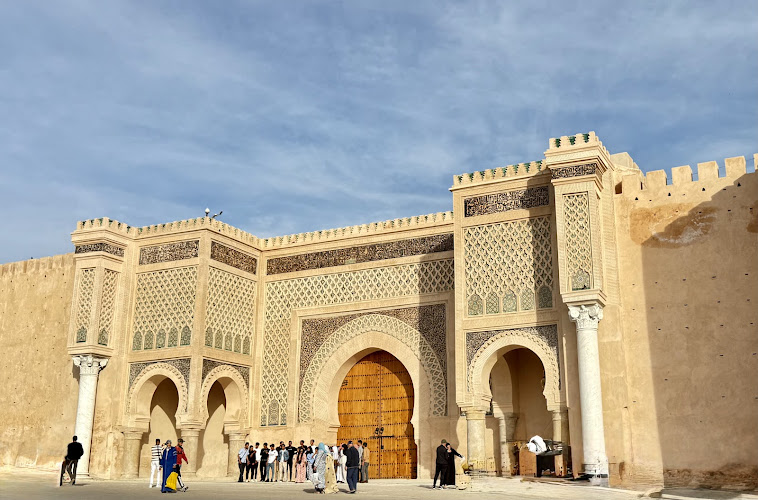
The attractions in Meknes aren't just tourist sites – they're genuine windows into Morocco's imperial history. Here's what makes this city worth your time:- Bab Mansour – This monumental gate stands as one of North Africa's most impressive entrances, decorated with green and white mosaic tilework that's survived centuries. The arches frame the gateway in a way that makes you understand why sultans loved grand gestures.
- Mausoleum of Moulay Ismail – One of the few Moroccan religious sites that non-Muslims can enter, this peaceful complex features beautiful courtyards, intricate fountains, and the tomb of the sultan who put Meknes on the map. The craftsmanship in the zellige tilework is absolutely stunning.
- Heri es-Souani – These ruined granaries and stables showcase engineering that was way ahead of its time. The thick walls and clever ventilation system kept grain fresh and horses cool even in scorching summers. Standing in these massive vaulted rooms, you get a real sense of the empire's scale.
- Place el-Hedim – Think of this as Meknes' answer to Marrakech's Jemaa el-Fna, but more relaxed and less overwhelming. The square comes alive in the evenings with food stalls, musicians, and locals just hanging out.
- The Medina – Unlike some tourist-heavy medinas, Meknes' old quarter still functions primarily for locals. You'll find traditional souks selling everything from spices to leather goods, with fewer aggressive touts than other Moroccan cities.
- Royal Golf Course – Surrounding the imperial city are beautifully maintained green spaces that offer surprising tranquility just minutes from the bustling medina.
- The Jewish Quarter (Mellah) – This historic neighborhood showcases the diversity of Meknes' past, with distinctive architecture and a fascinating cemetery worth exploring.
- Dar Jamai Museum – Housed in a 19th-century palace, this museum displays traditional Moroccan arts and crafts. The building itself is as interesting as what's inside.
Best Time to Visit
I'm gonna be straight with you – summer in Meknes can be brutal. We're talking temperatures that regularly climb above 35°C (95°F), and the sun beats down with an intensity that makes sightseeing feel like an endurance test. Spring is absolutely gorgeous, particularly March through May. The surrounding countryside explodes with wildflowers, temperatures hover in the comfortable 20-25°C range, and you can actually enjoy walking around without feeling like you're melting. I visited in late April once and the weather was pretty much perfect – warm enough for short sleeves during the day, cool enough in the evenings that you'd want a light jacket. Autumn (September through November) offers similar conditions. The oppressive summer heat breaks, locals seem more relaxed, and the agricultural land surrounding the city comes alive with harvest activity. October is particularly nice because you can catch grape harvests in the nearby Meknes wine region. Winter brings cooler temperatures and occasional rain. January and February can get surprisingly chilly, especially at night when temperatures sometimes drop to around 5°C. But if you don't mind bundling up a bit, winter has advantages – fewer tourists, lower hotel prices, and a more authentic experience of how locals actually live. Friday mornings can be crowded throughout the year since that's when many locals do their weekly shopping in the souks. If you want to see the medina at its most authentic and bustling, that's your time. But if crowds aren't your thing, maybe plan around it. Ramadan shifts every year based on the lunar calendar, and while visiting during this holy month offers unique cultural insights, you should know that many restaurants close during daylight hours and the city's rhythm changes significantly.How to Get There
Getting to Meknes is actually easier than you might think, though it does require a bit of planning since the city doesn't have its own commercial airport. Most international travelers fly into either Fes-Saïss Airport (about 60 kilometers away) or Rabat-Salé Airport (roughly 130 kilometers). Casablanca's Mohammed V International Airport is further but offers more international connections – it's about 240 kilometers from Meknes. From Fes, the train is honestly your best bet. Morocco's rail network is surprisingly efficient, and trains run regularly between Fes and Meknes. The journey takes around 45 minutes to an hour, costs just a few dollars, and offers comfortable seating with air conditioning. I've taken this route multiple times and it's always been smooth. If you're coming from Rabat or Casablanca, the train still makes sense. The ride from Rabat takes about two hours, while Casablanca requires roughly three hours. The scenery along the way is pretty nice – you'll pass through agricultural land, small villages, and rolling hills. CTM and Supratours operate bus services connecting Meknes to most major Moroccan cities. Buses are cheaper than trains but take longer and can get cramped. That said, they're reliable enough if you're on a tight budget. Driving yourself is totally doable if you're comfortable with Moroccan road conditions. The highways connecting major cities are in good shape, though driving within Meknes itself can be chaotic. Parking near the medina is tricky, so most visitors leave their cars at hotels and walk or take taxis. Grand taxis (shared taxis) run between Meknes and nearby cities like Fes. These pack six passengers into old Mercedes sedans and leave when full. It's an authentic local experience, but not the most comfortable option for longer distances.Tips for Visiting
After spending time in Meknes and making a few mistakes along the way, here's what I wish someone had told me before my first visit. Dress modestly, especially when visiting religious sites. Morocco is relatively relaxed compared to some Islamic countries, but showing respect through clothing choices goes a long way. I've seen tourists get turned away from the Mausoleum for wearing shorts or tank tops. The medina can be confusing to navigate, and that's putting it mildly. Download offline maps or hire a local guide for your first exploration. Getting lost is part of the experience, sure, but intentionally getting lost is more fun than accidentally spending two hours trying to find your hotel. Bargaining is expected in the souks, but approach it with good humor rather than aggression. Start at about 40-50% of the asking price and work from there. And honestly, if you're haggling over the equivalent of a dollar, maybe just pay it – that amount means more to the seller than it does to you. Learn a few basic phrases in French or Arabic. English isn't as widely spoken in Meknes as in more touristy cities. Even butchering "shukran" (thank you) or "salam alaikum" (peace be upon you) earns smiles and better interactions. Stay hydrated. The climate is dry, and you'll be walking a lot. Bottled water is cheap and available everywhere. Avoid tap water unless your hotel specifically says it's safe. The local cuisine is fantastic and way cheaper than in tourist restaurants. Look for places packed with locals – that's always a good sign. Try pastilla, a sweet and savory pie that's a Meknes specialty, or grab some fresh bread from a neighborhood bakery. Exchange money at banks or official bureaus rather than with random people on the street. The rates might be slightly worse at banks, but you won't get scammed. ATMs are widely available, though some charge hefty fees. Taxis within the city are cheap but make sure the meter is running or agree on a price before getting in. A ride across town shouldn't cost more than 20-30 dirhams during the day. Photography is generally fine in public spaces, but always ask before photographing people, especially women. Some folks are happy to pose, others aren't, and respecting that builds better connections than sneaking shots. Visit Volubilis while you're here. These remarkably preserved Roman ruins sit just 30 kilometers from Meknes and offer incredible mosaic floors and columns. It's an easy half-day trip that adds another layer to understanding the region's deep history. The city is generally safe, but petty theft happens. Keep valuables secure, don't flash expensive jewelry or cameras unnecessarily, and stay aware of your surroundings in crowded areas. Book accommodations inside or near the medina if you want atmosphere, or in the ville nouvelle if you prefer modern amenities and easier parking. Both have their advantages depending on your travel style.Key Features
- Bab Mansour gate and El Hedim Square
- Granaries and royal stables of the Meknes kasbah
- Compact medina with traditional souks and riads
- Proximity to the Roman ruins of Volubilis
- Distinctive Hispano-Moorish and 17th-century imperial architecture
More Details
Updated March 30, 2026
Table of Contents
Description
Meknes doesn’t get the same tourist buzz as Marrakech or Fez, and honestly, that’s part of its charm. When I first heard about this imperial city tucked away in northern Morocco, I’ll admit I had to look it up on a map. But after spending time there, I realized this place deserves way more attention than it gets.
The city served as Morocco’s capital during the reign of Sultan Moulay Ismail in the 17th century, and boy, did this guy have grand ambitions. He transformed Meknes into an imperial powerhouse that rivaled the great cities of Europe. Walking through the medina today, you can still feel that ambition in the massive gates, sprawling palaces, and architectural wonders scattered throughout the city.
What strikes most visitors immediately is the scale of everything. The fortifications stretch for kilometers, the gates tower overhead like giants frozen in stone, and the granaries could have fed an army for years. Because that’s exactly what they did. Moulay Ismail commanded tens of thousands of soldiers, and Meknes was built to support that kind of power.
The old imperial city sits comfortably among hills and fertile plains, surrounded by olive groves and vineyards. It’s this agricultural abundance that made Meknes such a strategic choice for a capital. The land here is generous, and the climate is Mediterranean enough to grow practically anything.
Modern Meknes has grown around its historical core, creating an interesting blend of ancient imperial grandeur and contemporary Moroccan life. The newer ville nouvelle sits adjacent to the old medina, offering tree-lined boulevards and French colonial architecture that contrasts sharply with the ancient Islamic structures just a short walk away.
Key Features
The attractions in Meknes aren’t just tourist sites – they’re genuine windows into Morocco’s imperial history. Here’s what makes this city worth your time:
- Bab Mansour – This monumental gate stands as one of North Africa’s most impressive entrances, decorated with green and white mosaic tilework that’s survived centuries. The arches frame the gateway in a way that makes you understand why sultans loved grand gestures.
- Mausoleum of Moulay Ismail – One of the few Moroccan religious sites that non-Muslims can enter, this peaceful complex features beautiful courtyards, intricate fountains, and the tomb of the sultan who put Meknes on the map. The craftsmanship in the zellige tilework is absolutely stunning.
- Heri es-Souani – These ruined granaries and stables showcase engineering that was way ahead of its time. The thick walls and clever ventilation system kept grain fresh and horses cool even in scorching summers. Standing in these massive vaulted rooms, you get a real sense of the empire’s scale.
- Place el-Hedim – Think of this as Meknes’ answer to Marrakech’s Jemaa el-Fna, but more relaxed and less overwhelming. The square comes alive in the evenings with food stalls, musicians, and locals just hanging out.
- The Medina – Unlike some tourist-heavy medinas, Meknes’ old quarter still functions primarily for locals. You’ll find traditional souks selling everything from spices to leather goods, with fewer aggressive touts than other Moroccan cities.
- Royal Golf Course – Surrounding the imperial city are beautifully maintained green spaces that offer surprising tranquility just minutes from the bustling medina.
- The Jewish Quarter (Mellah) – This historic neighborhood showcases the diversity of Meknes’ past, with distinctive architecture and a fascinating cemetery worth exploring.
- Dar Jamai Museum – Housed in a 19th-century palace, this museum displays traditional Moroccan arts and crafts. The building itself is as interesting as what’s inside.
Best Time to Visit
I’m gonna be straight with you – summer in Meknes can be brutal. We’re talking temperatures that regularly climb above 35°C (95°F), and the sun beats down with an intensity that makes sightseeing feel like an endurance test.
Spring is absolutely gorgeous, particularly March through May. The surrounding countryside explodes with wildflowers, temperatures hover in the comfortable 20-25°C range, and you can actually enjoy walking around without feeling like you’re melting. I visited in late April once and the weather was pretty much perfect – warm enough for short sleeves during the day, cool enough in the evenings that you’d want a light jacket.
Autumn (September through November) offers similar conditions. The oppressive summer heat breaks, locals seem more relaxed, and the agricultural land surrounding the city comes alive with harvest activity. October is particularly nice because you can catch grape harvests in the nearby Meknes wine region.
Winter brings cooler temperatures and occasional rain. January and February can get surprisingly chilly, especially at night when temperatures sometimes drop to around 5°C. But if you don’t mind bundling up a bit, winter has advantages – fewer tourists, lower hotel prices, and a more authentic experience of how locals actually live.
Friday mornings can be crowded throughout the year since that’s when many locals do their weekly shopping in the souks. If you want to see the medina at its most authentic and bustling, that’s your time. But if crowds aren’t your thing, maybe plan around it.
Ramadan shifts every year based on the lunar calendar, and while visiting during this holy month offers unique cultural insights, you should know that many restaurants close during daylight hours and the city’s rhythm changes significantly.
How to Get There
Getting to Meknes is actually easier than you might think, though it does require a bit of planning since the city doesn’t have its own commercial airport.
Most international travelers fly into either Fes-Saïss Airport (about 60 kilometers away) or Rabat-Salé Airport (roughly 130 kilometers). Casablanca’s Mohammed V International Airport is further but offers more international connections – it’s about 240 kilometers from Meknes.
From Fes, the train is honestly your best bet. Morocco’s rail network is surprisingly efficient, and trains run regularly between Fes and Meknes. The journey takes around 45 minutes to an hour, costs just a few dollars, and offers comfortable seating with air conditioning. I’ve taken this route multiple times and it’s always been smooth.
If you’re coming from Rabat or Casablanca, the train still makes sense. The ride from Rabat takes about two hours, while Casablanca requires roughly three hours. The scenery along the way is pretty nice – you’ll pass through agricultural land, small villages, and rolling hills.
CTM and Supratours operate bus services connecting Meknes to most major Moroccan cities. Buses are cheaper than trains but take longer and can get cramped. That said, they’re reliable enough if you’re on a tight budget.
Driving yourself is totally doable if you’re comfortable with Moroccan road conditions. The highways connecting major cities are in good shape, though driving within Meknes itself can be chaotic. Parking near the medina is tricky, so most visitors leave their cars at hotels and walk or take taxis.
Grand taxis (shared taxis) run between Meknes and nearby cities like Fes. These pack six passengers into old Mercedes sedans and leave when full. It’s an authentic local experience, but not the most comfortable option for longer distances.
Tips for Visiting
After spending time in Meknes and making a few mistakes along the way, here’s what I wish someone had told me before my first visit.
Dress modestly, especially when visiting religious sites. Morocco is relatively relaxed compared to some Islamic countries, but showing respect through clothing choices goes a long way. I’ve seen tourists get turned away from the Mausoleum for wearing shorts or tank tops.
The medina can be confusing to navigate, and that’s putting it mildly. Download offline maps or hire a local guide for your first exploration. Getting lost is part of the experience, sure, but intentionally getting lost is more fun than accidentally spending two hours trying to find your hotel.
Bargaining is expected in the souks, but approach it with good humor rather than aggression. Start at about 40-50% of the asking price and work from there. And honestly, if you’re haggling over the equivalent of a dollar, maybe just pay it – that amount means more to the seller than it does to you.
Learn a few basic phrases in French or Arabic. English isn’t as widely spoken in Meknes as in more touristy cities. Even butchering “shukran” (thank you) or “salam alaikum” (peace be upon you) earns smiles and better interactions.
Stay hydrated. The climate is dry, and you’ll be walking a lot. Bottled water is cheap and available everywhere. Avoid tap water unless your hotel specifically says it’s safe.
The local cuisine is fantastic and way cheaper than in tourist restaurants. Look for places packed with locals – that’s always a good sign. Try pastilla, a sweet and savory pie that’s a Meknes specialty, or grab some fresh bread from a neighborhood bakery.
Exchange money at banks or official bureaus rather than with random people on the street. The rates might be slightly worse at banks, but you won’t get scammed. ATMs are widely available, though some charge hefty fees.
Taxis within the city are cheap but make sure the meter is running or agree on a price before getting in. A ride across town shouldn’t cost more than 20-30 dirhams during the day.
Photography is generally fine in public spaces, but always ask before photographing people, especially women. Some folks are happy to pose, others aren’t, and respecting that builds better connections than sneaking shots.
Visit Volubilis while you’re here. These remarkably preserved Roman ruins sit just 30 kilometers from Meknes and offer incredible mosaic floors and columns. It’s an easy half-day trip that adds another layer to understanding the region’s deep history.
The city is generally safe, but petty theft happens. Keep valuables secure, don’t flash expensive jewelry or cameras unnecessarily, and stay aware of your surroundings in crowded areas.
Book accommodations inside or near the medina if you want atmosphere, or in the ville nouvelle if you prefer modern amenities and easier parking. Both have their advantages depending on your travel style.
Key Highlights
- Bab Mansour gate and El Hedim Square
- Granaries and royal stables of the Meknes kasbah
- Compact medina with traditional souks and riads
- Proximity to the Roman ruins of Volubilis
- Distinctive Hispano-Moorish and 17th-century imperial architecture
Location
Places to Stay Near Meknes
Find and Book a Tour
Explore More Travel Guides
No reviews found! Be the first to review!
Meknes is a prominent Culture & History located in Meknes.
Visit us at: VF79+429, Meknès, Maroc.
Traveler Reviews for Meknes
There are no reviews yet. Be the first one to write one.
Have you visited Meknes? Help other travelers by sharing your review.
Nearby Attractions
You Might Also Like
Al-Hadeem Square

Bab el-Khemis

Madrasa Bou Inania
Find Accommodations Nearby
Recommended Tours & Activities
Visitor Reviews
There are no reviews yet. Be the first one to write one.
Share Your Experience
Have you visited Meknes? Help other travelers by leaving a review.