
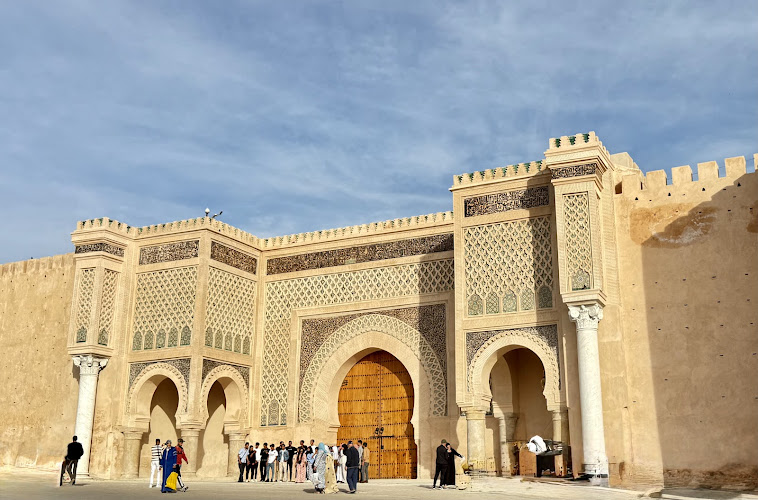
Al-Hadeem Square
About Al-Hadeem Square
Description
Al-Hadeem Square in Meknès is one of those places that quietly demands your attention. It’s not just a square—it’s a living, breathing stage of Moroccan life. You’ll find yourself surrounded by the hum of conversation, the aroma of sizzling street food, and the faint rhythm of drums echoing from a nearby musician. The square sits between the old medina and the imperial city, making it the heart of Meknès in more ways than one. It’s framed by the grand Bab Mansour Gate, a masterpiece of Moroccan architecture that feels almost too perfect to be real. And yet, there it stands—majestic, weathered, and full of stories.
There’s something deeply human about this place. It’s where locals gather at dusk, sipping mint tea while watching children chase pigeons across the cobblestones. The vendors call out, not in the pushy way you might expect, but with a kind of friendly persistence that feels more like conversation than salesmanship. You might wander past a man selling roasted nuts, another arranging handmade slippers in a rainbow of colors, and a woman ladling out steaming bowls of harira soup. It’s a sensory overload in the best way possible.
What I personally love about Al-Hadeem Square is how it manages to be both chaotic and calm. In the middle of the day, it’s a swirl of movement—tourists snapping photos, locals bargaining, kids darting between stalls. But as the sun dips low, the energy softens. The golden light spills over the square, and everything feels slower, warmer, almost nostalgic. It’s one of those rare places where you can actually feel the pulse of the city beneath your feet.
Key Features
- Historical significance: The square dates back to the 17th century, built during the reign of Sultan Moulay Ismail as a symbol of imperial power and civic pride.
- Iconic Bab Mansour Gate: This monumental gate dominates the square’s edge, adorned with intricate zellige tilework and marble columns—an architectural marvel worth lingering over.
- Local markets: A maze of stalls offering spices, crafts, carpets, and traditional Moroccan attire. Bargaining is expected, but always done with a smile.
- Street performances: From storytellers to snake charmers, the square comes alive with entertainers who keep centuries-old traditions alive.
- Food stalls: Sample authentic Moroccan street food—think grilled meats, tagines, and fresh-squeezed orange juice that tastes like sunshine.
- Accessibility: The area is wheelchair-friendly, with smooth pathways and accessible parking nearby.
- Family-friendly: Safe and open, it’s a great spot for families with children to explore and people-watch.
One detail that often gets overlooked is how the square acts as a bridge between old and new Meknès. On one side, the medina’s narrow alleys whisper of centuries past; on the other, modern cafés and shops hint at the city’s evolving spirit. It’s this contrast that makes Al-Hadeem Square so fascinating—it’s both a relic and a reflection of Morocco today.
Best Time to Visit
If you can, visit in the late afternoon. That’s when the square transforms. The light softens, the air cools, and the crowd thickens just enough to give it that perfect buzz of activity. Around sunset, the sky glows behind Bab Mansour, and the whole place feels cinematic. I’ve sat there more than once, mint tea in hand, just watching the world go by—and honestly, it’s one of those simple joys that stays with you.
Spring (March to May) and autumn (September to November) are the sweet spots weather-wise. The temperatures are mild, and the evenings are perfect for wandering without breaking a sweat. Summer can be hot—really hot—especially around midday, so if you do visit then, plan for early mornings or evenings. Winter has its charm too; it’s quieter, and you’ll have more space to take in the details without the usual bustle.
How to Get There
Reaching Al-Hadeem Square is fairly straightforward if you’re already in Meknès. Most travelers arrive by train from Fès or Rabat, and from the main station, it’s just a short taxi ride to the old city. Taxis here are inexpensive, but make sure to agree on the fare before hopping in. If you’re feeling adventurous, you can also walk from the Ville Nouvelle (new town) area—it’s about a 20-minute stroll, and you’ll pass through some interesting local streets along the way.
For those driving, parking is available near the square, though it can get crowded during peak hours. The good news is that the area is pedestrian-friendly once you’re there. You’ll want to explore on foot anyway; every corner hides something worth noticing, from carved wooden doors to the scent of fresh bread wafting from tiny bakeries.
Tips for Visiting
Here’s where a bit of local know-how makes all the difference. Bring small change—many vendors don’t have large bills, and it’s polite to pay in coins for smaller purchases. If you’re planning to photograph performers or stalls, always ask first. Most people are happy to oblige, especially if you buy something or leave a small tip.
Dress modestly and comfortably. The square can get busy, and the cobblestones are uneven in places, so sturdy shoes are your best friend. Keep an eye on your belongings—not because it’s unsafe, but because the crowd can get dense, and it’s easy to get distracted by all the sights and sounds.
One of my favorite tips? Don’t rush. Seriously. Al-Hadeem Square rewards those who linger. Sit at a café, order a glass of mint tea, and just watch. You’ll see the rhythm of daily life unfold—the old men debating politics, the kids laughing over shared snacks, the tourists marveling at the gate’s intricate patterns. It’s these small, unscripted moments that make travel worth it.
If you’re into photography, bring your camera around golden hour. The light bouncing off the tiles of Bab Mansour is something else—it gives the whole square a warm, almost magical glow. And if you’re a foodie (who isn’t?), try the local grilled kefta or msemen pancakes from one of the food stalls. They’re simple, cheap, and utterly delicious.
At the end of the day, Al-Hadeem Square isn’t just a tourist attraction—it’s a heartbeat of Meknès life. It’s where history meets everyday reality, where the past isn’t locked in museums but lived out loud in laughter, trade, and storytelling. Whether you spend ten minutes or two hours here, you’ll walk away with something that sticks—a memory, a flavor, a feeling. And honestly, isn’t that what travel’s all about?
Key Features
- Key Features
- Best Time to Visit
- How to Get There
- Tips for Visiting
More Details
Updated October 11, 2025
Table of Contents
Description
Al-Hadeem Square in Meknès is one of those places that quietly demands your attention. It’s not just a square—it’s a living, breathing stage of Moroccan life. You’ll find yourself surrounded by the hum of conversation, the aroma of sizzling street food, and the faint rhythm of drums echoing from a nearby musician. The square sits between the old medina and the imperial city, making it the heart of Meknès in more ways than one. It’s framed by the grand Bab Mansour Gate, a masterpiece of Moroccan architecture that feels almost too perfect to be real. And yet, there it stands—majestic, weathered, and full of stories.
There’s something deeply human about this place. It’s where locals gather at dusk, sipping mint tea while watching children chase pigeons across the cobblestones. The vendors call out, not in the pushy way you might expect, but with a kind of friendly persistence that feels more like conversation than salesmanship. You might wander past a man selling roasted nuts, another arranging handmade slippers in a rainbow of colors, and a woman ladling out steaming bowls of harira soup. It’s a sensory overload in the best way possible.
What I personally love about Al-Hadeem Square is how it manages to be both chaotic and calm. In the middle of the day, it’s a swirl of movement—tourists snapping photos, locals bargaining, kids darting between stalls. But as the sun dips low, the energy softens. The golden light spills over the square, and everything feels slower, warmer, almost nostalgic. It’s one of those rare places where you can actually feel the pulse of the city beneath your feet.
Key Features
- Historical significance: The square dates back to the 17th century, built during the reign of Sultan Moulay Ismail as a symbol of imperial power and civic pride.
- Iconic Bab Mansour Gate: This monumental gate dominates the square’s edge, adorned with intricate zellige tilework and marble columns—an architectural marvel worth lingering over.
- Local markets: A maze of stalls offering spices, crafts, carpets, and traditional Moroccan attire. Bargaining is expected, but always done with a smile.
- Street performances: From storytellers to snake charmers, the square comes alive with entertainers who keep centuries-old traditions alive.
- Food stalls: Sample authentic Moroccan street food—think grilled meats, tagines, and fresh-squeezed orange juice that tastes like sunshine.
- Accessibility: The area is wheelchair-friendly, with smooth pathways and accessible parking nearby.
- Family-friendly: Safe and open, it’s a great spot for families with children to explore and people-watch.
One detail that often gets overlooked is how the square acts as a bridge between old and new Meknès. On one side, the medina’s narrow alleys whisper of centuries past; on the other, modern cafés and shops hint at the city’s evolving spirit. It’s this contrast that makes Al-Hadeem Square so fascinating—it’s both a relic and a reflection of Morocco today.
Best Time to Visit
If you can, visit in the late afternoon. That’s when the square transforms. The light softens, the air cools, and the crowd thickens just enough to give it that perfect buzz of activity. Around sunset, the sky glows behind Bab Mansour, and the whole place feels cinematic. I’ve sat there more than once, mint tea in hand, just watching the world go by—and honestly, it’s one of those simple joys that stays with you.
Spring (March to May) and autumn (September to November) are the sweet spots weather-wise. The temperatures are mild, and the evenings are perfect for wandering without breaking a sweat. Summer can be hot—really hot—especially around midday, so if you do visit then, plan for early mornings or evenings. Winter has its charm too; it’s quieter, and you’ll have more space to take in the details without the usual bustle.
How to Get There
Reaching Al-Hadeem Square is fairly straightforward if you’re already in Meknès. Most travelers arrive by train from Fès or Rabat, and from the main station, it’s just a short taxi ride to the old city. Taxis here are inexpensive, but make sure to agree on the fare before hopping in. If you’re feeling adventurous, you can also walk from the Ville Nouvelle (new town) area—it’s about a 20-minute stroll, and you’ll pass through some interesting local streets along the way.
For those driving, parking is available near the square, though it can get crowded during peak hours. The good news is that the area is pedestrian-friendly once you’re there. You’ll want to explore on foot anyway; every corner hides something worth noticing, from carved wooden doors to the scent of fresh bread wafting from tiny bakeries.
Tips for Visiting
Here’s where a bit of local know-how makes all the difference. Bring small change—many vendors don’t have large bills, and it’s polite to pay in coins for smaller purchases. If you’re planning to photograph performers or stalls, always ask first. Most people are happy to oblige, especially if you buy something or leave a small tip.
Dress modestly and comfortably. The square can get busy, and the cobblestones are uneven in places, so sturdy shoes are your best friend. Keep an eye on your belongings—not because it’s unsafe, but because the crowd can get dense, and it’s easy to get distracted by all the sights and sounds.
One of my favorite tips? Don’t rush. Seriously. Al-Hadeem Square rewards those who linger. Sit at a café, order a glass of mint tea, and just watch. You’ll see the rhythm of daily life unfold—the old men debating politics, the kids laughing over shared snacks, the tourists marveling at the gate’s intricate patterns. It’s these small, unscripted moments that make travel worth it.
If you’re into photography, bring your camera around golden hour. The light bouncing off the tiles of Bab Mansour is something else—it gives the whole square a warm, almost magical glow. And if you’re a foodie (who isn’t?), try the local grilled kefta or msemen pancakes from one of the food stalls. They’re simple, cheap, and utterly delicious.
At the end of the day, Al-Hadeem Square isn’t just a tourist attraction—it’s a heartbeat of Meknès life. It’s where history meets everyday reality, where the past isn’t locked in museums but lived out loud in laughter, trade, and storytelling. Whether you spend ten minutes or two hours here, you’ll walk away with something that sticks—a memory, a flavor, a feeling. And honestly, isn’t that what travel’s all about?
Key Highlights
- Key Features
- Best Time to Visit
- How to Get There
- Tips for Visiting
Location
Places to Stay Near Al-Hadeem Square
Find and Book a Tour
Explore More Travel Guides
No reviews found! Be the first to review!
Traveler Reviews for Al-Hadeem Square
There are no reviews yet. Be the first one to write one.
Have you visited Al-Hadeem Square? Help other travelers by sharing your review.
You Might Also Like

Place Lalla Aouda

Friends way
Bab El Mers باب المرس
Find Accommodations Nearby
Recommended Tours & Activities
Visitor Reviews
There are no reviews yet. Be the first one to write one.
Share Your Experience
Have you visited Al-Hadeem Square? Help other travelers by leaving a review.