Luodai Ancient Town
About Luodai Ancient Town
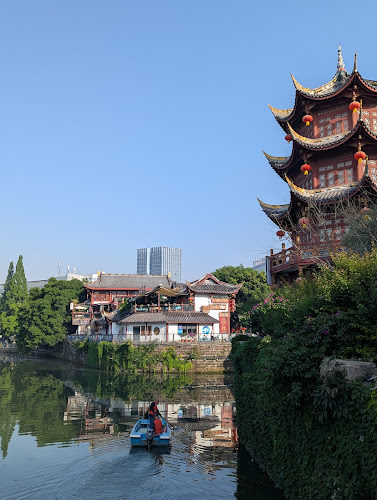
Luodai Ancient Town is a tourist attraction in the Longquanyi District of Chengdu, China. This AAAA national tourist attraction is a well-preserved Hakka town located 18 to 20 kilometers northeast of Chengdu's city center.
What to Expect
You can explore a town with a history dating back to the Shu Han period of the Three Kingdoms. The town's core identity is its Hakka culture; it is often called the "First Hakka Town of Western China." Key attractions include four historic guildhalls built for Hakka people from other Chinese provinces. You can also visit a Hakka Museum, gardens, parks, and temples. The experience includes savoring local snacks from numerous food stalls, enjoying tea in street-side tea houses, and playing mahjong.
Practical Information
The address is Bajiaojing St, Longquanyi District, Chengdu, Sichuan, China, 610103. Admission to the town is free, and it is open all day. The town is a popular destination, holding a 4.2/5 rating from visitors.
History & Significance
Luodai Ancient Town was established over a millennium ago. It stands out as a significant cultural site due to its deep Hakka heritage, with over 85% of its residents being of Hakka descent. The town's preservation offers a direct link to this unique cultural community in western China.
More Details
Updated April 5, 2026
Luodai Ancient Town is a tourist attraction in the Longquanyi District of Chengdu, China. This AAAA national tourist attraction is a well-preserved Hakka town located 18 to 20 kilometers northeast of Chengdu’s city center.
Table of Contents
- What to Expect
- Practical Information
- History & Significance
- Location
- Places to Stay Near Luodai Ancient Town
- Find and Book a Tour
- Explore More Travel Guides
- Key Takeaways
- About Luodai Ancient Town
- History and Significance
- What Makes It Special
- What to See and Do
- Main Attractions and Highlights
- Best Time to Visit
- Visitor Information
- Location and How to Get There
- Tips for Visitors
- Nearby Places You Might Like
- Traveler Reviews for Luodai Ancient Town
- Share Your Experience
What to Expect
You can explore a town with a history dating back to the Shu Han period of the Three Kingdoms. The town’s core identity is its Hakka culture; it is often called the “First Hakka Town of Western China.” Key attractions include four historic guildhalls built for Hakka people from other Chinese provinces. You can also visit a Hakka Museum, gardens, parks, and temples. The experience includes savoring local snacks from numerous food stalls, enjoying tea in street-side tea houses, and playing mahjong.
Practical Information
The address is Bajiaojing St, Longquanyi District, Chengdu, Sichuan, China, 610103. Admission to the town is free, and it is open all day. The town is a popular destination, holding a 4.2/5 rating from visitors.
History & Significance
Luodai Ancient Town was established over a millennium ago. It stands out as a significant cultural site due to its deep Hakka heritage, with over 85% of its residents being of Hakka descent. The town’s preservation offers a direct link to this unique cultural community in western China.
Location
Places to Stay Near Luodai Ancient Town
Find and Book a Tour
Explore More Travel Guides
No reviews found! Be the first to review!
About 20 kilometers east of Chengdu, there’s a living museum of migration history that most travelers totally overlook. Luodai Ancient Town is the largest Hakka settlement in western China—nearly 90% of locals still speak the Hakka dialect and keep up traditions their ancestors brought during the epic “Huguang Filling Sichuan” migration under the Qing Dynasty.
Wandering its bluestone streets, you’ll feel like you’ve stumbled into a different province. Ornate guild halls from Guangdong, Jiangxi, and Hunan line the lanes, each a testament to the unique Hakka heritage here.
But Luodai isn’t just about sightseeing or snapping photos of restored halls. Here, you can try heartbreak cold noodles—so spicy they’re said to make homesick immigrants cry—and catch bare-chested performers dancing through showers of molten iron during the Fire Dragon Festival.
You’ll hear elderly folks chatting in a dialect nothing like the Chengdu you just left behind. The town somehow manages to balance tourist shops with slices of real daily life—a rare feat these days.
Getting to Luodai is pretty painless. Metro Line 4 gets you most of the way, and a short bus ride finishes the trip. It’s just about an hour from central Chengdu, and you’ll dodge the crowds that clog up the city’s better-known ancient towns.
The main street is only a bit over a kilometer, but don’t be fooled. If you duck into the side alleys and poke your head into the guild halls, you’ll easily burn through half a day.
Key Takeaways
- Luodai Ancient Town preserves vibrant Hakka culture just outside Chengdu, with four historic guild halls and traditional architecture.
- The town hosts wild festivals like the Fire Dragon Festival and dishes up signature Hakka cuisine—yes, including heartbreak cold noodles.
- It’s a breeze to reach Luodai by metro and bus, usually in about an hour from downtown Chengdu.
About Luodai Ancient Town
Luodai Ancient Town sits about 15-20 kilometers east of central Chengdu. It’s the largest Hakka settlement in southwest China, with over 20,000 Hakka residents—most still chatting away in their own dialect.
History and Significance
The town’s roots go back 1,700 years, though its name comes from a quirky legend. Supposedly, Liu Shan—the last emperor of Shu Han—dropped his jade belt into a well here, which is how Luodai (“dropped belt”) got its name.
But honestly, the town’s real story kicks off during the late Ming and early Qing dynasties. After war ravaged Sichuan, the Qing government rolled out a massive resettlement campaign. Hakka people from Guangdong, Jiangxi, and Fujian trekked west along the Yangtze, hoping for a fresh start.
These newcomers turned Luodai into a bustling commercial hub for Chengdu’s Dongshan area. They built grand guild halls—part community center, part symbol of their roots. What’s wild is how the Hakka here managed to hang onto their language, architecture, and customs all these centuries, even as Sichuan culture swirled around them.
What Makes It Special
Visiting Luodai feels like dipping into a living cultural museum, not some sanitized tourist trap. The four main guild halls each show off different regional styles. The Guangdong Guild Hall is decked out with Lingnan carvings and wind-fire walls, while the Jiangxi Guild Hall has this wild suspended stage, held up by just two pillars.
Elderly residents still speak Hakka in the streets. If you’re lucky enough to be here during Chinese New Year, the Fire Dragon Festival is pure adrenaline—bare-chested dancers dash through molten iron sparks, blessing the town for the year ahead.
There’s also a summer Water Dragon Festival, which is basically a town-wide water fight to beat the heat. A newly built circular Tulou looms beside the old streets, mimicking the famous Fujian earth buildings. Inside, there’s a small Hakka cultural museum.
Don’t skip the “heartbreak cold noodles,” either. They’re fiery as heck, and legend has it homesick Hakka immigrants would eat them, crying from both the spice and the nostalgia.
What to See and Do
Luodai Ancient Town packs a surprising amount of Hakka culture and history into a tiny footprint, just 18 kilometers from Chengdu. The town’s architecture, food, and festivals all tell the story of the Hakka people who made their way here centuries back.
Main Attractions and Highlights
The four big guild halls steal the show. Guangdong Guild Hall is the star—you’ll spot its dramatic fire walls from a block away. It’s one of China’s best-preserved Hakka guild halls, loaded with intricate wood and stone carvings.
Inside, the Hakka Culture Museum tells the story of the “Hubei and Hunan Filling Sichuan” migration. Jiangxi Guild Hall (Wanshou Palace) couldn’t be more different—its design is simpler, but check out the suspended stage, which somehow stands on just two pillars.
The Huguang Guild Hall is another highlight, a reminder of how strong these immigrant communities became. The main street runs just over a kilometer, lined with old wooden shops from the Ming and Qing eras.
Behind the main drag, seven narrow alleys twist away, hiding traditional Hakka homes where families still actually live. The Hakka Tulou—a modern, circular building modeled after Fujian’s earthen structures—offers a decent panoramic view if you climb up top.
Best Time to Visit
If you want to see Luodai at its wildest, come during the Fire Dragon Festival (the first two weeks of the lunar new year). Performers dash through molten iron sparks—a tradition that’s even caught UNESCO’s eye.
Crowds can get pretty thick, but honestly, the energy is infectious. March through June and September through November are sweet spots for weather and thinner crowds. You’ll have space to wander the guild halls and maybe even chat with locals over tea.
Summer brings the Water Dragon Festival, but brace yourself—it gets hot. Winter is quiet, except during Spring Festival. If you like your ancient towns peaceful, that’s your window.
Visitor Information
Luodai Ancient Town is about 15-18 km from downtown Chengdu. It’s perfect for a half-day or full-day trip, open year-round.
Location and How to Get There
You’ll find Luodai in Longquanyi District, right up against the foothills of the Longquan Mountains. The easiest way to get there is by metro—hop on Line 2 to Longquanyi Station, then grab bus L024 or a quick taxi for the last 15 minutes.
If you prefer buses, look for route 219 or 343A from Wuguiqiao Bus Station. That’ll take you 40-60 minutes, depending on traffic. Locals often just call a DiDi (China’s Uber), which runs about 50-70 yuan and gets you there in half an hour.
Getting Around: Luodai is compact and walkable. The main street is less than a kilometer, so you won’t need wheels. There’s parking near the entrance and it’s usually easy to snag a spot.
Tips for Visitors
Luodai Ancient Town technically never closes, but let’s be real—shops and attractions usually run from 9:00 AM to 6:00 PM. On weekends, the crowds swell with Chengdu families, especially around lunchtime.
If you want those quiet, atmospheric shots of old streets, try coming on a weekday morning. It’s just you, the cobblestones, and maybe a stray cat or two.
Bring some cash with you. Sure, mobile payment works at plenty of spots, but those tiny food stalls and some of the older little shops still prefer the old way.
Definitely wear comfortable shoes. Those ancient stone streets look gorgeous in photos but, trust me, they can be uneven and slick after a rain.
Spring and autumn are the sweet spots—March to May, or September to November. Temperatures are pleasant, perfect for wandering.
Summer? Expect heat and sticky humidity. The upside is you can always duck into a tea house for a breather.
Oh, and don’t skip the Hakka snacks along the main drag. The shao bai (steamed pork) and tian shui mian (sweet water noodles) aren’t just for tourists—they’re seriously tasty.
Traveler Reviews for Luodai Ancient Town
There are no reviews yet. Be the first one to write one.
Have you visited Luodai Ancient Town? Help other travelers by sharing your review.
Find Accommodations Nearby
Recommended Tours & Activities
Visitor Reviews
There are no reviews yet. Be the first one to write one.
Share Your Experience
Have you visited Luodai Ancient Town? Help other travelers by leaving a review.