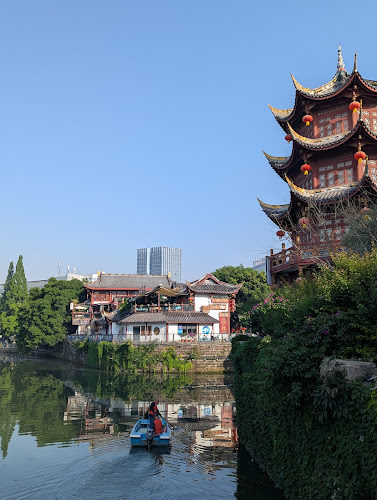
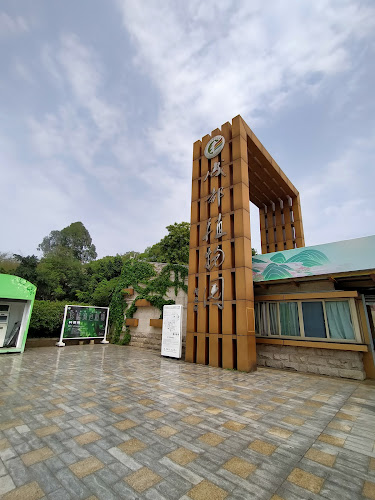
About Dujiangyan Irrigation System

## Dujiangyan Irrigation System (都江堰): what you’re really looking at when you visit The Dujiangyan Irrigation System is an ancient, still-functioning water-control project on the Min River (Minjiang) in Dujiangyan City, Chengdu, Sichuan, China. It was first built around 256 BCE during the Qin period, traditionally attributed to the official/engineer Li Bing (and commonly in sources, his son), using a “divert and regulate” approach rather than blocking the river with a dam. World Heritage Centre It’s also part of the UNESCO World Heritage inscription “Mount Qingcheng and the Dujiangyan Irrigation System”, added to the list in 2000 (site ID 1001, cultural criteria (ii)(iv)(vi)). World Heritage Centre --- ## Why it matters (beyond the plaque) Most famous ancient “irrigation” works are impressive as ruins. Dujiangyan is different: the design is still used to control Min River water and distribute it across the Chengdu Plain—supporting flood control and irrigation at a landscape scale. UNESCO’s summary is blunt about its core significance: the system still controls Min River waters and distributes them to the fertile farmland of the Chengdu plains. World Heritage Centre The deeper point: it’s a systems achievement, not a single structure. Dujiangyan is best understood as a set of linked controls that manipulate flow split, sediment handling, and overflow safety using river dynamics and terrain—without a traditional dam across the main channel. --- ## The three components you should seek out on-site When people say “Dujiangyan,” they’re usually pointing to a trio of features that work together: ### 1) Yuzui (Fish Mouth Levee) — the split that makes everything else possible This is the engineered “nose” that divides the Min River into an inner and outer channel. Sources commonly describe it as the key structure that controls how much water enters the irrigation network versus how much stays in the main river course. How to experience it: stand where you can see the river physically separate. If the water is high, the scale reads immediately; if it’s lower, you can often see more of the shape that gives it the “fish mouth” nickname. ### 2) Feishayan (Flying Sand Weir) — flood + sediment relief This is the safety valve: an opening that allows excess water and sediment to move from the inner stream back toward the outer stream, supporting flood management and helping prevent the irrigation channel from choking on silt. What to look for: anything that shows turbulent, swirling flow. The idea (described in common explanations of the system) is that the hydraulics encourage sediment to be carried out rather than settled in the irrigation network. ### 3) Baopingkou (Bottle-Neck Channel) — the controlled outlet into the plain This is the “gate” cut through the mountain that channels water onward for distribution. The narrow, bottle-neck geometry is part of how flow is regulated. On the ground: this is where the system stops feeling like a “river scene” and starts reading like infrastructure—because you’re seeing the deliberate constraint that makes downstream distribution manageable. --- ## How to plan a visit from Chengdu (practical, minimal drama) Dujiangyan is commonly visited as a day trip from Chengdu. Many travelers go via the Chengdu–Dujiangyan–Qingchengshan rail corridor and then connect locally to the scenic area. China Guide ### Getting there by train + local transfer - A widely used approach is taking the Chengdu–Dujiangyan/Qingchengshan line, then transferring by bus or taxi to the scenic area. China Guide - One published set of local instructions notes that from Dujiangyan Railway Station, multiple local buses (numbers vary by source) or a taxi can reach the scenic area. China Guide I’m intentionally not giving “exactly-one-true” bus number or fare as a hard guarantee—local routes and pricing are the easiest details to change. Use the above as the pattern: train to Dujiangyan area → short local hop. China Guide --- ## What to prioritize once you’re inside (a simple walking logic) If you want the visit to feel coherent, don’t wander randomly. Use the system order: 1. Start where the river splits (Yuzui/Fish Mouth). 2. Move to the overflow/sediment control (Feishayan). 3. Finish at the bottle-neck channel (Baopingkou) that sends managed flow onward. That sequence mirrors the engineering story: divide → relieve → distribute. --- ## Context you can mention without overselling it ### UNESCO pairing with Mount Qingcheng isn’t random UNESCO lists the property as Mount Qingcheng and the Dujiangyan Irrigation System—linking a major early Daoist mountain site with a landmark of hydraulic engineering in the same region. World Heritage Centre ### “Still in use” isn’t marketing copy Multiple summaries (including UNESCO’s) treat continued function as central: the system still controls Min River waters and distributes them to farmland. That continuity is a big part of why it’s more than a scenic stop. World Heritage Centre --- ## Two contextual internal link opportunities (safe + relevant) I can’t know your exact URL structure, but these are the two most natural internal links for dwell time and topical clustering: - Link out from your intro with anchor text like “Best things to do in Chengdu” (your Chengdu hub/guide). - Link from the UNESCO context section with anchor text like “Mount Qingcheng day trip guide” (your Mount Qingcheng article, since it’s the paired World Heritage component). World Heritage Centre --- ## Quick facts (from your dataset) - Name: Dujiangyan Irrigation System - Type: Tourist attraction - City: Chengdu (Dujiangyan City area), Sichuan, China - Coordinates: 31.0051649, 103.6075308 - Rating provided: 4.5 --- ## Outdated-data flags (what I’m not freezing as “fact”) - Ticket prices, seasonal pricing, and opening hours change frequently and differ across ticket types and entrances. I’m not locking numbers into this draft for that reason. - Local bus route numbers/frequency can change; treat any single blog’s route list as “directionally useful,” not permanent. China Guide

Key Features

Dujiangyan Irrigation System

More Details

Updated April 15, 2024

## Dujiangyan Irrigation System (都江堰): what you’re really looking at when you visit

The Dujiangyan Irrigation System is an ancient, still-functioning water-control project on the Min River (Minjiang) in Dujiangyan City, Chengdu, Sichuan, China. It was first built around 256 BCE during the Qin period, traditionally attributed to the official/engineer Li Bing (and commonly in sources, his son), using a “divert and regulate” approach rather than blocking the river with a dam. World Heritage Centre

It’s also part of the UNESCO World Heritage inscription “Mount Qingcheng and the Dujiangyan Irrigation System”, added to the list in 2000 (site ID 1001, cultural criteria (ii)(iv)(vi)). World Heritage Centre

## Why it matters (beyond the plaque)

Most famous ancient “irrigation” works are impressive as ruins. Dujiangyan is different: the design is still used to control Min River water and distribute it across the Chengdu Plain—supporting flood control and irrigation at a landscape scale. UNESCO’s summary is blunt about its core significance: the system still controls Min River waters and distributes them to the fertile farmland of the Chengdu plains. World Heritage Centre

The deeper point: it’s a systems achievement, not a single structure. Dujiangyan is best understood as a set of linked controls that manipulate flow split, sediment handling, and overflow safety using river dynamics and terrain—without a traditional dam across the main channel.

## The three components you should seek out on-site

When people say “Dujiangyan,” they’re usually pointing to a trio of features that work together:

### 1) Yuzui (Fish Mouth Levee) — the split that makes everything else possible
This is the engineered “nose” that divides the Min River into an inner and outer channel. Sources commonly describe it as the key structure that controls how much water enters the irrigation network versus how much stays in the main river course.

How to experience it: stand where you can see the river physically separate. If the water is high, the scale reads immediately; if it’s lower, you can often see more of the shape that gives it the “fish mouth” nickname.

### 2) Feishayan (Flying Sand Weir) — flood + sediment relief
This is the safety valve: an opening that allows excess water and sediment to move from the inner stream back toward the outer stream, supporting flood management and helping prevent the irrigation channel from choking on silt.

What to look for: anything that shows turbulent, swirling flow. The idea (described in common explanations of the system) is that the hydraulics encourage sediment to be carried out rather than settled in the irrigation network.

### 3) Baopingkou (Bottle-Neck Channel) — the controlled outlet into the plain
This is the “gate” cut through the mountain that channels water onward for distribution. The narrow, bottle-neck geometry is part of how flow is regulated.

On the ground: this is where the system stops feeling like a “river scene” and starts reading like infrastructure—because you’re seeing the deliberate constraint that makes downstream distribution manageable.

## How to plan a visit from Chengdu (practical, minimal drama)

Dujiangyan is commonly visited as a day trip from Chengdu. Many travelers go via the Chengdu–Dujiangyan–Qingchengshan rail corridor and then connect locally to the scenic area. China Guide

### Getting there by train + local transfer
– A widely used approach is taking the Chengdu–Dujiangyan/Qingchengshan line, then transferring by bus or taxi to the scenic area. China Guide
– One published set of local instructions notes that from Dujiangyan Railway Station, multiple local buses (numbers vary by source) or a taxi can reach the scenic area. China Guide

I’m intentionally not giving “exactly-one-true” bus number or fare as a hard guarantee—local routes and pricing are the easiest details to change. Use the above as the pattern: train to Dujiangyan area → short local hop. China Guide

## What to prioritize once you’re inside (a simple walking logic)

If you want the visit to feel coherent, don’t wander randomly. Use the system order:

1. Start where the river splits (Yuzui/Fish Mouth).
2. Move to the overflow/sediment control (Feishayan).
3. Finish at the bottle-neck channel (Baopingkou) that sends managed flow onward.

That sequence mirrors the engineering story: divide → relieve → distribute.

## Context you can mention without overselling it

### UNESCO pairing with Mount Qingcheng isn’t random
UNESCO lists the property as Mount Qingcheng and the Dujiangyan Irrigation System—linking a major early Daoist mountain site with a landmark of hydraulic engineering in the same region. World Heritage Centre

### “Still in use” isn’t marketing copy
Multiple summaries (including UNESCO’s) treat continued function as central: the system still controls Min River waters and distributes them to farmland. That continuity is a big part of why it’s more than a scenic stop. World Heritage Centre

## Two contextual internal link opportunities (safe + relevant)

I can’t know your exact URL structure, but these are the two most natural internal links for dwell time and topical clustering:

– Link out from your intro with anchor text like “Best things to do in Chengdu” (your Chengdu hub/guide).
– Link from the UNESCO context section with anchor text like “Mount Qingcheng day trip guide” (your Mount Qingcheng article, since it’s the paired World Heritage component). World Heritage Centre

## Quick facts (from your dataset)
– Name: Dujiangyan Irrigation System
– Type: Tourist attraction
– City: Chengdu (Dujiangyan City area), Sichuan, China
– Coordinates: 31.0051649, 103.6075308
– Rating provided: 4.5

## Outdated-data flags (what I’m not freezing as “fact”)
– Ticket prices, seasonal pricing, and opening hours change frequently and differ across ticket types and entrances. I’m not locking numbers into this draft for that reason.
– Local bus route numbers/frequency can change; treat any single blog’s route list as “directionally useful,” not permanent. China Guide

Key Highlights

Dujiangyan Irrigation System

Location

Places to Stay Near Dujiangyan Irrigation System

Find and Book a Tour

Explore More Travel Guides

No reviews found! Be the first to review!

Traveler Reviews for Dujiangyan Irrigation System

There are no reviews yet. Be the first one to write one.

Share Your Experience

Have you visited Dujiangyan Irrigation System? Help other travelers by sharing your review.

Find Accommodations Nearby

Recommended Tours & Activities

Visitor Reviews

There are no reviews yet. Be the first one to write one.

Share Your Experience

Have you visited Dujiangyan Irrigation System? Help other travelers by leaving a review.