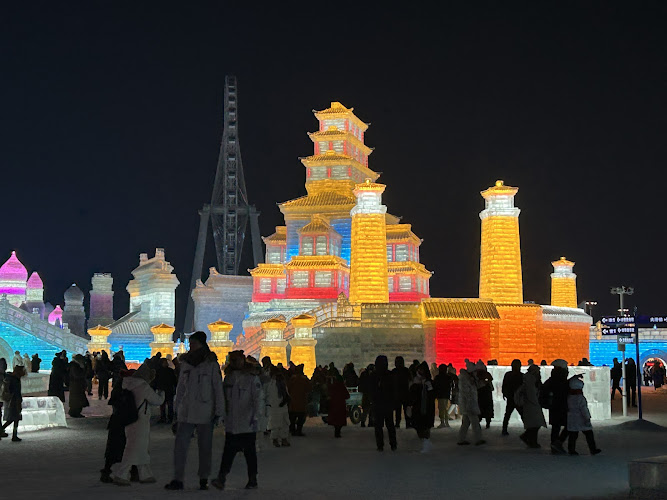
Bingxue Big World stands as one of China’s most extraordinary winter attractions, transforming into a frozen playground each year when temperatures plummet below freezing. Located in Harbin, this isn’t just another seasonal festival—it’s a massive outdoor exhibition where ice and snow become the medium for creating an entirely different world. Picture walking through towering ice sculptures that reach several stories high, illuminated by thousands of LED lights that turn the frozen landscape into something that feels pulled straight from a fairy tale.
The sheer scale of this place hits you the moment you arrive. We’re talking about hundreds of thousands of cubic meters of ice harvested from the nearby Songhua River, transformed by skilled artisans into architectural wonders, mythical creatures, and abstract designs that push the boundaries of what frozen water can become. But here’s what really sets Bingxue Big World apart from other ice festivals around the globe—it’s fully interactive. You’re not just gawking at sculptures from behind barriers. You can slide down ice slides that stretch over 300 meters long, navigate through frozen mazes where the walls tower above your head, and even pedal special bikes across icy paths that wind through the entire complex.
And the concerts? They’re held right there among the ice structures, creating this surreal atmosphere where musicians perform while surrounded by glowing frozen art. It’s honestly one of those experiences that photographs can’t quite capture because you need to feel that bite of cold air on your face, hear the crunch of snow beneath your boots, and see your breath turning to mist as you marvel at buildings made entirely of ice.
The place has become so popular that it draws visitors from all corners of the world, and for good reason. It’s accessibility features make it possible for nearly everyone to experience this winter magic, which is something I genuinely appreciate about the venue.
Key Features
Bingxue Big World offers an impressive array of attractions and experiences that make it worth braving the frigid temperatures:
- Monumental Ice Sculptures: Massive architectural replicas and original designs crafted entirely from ice blocks, some reaching heights of 20-30 meters, showcasing traditional Chinese architecture, famous world landmarks, and fantastical creations
- Ice Slides and Rides: Multiple sliding attractions ranging from gentle slopes for families to adrenaline-pumping steep descents that send you racing through tunnels and down massive ice chutes at exhilarating speeds
- Frozen Mazes: Intricate labyrinth structures carved from ice blocks where visitors can test their navigation skills while surrounded by walls of glowing frozen art
- Special Ice Bikes: Unique bicycles designed for riding on icy surfaces, allowing guests to explore the expansive grounds on two wheels instead of foot
- Snow Sports Areas: Dedicated zones for activities like snow tubing, ice skating, and other winter recreational pursuits that take advantage of the natural elements
- Evening Light Shows: Spectacular illumination displays where colored LED lights embedded within the ice sculptures create a constantly changing kaleidoscope of colors against the dark winter sky
- Live Musical Performances: Regular concerts and performances held within the ice exhibition grounds, featuring both traditional and contemporary music in this unique frozen venue
- Ice Bars and Restaurants: Food and beverage facilities where even the furniture is made of ice, though they serve hot drinks and meals to help visitors warm up from the inside
- Photo Opportunities: Countless Instagram-worthy spots throughout the complex where the combination of ice architecture and lighting creates stunning backdrops
- Full Accessibility: Wheelchair-accessible entrances, parking areas, and restroom facilities ensuring visitors with mobility challenges can experience the winter wonderland
Best Time to Visit
Timing your visit to Bingxue Big World makes all the difference between a magical experience and a freezing ordeal you’ll want to cut short. The venue typically opens in late December and runs through February, with some years extending into early March depending on weather conditions. But not all weeks are created equal.
January hits the sweet spot for most travelers. The sculptures have been completed and perfected by then, the lighting systems are fully operational, and you’ll catch the attraction in its prime condition before any potential warming spells start affecting the ice quality. I’d specifically recommend visiting during the middle two weeks of January if your schedule allows it.
Now, here’s something most travel guides won’t tell you—weekdays blow weekends out of the water for visit quality. Chinese New Year brings massive domestic crowds, so if your trip coincides with that holiday period (which shifts dates annually based on the lunar calendar), brace yourself for long lines and packed pathways. The week immediately after Chinese New Year tends to quiet down significantly while the attraction remains in excellent condition.
As for time of day? Evening visits are genuinely superior to daytime ones. The sculptures look impressive during daylight hours, sure, but they become absolutely transcendent after sunset when all those embedded lights illuminate the ice from within. Plan to arrive around 4 PM, explore a bit in the fading daylight to get your bearings, then experience the transformation as darkness falls and the lights come alive. Most visitors arrive right at sunset, so coming a bit earlier means you’ll beat the evening rush.
Temperature-wise, you’re looking at averages between -15°C to -25°C (5°F to -13°F), though it can plunge even colder on particularly brutal nights. Ironically, the colder it gets, the better condition the sculptures maintain. But the colder temperatures also mean shorter comfortable visiting times for most people.
How to Get There
Getting to Bingxue Big World requires a bit of planning since it’s located on the outskirts of Harbin city proper. Most international travelers fly into Harbin Taiping International Airport, which connects to major Chinese cities like Beijing, Shanghai, and Guangzhou. From the airport, you’re looking at roughly a 45-minute journey to the attraction depending on traffic and your exact starting point.
Taxis remain the most straightforward option for foreign visitors who don’t speak Chinese. Just show the driver the Chinese characters for Bingxue Big World (冰雪大世界) written down, and they’ll know exactly where you’re headed. Expect to pay around 80-120 yuan for the trip from central Harbin hotels. The ride-sharing app Didi works excellently in Harbin if you’ve got it set up on your phone—often cheaper than traditional cabs and you can track your route.
Public transportation exists but gets complicated. Bus routes do service the area, but honestly? With limited English signage and the confusion of navigating an unfamiliar system in sub-zero temperatures, I wouldn’t recommend it unless you’re particularly adventurous or traveling with a Chinese-speaking companion.
Many hotels in Harbin offer shuttle services to Bingxue Big World during winter season, sometimes included in package deals. Definitely worth asking when you book your accommodation. Tour groups also run daily trips from various pickup points throughout the city, though these usually come with time restrictions that might feel rushed.
If you’re visiting multiple Harbin ice attractions—and you probably should, since Ice and Snow World, Sun Island Snow Expo, and the Ice Lantern Festival are all nearby—consider hiring a car and driver for the day. It costs more upfront but eliminates the stress of coordinating multiple transportation legs in extreme cold.
One more thing nobody mentions: the parking lot fills up fast on peak evenings. If you’re driving yourself or in a private car, arrive before 5 PM or prepare for a substantial walk from distant parking areas.
Tips for Visiting
Alright, let’s talk real preparation because Bingxue Big World will punish inadequate planning. I’m talking serious cold we’re dealing with here—the kind that makes you question your life choices if you show up in regular winter gear.
Layer like your comfort depends on it, because it absolutely does. Thermal underwear is non-negotiable, not optional. Over that, fleece or wool mid-layers, then a heavy down jacket that extends past your hips. Your legs get forgotten by most first-timers—don’t make that mistake. Insulated snow pants or at least thick thermal leggings under your regular pants make a huge difference. I learned this the hard way during my first winter festival experience years ago in another city, and trust me, cold legs will ruin your entire evening faster than almost anything else.
Footwear deserves its own paragraph. Waterproof insulated boots rated for at least -20°C, and make sure they have aggressive tread. The paths get icy and slippery, and you’ll be walking on compacted snow for hours. Bring hand warmers and foot warmers—those little chemical heat packs sold at outdoor stores. Drop the foot warmers in your boots before heading out and keep several hand warmers in your pockets. When your fingers start going numb (and they will), you’ll remember this advice fondly.
Face protection matters more than people realize. A neck gaiter or balaclava that you can pull up over your nose and cheeks prevents frostbite on exposed skin. Your phone battery will drain ridiculously fast in the cold, so bring a portable charger and keep both your phone and the battery pack in inner pockets close to your body warmth when not using them.
Book tickets online before you arrive. The admission lines during peak times stretch absurdly long, and standing still in that cold while waiting to purchase tickets is miserable. Advanced booking lets you head straight through most of the queuing.
Bring cash as backup even though they accept cards and mobile payments. Sometimes the card readers malfunction in extreme cold—technology doesn’t love these temperatures any more than unprepared humans do. Having yuan on hand prevents payment headaches.
The ice slides are genuinely fun but can be rough on your backside. Some people bring small foam pads to sit on, though the venue usually provides sliding mats. The slides also move faster than you’d expect, so hold on tight and keep your feet up. Small kids might find some of the larger slides genuinely scary, despite the “good for kids” designation.
Plan for 2-3 hours minimum to see everything without rushing, though you could easily spend 4-5 hours if you’re really into it and the cold doesn’t drive you inside sooner. Most people tap out around the 2-3 hour mark when the cumulative cold finally overwhelms their layering strategy.
Duck into the indoor warming areas strategically scattered throughout the venue. Grab hot drinks—tea, coffee, hot chocolate—and give your body temperature a chance to recover every 45 minutes or so. These warming breaks extend your visiting time significantly.
Restrooms are available and even wheelchair accessible, but the facilities can get overwhelmed during peak hours. Plan accordingly, especially since dealing with multiple layers of cold-weather clothing in a restroom stall isn’t the most graceful experience.
Finally, and this might sound strange—embrace the cold rather than fighting it mentally. Bingxue Big World offers experiences you literally cannot have anywhere else except in these exact conditions. The discomfort becomes part of the adventure, proof that you did something extraordinary. Just prepare properly, pace yourself, and when you’ve had enough cold, call it a day without guilt. There’s no shame in warming up.
 Real Journey Travels