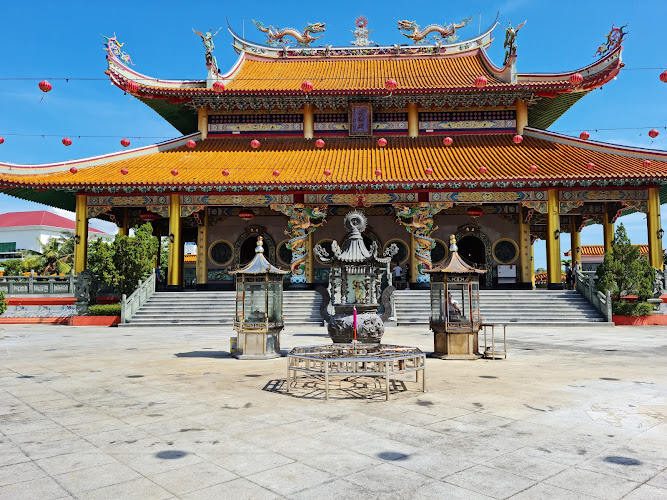
Lian Hua San San Ching Temple
About Lian Hua San San Ching Temple
Description
Lian Hua San Ching Tien Temple is regarded by many as one of the most remarkable Taoist temples in Southeast Asia, and for good reason. Set within the lively city of Miri, this temple is not just a place of quiet worship but also an architectural marvel that draws both travelers and locals. Designed with intricate details, soaring roofs, and colorful dragon motifs that seem to guard the temple from above, it is the kind of place that makes you linger a little longer than you thought you would. It is equally spiritual and atmospheric, and while visitors may be struck by its visual grandeur, those who take extra time often come away feeling a sense of calm too.
People who come here usually highlight the peaceful environment. The temple grounds feel expansive without being overwhelming, which makes it suitable for unhurried exploration. The main prayer halls offer a look into Taoist traditions, and while you are more than welcome to participate in small offerings or simply observe, it is the ornate altars and the artistry that tend to capture the imagination. The attention to detail reflects centuries of Chinese tradition and Taoist symbolism, all accentuated by Sarawak’s unique cultural blend. The temple also prides itself on being accessible to all—whether for prayer, meditation, or those wanting to simply admire its design—helped further by its wheelchair-friendly entrances and parking areas.
It is not uncommon to hear differing opinions about the temple. Some say the space is a breathtaking landmark they would happily recommend, while others feel it may not offer as much depth if one isn’t already curious about Taoist culture. That being said, even those who don’t approach it with religious interests often admit that the structure is worth a visit just for the art and atmosphere on display. Personally, the experience of watching early morning visitors lighting incense and offering prayers was unforgettable—it felt real, unpolished, deeply human.
Travelers searching for a meaningful cultural stop will likely find themselves in awe here, although it is important to manage expectations. It isn’t an amusement spot filled with activity. Instead, the joy lies in slowing down to absorb the sounds, sights, and scents of a functioning temple that still serves the community while welcoming outsiders with respect.
Key Features
- Recognized as one of the largest Taoist temples in Southeast Asia
- Showcases intricate carvings, colorful murals, and symbolic statues that depict Taoist deities
- Features a towering lotus-shaped design that has become an iconic landmark in Miri
- Includes multiple prayer halls where rituals and offerings are made daily
- Wheelchair accessible with dedicated parking and an accessible entrance
- Public restrooms available on-site, making it practical for longer visits
- A peaceful atmosphere that welcomes both worshippers and casual visitors
- Photography-friendly exteriors, especially during early morning and late afternoon light
Best Time to Visit
Timing really alters the way you experience this temple. Early mornings are ideal if you want peace, a chance to walk the grounds freely, and perhaps witness quiet offerings being made by locals. The mid-mornings and afternoons can be busier with travelers arriving, but this can also be when you get the most vibrant atmosphere. Sunset hours lend a special glow to the colorful surfaces of the temple roof, and if you love photography, this might be the golden hour to catch. Avoid midday if you are sensitive to heat, as Sarawak’s tropical sun can be a little unforgiving. Festive seasons like Chinese New Year provide a whole different experience, with lanterns, rituals, and energy that makes the temple even more compelling, though crowds are guaranteed.
How to Get There
Arriving at the temple is straightforward. Those staying in Miri city can easily get there by car or taxi within a short ride—traffic permitting. Public buses do run nearby, but they may not be the most convenient for visitors unfamiliar with the routes. For those who prefer the ease of navigation, ride-hailing apps serve the area reliably. If you are driving on your own, parking is available around the grounds, which makes it easier to explore at your own pace without worrying about moving vehicles. I’d personally recommend arranging a drop-off via a local driver if you want to avoid parking altogether and fully focus on exploring once you arrive.
Tips for Visiting
There are a few things to keep in mind if you want to make your trip smooth and meaningful:
- Dress respectfully: Light, comfortable clothing is fine, but modest attire is preferred since this is an active religious site. Covering shoulders and knees is a considerate choice.
- Embrace slower exploration: Don’t rush through. Half the experience is just walking slowly, taking in the carvings, and listening to the natural quiet of the grounds.
- Photography etiquette: Exterior shots are welcome, but be mindful when inside prayer halls. Always ask or observe what the locals are doing before snapping photos.
- Bring small cash: If you want to give an offering or pick up incense, carrying a bit of local currency on hand is helpful.
- Mind the weather: Sarawak’s humidity can be tough. Carry water, maybe even a small towel. Hats help too if you’re exploring outside in the midday sun.
- Best for a half-day stop: It doesn’t take the whole day to visit, but plan for at least an hour or two if you truly want to appreciate it.
And one last little nudge—it’s easy to view temples just through the lens of architecture or for that perfect photo backdrop, but the Lian Hua San Ching Tien Temple really serves its community. Being mindful of this and choosing to approach with respect will not only earn you smiles from locals but also enrich your visit with something more meaningful than just sightseeing. That’s, in my opinion, the real worth of places like this.

Key Features
- Recognized as one of the largest Taoist temples in Southeast Asia
- Showcases intricate carvings, colorful murals, and symbolic statues that depict Taoist deities
- Features a towering lotus-shaped design that has become an iconic landmark in Miri
- Includes multiple prayer halls where rituals and offerings are made daily
- Wheelchair accessible with dedicated parking and an accessible entrance
- Public restrooms available on-site, making it practical for longer visits
- A peaceful atmosphere that welcomes both worshippers and casual visitors
- Photography-friendly exteriors, especially during early morning and late afternoon light
More Details
Updated October 1, 2025
Table of Contents
Description
Lian Hua San Ching Tien Temple is regarded by many as one of the most remarkable Taoist temples in Southeast Asia, and for good reason. Set within the lively city of Miri, this temple is not just a place of quiet worship but also an architectural marvel that draws both travelers and locals. Designed with intricate details, soaring roofs, and colorful dragon motifs that seem to guard the temple from above, it is the kind of place that makes you linger a little longer than you thought you would. It is equally spiritual and atmospheric, and while visitors may be struck by its visual grandeur, those who take extra time often come away feeling a sense of calm too.
People who come here usually highlight the peaceful environment. The temple grounds feel expansive without being overwhelming, which makes it suitable for unhurried exploration. The main prayer halls offer a look into Taoist traditions, and while you are more than welcome to participate in small offerings or simply observe, it is the ornate altars and the artistry that tend to capture the imagination. The attention to detail reflects centuries of Chinese tradition and Taoist symbolism, all accentuated by Sarawak’s unique cultural blend. The temple also prides itself on being accessible to all—whether for prayer, meditation, or those wanting to simply admire its design—helped further by its wheelchair-friendly entrances and parking areas.
It is not uncommon to hear differing opinions about the temple. Some say the space is a breathtaking landmark they would happily recommend, while others feel it may not offer as much depth if one isn’t already curious about Taoist culture. That being said, even those who don’t approach it with religious interests often admit that the structure is worth a visit just for the art and atmosphere on display. Personally, the experience of watching early morning visitors lighting incense and offering prayers was unforgettable—it felt real, unpolished, deeply human.
Travelers searching for a meaningful cultural stop will likely find themselves in awe here, although it is important to manage expectations. It isn’t an amusement spot filled with activity. Instead, the joy lies in slowing down to absorb the sounds, sights, and scents of a functioning temple that still serves the community while welcoming outsiders with respect.
Key Features
- Recognized as one of the largest Taoist temples in Southeast Asia
- Showcases intricate carvings, colorful murals, and symbolic statues that depict Taoist deities
- Features a towering lotus-shaped design that has become an iconic landmark in Miri
- Includes multiple prayer halls where rituals and offerings are made daily
- Wheelchair accessible with dedicated parking and an accessible entrance
- Public restrooms available on-site, making it practical for longer visits
- A peaceful atmosphere that welcomes both worshippers and casual visitors
- Photography-friendly exteriors, especially during early morning and late afternoon light
Best Time to Visit
Timing really alters the way you experience this temple. Early mornings are ideal if you want peace, a chance to walk the grounds freely, and perhaps witness quiet offerings being made by locals. The mid-mornings and afternoons can be busier with travelers arriving, but this can also be when you get the most vibrant atmosphere. Sunset hours lend a special glow to the colorful surfaces of the temple roof, and if you love photography, this might be the golden hour to catch. Avoid midday if you are sensitive to heat, as Sarawak’s tropical sun can be a little unforgiving. Festive seasons like Chinese New Year provide a whole different experience, with lanterns, rituals, and energy that makes the temple even more compelling, though crowds are guaranteed.
How to Get There
Arriving at the temple is straightforward. Those staying in Miri city can easily get there by car or taxi within a short ride—traffic permitting. Public buses do run nearby, but they may not be the most convenient for visitors unfamiliar with the routes. For those who prefer the ease of navigation, ride-hailing apps serve the area reliably. If you are driving on your own, parking is available around the grounds, which makes it easier to explore at your own pace without worrying about moving vehicles. I’d personally recommend arranging a drop-off via a local driver if you want to avoid parking altogether and fully focus on exploring once you arrive.
Tips for Visiting
There are a few things to keep in mind if you want to make your trip smooth and meaningful:
- Dress respectfully: Light, comfortable clothing is fine, but modest attire is preferred since this is an active religious site. Covering shoulders and knees is a considerate choice.
- Embrace slower exploration: Don’t rush through. Half the experience is just walking slowly, taking in the carvings, and listening to the natural quiet of the grounds.
- Photography etiquette: Exterior shots are welcome, but be mindful when inside prayer halls. Always ask or observe what the locals are doing before snapping photos.
- Bring small cash: If you want to give an offering or pick up incense, carrying a bit of local currency on hand is helpful.
- Mind the weather: Sarawak’s humidity can be tough. Carry water, maybe even a small towel. Hats help too if you’re exploring outside in the midday sun.
- Best for a half-day stop: It doesn’t take the whole day to visit, but plan for at least an hour or two if you truly want to appreciate it.
And one last little nudge—it’s easy to view temples just through the lens of architecture or for that perfect photo backdrop, but the Lian Hua San Ching Tien Temple really serves its community. Being mindful of this and choosing to approach with respect will not only earn you smiles from locals but also enrich your visit with something more meaningful than just sightseeing. That’s, in my opinion, the real worth of places like this.
Key Highlights
- Recognized as one of the largest Taoist temples in Southeast Asia
- Showcases intricate carvings, colorful murals, and symbolic statues that depict Taoist deities
- Features a towering lotus-shaped design that has become an iconic landmark in Miri
- Includes multiple prayer halls where rituals and offerings are made daily
- Wheelchair accessible with dedicated parking and an accessible entrance
- Public restrooms available on-site, making it practical for longer visits
- A peaceful atmosphere that welcomes both worshippers and casual visitors
- Photography-friendly exteriors, especially during early morning and late afternoon light
Location
Places to Stay Near Lian Hua San San Ching Temple
Find and Book a Tour
Explore More Travel Guides
No reviews found! Be the first to review!
Traveler Reviews for Lian Hua San San Ching Temple
There are no reviews yet. Be the first one to write one.
Have you visited Lian Hua San San Ching Temple? Help other travelers by sharing your review.
Find Accommodations Nearby
Recommended Tours & Activities
Visitor Reviews
There are no reviews yet. Be the first one to write one.
Share Your Experience
Have you visited Lian Hua San San Ching Temple? Help other travelers by leaving a review.