
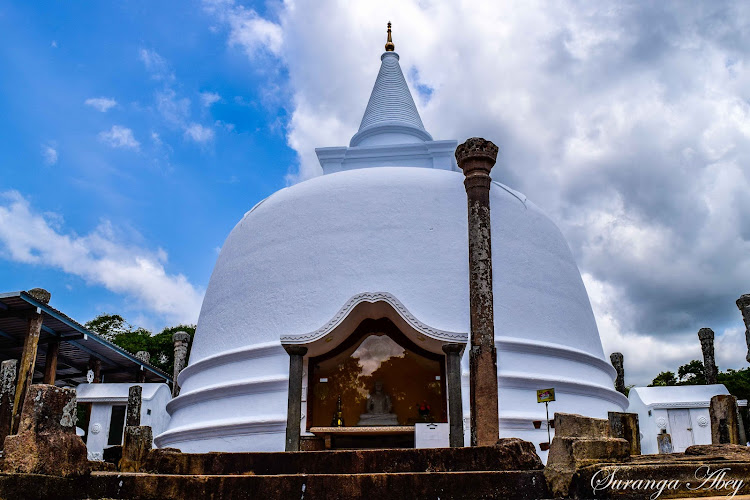
Lankaramaya | ලංකාරාමය
About Lankaramaya | ලංකාරාමය
Description
If you’ve ever dreamt of brushing up against history—like, really feeling the past breathing alongside you—Lankaramaya just might be your spot. Okay, I’ll be honest, when you first glimpse the broad dagoba (that’s a stupa, in Buddhist lingo) poking out among the trees, you’re going to sense you’ve stumbled into somewhere quietly extraordinary. It’s not as overwhelmingly massive as Ruwanwelisaya (and, hey, sometimes less is more), but Lankaramaya pulls you in with an ancient dignity and an atmosphere that’s both relaxed and deeply spiritual. It occupies its own little pocket of Anuradhapura and sort of whispers stories—rather than shouting about its importance—making it honestly more approachable.
The stupa, built by King Valagamba over 2,000 years ago (let your mind wrap around that number for a sec), was once part of a sprawling monastery called Galhebakada. Most folks barely scratch the surface here, snapping a quick pic and moving on—but linger for a moment, and you’ll pick up on the dusty, subtle grandeur. Local folks even pop over just for a quiet moment before work, and I swear there's something grounding about the simplicity of a white dome surrounded by silent columns reaching into the sky.
Sure, it’s a hit with tourists ticking off the “Big Three” of Anuradhapura, but don’t miss how Lankaramaya quietly stands apart: fewer crowds, little ambient noise except the odd songbird and gentlest breeze, and a sense of age-old reverence that doesn’t feel put-on for visitors. And let’s not gloss over another major perk—it’s wheelchair-accessible, which makes it a lot more open than you’d expect from an ancient site (I’m always rooting for inclusivity, so this had to get a mention).
In all honesty, every time I’ve swung by Lankaramaya, I’m surprised by how it seems to slip under the radar. The locals light incense, monks in saffron robes walk the grounds, and I find myself slowing down—less rush, more presence. It’s these lived everyday moments, woven in with all that stone and sky, that make the place stick in your memory longer than you’d think. Sure, it might not get rave reviews from every adrenaline-seeking traveler, but if you’re after atmosphere, authenticity, and feeling—even just for a few minutes—this dagoba is worth stepping off the main track.
Key Features
- Ancient Stupa: Lankaramaya’s central stupa is simple but elegant, a fine white dome rising from old brickwork, with a history that stretches back to the 1st century BCE. Honestly, standing beside something that old (and still revered) knocks you for six, even if you’re not a history buff.
- Distinctive Ruinous Pillars: Ever look at photos and see those lonely stone columns lined up in a circle? That’s Lankaramaya’s signature. They’re rumored to be the remains of vast pillar halls—imagine the grandeur of the past. Some say there were dozens, now just a haunting stone outline.
- Peaceful Vibe: Compared to its more bustling “cousins”, Lankaramaya is refreshingly quiet. Want a few moments to collect your thoughts or just sit with a gentle breeze in the air? You’ll get that here.
- Religious Significance: An active Buddhist pilgrimage site. Watching local worshippers go about age-old rituals—laying out lotus flowers, looping clockwise around the dagoba—brings the structure to vibrant, living life.
- Accessibility: Wheelchair-accessible parking—a huge plus for anyone traveling with mobility needs. Not every site in Anuradhapura caters to all, but here you’re in luck.
- Photographic Opportunities: Early morning light and late afternoon shadows lend the place a golden, near-haunting beauty. If you love a good photo or travel sketch, you’ll be occupied for hours (ask me about the time I tried to sketch every single pillar—my hand nearly fell off).
- Local Culture Peek: Lankaramaya gives you a look at everyday temple life, not just a sanitized tourist display. Sometimes there’s a small stall selling coconuts or joss sticks, run by folks who always seem happy to swap a smile—or a story.
Best Time to Visit
Alright, let’s cut to the chase—the tropical sun in this part of Sri Lanka does not play nice come midday. If you’re visiting Lankaramaya, do yourself a favor and get there early. Sunrise casts the white stupa in a pale golden light, and the air’s got that perfect, crisp freshness. Late afternoons are also magic, with shadows slanting long and the day’s heat backing off. I once tried a noon visit in May—the heat bounced off the ancient stones like a bad radio signal—don’t recommend!
If you’re into festivals, the Buddhist full moon days (poya days) are wild to witness: crowds of locals, processions, blossoms everywhere. It’s noisy, joyous, and slightly chaotic—an experience, but definitely not peaceful. Most travelers lean toward December through March for weather, which means you dodge the worst of the rain, though the dagoba’s white stone looks pretty dreamy against dramatic monsoon clouds if you like your photos a tad moody.
Bottom line? Early morning or late afternoon, dry season if possible. Unless you like your sunburns stubborn and your T-shirt stuck to your back—hey, I don’t judge.
How to Get There
Lankaramaya sits right inside the beating heart of ancient Anuradhapura. If you’re already in town, reaching the site is a breeze—most tuk-tuk drivers know it by heart. Just say “Lankaramaya” (the “Lanka-rah-mah-ya” pronunciation helps), and you’ll be whisked there in minutes. For my money, tuk-tuks are your best bet—nothing like wind in your face and drivers who’ve got a story for every bend of the road.
If you’re keen on cycling (rentals are everywhere in Anuradhapura), it’s a picturesque ride through tree-shaded lanes, with glimpses of ancient ruins popping up unexpectedly. There’s something about pushing a bicycle under the shadow of giant bodhi trees and lingering at old stone tanks that really sets the tone.
If you’re driving, there’s wheel-chair accessible parking right by the temple. The entire Sacred City has decent signage these days—though, full disclosure, I’ve still managed to get lost (twice). That’s half the fun! And don’t stress—no one gets fussed if you ask directions…often, someone will escort you half the way there. Lankan hospitality at work.
Tips for Visiting
- Dress Respectfully: This is both an active place of worship and a sensitive heritage site. Cover shoulders, knees, and ditch hats/shoes as you approach the stupa—it’s more comfortable than you think. Sarongs can be borrowed at entrance if you spaced packing one.
- Plan for Heat: Bring water and a hat. Shoes off means your feet hit hot stone, sometimes enough to do a little dance—locals do it barefoot, but you might consider socks (fashion be damned).
- Photography: Go for natural light—mid-morning is magic. Drones are a no-go, but you won’t need them. Try getting low for a shot of those standing pillars and the dome together. And remember, always ask before snapping locals or monks—it’s just good manners.
- Connect with Locals: Don’t be shy about starting a conversation. Most folks are thrilled to share Lankaramaya’s story, and you might get local guidance about other tucked-away corners.
- Respect Ceremonies: If prayers are happening, give space. Don’t speak loudly or stand directly in front of worshippers. It’s okay to watch quietly—I've found these moments oddly moving, even as a non-Buddhist.
- Time Your Visit: Morning for peace, mid-day for heat lovers, late afternoon for golden hour. Unless you crave crowds and energy, avoid major Buddhist festival days.
- No Commercial Activity: Selling or touting inside is rare and discouraged; you won’t be hassled (which is honestly so refreshing compared to similar sites elsewhere).
- Unlock Hidden Corners: Walk the outer circle and explore the remnants of the ancient monastery. The further you wander, the quieter it gets—sometimes you’ll spot a sleepy dog or a monk prepping for evening chants.
Lankaramaya isn’t about roaring crowds or high-adrenaline adventure—it’s about stepping
Key Features
- Key Features
- Best Time to Visit
- How to Get There
- Tips for Visiting
More Details
Updated June 11, 2025
Table of Contents
Description
If you’ve ever dreamt of brushing up against history—like, really feeling the past breathing alongside you—Lankaramaya just might be your spot. Okay, I’ll be honest, when you first glimpse the broad dagoba (that’s a stupa, in Buddhist lingo) poking out among the trees, you’re going to sense you’ve stumbled into somewhere quietly extraordinary. It’s not as overwhelmingly massive as Ruwanwelisaya (and, hey, sometimes less is more), but Lankaramaya pulls you in with an ancient dignity and an atmosphere that’s both relaxed and deeply spiritual. It occupies its own little pocket of Anuradhapura and sort of whispers stories—rather than shouting about its importance—making it honestly more approachable.
The stupa, built by King Valagamba over 2,000 years ago (let your mind wrap around that number for a sec), was once part of a sprawling monastery called Galhebakada. Most folks barely scratch the surface here, snapping a quick pic and moving on—but linger for a moment, and you’ll pick up on the dusty, subtle grandeur. Local folks even pop over just for a quiet moment before work, and I swear there’s something grounding about the simplicity of a white dome surrounded by silent columns reaching into the sky.
Sure, it’s a hit with tourists ticking off the “Big Three” of Anuradhapura, but don’t miss how Lankaramaya quietly stands apart: fewer crowds, little ambient noise except the odd songbird and gentlest breeze, and a sense of age-old reverence that doesn’t feel put-on for visitors. And let’s not gloss over another major perk—it’s wheelchair-accessible, which makes it a lot more open than you’d expect from an ancient site (I’m always rooting for inclusivity, so this had to get a mention).
In all honesty, every time I’ve swung by Lankaramaya, I’m surprised by how it seems to slip under the radar. The locals light incense, monks in saffron robes walk the grounds, and I find myself slowing down—less rush, more presence. It’s these lived everyday moments, woven in with all that stone and sky, that make the place stick in your memory longer than you’d think. Sure, it might not get rave reviews from every adrenaline-seeking traveler, but if you’re after atmosphere, authenticity, and feeling—even just for a few minutes—this dagoba is worth stepping off the main track.
Key Features
- Ancient Stupa: Lankaramaya’s central stupa is simple but elegant, a fine white dome rising from old brickwork, with a history that stretches back to the 1st century BCE. Honestly, standing beside something that old (and still revered) knocks you for six, even if you’re not a history buff.
- Distinctive Ruinous Pillars: Ever look at photos and see those lonely stone columns lined up in a circle? That’s Lankaramaya’s signature. They’re rumored to be the remains of vast pillar halls—imagine the grandeur of the past. Some say there were dozens, now just a haunting stone outline.
- Peaceful Vibe: Compared to its more bustling “cousins”, Lankaramaya is refreshingly quiet. Want a few moments to collect your thoughts or just sit with a gentle breeze in the air? You’ll get that here.
- Religious Significance: An active Buddhist pilgrimage site. Watching local worshippers go about age-old rituals—laying out lotus flowers, looping clockwise around the dagoba—brings the structure to vibrant, living life.
- Accessibility: Wheelchair-accessible parking—a huge plus for anyone traveling with mobility needs. Not every site in Anuradhapura caters to all, but here you’re in luck.
- Photographic Opportunities: Early morning light and late afternoon shadows lend the place a golden, near-haunting beauty. If you love a good photo or travel sketch, you’ll be occupied for hours (ask me about the time I tried to sketch every single pillar—my hand nearly fell off).
- Local Culture Peek: Lankaramaya gives you a look at everyday temple life, not just a sanitized tourist display. Sometimes there’s a small stall selling coconuts or joss sticks, run by folks who always seem happy to swap a smile—or a story.
Best Time to Visit
Alright, let’s cut to the chase—the tropical sun in this part of Sri Lanka does not play nice come midday. If you’re visiting Lankaramaya, do yourself a favor and get there early. Sunrise casts the white stupa in a pale golden light, and the air’s got that perfect, crisp freshness. Late afternoons are also magic, with shadows slanting long and the day’s heat backing off. I once tried a noon visit in May—the heat bounced off the ancient stones like a bad radio signal—don’t recommend!
If you’re into festivals, the Buddhist full moon days (poya days) are wild to witness: crowds of locals, processions, blossoms everywhere. It’s noisy, joyous, and slightly chaotic—an experience, but definitely not peaceful. Most travelers lean toward December through March for weather, which means you dodge the worst of the rain, though the dagoba’s white stone looks pretty dreamy against dramatic monsoon clouds if you like your photos a tad moody.
Bottom line? Early morning or late afternoon, dry season if possible. Unless you like your sunburns stubborn and your T-shirt stuck to your back—hey, I don’t judge.
How to Get There
Lankaramaya sits right inside the beating heart of ancient Anuradhapura. If you’re already in town, reaching the site is a breeze—most tuk-tuk drivers know it by heart. Just say “Lankaramaya” (the “Lanka-rah-mah-ya” pronunciation helps), and you’ll be whisked there in minutes. For my money, tuk-tuks are your best bet—nothing like wind in your face and drivers who’ve got a story for every bend of the road.
If you’re keen on cycling (rentals are everywhere in Anuradhapura), it’s a picturesque ride through tree-shaded lanes, with glimpses of ancient ruins popping up unexpectedly. There’s something about pushing a bicycle under the shadow of giant bodhi trees and lingering at old stone tanks that really sets the tone.
If you’re driving, there’s wheel-chair accessible parking right by the temple. The entire Sacred City has decent signage these days—though, full disclosure, I’ve still managed to get lost (twice). That’s half the fun! And don’t stress—no one gets fussed if you ask directions…often, someone will escort you half the way there. Lankan hospitality at work.
Tips for Visiting
- Dress Respectfully: This is both an active place of worship and a sensitive heritage site. Cover shoulders, knees, and ditch hats/shoes as you approach the stupa—it’s more comfortable than you think. Sarongs can be borrowed at entrance if you spaced packing one.
- Plan for Heat: Bring water and a hat. Shoes off means your feet hit hot stone, sometimes enough to do a little dance—locals do it barefoot, but you might consider socks (fashion be damned).
- Photography: Go for natural light—mid-morning is magic. Drones are a no-go, but you won’t need them. Try getting low for a shot of those standing pillars and the dome together. And remember, always ask before snapping locals or monks—it’s just good manners.
- Connect with Locals: Don’t be shy about starting a conversation. Most folks are thrilled to share Lankaramaya’s story, and you might get local guidance about other tucked-away corners.
- Respect Ceremonies: If prayers are happening, give space. Don’t speak loudly or stand directly in front of worshippers. It’s okay to watch quietly—I’ve found these moments oddly moving, even as a non-Buddhist.
- Time Your Visit: Morning for peace, mid-day for heat lovers, late afternoon for golden hour. Unless you crave crowds and energy, avoid major Buddhist festival days.
- No Commercial Activity: Selling or touting inside is rare and discouraged; you won’t be hassled (which is honestly so refreshing compared to similar sites elsewhere).
- Unlock Hidden Corners: Walk the outer circle and explore the remnants of the ancient monastery. The further you wander, the quieter it gets—sometimes you’ll spot a sleepy dog or a monk prepping for evening chants.
Lankaramaya isn’t about roaring crowds or high-adrenaline adventure—it’s about stepping
Key Highlights
- Key Features
- Best Time to Visit
- How to Get There
- Tips for Visiting
Location
Places to Stay Near Lankaramaya | ලංකාරාමය
Find and Book a Tour
Explore More Travel Guides
No reviews found! Be the first to review!
Traveler Reviews for Lankaramaya | ලංකාරාමය
There are no reviews yet. Be the first one to write one.
Have you visited Lankaramaya | ලංකාරාමය? Help other travelers by sharing your review.
You Might Also Like

Abhayagiriya
Lovamahapaya | ලෝවාමහාපාය
Basawakkulama(බසවක්කුලම)
Find Accommodations Nearby
Recommended Tours & Activities
Visitor Reviews
There are no reviews yet. Be the first one to write one.
Share Your Experience
Have you visited Lankaramaya | ලංකාරාමය? Help other travelers by leaving a review.