
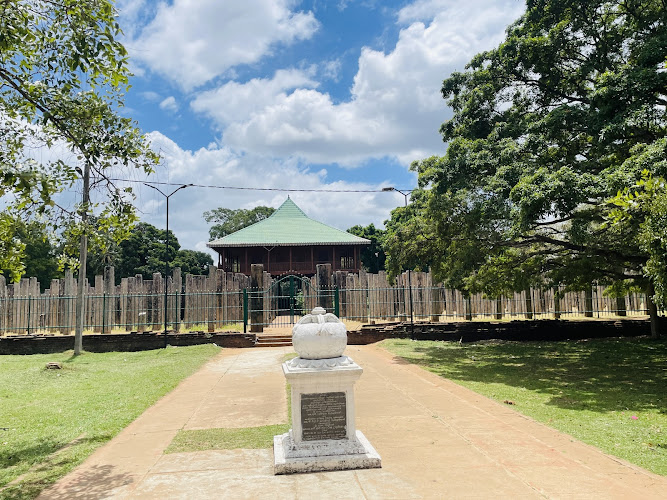
Lovamahapaya | ලෝවාමහාපාය
About Lovamahapaya | ලෝවාමහාපාය
Description
Alright, if you ask me, the Lovamahapaya (or should I just call it the Brazen Palace? Nah, let's stick to both) is one of those jaw-dropping, underhyped gems hiding in plain sight right in Anuradhapura’s ancient city core. You’re staring at the spot where Sri Lankan architects were flexing their skills (and let’s be honest, probably their egos too) way back in the 2nd century BCE—seriously, that’s over 2,200 years ago! Today, you see nothing more than rows of stone pillars standing in grid-formation, sunbaked and a bit mysterious, but once upon a time, this was a skyscraper by ancient standards—an actual nine-story palace glittering with bronze tiles.
Lovamahapaya was built by King Dutugemunu (if you’re into stories of kings and warrior monks, this guy is endlessly fascinating). He wasn’t kidding around: the palace had a thousand rooms and a roof that literally gleamed under the sun, thanks to bronze tiles, hence the name "Brazen Palace." Monks gathered here for meetings, meditation, and (who knows?) maybe a good old political chat. Imagine standing among these pillars, thinking of the throngs of monks once bustling around, the air humming with chants and ancient gossip. It makes the stones feel almost alive.
To be brutally honest—since what’s travel without a dash of truth?—you won’t see all nine stories resurrected. Centuries of natural forces and human pranks have left only the stone skeleton. Some folks stroll by, snap a pic, and bolt. But here’s my take: linger. Absorb the scale, the geometry, the little carvings if you squint close enough. And let’s not ignore the vibes—there’s a sense of peace and wonder that only places with millennia of stories can give. If you’re the kind who likes slow-travel and a sprinkle of mystery, you’ll eat it right up.
Key Features
- Over 1,600 granite stone pillars in a symmetrical, hypnotic grid—history meeting architecture head-on.
- Remnants of the original nine-story design; it was said to be 150 feet high (think: pre-modern high-rise, but fancier).
- Once covered with bronze roofing tiles that would catch the sun—pretty much a beacon for miles around.
- Served as a grand residence and gathering hall for Buddhist monks and community leaders.
- Stunning stonework detailing and ancient engravings hiding in plain sight if you pay attention.
- Accessible parking lot with wheelchair-friendly features—rare and awesome for a site this old.
- Kid-friendly space where the young and curious can roam safely.
- Centrally located within Anuradhapura’s UNESCO-listed Sacred City, alongside the Sri Maha Bodhi and other icons.
- A place of significance for both practicing Buddhists and history buffs. Pilgrims and curious wanderers coexist quietly here.
- Rarely crowded compared to nearby temples, perfect if you dislike jostling elbows mid-photo.
Best Time to Visit
So, you’re planning your trip and wondering when this place shines brightest? Let me save you the rookie mistake: midday in Anuradhapura gets hot—like "frying egg on a granite pillar" level. I say beat the sun and the rush. Early mornings are magical here, when light and shadow dance across the ancient stones and the air still carries last night’s coolness. Plus, you might catch monks passing by—always a gentle reminder of the site’s living legacy.
If you’re all about the weather, December through March (dry season) is the sweet spot. Rates are fair, skies mostly clear, and everything around the palace—the lokka of history—is photo-ready. During Poson Poya (the full moon in June), the whole city goes into festival mode, and while it can be crowded, the energy is next level. I once visited during this period, and the city quite literally glowed under lanterns. But if crowds aren’t your cup of tea, avoid poya days.
Bottom line? Avoid the soaking heat between 11 am and 4 pm, unless you bring extra water, sunscreen, and a hat big enough for a royal.
How to Get There
Here’s where planning gets important. Anuradhapura itself is super accessible from everywhere—Colombo, Kandy, the cultural triangle—you name it. You’ve got choices: hop on a train for a slow but scenic ride, take an air-conditioned bus (bless those drivers and their road trip playlists), or hire a private car with a local guide who’ll tell you legends along the way (I’m personally partial to good road trip karaoke, though your mileage may vary!).
Once you’re in Anuradhapura, Lovamahapaya isn’t hidden in some thick jungle. It’s smack dab in the Sacred City, right between the Sri Maha Bodhi tree and Ruwanwelisaya stupa. You can literally walk from one to the next—it’s that close. If you’re feeling energetic, rent a bicycle; it’s the most classic, breezy way to get around the ruins, and trust me, your knees will thank you. Tuk-tuks are everywhere, and for a handful of rupees, drivers, young and old, will spin stories (true or otherwise) as you ride.
Wheelchair users and families with strollers—you’re in luck. The parking area is accessible and smooth compared to most dusty paths in Sri Lanka’s ruins. If only every site could be so practical.
Tips for Visiting
- Don’t rush it. The temptation’s real to breeze by in an hour. But take your time—let the place speak to you. Pause among the pillars and picture the palace as it was. Snap photos, yes, but also just sit. Listen. Imagine the hubbub of monk debates and the rustle of ancient robes.
- Stay hydrated. This sounds a bit "mom advice," but trust me, Sri Lankan sun is not shy. Always have water, maybe even a coconut if you see a vendor—it’s the local way and oh-so-refreshing.
- Dress respectfully. While it’s more relaxed than sacred stupas, you’re still in a revered zone. Shoulders and knees covered is always a classy move.
- Engage with a local guide. Stories, legends, small details—these come alive with a passionate storyteller. I've met guides in Anuradhapura who can turn a pile of rocks into an epic saga in ten minutes flat!
- Travel off-peak if you’re crowd-phobic. Weekdays and early mornings are your friends.
- Bring kids! It’s a wide-open site, perfect for little adventurers to play explorer. Just keep an eye near the pillars—they’re both mesmerizing and irresistible for climbing (not encouraged).
- Wheelchair access is decent for a historical place. If you or someone in your party has mobility needs, Lovamahapaya is surprisingly accommodating. Who knew centuries-old ruins could be so ahead of their time?
- Photographers, bring your wide angle lens. The geometry of these stone pillars is something else, especially when shot in the soft morning light. And fewer tourists means fewer photobombers. Win!
- Go beyond the pillars. Venture a little around the grounds. You’ll stumble upon ancient bricks, mysterious relic holes, and views that put the surrounding stupas in perfect frame. It’s like time travel for your Instagram feed.
- Finish with a meditation pause. There’s a unique calm here. I once sat on one of the shaded stones, closed my eyes, and let the centuries melt away. Even for non-Buddhists, the peace is real.
If you’re chasing traces of ancient wonder and want a story to tell that isn’t in every guidebook (yet), Lovamahapaya is your spot. It doesn’t clamour for your attention—it rewards it. For history nerds and daydreamers alike, these pillars can stir the imagination every bit as powerfully as the legends themselves. I say, give yourself to the place, and see what you discover.
Key Features
- Over 1,600 granite stone pillars in a symmetrical, hypnotic grid—history meeting architecture head-on.
- Remnants of the original nine-story design; it was said to be 150 feet high (think: pre-modern high-rise, but fancier).
- Once covered with bronze roofing tiles that would catch the sun—pretty much a beacon for miles around.
- Served as a grand residence and gathering hall for Buddhist monks and community leaders.
- Stunning stonework detailing and ancient engravings hiding in plain sight if you pay attention.
- Accessible parking lot with wheelchair-friendly features—rare and awesome for a site this old.
- Kid-friendly space where the young and curious can roam safely.
- Centrally located within Anuradhapura’s UNESCO-listed Sacred City, alongside the Sri Maha Bodhi and other icons.
More Details
Updated June 11, 2025
Table of Contents
Description
Alright, if you ask me, the Lovamahapaya (or should I just call it the Brazen Palace? Nah, let’s stick to both) is one of those jaw-dropping, underhyped gems hiding in plain sight right in Anuradhapura’s ancient city core. You’re staring at the spot where Sri Lankan architects were flexing their skills (and let’s be honest, probably their egos too) way back in the 2nd century BCE—seriously, that’s over 2,200 years ago! Today, you see nothing more than rows of stone pillars standing in grid-formation, sunbaked and a bit mysterious, but once upon a time, this was a skyscraper by ancient standards—an actual nine-story palace glittering with bronze tiles.
Lovamahapaya was built by King Dutugemunu (if you’re into stories of kings and warrior monks, this guy is endlessly fascinating). He wasn’t kidding around: the palace had a thousand rooms and a roof that literally gleamed under the sun, thanks to bronze tiles, hence the name “Brazen Palace.” Monks gathered here for meetings, meditation, and (who knows?) maybe a good old political chat. Imagine standing among these pillars, thinking of the throngs of monks once bustling around, the air humming with chants and ancient gossip. It makes the stones feel almost alive.
To be brutally honest—since what’s travel without a dash of truth?—you won’t see all nine stories resurrected. Centuries of natural forces and human pranks have left only the stone skeleton. Some folks stroll by, snap a pic, and bolt. But here’s my take: linger. Absorb the scale, the geometry, the little carvings if you squint close enough. And let’s not ignore the vibes—there’s a sense of peace and wonder that only places with millennia of stories can give. If you’re the kind who likes slow-travel and a sprinkle of mystery, you’ll eat it right up.
Key Features
- Over 1,600 granite stone pillars in a symmetrical, hypnotic grid—history meeting architecture head-on.
- Remnants of the original nine-story design; it was said to be 150 feet high (think: pre-modern high-rise, but fancier).
- Once covered with bronze roofing tiles that would catch the sun—pretty much a beacon for miles around.
- Served as a grand residence and gathering hall for Buddhist monks and community leaders.
- Stunning stonework detailing and ancient engravings hiding in plain sight if you pay attention.
- Accessible parking lot with wheelchair-friendly features—rare and awesome for a site this old.
- Kid-friendly space where the young and curious can roam safely.
- Centrally located within Anuradhapura’s UNESCO-listed Sacred City, alongside the Sri Maha Bodhi and other icons.
- A place of significance for both practicing Buddhists and history buffs. Pilgrims and curious wanderers coexist quietly here.
- Rarely crowded compared to nearby temples, perfect if you dislike jostling elbows mid-photo.
Best Time to Visit
So, you’re planning your trip and wondering when this place shines brightest? Let me save you the rookie mistake: midday in Anuradhapura gets hot—like “frying egg on a granite pillar” level. I say beat the sun and the rush. Early mornings are magical here, when light and shadow dance across the ancient stones and the air still carries last night’s coolness. Plus, you might catch monks passing by—always a gentle reminder of the site’s living legacy.
If you’re all about the weather, December through March (dry season) is the sweet spot. Rates are fair, skies mostly clear, and everything around the palace—the lokka of history—is photo-ready. During Poson Poya (the full moon in June), the whole city goes into festival mode, and while it can be crowded, the energy is next level. I once visited during this period, and the city quite literally glowed under lanterns. But if crowds aren’t your cup of tea, avoid poya days.
Bottom line? Avoid the soaking heat between 11 am and 4 pm, unless you bring extra water, sunscreen, and a hat big enough for a royal.
How to Get There
Here’s where planning gets important. Anuradhapura itself is super accessible from everywhere—Colombo, Kandy, the cultural triangle—you name it. You’ve got choices: hop on a train for a slow but scenic ride, take an air-conditioned bus (bless those drivers and their road trip playlists), or hire a private car with a local guide who’ll tell you legends along the way (I’m personally partial to good road trip karaoke, though your mileage may vary!).
Once you’re in Anuradhapura, Lovamahapaya isn’t hidden in some thick jungle. It’s smack dab in the Sacred City, right between the Sri Maha Bodhi tree and Ruwanwelisaya stupa. You can literally walk from one to the next—it’s that close. If you’re feeling energetic, rent a bicycle; it’s the most classic, breezy way to get around the ruins, and trust me, your knees will thank you. Tuk-tuks are everywhere, and for a handful of rupees, drivers, young and old, will spin stories (true or otherwise) as you ride.
Wheelchair users and families with strollers—you’re in luck. The parking area is accessible and smooth compared to most dusty paths in Sri Lanka’s ruins. If only every site could be so practical.
Tips for Visiting
- Don’t rush it. The temptation’s real to breeze by in an hour. But take your time—let the place speak to you. Pause among the pillars and picture the palace as it was. Snap photos, yes, but also just sit. Listen. Imagine the hubbub of monk debates and the rustle of ancient robes.
- Stay hydrated. This sounds a bit “mom advice,” but trust me, Sri Lankan sun is not shy. Always have water, maybe even a coconut if you see a vendor—it’s the local way and oh-so-refreshing.
- Dress respectfully. While it’s more relaxed than sacred stupas, you’re still in a revered zone. Shoulders and knees covered is always a classy move.
- Engage with a local guide. Stories, legends, small details—these come alive with a passionate storyteller. I’ve met guides in Anuradhapura who can turn a pile of rocks into an epic saga in ten minutes flat!
- Travel off-peak if you’re crowd-phobic. Weekdays and early mornings are your friends.
- Bring kids! It’s a wide-open site, perfect for little adventurers to play explorer. Just keep an eye near the pillars—they’re both mesmerizing and irresistible for climbing (not encouraged).
- Wheelchair access is decent for a historical place. If you or someone in your party has mobility needs, Lovamahapaya is surprisingly accommodating. Who knew centuries-old ruins could be so ahead of their time?
- Photographers, bring your wide angle lens. The geometry of these stone pillars is something else, especially when shot in the soft morning light. And fewer tourists means fewer photobombers. Win!
- Go beyond the pillars. Venture a little around the grounds. You’ll stumble upon ancient bricks, mysterious relic holes, and views that put the surrounding stupas in perfect frame. It’s like time travel for your Instagram feed.
- Finish with a meditation pause. There’s a unique calm here. I once sat on one of the shaded stones, closed my eyes, and let the centuries melt away. Even for non-Buddhists, the peace is real.
If you’re chasing traces of ancient wonder and want a story to tell that isn’t in every guidebook (yet), Lovamahapaya is your spot. It doesn’t clamour for your attention—it rewards it. For history nerds and daydreamers alike, these pillars can stir the imagination every bit as powerfully as the legends themselves. I say, give yourself to the place, and see what you discover.
Key Highlights
- Over 1,600 granite stone pillars in a symmetrical, hypnotic grid—history meeting architecture head-on.
- Remnants of the original nine-story design; it was said to be 150 feet high (think: pre-modern high-rise, but fancier).
- Once covered with bronze roofing tiles that would catch the sun—pretty much a beacon for miles around.
- Served as a grand residence and gathering hall for Buddhist monks and community leaders.
- Stunning stonework detailing and ancient engravings hiding in plain sight if you pay attention.
- Accessible parking lot with wheelchair-friendly features—rare and awesome for a site this old.
- Kid-friendly space where the young and curious can roam safely.
- Centrally located within Anuradhapura’s UNESCO-listed Sacred City, alongside the Sri Maha Bodhi and other icons.
Location
Places to Stay Near Lovamahapaya | ලෝවාමහාපාය
Find and Book a Tour
Explore More Travel Guides
No reviews found! Be the first to review!
Traveler Reviews for Lovamahapaya | ලෝවාමහාපාය
There are no reviews yet. Be the first one to write one.
Have you visited Lovamahapaya | ලෝවාමහාපාය? Help other travelers by sharing your review.
You Might Also Like
Mirisawetiya
Anuradhapura Unesco Signage
Archaeological Museum, Anuradhapura
Find Accommodations Nearby
Recommended Tours & Activities
Visitor Reviews
There are no reviews yet. Be the first one to write one.
Share Your Experience
Have you visited Lovamahapaya | ලෝවාමහාපාය? Help other travelers by leaving a review.