
KODE, West Norway Museum of Decorative Art
About KODE, West Norway Museum of Decorative Art
Description
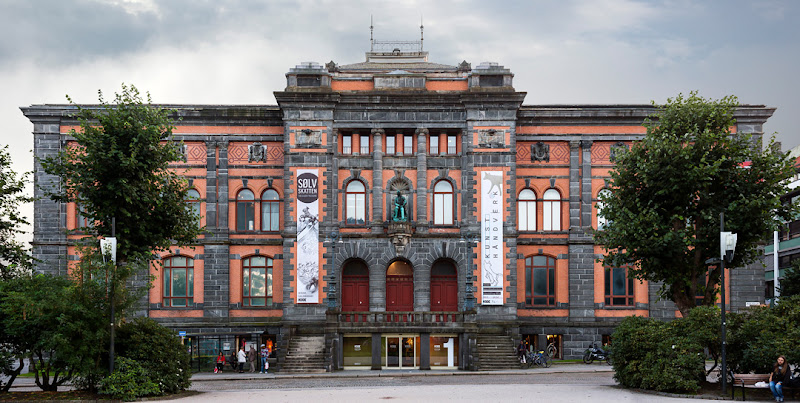
The West Norway Museum of Decorative Art, commonly referred to as KODE's decorative art building, presents itself as a 19th-century exhibition house that quietly insists on being seen. The building itself — a piece of history — was conceived in the era of revival styles and carries that atmosphere into its galleries: high ceilings, carved wood details, rooms that feel like someone paused mid-curation and stepped out for fresh air. The architecture, attributed to Henry Bucher, gives the visitor a sense that they are walking through more than a museum; they are moving through a chapter of Bergen's cultural life.
At its core the museum celebrates craftsmanship. The displays emphasize silver, glass and textile work, but those three words only scratch the surface. There are porcelain pieces that pack the kind of visual punch usually reserved for anecdotes, small painted boxes that make catalogers giddy, and furniture fragments that feel like secret messages from earlier centuries. The decorative art collection charts tastes and techniques from across Europe and parts of Asia, with objects that belong as comfortably to an intimate salon as to a scholarly essay. It is a place where technique meets the everyday — brooches and bowls, tapestries and teacups — and they all whisper stories about how people in this part of the world lived, dressed, dined and displayed status.
One of the museum's quietly strong suits is its silver collection. Visit on a dull day and the silver will still catch light like it's been practicing for decades. Plates, cutlery, candlesticks: these objects show off local silversmith traditions and the international currents that brushed Bergen over time. Glasswork, too, is impressive — not only the fragile goblets and vases but also the narrative around how glassmaking evolved and traveled. The textile displays hold a different kind of attention: patterns, weaving techniques and embroidered motifs that reveal social histories as much as aesthetic ones. Textiles are, after all, the slow-motion diaries of households.
There is a measured balance here between scholarly curation and approachable storytelling. The permanent exhibitions offer context — dates, techniques, materials — but the museum also knows how to invite curiosity rather than demand prior knowledge. A traveler who is not a trained art historian will still find plenty to delight in. A detail-oriented visitor might linger over the fine hallmarks on a silver spoon or the subtle dye variations in a woven shawl. A casual browser will enjoy the rhythm of the rooms and the way certain objects are staged to suggest a lifestyle across time.
Some visitors come for the building, others for the collection, and many for both. It is common to discover that the museum rewards slow attention: a relatively small gallery can yield surprises if one spends even 15 minutes with the right case. And because the museum sits within KODE's broader group of art institutions, it often benefits from thematic overlap with neighboring buildings: design and fine art conversations spill across the campus, giving the decorative arts context within a larger history of Norwegian art and international exchange.
Service-wise, visitors will find a friendly, professional staff on site and basic amenities that modern travelers expect. There's an on-site restaurant, clean restrooms including gender-neutral options, and facilities designed with accessibility in mind — wheelchair-accessible entrance and restrooms are available, which matters a lot if mobility is a concern. For families, the museum generally rates well: children are welcomed and there are displays that tend to capture their imaginations, especially the shiny, intricate objects that adults also enjoy. The atmosphere is relaxed rather than fussy, and that makes the place feel more like a lived-in cultural institution than an untouchable archive.
Because museums are living places, exhibitions sometimes shift. The permanent core focuses on decorative arts, but rotating exhibits and special displays bring in contemporary voices, thematic investigations and guest collections. These temporary shows can be the reason a repeat visitor returns; they often draw on local design narratives as well as international trends, and they tend to highlight craftsmanship, sustainability, and the techniques that link past makers to today's designers.
There are a few pragmatic notes that seasoned museum-goers will appreciate. Lighting is thoughtful but occasionally dramatic — which is good for preserving fragile pieces but means some corners feel intentionally shadowed. Plaques and labels are informative, though a visitor wanting deep archival detail may wish to consult catalogues or staff for more intensive research. And, as in many historic buildings repurposed as museums, the flow between rooms can be a little quirky; the layout encourages exploring rather than rushing, but that same meandering layout can be confusing at first if someone is on a tight schedule.
The general visitor mood toward the museum tends to be positive, especially among people who value craftsmanship, historical objects, and the stories embedded in everyday items. Yet, it is fair to say the museum sometimes divides opinions — a handful of visitors wish for more modern signage or extended hours, while others praise the intimacy and meticulous presentation. This mix is almost what makes the place interesting: it feels curated with a clear point of view rather than trying to be all things at once.
Personal anecdote: the writer remembers a rainy afternoon in Bergen when the decorative arts museum felt like a warm, quiet island. After standing under umbrellas on cobbled streets, the transition into rooms filled with textiles and shining silver was unexpectedly comforting. The writer lingered at a display of late 19th-century tea wares, imagining conversations that once happened around them. It is that oddly domestic, human-scale touch that gives the museum personality; these objects were used, loved, sometimes dropped and repaired, and that makes them feel more alive than pristine showpieces behind glass.
For travelers who plan ahead, a visit here pairs nicely with a broader itinerary. It sits well with afternoons that combine history, design, and culinary detours — a museum visit followed by coffee in the museum restaurant, or nearby cafes, feels practical and pleasant. Photographers and lovers of detail will find plenty to study; curators and designers can read the objects as lessons in technique and taste. And yes, if someone arrives thinking decorative art might be an optional stop, there’s a fair chance they leave appreciating the craft and the care that goes into preserving these everyday masterpieces.
Accessibility, family friendliness and the presence of visitor facilities make it manageable for a wide range of guests. Do note that the museum has a museum-like pace: it's a place for leaning in, not for marathon sightseeing. If someone tries to sprint through it in ten minutes, they'll likely miss the point. A relaxed two-hour block gives time to absorb the silver and glasswork and to enjoy the textile room without feeling rushed.
Finally, why might the West Norway Museum of Decorative Art stand out in a travel itinerary? Because it concentrates on makers and making — on the objects that people used and decorated their lives with. That lens brings a close-up view of cultural history: trade networks reflected in porcelain glazes, local guild skills encoded in silver marks, and social stories woven into textiles. It is not always flashy. Often, it is quietly persuasive: leave a little time, look closely, and the museum will reward the attention.
All told, the West Norway Museum of Decorative Art offers visitors an intimate, thoughtfully presented collection of decorative arts housed in a historic exhibition building. It blends scholarly care with an inviting manner, and while it may not shout for attention in a city full of attractions, it more than rewards those who slow down and let the objects tell their stories. The writer will be going back, because one visit is rarely enough to appreciate every glint of silver or the subtleties woven into fabric sample after fabric sample. And if that sounds a little fussy — well, good. Sometimes the small, fussy things are the ones that stick with you.
Key Features
More Details
Updated August 29, 2025
Table of Contents
Description
The West Norway Museum of Decorative Art, commonly referred to as KODE’s decorative art building, presents itself as a 19th-century exhibition house that quietly insists on being seen. The building itself — a piece of history — was conceived in the era of revival styles and carries that atmosphere into its galleries: high ceilings, carved wood details, rooms that feel like someone paused mid-curation and stepped out for fresh air. The architecture, attributed to Henry Bucher, gives the visitor a sense that they are walking through more than a museum; they are moving through a chapter of Bergen’s cultural life.
At its core the museum celebrates craftsmanship. The displays emphasize silver, glass and textile work, but those three words only scratch the surface. There are porcelain pieces that pack the kind of visual punch usually reserved for anecdotes, small painted boxes that make catalogers giddy, and furniture fragments that feel like secret messages from earlier centuries. The decorative art collection charts tastes and techniques from across Europe and parts of Asia, with objects that belong as comfortably to an intimate salon as to a scholarly essay. It is a place where technique meets the everyday — brooches and bowls, tapestries and teacups — and they all whisper stories about how people in this part of the world lived, dressed, dined and displayed status.
One of the museum’s quietly strong suits is its silver collection. Visit on a dull day and the silver will still catch light like it’s been practicing for decades. Plates, cutlery, candlesticks: these objects show off local silversmith traditions and the international currents that brushed Bergen over time. Glasswork, too, is impressive — not only the fragile goblets and vases but also the narrative around how glassmaking evolved and traveled. The textile displays hold a different kind of attention: patterns, weaving techniques and embroidered motifs that reveal social histories as much as aesthetic ones. Textiles are, after all, the slow-motion diaries of households.
There is a measured balance here between scholarly curation and approachable storytelling. The permanent exhibitions offer context — dates, techniques, materials — but the museum also knows how to invite curiosity rather than demand prior knowledge. A traveler who is not a trained art historian will still find plenty to delight in. A detail-oriented visitor might linger over the fine hallmarks on a silver spoon or the subtle dye variations in a woven shawl. A casual browser will enjoy the rhythm of the rooms and the way certain objects are staged to suggest a lifestyle across time.
Some visitors come for the building, others for the collection, and many for both. It is common to discover that the museum rewards slow attention: a relatively small gallery can yield surprises if one spends even 15 minutes with the right case. And because the museum sits within KODE’s broader group of art institutions, it often benefits from thematic overlap with neighboring buildings: design and fine art conversations spill across the campus, giving the decorative arts context within a larger history of Norwegian art and international exchange.
Service-wise, visitors will find a friendly, professional staff on site and basic amenities that modern travelers expect. There’s an on-site restaurant, clean restrooms including gender-neutral options, and facilities designed with accessibility in mind — wheelchair-accessible entrance and restrooms are available, which matters a lot if mobility is a concern. For families, the museum generally rates well: children are welcomed and there are displays that tend to capture their imaginations, especially the shiny, intricate objects that adults also enjoy. The atmosphere is relaxed rather than fussy, and that makes the place feel more like a lived-in cultural institution than an untouchable archive.
Because museums are living places, exhibitions sometimes shift. The permanent core focuses on decorative arts, but rotating exhibits and special displays bring in contemporary voices, thematic investigations and guest collections. These temporary shows can be the reason a repeat visitor returns; they often draw on local design narratives as well as international trends, and they tend to highlight craftsmanship, sustainability, and the techniques that link past makers to today’s designers.
There are a few pragmatic notes that seasoned museum-goers will appreciate. Lighting is thoughtful but occasionally dramatic — which is good for preserving fragile pieces but means some corners feel intentionally shadowed. Plaques and labels are informative, though a visitor wanting deep archival detail may wish to consult catalogues or staff for more intensive research. And, as in many historic buildings repurposed as museums, the flow between rooms can be a little quirky; the layout encourages exploring rather than rushing, but that same meandering layout can be confusing at first if someone is on a tight schedule.
The general visitor mood toward the museum tends to be positive, especially among people who value craftsmanship, historical objects, and the stories embedded in everyday items. Yet, it is fair to say the museum sometimes divides opinions — a handful of visitors wish for more modern signage or extended hours, while others praise the intimacy and meticulous presentation. This mix is almost what makes the place interesting: it feels curated with a clear point of view rather than trying to be all things at once.
Personal anecdote: the writer remembers a rainy afternoon in Bergen when the decorative arts museum felt like a warm, quiet island. After standing under umbrellas on cobbled streets, the transition into rooms filled with textiles and shining silver was unexpectedly comforting. The writer lingered at a display of late 19th-century tea wares, imagining conversations that once happened around them. It is that oddly domestic, human-scale touch that gives the museum personality; these objects were used, loved, sometimes dropped and repaired, and that makes them feel more alive than pristine showpieces behind glass.
For travelers who plan ahead, a visit here pairs nicely with a broader itinerary. It sits well with afternoons that combine history, design, and culinary detours — a museum visit followed by coffee in the museum restaurant, or nearby cafes, feels practical and pleasant. Photographers and lovers of detail will find plenty to study; curators and designers can read the objects as lessons in technique and taste. And yes, if someone arrives thinking decorative art might be an optional stop, there’s a fair chance they leave appreciating the craft and the care that goes into preserving these everyday masterpieces.
Accessibility, family friendliness and the presence of visitor facilities make it manageable for a wide range of guests. Do note that the museum has a museum-like pace: it’s a place for leaning in, not for marathon sightseeing. If someone tries to sprint through it in ten minutes, they’ll likely miss the point. A relaxed two-hour block gives time to absorb the silver and glasswork and to enjoy the textile room without feeling rushed.
Finally, why might the West Norway Museum of Decorative Art stand out in a travel itinerary? Because it concentrates on makers and making — on the objects that people used and decorated their lives with. That lens brings a close-up view of cultural history: trade networks reflected in porcelain glazes, local guild skills encoded in silver marks, and social stories woven into textiles. It is not always flashy. Often, it is quietly persuasive: leave a little time, look closely, and the museum will reward the attention.
All told, the West Norway Museum of Decorative Art offers visitors an intimate, thoughtfully presented collection of decorative arts housed in a historic exhibition building. It blends scholarly care with an inviting manner, and while it may not shout for attention in a city full of attractions, it more than rewards those who slow down and let the objects tell their stories. The writer will be going back, because one visit is rarely enough to appreciate every glint of silver or the subtleties woven into fabric sample after fabric sample. And if that sounds a little fussy — well, good. Sometimes the small, fussy things are the ones that stick with you.
Key Highlights
KODE, West Norway Museum of Decorative Art
Location
Places to Stay Near KODE, West Norway Museum of Decorative Art
Find and Book a Tour
Explore More Travel Guides
No reviews found! Be the first to review!
Traveler Reviews for KODE, West Norway Museum of Decorative Art
There are no reviews yet. Be the first one to write one.
Have you visited KODE, West Norway Museum of Decorative Art? Help other travelers by sharing your review.
You Might Also Like
Akvariet i Bergen - The National Aquarium

Nordnesparken 1

Muséhagen
Find Accommodations Nearby
Recommended Tours & Activities
Visitor Reviews
There are no reviews yet. Be the first one to write one.
Share Your Experience
Have you visited KODE, West Norway Museum of Decorative Art? Help other travelers by leaving a review.