
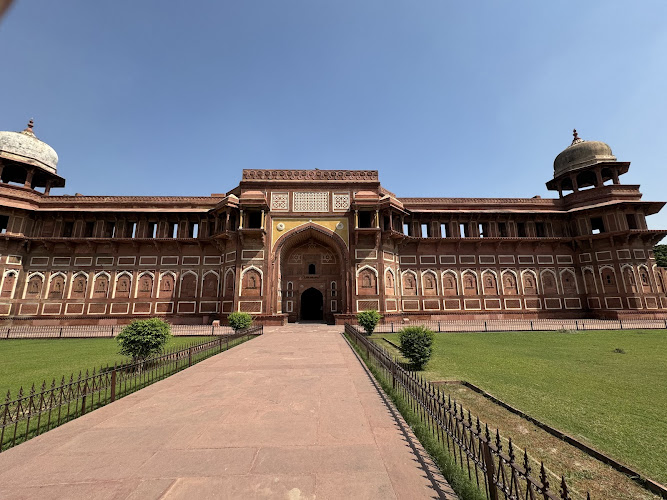
Jahangir Palace
About Jahangir Palace
Description
Jahangir Palace, tucked inside the grand Agra Fort, is one of those places that quietly steals your heart before you even realize it. Built by Emperor Akbar in the late 16th century, this palace was meant for his Rajput wives—especially for his favorite, Jodha Bai. And you can feel that blend of Mughal strength and Rajput grace in every arch, every carved window, every red sandstone wall that seems to glow differently as the sun shifts through the day. The palace isn’t flashy; it’s dignified, serene, and deeply human in its proportions. It’s one of those rare Mughal structures that feels personal, like it was meant to be lived in, not just admired.
Walking through Jahangir Palace, you’ll notice how the craftsmanship speaks volumes about the cultural fusion that defined Akbar’s reign. The red sandstone façade, the delicate jharokhas, and the geometric latticework all tell stories of artisans who took pride in their art. I remember the first time I stood in its courtyard—it felt oddly peaceful despite the crowd. Maybe it’s the symmetry, or maybe it’s just that the place seems to hold its own quiet rhythm, undisturbed by time.
Though centuries have passed, the palace still carries whispers of royal life—where queens walked, courtiers bowed, and the hum of Mughal music may once have floated through those corridors. Travelers often come here expecting grandeur, but they leave talking about its calmness. It’s a place that doesn’t shout for attention; it waits for you to notice its details—the kind of beauty that grows on you the longer you stay.
Key Features
- Architectural Style: A stunning blend of Mughal and Rajput architecture, built primarily from red sandstone with intricate carvings and inlaid designs.
- Historical Significance: Constructed by Emperor Akbar for his Rajput wives, representing a symbolic union between Mughal and Rajput cultures.
- Courtyard Design: The palace features a large central courtyard surrounded by chambers and corridors, once used for royal gatherings and daily life.
- Decorative Elements: Delicate jali (lattice) screens, ornate brackets, and floral motifs that showcase both artistic finesse and cultural harmony.
- Accessibility: The palace is wheelchair-friendly, with accessible entrances, restrooms, and parking facilities, making it convenient for all visitors.
- Family-Friendly: The open spaces and historical intrigue make it a great spot for families and kids interested in exploring history beyond textbooks.
- Photography Opportunities: The interplay of light and shadow on the red sandstone walls creates mesmerizing photo moments, especially during early morning or late afternoon.
- Connection to Agra Fort: As part of the larger Agra Fort complex, visitors can explore multiple historical structures in one visit, including Diwan-i-Khas and Sheesh Mahal.
Best Time to Visit
If you’ve ever been to Agra in peak summer, you’ll know that the sun can be merciless. So, the best time to visit Jahangir Palace is between October and March, when the weather is pleasantly cool, and wandering through the fort doesn’t feel like a survival challenge. Mornings are especially magical—the air is crisp, the crowds are thinner, and the sandstone glows a soft amber under the rising sun. I once visited in early February, and honestly, it felt like stepping into a painting. The light, the quiet, even the distant sound of birds—it all just fit together perfectly.
That said, if you happen to visit in summer, plan your trip early in the morning or late in the afternoon. Carry water, wear a hat, and take breaks in the shaded corridors—they’re naturally cooler and make for great resting spots. Monsoon season (July to September) has its charm too; the rain brings out the deep red tones of the sandstone, and the scent of wet earth adds something special to the experience. But be prepared for slippery pathways and sudden showers.
How to Get There
Reaching Jahangir Palace is quite straightforward since it lies within the Agra Fort complex, one of the most accessible attractions in the city. Agra itself is well-connected by road, rail, and air. If you’re coming from Delhi, it’s about a 3–4 hour drive via the Yamuna Expressway—a smooth and scenic route that makes for a comfortable day trip. Trains from major cities like Delhi, Jaipur, and Varanasi frequently stop at Agra Cantt Station, which is only a short drive from the fort.
For those flying in, the Agra Airport (Pandit Deen Dayal Upadhyay Airport) has limited domestic flights, but most travelers prefer flying into Delhi and then driving down. Once in Agra, local transport options are plenty—auto-rickshaws, taxis, or even electric rickshaws that are both eco-friendly and fun. Personally, I’d recommend hiring a local guide or driver who knows the area well. They often share stories and insights that you won’t find in guidebooks, like which gate to enter for the least crowded route or where to get the best view of the palace’s façade.
Tips for Visiting
Visiting Jahangir Palace isn’t just about ticking off another monument from your list—it’s about soaking up the history and atmosphere that still lingers here. Here are a few tips that might help you make the most of your visit:
- Arrive Early: The palace opens early, and mornings are the best time to explore before the crowds and heat set in. You’ll also get the best light for photos.
- Hire a Guide: A knowledgeable guide can bring the place alive with stories of Akbar, Jahangir, and the royal family. It’s worth the small extra cost.
- Dress Comfortably: Light cotton clothes and comfortable shoes are your best friends here. The palace involves a fair bit of walking.
- Stay Hydrated: Agra can be deceptively hot even in winter, so carry a bottle of water with you.
- Photography Etiquette: While photography is allowed, be respectful of others and avoid blocking pathways or climbing on restricted areas.
- Accessibility: The palace is wheelchair accessible, but it’s always good to check with the ticket counter for the best entry route for visitors with mobility needs.
- Combine Your Visit: Since the palace is part of Agra Fort, plan to explore nearby attractions like the Diwan-i-Aam, Musamman Burj, and of course, the Taj Mahal just across the river.
- Take Your Time: Don’t rush. Sit in the courtyard, watch the play of light on the red walls, and just let yourself be still for a moment. That’s when the place really reveals itself.
One thing I’ve learned from traveling across India’s historical sites is that every place has its own tempo. Jahangir Palace moves at a slower, gentler rhythm. It doesn’t overwhelm you with grandeur like the Taj Mahal does, but it leaves you thinking long after you’ve left. You can almost imagine the queens chatting in the courtyard, the faint scent of rosewater in the air, and the sound of anklets echoing through the corridors. It’s that kind of place—quietly powerful, deeply nostalgic, and surprisingly moving.
So if you’re planning a trip to Agra, don’t just rush through the palace on your way to the next monument. Take your time. Let the history, the architecture, and the atmosphere sink in. Jahangir Palace isn’t just a building—it’s a story carved in stone, a reminder of an era when art and love shaped empires. And trust me, once you’ve walked through its arches, you’ll carry a piece of it with you long after you’ve gone.
Key Features
- Key Features
- Best Time to Visit
- How to Get There
- Tips for Visiting
More Details
Updated November 10, 2025
Table of Contents
Description
Jahangir Palace, tucked inside the grand Agra Fort, is one of those places that quietly steals your heart before you even realize it. Built by Emperor Akbar in the late 16th century, this palace was meant for his Rajput wives—especially for his favorite, Jodha Bai. And you can feel that blend of Mughal strength and Rajput grace in every arch, every carved window, every red sandstone wall that seems to glow differently as the sun shifts through the day. The palace isn’t flashy; it’s dignified, serene, and deeply human in its proportions. It’s one of those rare Mughal structures that feels personal, like it was meant to be lived in, not just admired.
Walking through Jahangir Palace, you’ll notice how the craftsmanship speaks volumes about the cultural fusion that defined Akbar’s reign. The red sandstone façade, the delicate jharokhas, and the geometric latticework all tell stories of artisans who took pride in their art. I remember the first time I stood in its courtyard—it felt oddly peaceful despite the crowd. Maybe it’s the symmetry, or maybe it’s just that the place seems to hold its own quiet rhythm, undisturbed by time.
Though centuries have passed, the palace still carries whispers of royal life—where queens walked, courtiers bowed, and the hum of Mughal music may once have floated through those corridors. Travelers often come here expecting grandeur, but they leave talking about its calmness. It’s a place that doesn’t shout for attention; it waits for you to notice its details—the kind of beauty that grows on you the longer you stay.
Key Features
- Architectural Style: A stunning blend of Mughal and Rajput architecture, built primarily from red sandstone with intricate carvings and inlaid designs.
- Historical Significance: Constructed by Emperor Akbar for his Rajput wives, representing a symbolic union between Mughal and Rajput cultures.
- Courtyard Design: The palace features a large central courtyard surrounded by chambers and corridors, once used for royal gatherings and daily life.
- Decorative Elements: Delicate jali (lattice) screens, ornate brackets, and floral motifs that showcase both artistic finesse and cultural harmony.
- Accessibility: The palace is wheelchair-friendly, with accessible entrances, restrooms, and parking facilities, making it convenient for all visitors.
- Family-Friendly: The open spaces and historical intrigue make it a great spot for families and kids interested in exploring history beyond textbooks.
- Photography Opportunities: The interplay of light and shadow on the red sandstone walls creates mesmerizing photo moments, especially during early morning or late afternoon.
- Connection to Agra Fort: As part of the larger Agra Fort complex, visitors can explore multiple historical structures in one visit, including Diwan-i-Khas and Sheesh Mahal.
Best Time to Visit
If you’ve ever been to Agra in peak summer, you’ll know that the sun can be merciless. So, the best time to visit Jahangir Palace is between October and March, when the weather is pleasantly cool, and wandering through the fort doesn’t feel like a survival challenge. Mornings are especially magical—the air is crisp, the crowds are thinner, and the sandstone glows a soft amber under the rising sun. I once visited in early February, and honestly, it felt like stepping into a painting. The light, the quiet, even the distant sound of birds—it all just fit together perfectly.
That said, if you happen to visit in summer, plan your trip early in the morning or late in the afternoon. Carry water, wear a hat, and take breaks in the shaded corridors—they’re naturally cooler and make for great resting spots. Monsoon season (July to September) has its charm too; the rain brings out the deep red tones of the sandstone, and the scent of wet earth adds something special to the experience. But be prepared for slippery pathways and sudden showers.
How to Get There
Reaching Jahangir Palace is quite straightforward since it lies within the Agra Fort complex, one of the most accessible attractions in the city. Agra itself is well-connected by road, rail, and air. If you’re coming from Delhi, it’s about a 3–4 hour drive via the Yamuna Expressway—a smooth and scenic route that makes for a comfortable day trip. Trains from major cities like Delhi, Jaipur, and Varanasi frequently stop at Agra Cantt Station, which is only a short drive from the fort.
For those flying in, the Agra Airport (Pandit Deen Dayal Upadhyay Airport) has limited domestic flights, but most travelers prefer flying into Delhi and then driving down. Once in Agra, local transport options are plenty—auto-rickshaws, taxis, or even electric rickshaws that are both eco-friendly and fun. Personally, I’d recommend hiring a local guide or driver who knows the area well. They often share stories and insights that you won’t find in guidebooks, like which gate to enter for the least crowded route or where to get the best view of the palace’s façade.
Tips for Visiting
Visiting Jahangir Palace isn’t just about ticking off another monument from your list—it’s about soaking up the history and atmosphere that still lingers here. Here are a few tips that might help you make the most of your visit:
- Arrive Early: The palace opens early, and mornings are the best time to explore before the crowds and heat set in. You’ll also get the best light for photos.
- Hire a Guide: A knowledgeable guide can bring the place alive with stories of Akbar, Jahangir, and the royal family. It’s worth the small extra cost.
- Dress Comfortably: Light cotton clothes and comfortable shoes are your best friends here. The palace involves a fair bit of walking.
- Stay Hydrated: Agra can be deceptively hot even in winter, so carry a bottle of water with you.
- Photography Etiquette: While photography is allowed, be respectful of others and avoid blocking pathways or climbing on restricted areas.
- Accessibility: The palace is wheelchair accessible, but it’s always good to check with the ticket counter for the best entry route for visitors with mobility needs.
- Combine Your Visit: Since the palace is part of Agra Fort, plan to explore nearby attractions like the Diwan-i-Aam, Musamman Burj, and of course, the Taj Mahal just across the river.
- Take Your Time: Don’t rush. Sit in the courtyard, watch the play of light on the red walls, and just let yourself be still for a moment. That’s when the place really reveals itself.
One thing I’ve learned from traveling across India’s historical sites is that every place has its own tempo. Jahangir Palace moves at a slower, gentler rhythm. It doesn’t overwhelm you with grandeur like the Taj Mahal does, but it leaves you thinking long after you’ve left. You can almost imagine the queens chatting in the courtyard, the faint scent of rosewater in the air, and the sound of anklets echoing through the corridors. It’s that kind of place—quietly powerful, deeply nostalgic, and surprisingly moving.
So if you’re planning a trip to Agra, don’t just rush through the palace on your way to the next monument. Take your time. Let the history, the architecture, and the atmosphere sink in. Jahangir Palace isn’t just a building—it’s a story carved in stone, a reminder of an era when art and love shaped empires. And trust me, once you’ve walked through its arches, you’ll carry a piece of it with you long after you’ve gone.
Key Highlights
- Key Features
- Best Time to Visit
- How to Get There
- Tips for Visiting
Location
Places to Stay Near Jahangir Palace
Find and Book a Tour
Explore More Travel Guides
No reviews found! Be the first to review!
Traveler Reviews for Jahangir Palace
There are no reviews yet. Be the first one to write one.
Have you visited Jahangir Palace? Help other travelers by sharing your review.
You Might Also Like

Amar Singh Gate

Taj Nature Walk

Itmad-ud-Daula
Find Accommodations Nearby
Recommended Tours & Activities
Visitor Reviews
There are no reviews yet. Be the first one to write one.
Share Your Experience
Have you visited Jahangir Palace? Help other travelers by leaving a review.