
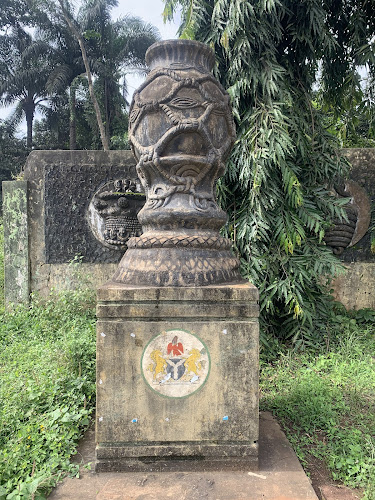
Igbo-Ukwu Museum
About Igbo-Ukwu Museum
Description
The Igbo-Ukwu Museum in Igbo Ukwu, Anambra, Nigeria, preserves one of West Africa’s most remarkable archaeological legacies: a cache of metalwork, glass beads, and ritual objects that point to sophisticated craftsmanship long before many assumed such techniques existed in the region. The museum displays artifacts recovered from local excavations that date back to roughly the 9th century, including intricate bronze vessels and verdant strings of glass beads. These objects hint at long-distance trade, highly developed metalworking — often produced with lost-wax casting — and a society with complex ceremonial life. For anyone curious about African art history, archaeological discoveries, or early metallurgy, this place is quietly profound.
Travelers often come expecting a large national gallery and instead find an intimate, specialized museum that rewards close looking. The layout favors intimate cases over vast halls, so visitors get up close to the filigree, the hammered surfaces, the tiny segmented beads that still catch the light. The story begins with a local dig that drew attention to unusual finds, and archaeologists later confirmed that the workmanship is exceptional: bronze and copper pieces decorate ritual vessels and regalia, and glass beads suggest links to wider trade networks. The museum’s interpretive materials attempt to place the objects in context, explaining how casting methods and bead-making point to local ingenuity as well as external connections.
It’s worth saying plainly: the museum is not perfect. The site’s small size means display space is limited and sometimes signage could be clearer. A few visitors note that facilities and interpretation vary depending on staffing and funding, but the core collection is unique — and that uniqueness tends to overshadow operational hiccups. Many visitors leave with the sense they have glimpsed an early chapter in a regional story that rewrites assumptions about ancient craftsmanship in Nigeria and West Africa.
Beyond objects, the museum functions as a cultural anchor for Igbo Ukwu and surrounding communities. It’s a place where local pride meets scholarly interest, and sometimes visitors will see local scholars or students gathered around a particular case, debating patterns, dating methods, or the significance of a motif. That mix — community, scholarship, and old metal that still seems to hum with meaning — makes a visit more than a checklist item. It’s a conversation starter, really. Oh, and for families: the museum is set up with accessibility in mind. Wheelchair accessible entrances, accessible parking, and restrooms are in place, and there is a restaurant and restroom on site for convenience. Getting tickets in advance is recommended especially during holiday weekends or school trips, and the site is kid-friendly enough that parents rarely regret bringing curious youngsters along.
Key Features
- Exceptional bronze and copper artifacts dating to around the 9th century, showcasing advanced metalworking techniques
- Glass beads and beadwork that point to far-reaching trade connections and local bead-making skill
- Examples of lost-wax casting and fine filigree — a highlight for anyone interested in ancient technologies
- Contextual archaeological interpretation explaining the discovery and excavation history
- Small, focused galleries that allow close inspection of details often missed in larger museums
- Wheelchair accessible entrance, parking, and restroom facilities
- On-site restaurant and restrooms for comfort during longer visits
- Family-friendly displays and a manageable layout for kids and parents
- Recommendation to buy tickets in advance to avoid waiting during busy times
Best Time to Visit
Season matters more than most travelers realize. The dry season, typically from November through March, tends to be the easiest time for road travel in Anambra and the surrounding region; roads are less muddy, and visitors report fewer delays. Mornings are quieter and cooler, which makes examining fine details on bronze pieces easier without the distraction of crowds or heat. If a traveler prefers a more peaceful pace, a weekday morning is ideal. Weekends and local school holidays bring more families and school groups, which is great if the traveler likes a lively atmosphere, but it can make close-up viewing trickier.
Special exhibitions and academic visits sometimes coincide with conferences or anniversary dates connected to the original excavations. If a visit can be scheduled around an event, the payoff can be deeper access and talks by curators or archaeologists. But the museum’s principal draw — the ancient bronzes and beads — is on permanent display most of the year, so visitors who can only get there off-season will still come away impressed.
How to Get There
The museum sits in Igbo Ukwu, within Anambra State, which is reachable by road from major regional hubs. Most visitors travel by car or hire a driver from nearby cities. From Onitsha or Awka the trip can be a comfortable drive, depending on traffic and road conditions; it is wise to allow extra time because local road surfaces and weather can introduce delays. Public transport, like intercity buses, will get travelers into the general area, but expect to arrange a last-mile taxi or local driver who knows the village lanes.
Visitors arriving from farther afield typically fly into a major Nigerian airport — Lagos or Abuja are common arrival points — then take a regional flight or a long-distance road transfer into Anambra. The final leg usually requires local navigation capability; many travelers decide to pre-book a driver who can meet them and handle parking and accessibility needs. For those self-driving, the museum provides wheelchair accessible parking. Taxi drivers from the nearest urban centers generally know the site, and local guides can be arranged to add context during the visit.
Tips for Visiting
Plan ahead. The museum is specialized and small, so buying tickets in advance is recommended, particularly during busy seasons and holiday weekends. Allow at least 60 to 90 minutes for the main galleries; anyone with a deeper interest in archaeology or metallurgy might easily take two hours. The museum is family-friendly, but bringing a short scavenger-list for kids — find the tiniest bead, spot the most ornate filigree — keeps young visitors engaged.
Respect the display rules. Photography policies vary; flash is usually not permitted because the light damages pigments and fragile materials. Visitors should carry small change because on-site services and vendors sometimes prefer cash. Comfortable shoes matter because, while the museum itself is compact, exploring the wider Igbo Ukwu area — markets, local craftsmen, or the sites tied to the original excavations — often means walking on uneven paths.
Ask questions. Staff and local guides often have stories that don’t make it into printed labels. A quick aside: one traveler lingered by a case, asked a guard about a pattern on a bronze vessel, and ended up invited to a short informal talk by a researcher who happened to be cataloguing objects that week — little chances like that happen when someone shows curiosity. Conversely, be prepared for occasional schedules that shift; opening hours can change for special events, religious holidays, or staff training days, so checking ahead is practical.
Bring a notebook or a phone to capture notes; the details matter. The delicate work, the tiny beads, the evidence of lost-wax casting — those are the things that spark a long conversation later. And for those who love a good souvenir hunt, plan a stop at local craft markets afterwards to support artisans making contemporary beadwork or metal items inspired by ancient designs. It’s a nice way to extend the visit beyond the museum walls.
Finally, temper expectations about facilities. The museum has a restaurant and restrooms which is a relief after a long drive, but service levels can vary. Be flexible, be patient, and keep an open mind. This place is prized for the collection’s rarity more than for glossy tourist infrastructure. If a traveler values stories and rare objects over polished amenities, the Igbo-Ukwu Museum will feel like a discovery — and that’s the point.
Key Features
- Exceptional bronze and copper artifacts dating to around the 9th century, showcasing advanced metalworking techniques
- Glass beads and beadwork that point to far-reaching trade connections and local bead-making skill
- Examples of lost-wax casting and fine filigree — a highlight for anyone interested in ancient technologies
- Contextual archaeological interpretation explaining the discovery and excavation history
- Small, focused galleries that allow close inspection of details often missed in larger museums
- Wheelchair accessible entrance, parking, and restroom facilities
- On-site restaurant and restrooms for comfort during longer visits
- Family-friendly displays and a manageable layout for kids and parents
More Details
Updated August 29, 2025
Table of Contents
Description
The Igbo-Ukwu Museum in Igbo Ukwu, Anambra, Nigeria, preserves one of West Africa’s most remarkable archaeological legacies: a cache of metalwork, glass beads, and ritual objects that point to sophisticated craftsmanship long before many assumed such techniques existed in the region. The museum displays artifacts recovered from local excavations that date back to roughly the 9th century, including intricate bronze vessels and verdant strings of glass beads. These objects hint at long-distance trade, highly developed metalworking — often produced with lost-wax casting — and a society with complex ceremonial life. For anyone curious about African art history, archaeological discoveries, or early metallurgy, this place is quietly profound.
Travelers often come expecting a large national gallery and instead find an intimate, specialized museum that rewards close looking. The layout favors intimate cases over vast halls, so visitors get up close to the filigree, the hammered surfaces, the tiny segmented beads that still catch the light. The story begins with a local dig that drew attention to unusual finds, and archaeologists later confirmed that the workmanship is exceptional: bronze and copper pieces decorate ritual vessels and regalia, and glass beads suggest links to wider trade networks. The museum’s interpretive materials attempt to place the objects in context, explaining how casting methods and bead-making point to local ingenuity as well as external connections.
It’s worth saying plainly: the museum is not perfect. The site’s small size means display space is limited and sometimes signage could be clearer. A few visitors note that facilities and interpretation vary depending on staffing and funding, but the core collection is unique — and that uniqueness tends to overshadow operational hiccups. Many visitors leave with the sense they have glimpsed an early chapter in a regional story that rewrites assumptions about ancient craftsmanship in Nigeria and West Africa.
Beyond objects, the museum functions as a cultural anchor for Igbo Ukwu and surrounding communities. It’s a place where local pride meets scholarly interest, and sometimes visitors will see local scholars or students gathered around a particular case, debating patterns, dating methods, or the significance of a motif. That mix — community, scholarship, and old metal that still seems to hum with meaning — makes a visit more than a checklist item. It’s a conversation starter, really. Oh, and for families: the museum is set up with accessibility in mind. Wheelchair accessible entrances, accessible parking, and restrooms are in place, and there is a restaurant and restroom on site for convenience. Getting tickets in advance is recommended especially during holiday weekends or school trips, and the site is kid-friendly enough that parents rarely regret bringing curious youngsters along.
Key Features
- Exceptional bronze and copper artifacts dating to around the 9th century, showcasing advanced metalworking techniques
- Glass beads and beadwork that point to far-reaching trade connections and local bead-making skill
- Examples of lost-wax casting and fine filigree — a highlight for anyone interested in ancient technologies
- Contextual archaeological interpretation explaining the discovery and excavation history
- Small, focused galleries that allow close inspection of details often missed in larger museums
- Wheelchair accessible entrance, parking, and restroom facilities
- On-site restaurant and restrooms for comfort during longer visits
- Family-friendly displays and a manageable layout for kids and parents
- Recommendation to buy tickets in advance to avoid waiting during busy times
Best Time to Visit
Season matters more than most travelers realize. The dry season, typically from November through March, tends to be the easiest time for road travel in Anambra and the surrounding region; roads are less muddy, and visitors report fewer delays. Mornings are quieter and cooler, which makes examining fine details on bronze pieces easier without the distraction of crowds or heat. If a traveler prefers a more peaceful pace, a weekday morning is ideal. Weekends and local school holidays bring more families and school groups, which is great if the traveler likes a lively atmosphere, but it can make close-up viewing trickier.
Special exhibitions and academic visits sometimes coincide with conferences or anniversary dates connected to the original excavations. If a visit can be scheduled around an event, the payoff can be deeper access and talks by curators or archaeologists. But the museum’s principal draw — the ancient bronzes and beads — is on permanent display most of the year, so visitors who can only get there off-season will still come away impressed.
How to Get There
The museum sits in Igbo Ukwu, within Anambra State, which is reachable by road from major regional hubs. Most visitors travel by car or hire a driver from nearby cities. From Onitsha or Awka the trip can be a comfortable drive, depending on traffic and road conditions; it is wise to allow extra time because local road surfaces and weather can introduce delays. Public transport, like intercity buses, will get travelers into the general area, but expect to arrange a last-mile taxi or local driver who knows the village lanes.
Visitors arriving from farther afield typically fly into a major Nigerian airport — Lagos or Abuja are common arrival points — then take a regional flight or a long-distance road transfer into Anambra. The final leg usually requires local navigation capability; many travelers decide to pre-book a driver who can meet them and handle parking and accessibility needs. For those self-driving, the museum provides wheelchair accessible parking. Taxi drivers from the nearest urban centers generally know the site, and local guides can be arranged to add context during the visit.
Tips for Visiting
Plan ahead. The museum is specialized and small, so buying tickets in advance is recommended, particularly during busy seasons and holiday weekends. Allow at least 60 to 90 minutes for the main galleries; anyone with a deeper interest in archaeology or metallurgy might easily take two hours. The museum is family-friendly, but bringing a short scavenger-list for kids — find the tiniest bead, spot the most ornate filigree — keeps young visitors engaged.
Respect the display rules. Photography policies vary; flash is usually not permitted because the light damages pigments and fragile materials. Visitors should carry small change because on-site services and vendors sometimes prefer cash. Comfortable shoes matter because, while the museum itself is compact, exploring the wider Igbo Ukwu area — markets, local craftsmen, or the sites tied to the original excavations — often means walking on uneven paths.
Ask questions. Staff and local guides often have stories that don’t make it into printed labels. A quick aside: one traveler lingered by a case, asked a guard about a pattern on a bronze vessel, and ended up invited to a short informal talk by a researcher who happened to be cataloguing objects that week — little chances like that happen when someone shows curiosity. Conversely, be prepared for occasional schedules that shift; opening hours can change for special events, religious holidays, or staff training days, so checking ahead is practical.
Bring a notebook or a phone to capture notes; the details matter. The delicate work, the tiny beads, the evidence of lost-wax casting — those are the things that spark a long conversation later. And for those who love a good souvenir hunt, plan a stop at local craft markets afterwards to support artisans making contemporary beadwork or metal items inspired by ancient designs. It’s a nice way to extend the visit beyond the museum walls.
Finally, temper expectations about facilities. The museum has a restaurant and restrooms which is a relief after a long drive, but service levels can vary. Be flexible, be patient, and keep an open mind. This place is prized for the collection’s rarity more than for glossy tourist infrastructure. If a traveler values stories and rare objects over polished amenities, the Igbo-Ukwu Museum will feel like a discovery — and that’s the point.
Key Highlights
- Exceptional bronze and copper artifacts dating to around the 9th century, showcasing advanced metalworking techniques
- Glass beads and beadwork that point to far-reaching trade connections and local bead-making skill
- Examples of lost-wax casting and fine filigree — a highlight for anyone interested in ancient technologies
- Contextual archaeological interpretation explaining the discovery and excavation history
- Small, focused galleries that allow close inspection of details often missed in larger museums
- Wheelchair accessible entrance, parking, and restroom facilities
- On-site restaurant and restrooms for comfort during longer visits
- Family-friendly displays and a manageable layout for kids and parents
Location
Places to Stay Near Igbo-Ukwu Museum
Find and Book a Tour
Explore More Travel Guides
No reviews found! Be the first to review!
Traveler Reviews for Igbo-Ukwu Museum
There are no reviews yet. Be the first one to write one.
Have you visited Igbo-Ukwu Museum? Help other travelers by sharing your review.
You Might Also Like

Port Harcourt Pleasure Park
Stella Obasanjo Library
Ijare Amusement Park
Find Accommodations Nearby
Recommended Tours & Activities
Visitor Reviews
There are no reviews yet. Be the first one to write one.
Share Your Experience
Have you visited Igbo-Ukwu Museum? Help other travelers by leaving a review.