
Heinrichsbrunnen
About Heinrichsbrunnen
Key Features
More Details
Updated April 15, 2024
## Heinrichsbrunnen (Braunschweig): what you’re looking at on the Hagenmarkt—and why it matters
If you’re standing on the Hagenmarkt in central Braunschweig (Brunswick), the Heinrichsbrunnen is hard to miss: a monumental historicist fountain crowned by Duke Henry the Lion (Heinrich der Löwe). It’s not “just a statue.” It’s a 19th-century statement about the city’s medieval roots, built on a square that had already been a civic focal point for centuries. Braunschweig
Quick facts (confirmed):
– Name: Heinrichsbrunnen
– Address: Hagenmarkt 3, 38100 Braunschweig, Germany
– Coordinates: 52.2671951, 10.5242974
– What it is: A historicist ornamental fountain (Zierbrunnen) completed in 1874 featuring a bronze figure of Henry the Lion
—
## Why this fountain exists here (and why it’s Henry the Lion)
Braunschweig’s identity is tightly linked to Henry the Lion, the powerful Welf duke associated with the city’s rise in the 12th century. The Hagen quarter (and its market square, the Hagenmarkt) traces back to that medieval period, and the 19th-century fountain deliberately ties the square to that origin story.
What’s especially interesting is that the Heinrichsbrunnen replaced the memory of an even older fountain:
– On (or near) the site, there was a medieval bronze fountain from 1407 with a figure of St. Catherine, patron saint of the nearby Katharinenkirche (St. Catherine’s Church).
– That Catherine figure was gilded in 1570 and later melted down in 1814 (during the period of the Wars of Liberation), reportedly for cannon metal.
So the square’s “centerpiece” switched symbolism over time: saint → duke, reflecting changing civic priorities and politics.
—
## What to look for up close: details most people walk past
The City of Braunschweig’s own description is unusually specific—and it’s worth using as your visual checklist.
### The Henry statue is intentionally “medieval-coded”
The bronze figure of Henry is 274 cm tall and designed in reference to his medieval tomb in Braunschweig Cathedral: he’s shown as a ruler with cloak and sword. Braunschweig
### The church model in his hand is not random
In his left hand, Henry holds a model of the Katharinenkirche—a direct nod to the church that anchors the Hagenmarkt. Braunschweig
### Dragons, lions, and foundry bragging rights
The Henry statue, plus the dragon and lion figures, were modeled by sculptor Adolf Breymann (1839–1878) and cast at Braunschweig’s Howaldt foundry. Braunschweig
This matters because it roots the monument in local industrial capability—Braunschweig wasn’t only commemorating history; it was also showcasing 19th-century craftsmanship.
### The basin design has an architect behind it
The fountain’s stone basins (described as two-tiered in the German Wikipedia entry) are attributed to architect Ludwig Winter, using Velpke sandstone.
—
## A tight timeline (so you can place it historically)
Here’s the sequence that’s consistently documented across sources:
– 1860s: Demolition and major changes around the square create a more open plaza, and the idea of a monument-fountain takes hold.
– 1873: The bronze Henry figure is shown at the Vienna World Exhibition (Weltausstellung).
– 4 July 1874: The fountain is inaugurated.
– 1998/99: A major restoration takes place (noted as necessary due to pollution and damage).
Outdated-data flag: Some widely repeated specifics—like exact annual cleaning costs—circulate online but can change year to year; treat those as time-sensitive unless confirmed by current city budget or conservation updates.
—
## How to visit Heinrichsbrunnen efficiently
### Best way to approach (practical, low-friction)
Because the fountain sits on the Hagenmarkt, you don’t “enter” a site—you arrive at a square. Use the address (Hagenmarkt 3) or coordinates if you’re navigating precisely.
### What to pair it with nearby (staying factual)
The most direct pairing is the Katharinenkirche, since the fountain explicitly references it (the model in Henry’s hand) and city materials present the Hagenmarkt + church as a linked ensemble. Braunschweig
If you want the broader civic-history context behind monuments like this, a strong next stop is the City of Brunswick Municipal Museum (Braunschweigisches Stadtmuseum), which focuses on Braunschweig’s municipal and regional development. Journey Tours & Travels
—
## Two internal links you can add contextually (RealJourneyTravels.com)
These are live pages on RealJourneyTravels.com that fit naturally within this visit:
– If you’re building a half-day walking route that includes the Hagenmarkt area: Braunschweig Private Walking Tour Journey Tours & Travels
– For deeper civic history and local context beyond the square: City of Brunswick Municipal Museum Journey Tours & Travels
—
## What makes Heinrichsbrunnen worth your time (in one sentence)
Heinrichsbrunnen is a high-signal monument: it compresses Braunschweig’s medieval identity, 19th-century historicism, and local industrial artistry into one spot—right on a market square that has been reinventing its symbolism for over 600 years.
Table of Contents
Key Highlights
Heinrichsbrunnen
Location
Places to Stay Near Heinrichsbrunnen
Find and Book a Tour
Explore More Travel Guides
No reviews found! Be the first to review!
Traveler Reviews for Heinrichsbrunnen
There are no reviews yet. Be the first one to write one.
Have you visited Heinrichsbrunnen? Help other travelers by sharing your review.
You Might Also Like
Kohlmarkt Braunschweig
Groundcrank
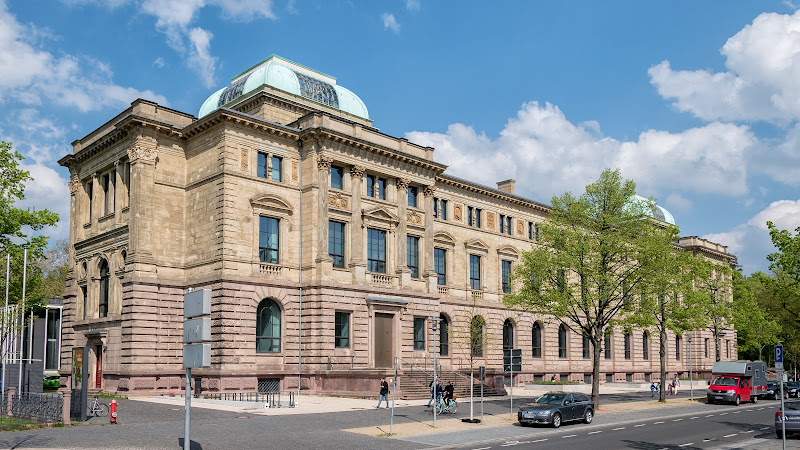
Herzog Anton Ulrich Museum
Find Accommodations Nearby
Recommended Tours & Activities
Visitor Reviews
There are no reviews yet. Be the first one to write one.
Share Your Experience
Have you visited Heinrichsbrunnen? Help other travelers by leaving a review.