
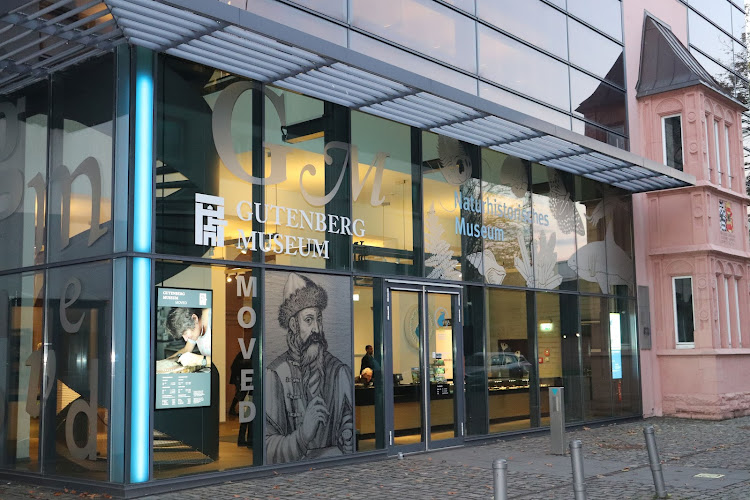
Gutenberg Museum
About Gutenberg Museum
Description
The Gutenberg Museum in Mainz is a hands-on celebration of the invention that changed the world of books and ideas. Dedicated to Johannes Gutenberg and the history of printing, the museum presents a mix of rare originals and clear, practical explanations of the printing process. Its headline attraction is the chance to see original leaves from 15th-century Gutenberg Bibles and high-quality reproductions and replicas of early printing equipment. The tone here is less hushed vault and more workshop-meets-gallery: objects are explained, machines are demonstrated, and the story of movable metal type is told with a curiosity that makes even the mildly interested lean in.
Architecturally, the museum blends older and more modern exhibition spaces, which can be charming in an imperfect, lived-in way. The exhibition layout traces the invention and spread of movable type across Europe, includes examples of printed works through the centuries, and highlights the social impact of book printing. There are interactive stations where visitors see type being composed and presses in action during scheduled demonstrations. Live performances and workshops are part of the program at times, giving the museum an almost theatrical element that adds energy to what could otherwise be purely academic displays.
The collection is notable because it does not only rely on dry labels. There are original fragments and several significant reproductions that allow comparison: movable type, wooden and later metal presses, type cases, paper samples, and printed pages from different centuries. The presence of original Gutenberg Bible leaves is a quietly powerful moment; the texture of the paper, the ink, the hand-made irregularities — it all communicates something that a photo never can. At the same time, the museum acknowledges the limits of preservation by providing replicas and digital facsimiles so visitors can explore without putting fragile originals at risk.
From a traveler’s perspective, the museum reads as both a specialist stop for those fascinated by book history and a surprisingly accessible attraction for families. There are kid-friendly demonstrations and discounts for children, and staff often run simple printing activities that engage younger visitors. Accessibility is taken seriously: there is a wheelchair-accessible entrance and restroom, and the layout aims to be navigable for many mobility needs. There is no on-site restaurant, so plan accordingly if hunger strikes mid-visit. Restrooms are available and there is paid parking nearby for those who arrive by car. The museum is part classroom, part performance space, part reliquary for the early printed word — and that mix is what makes it memorable.
Key Features
- Original Gutenberg Bible leaves and important early printed works
- Working replicas of Gutenberg-style printing presses and movable metal type
- Interactive exhibits and live demonstrations showing the printing process
- Special workshops and occasional live performances that animate printing history
- Family-friendly activities, discounts for kids, and changing tables for families with small children
- Wheelchair-accessible entrance and restroom for improved accessibility
- Paid parking on site or very close by; no museum restaurant so bring a snack plan
- Guided tours and onsite services available to help deepen the visit
- Extensive collection displaying the evolution of printing techniques from the 15th century onward
Best Time to Visit
Timing matters. For a calmer experience, mid-morning on a weekday tends to be the sweet spot. The museum is popular with school groups and tourists alike, and late mornings and early afternoons on weekends can be busier. If one wants the live demonstrations and workshops, checking the museum program in advance is wise because some performances happen only on specific days. Special exhibitions and events can draw extra crowds, so plan ahead if those are of particular interest.
Seasonally, spring and early autumn are excellent because Mainz itself is pleasant to walk around before or after the museum visit. Summer brings more international visitors, which is great if the traveler doesn’t mind a livelier atmosphere; but it can make certain display areas feel a little congested. Winter visits are quieter and cozy, though parts of the museum’s older rooms can feel cooler. In short: if one wants space to linger over type cases and to photograph exhibits without elbows in the shot, choose off-peak hours and weekdays whenever possible.
How to Get There
The Gutenberg Museum sits within easy reach of Mainz’s central attractions. From the main railway station, visitors can walk or take a short tram ride into the historic part of the city where the museum is located. The walk from central transit hubs is pleasant and passes through old streets and points of interest, so many travelers opt to stroll and make a day of it. Parking is available in a paid lot nearby for those arriving by car, though city traffic and parking fees can be a factor during busy times.
Public transport is reliable in Mainz; trams and buses connect the museum area to the wider Rhine-Main region. For travelers coming from larger nearby cities, regional trains make Mainz an easy day trip. Once in the old town area, the museum is signposted and simple to find. Because the museum is in a historically rich part of Mainz, combining the visit with a walk around the cathedral precinct or a coffee stop in a local café makes good sense. But note again: the museum itself does not have a restaurant, so plan food stops before or after the visit.
Tips for Visiting
Practical tips often make the difference between an OK museum visit and a delightful one. First, allow at least 90 minutes to two hours for a relaxed visit, longer if one plans to take a guided tour, attend a live demonstration, or join a hands-on workshop. The museum is compact but dense with information; rushing through will mean missing the tactile pleasure of watching type set and inked by hand.
Tickets can sometimes be bought on arrival, but during peak tourist periods or on special exhibition days it can get busy. Booking a guided tour in advance is advisable for visitors who crave deeper context—guides bring obscure details and stories to life. Photography rules differ depending on the exhibit, and flash is usually prohibited near sensitive originals. The museum’s staff are helpful about where photography is allowed, and visitors should ask if unsure.
Families will appreciate that the museum offers child-focused programs and discounts for kids. There are changing facilities and family-friendly restrooms, and simple activities make printing tangible for smaller hands. Still, if travelers arrive hungry, carry a small snack or plan to eat nearby because there is no museum restaurant. Also bring a small notebook; the museum inspires ideas and it’s oddly satisfying to jot down a few type-related sketches or quotes.
Accessibility is good but not perfect. Wheelchair users will find an accessible entrance and restroom, but some older rooms and displays may require a bit of navigation. If one needs extra assistance, contacting the museum ahead of the visit helps smooth logistics. While the museum does not list an assistive hearing loop, staff often accommodate visitors with patience and extra explanation during demonstrations.
A few less-obvious observations that experienced visitors mention: the museum feels more alive during demonstrations, so timing a visit to coincide with a scheduled press run or live performance markedly improves the experience. Also, don’t expect the museum to be enormous; it’s more about depth than scale. People who come expecting a sprawling complex sometimes judge it harshly until they slow down and examine the objects closely. And a small confession the writer will admit to: on a first visit years ago, a quick sprint through to see the Bible leaves left little impression. The second visit, with time to sit and read labels and watch demonstrations, revealed the museum’s quietly dramatic storytelling about printing and communication.
Finally, take a moment to reflect in the display areas devoted to social impact. The story here is not only mechanical; it’s about ideas, accessibility of information, and how printing reshaped society. For travelers interested in history, technology, or the tangible connections between past and present media, the Gutenberg Museum rewards curiosity with a neat, tangible narrative that lingers well after one leaves the gallery doors.
Key Features
- Original Gutenberg Bible leaves and important early printed works
- Working replicas of Gutenberg-style printing presses and movable metal type
- Interactive exhibits and live demonstrations showing the printing process
- Special workshops and occasional live performances that animate printing history
- Family-friendly activities, discounts for kids, and changing tables for families with small children
- Wheelchair-accessible entrance and restroom for improved accessibility
- Paid parking on site or very close by; no museum restaurant so bring a snack plan
- Guided tours and onsite services available to help deepen the visit
More Details
Updated August 29, 2025
Table of Contents
Description
The Gutenberg Museum in Mainz is a hands-on celebration of the invention that changed the world of books and ideas. Dedicated to Johannes Gutenberg and the history of printing, the museum presents a mix of rare originals and clear, practical explanations of the printing process. Its headline attraction is the chance to see original leaves from 15th-century Gutenberg Bibles and high-quality reproductions and replicas of early printing equipment. The tone here is less hushed vault and more workshop-meets-gallery: objects are explained, machines are demonstrated, and the story of movable metal type is told with a curiosity that makes even the mildly interested lean in.
Architecturally, the museum blends older and more modern exhibition spaces, which can be charming in an imperfect, lived-in way. The exhibition layout traces the invention and spread of movable type across Europe, includes examples of printed works through the centuries, and highlights the social impact of book printing. There are interactive stations where visitors see type being composed and presses in action during scheduled demonstrations. Live performances and workshops are part of the program at times, giving the museum an almost theatrical element that adds energy to what could otherwise be purely academic displays.
The collection is notable because it does not only rely on dry labels. There are original fragments and several significant reproductions that allow comparison: movable type, wooden and later metal presses, type cases, paper samples, and printed pages from different centuries. The presence of original Gutenberg Bible leaves is a quietly powerful moment; the texture of the paper, the ink, the hand-made irregularities — it all communicates something that a photo never can. At the same time, the museum acknowledges the limits of preservation by providing replicas and digital facsimiles so visitors can explore without putting fragile originals at risk.
From a traveler’s perspective, the museum reads as both a specialist stop for those fascinated by book history and a surprisingly accessible attraction for families. There are kid-friendly demonstrations and discounts for children, and staff often run simple printing activities that engage younger visitors. Accessibility is taken seriously: there is a wheelchair-accessible entrance and restroom, and the layout aims to be navigable for many mobility needs. There is no on-site restaurant, so plan accordingly if hunger strikes mid-visit. Restrooms are available and there is paid parking nearby for those who arrive by car. The museum is part classroom, part performance space, part reliquary for the early printed word — and that mix is what makes it memorable.
Key Features
- Original Gutenberg Bible leaves and important early printed works
- Working replicas of Gutenberg-style printing presses and movable metal type
- Interactive exhibits and live demonstrations showing the printing process
- Special workshops and occasional live performances that animate printing history
- Family-friendly activities, discounts for kids, and changing tables for families with small children
- Wheelchair-accessible entrance and restroom for improved accessibility
- Paid parking on site or very close by; no museum restaurant so bring a snack plan
- Guided tours and onsite services available to help deepen the visit
- Extensive collection displaying the evolution of printing techniques from the 15th century onward
Best Time to Visit
Timing matters. For a calmer experience, mid-morning on a weekday tends to be the sweet spot. The museum is popular with school groups and tourists alike, and late mornings and early afternoons on weekends can be busier. If one wants the live demonstrations and workshops, checking the museum program in advance is wise because some performances happen only on specific days. Special exhibitions and events can draw extra crowds, so plan ahead if those are of particular interest.
Seasonally, spring and early autumn are excellent because Mainz itself is pleasant to walk around before or after the museum visit. Summer brings more international visitors, which is great if the traveler doesn’t mind a livelier atmosphere; but it can make certain display areas feel a little congested. Winter visits are quieter and cozy, though parts of the museum’s older rooms can feel cooler. In short: if one wants space to linger over type cases and to photograph exhibits without elbows in the shot, choose off-peak hours and weekdays whenever possible.
How to Get There
The Gutenberg Museum sits within easy reach of Mainz’s central attractions. From the main railway station, visitors can walk or take a short tram ride into the historic part of the city where the museum is located. The walk from central transit hubs is pleasant and passes through old streets and points of interest, so many travelers opt to stroll and make a day of it. Parking is available in a paid lot nearby for those arriving by car, though city traffic and parking fees can be a factor during busy times.
Public transport is reliable in Mainz; trams and buses connect the museum area to the wider Rhine-Main region. For travelers coming from larger nearby cities, regional trains make Mainz an easy day trip. Once in the old town area, the museum is signposted and simple to find. Because the museum is in a historically rich part of Mainz, combining the visit with a walk around the cathedral precinct or a coffee stop in a local café makes good sense. But note again: the museum itself does not have a restaurant, so plan food stops before or after the visit.
Tips for Visiting
Practical tips often make the difference between an OK museum visit and a delightful one. First, allow at least 90 minutes to two hours for a relaxed visit, longer if one plans to take a guided tour, attend a live demonstration, or join a hands-on workshop. The museum is compact but dense with information; rushing through will mean missing the tactile pleasure of watching type set and inked by hand.
Tickets can sometimes be bought on arrival, but during peak tourist periods or on special exhibition days it can get busy. Booking a guided tour in advance is advisable for visitors who crave deeper context—guides bring obscure details and stories to life. Photography rules differ depending on the exhibit, and flash is usually prohibited near sensitive originals. The museum’s staff are helpful about where photography is allowed, and visitors should ask if unsure.
Families will appreciate that the museum offers child-focused programs and discounts for kids. There are changing facilities and family-friendly restrooms, and simple activities make printing tangible for smaller hands. Still, if travelers arrive hungry, carry a small snack or plan to eat nearby because there is no museum restaurant. Also bring a small notebook; the museum inspires ideas and it’s oddly satisfying to jot down a few type-related sketches or quotes.
Accessibility is good but not perfect. Wheelchair users will find an accessible entrance and restroom, but some older rooms and displays may require a bit of navigation. If one needs extra assistance, contacting the museum ahead of the visit helps smooth logistics. While the museum does not list an assistive hearing loop, staff often accommodate visitors with patience and extra explanation during demonstrations.
A few less-obvious observations that experienced visitors mention: the museum feels more alive during demonstrations, so timing a visit to coincide with a scheduled press run or live performance markedly improves the experience. Also, don’t expect the museum to be enormous; it’s more about depth than scale. People who come expecting a sprawling complex sometimes judge it harshly until they slow down and examine the objects closely. And a small confession the writer will admit to: on a first visit years ago, a quick sprint through to see the Bible leaves left little impression. The second visit, with time to sit and read labels and watch demonstrations, revealed the museum’s quietly dramatic storytelling about printing and communication.
Finally, take a moment to reflect in the display areas devoted to social impact. The story here is not only mechanical; it’s about ideas, accessibility of information, and how printing reshaped society. For travelers interested in history, technology, or the tangible connections between past and present media, the Gutenberg Museum rewards curiosity with a neat, tangible narrative that lingers well after one leaves the gallery doors.
Key Highlights
- Original Gutenberg Bible leaves and important early printed works
- Working replicas of Gutenberg-style printing presses and movable metal type
- Interactive exhibits and live demonstrations showing the printing process
- Special workshops and occasional live performances that animate printing history
- Family-friendly activities, discounts for kids, and changing tables for families with small children
- Wheelchair-accessible entrance and restroom for improved accessibility
- Paid parking on site or very close by; no museum restaurant so bring a snack plan
- Guided tours and onsite services available to help deepen the visit
Location
Places to Stay Near Gutenberg Museum
Find and Book a Tour
Explore More Travel Guides
No reviews found! Be the first to review!
Traveler Reviews for Gutenberg Museum
There are no reviews yet. Be the first one to write one.
Have you visited Gutenberg Museum? Help other travelers by sharing your review.
Find Accommodations Nearby
Recommended Tours & Activities
Visitor Reviews
There are no reviews yet. Be the first one to write one.
Share Your Experience
Have you visited Gutenberg Museum? Help other travelers by leaving a review.