
Graseweghaus
About Graseweghaus
Description
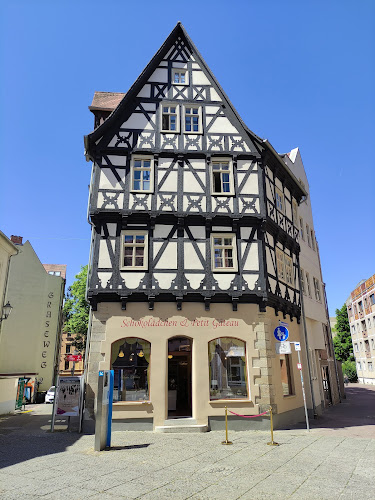
The Graseweghaus in Halle (Saale), Germany, is one of those places that makes you stop mid-walk and do a little double-take. It's a half-timbered house, tucked into the historic heart of the city, with its striking old-world architecture and unmistakable medieval charm. Many visitors are drawn to it for its authentic craftsmanship, the kind you don’t really see in modern buildings anymore. Walking past it feels like stepping back several centuries, when Halle was a bustling Saxon hub with merchants, plague doctors, and townsfolk gathering in the nearby market square. In a way, it’s more than just a building—it’s a slice of Saxony-Anhalt’s story standing strong against the test of time.
There’s something incredibly grounding about seeing a structure like this still standing. The exposed wooden beams, the careful symmetry of its framework, and the historic details layered onto its walls—it all speaks to how buildings themselves can carry memory. Some folks, especially history enthusiasts, linger around longer just to take in the details, while others stop for quick photos before heading back into the market square. It has this knack for intriguing people, no matter their background. And while not everyone is wowed in exactly the same way, the overall impression most walk away with seems to be one of quiet respect and curiosity.
For families, it’s fairly easy to include a short visit here since it’s compact, kid-friendly, and located right in the middle of where most travelers are already exploring. I can think back to the time when I traveled with friends in Halle and our wandering led us here by accident—the Graseweghaus wasn’t even marked boldly on our map. Still, it felt like a discovery, one of those “Oh wow, what’s this?” moments you hope to stumble upon while exploring a historic German city.
Key Features
- A classic half-timbered house that exemplifies traditional German architecture.
- Historical connections to Halle’s medieval past, including its role within Saxony-Anhalt heritage.
- Striking wooden framework and craftsmanship that highlight medieval building techniques.
- Located close to the main market square, making it convenient for exploring other historic sights.
- Considered one of the oldest preserved residential-style structures in the city.
- Easily accessible and suitable for family visits, including kids.
- A popular stop for photography due to its distinctive façade.
Best Time to Visit
Timing your visit to the Graseweghaus can change how you experience it. In summer, Halle generally comes alive with outdoor events and markets, so the area around the house has a cheerful atmosphere. But crowd levels also spike during those months, so if you’re someone who dislikes bustling groups, you might find yourself weaving through people trying to get a decent view. Personally, I think spring and autumn are perfect—there are fewer people, softer light for photos, and the weather stays pleasant without being overwhelming. A quiet morning walk past the house in autumn, when the air feels crisp, has a whole different mood compared to a sunny festival day in July.
Winter holds its own charm too. If you happen to be in Halle near Christmastime, the nearby market square transforms into a festive maze of stalls, and seeing the Graseweghaus framed by twinkling lights is something special. It creates this contrast of old against new celebration, tradition beside festivity, that’s worth experiencing at least once.
How to Get There
Reaching the Graseweghaus is straightforward thanks to its central location in Halle (Saale), one of the key cities in Saxony-Anhalt. If you arrive by train, the main station is just a short tram ride or even a walk away depending on your pace. Local public transport is reliable, with trams weaving through the city and dropping you close to the historic center. From there, it’s usually a short stroll before the house comes into sight.
For drivers, finding parking in the center of Halle can require a bit of patience, but several parking garages are within walking distance. Once parked, it’s easy to explore the area entirely on foot. Put simply, this isn’t the kind of attraction that requires a day-long trek or over-complicated planning. And honestly, that’s one of the best parts—you can fold a visit into your day as naturally as grabbing a coffee in town.
Tips for Visiting
While a visit to the Graseweghaus doesn’t demand elaborate planning, here are a few little things to keep in mind—some obvious, some not so much—that can make your stop smoother and maybe even more enjoyable:
- Allow time for the details. Even if it looks like a quick photo spot, linger for a few extra minutes to really take in the architectural touches.
- Pair it with the market square. Since it’s literally around the corner, combine both in one walk. The transitions from square to street to historic house paint a fuller picture of Halle’s past.
- Best light is mid-morning. If you’re chasing photos, sunlight hits the façade in a flattering way at this time (learned that one the hard way after too many shadow-heavy shots in late afternoon).
- Bring kids if you’re traveling as a family. It’s a safe, street-side stop and a neat chance to introduce younger travelers to what “old” architecture really looks like in practice.
- Layer it into a self-guided tour. Halle has a handful of historical landmarks in close walking distance—the Graseweghaus makes a perfect anchor point to build your own route.
- Be respectful. As with many old buildings, it’s not a place to climb on or treat casually—it’s a small but enduring part of heritage preservation.
And maybe just one personal thought to finish: don’t go rushing. Too many times while traveling I’ve found myself speed-walking to “the main attraction” and almost missing gems like this one. The Graseweghaus is on the smaller side, but its impact lies in pausing long enough to let it pull you back into the city’s medieval pulse. Sometimes the quietest stops are the ones that stick with you the most when you look back on your trip.
Key Features
- A classic half-timbered house that exemplifies traditional German architecture.
- Historical connections to Halle’s medieval past, including its role within Saxony-Anhalt heritage.
- Striking wooden framework and craftsmanship that highlight medieval building techniques.
- Located close to the main market square, making it convenient for exploring other historic sights.
- Considered one of the oldest preserved residential-style structures in the city.
- Easily accessible and suitable for family visits, including kids.
- A popular stop for photography due to its distinctive façade.
More Details
Updated October 2, 2025
Table of Contents
Description
The Graseweghaus in Halle (Saale), Germany, is one of those places that makes you stop mid-walk and do a little double-take. It’s a half-timbered house, tucked into the historic heart of the city, with its striking old-world architecture and unmistakable medieval charm. Many visitors are drawn to it for its authentic craftsmanship, the kind you don’t really see in modern buildings anymore. Walking past it feels like stepping back several centuries, when Halle was a bustling Saxon hub with merchants, plague doctors, and townsfolk gathering in the nearby market square. In a way, it’s more than just a building—it’s a slice of Saxony-Anhalt’s story standing strong against the test of time.
There’s something incredibly grounding about seeing a structure like this still standing. The exposed wooden beams, the careful symmetry of its framework, and the historic details layered onto its walls—it all speaks to how buildings themselves can carry memory. Some folks, especially history enthusiasts, linger around longer just to take in the details, while others stop for quick photos before heading back into the market square. It has this knack for intriguing people, no matter their background. And while not everyone is wowed in exactly the same way, the overall impression most walk away with seems to be one of quiet respect and curiosity.
For families, it’s fairly easy to include a short visit here since it’s compact, kid-friendly, and located right in the middle of where most travelers are already exploring. I can think back to the time when I traveled with friends in Halle and our wandering led us here by accident—the Graseweghaus wasn’t even marked boldly on our map. Still, it felt like a discovery, one of those “Oh wow, what’s this?” moments you hope to stumble upon while exploring a historic German city.
Key Features
- A classic half-timbered house that exemplifies traditional German architecture.
- Historical connections to Halle’s medieval past, including its role within Saxony-Anhalt heritage.
- Striking wooden framework and craftsmanship that highlight medieval building techniques.
- Located close to the main market square, making it convenient for exploring other historic sights.
- Considered one of the oldest preserved residential-style structures in the city.
- Easily accessible and suitable for family visits, including kids.
- A popular stop for photography due to its distinctive façade.
Best Time to Visit
Timing your visit to the Graseweghaus can change how you experience it. In summer, Halle generally comes alive with outdoor events and markets, so the area around the house has a cheerful atmosphere. But crowd levels also spike during those months, so if you’re someone who dislikes bustling groups, you might find yourself weaving through people trying to get a decent view. Personally, I think spring and autumn are perfect—there are fewer people, softer light for photos, and the weather stays pleasant without being overwhelming. A quiet morning walk past the house in autumn, when the air feels crisp, has a whole different mood compared to a sunny festival day in July.
Winter holds its own charm too. If you happen to be in Halle near Christmastime, the nearby market square transforms into a festive maze of stalls, and seeing the Graseweghaus framed by twinkling lights is something special. It creates this contrast of old against new celebration, tradition beside festivity, that’s worth experiencing at least once.
How to Get There
Reaching the Graseweghaus is straightforward thanks to its central location in Halle (Saale), one of the key cities in Saxony-Anhalt. If you arrive by train, the main station is just a short tram ride or even a walk away depending on your pace. Local public transport is reliable, with trams weaving through the city and dropping you close to the historic center. From there, it’s usually a short stroll before the house comes into sight.
For drivers, finding parking in the center of Halle can require a bit of patience, but several parking garages are within walking distance. Once parked, it’s easy to explore the area entirely on foot. Put simply, this isn’t the kind of attraction that requires a day-long trek or over-complicated planning. And honestly, that’s one of the best parts—you can fold a visit into your day as naturally as grabbing a coffee in town.
Tips for Visiting
While a visit to the Graseweghaus doesn’t demand elaborate planning, here are a few little things to keep in mind—some obvious, some not so much—that can make your stop smoother and maybe even more enjoyable:
- Allow time for the details. Even if it looks like a quick photo spot, linger for a few extra minutes to really take in the architectural touches.
- Pair it with the market square. Since it’s literally around the corner, combine both in one walk. The transitions from square to street to historic house paint a fuller picture of Halle’s past.
- Best light is mid-morning. If you’re chasing photos, sunlight hits the façade in a flattering way at this time (learned that one the hard way after too many shadow-heavy shots in late afternoon).
- Bring kids if you’re traveling as a family. It’s a safe, street-side stop and a neat chance to introduce younger travelers to what “old” architecture really looks like in practice.
- Layer it into a self-guided tour. Halle has a handful of historical landmarks in close walking distance—the Graseweghaus makes a perfect anchor point to build your own route.
- Be respectful. As with many old buildings, it’s not a place to climb on or treat casually—it’s a small but enduring part of heritage preservation.
And maybe just one personal thought to finish: don’t go rushing. Too many times while traveling I’ve found myself speed-walking to “the main attraction” and almost missing gems like this one. The Graseweghaus is on the smaller side, but its impact lies in pausing long enough to let it pull you back into the city’s medieval pulse. Sometimes the quietest stops are the ones that stick with you the most when you look back on your trip.
Key Highlights
- A classic half-timbered house that exemplifies traditional German architecture.
- Historical connections to Halle’s medieval past, including its role within Saxony-Anhalt heritage.
- Striking wooden framework and craftsmanship that highlight medieval building techniques.
- Located close to the main market square, making it convenient for exploring other historic sights.
- Considered one of the oldest preserved residential-style structures in the city.
- Easily accessible and suitable for family visits, including kids.
- A popular stop for photography due to its distinctive façade.
Location
Places to Stay Near Graseweghaus
Find and Book a Tour
Explore More Travel Guides
No reviews found! Be the first to review!
Traveler Reviews for Graseweghaus
There are no reviews yet. Be the first one to write one.
Have you visited Graseweghaus? Help other travelers by sharing your review.
You Might Also Like
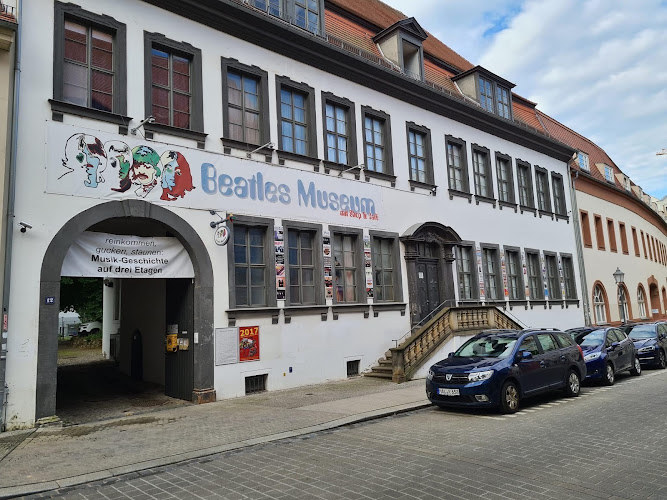
Beatles Museum
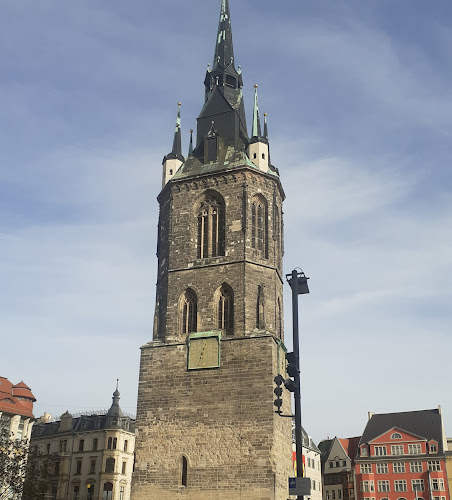
Marktpl.

Neumühle
Find Accommodations Nearby
Recommended Tours & Activities
Visitor Reviews
There are no reviews yet. Be the first one to write one.
Share Your Experience
Have you visited Graseweghaus? Help other travelers by leaving a review.