
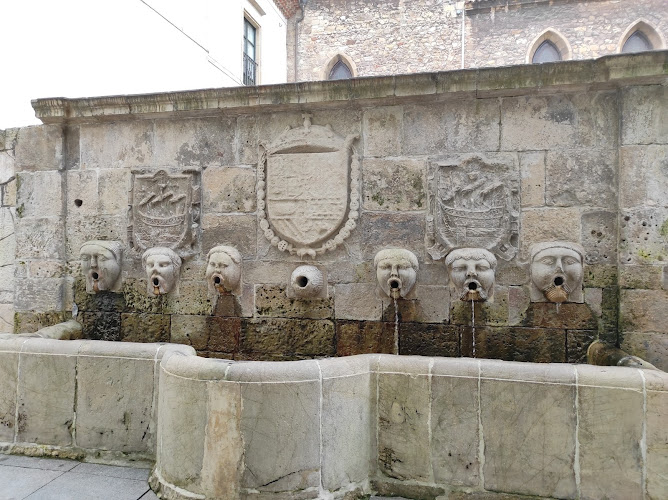
Fuente de los Caños de San Francisco
About Fuente de los Caños de San Francisco
Description
Let’s be straight: the Fuente de los Caños de San Francisco isn’t the sort of landmark you stumble across in every city. This little gem ticks all the boxes if you’re a history buff, local culture aficionado, or you simply like poking around those secret corners where “ordinary” life meets an ancient past. Picture it: stone lions with water forever trickling from their mouths, travelers pausing with their camera phones, and old-timers having a chat under the arches. The plaza buzzes lightly, never tourist-overrun but not exactly a hidden void either.
It’s impossible not to appreciate the way the source pulls together centuries of stories—more than a few glasses of water have been poured for travelers from all walks of life. I remember stopping by at the end of a long day, wanting a sip just because some local said “the water’s pure and colder than your ex’s heart in January.” True story. Turns out, there’s some real authenticity behind that tongue-in-cheek local pride. Even if you’re not thirsty, the intricate stonework will draw you in. The lions, symbols of strength and protection, have stood guard here for hundreds of years, watching over changing fashions, languages, generations… and a few pigeons too.
But what really hits home for me is the atmosphere. You get those gentle murmurs of everyday life—kids giggling as they try to touch the lion heads, someone sketching on the nearby bench, a couple tourists scanning an old guidebook. If you’re the sort of person who makes a bee-line to the heart of a city, this is your kind of spot. It never shouts for attention, but it rewards curiosity in spades. The fountain sits, patient and proud, beautifully restored, and still serving up water like it did in centuries past. Good for kids? Absolutely. Wheelchair accessible? Thank goodness, yes—and not enough places can boast that in old town centers.
Key Features
- Historic Fountain: Built in the Baroque period, featuring finely carved stone lions spouting crystal-clear water—one of the city’s earliest public utilities still in use.
- Local Meeting Point: Often described as a hub for locals, providing the perfect people-watching spot—you’ll see everyone from grandmothers with shopping bags to teens sharing secrets.
- Architectural Details: The mix of Ionic pilasters and curved shapes, blending tradition and elegance. Honestly, you don’t need to be an architecture nerd to appreciate it.
- Photogenic Backdrop: Wonderful spot for candid travel photos, especially with sunlight dappling off the stonework in the afternoon.
- City Tradition: Locals have drawn drinking water from the fountain for generations—there’s a peculiar pride in the purity and taste (I’m inclined to agree, give it a try!).
- Child & Family Friendly: The open plaza and the gentle sound of running water seem to calm even the most energetic little ones—for a moment anyway.
- Wheelchair Accessible: Smooth pavement leading up to the fountain makes it doable for just about anyone. A rare plus in historic districts.
- Central Location: Found in a lively area, just steps away from markets, cafes, and shops, making it ridiculously easy to swing by even if you’re on foot all day.
Best Time to Visit
So, let’s get to timing, because it really can make or break your experience. Early morning? There’s a calm, almost meditative hush—if you’re a sunrise wanderer, you’ll have the lions (almost) to yourself. I’ve sat there at 8am, coffee in hand from a nearby bakery, and watched as the city gradually wakes up. It’s honestly magic.
Late afternoon brings a gentle buzz—locals heading home, a few tourists lingering. It’s perfect if you enjoy a low-key energy and people-watching. Avoid midday if you can, especially in the summer, when the plaza turns into a suntrap and every sensible person is off having lunch or a siesta. (Seriously, learn from the locals, take a siesta!) Evenings can feel downright romantic, with the stone taking on a golden glow as the sun dips lower—snag a bench and just soak in that atmosphere.
In terms of seasons, late spring and early autumn are the crowd-pleasers. The weather’s temperate, flowers sometimes bloom nearby, and you avoid those big summer tour groups. If you come in winter, bundle up and you’ll get that brisk air, dramatic light, and more privacy. But yeah, don’t expect to go paddling in the fountain...that’s strictly frowned upon!
How to Get There
Getting here is a cinch, which is good news if you’re anything like me and tend to wander off the beaten path only to get lost. From the town center, it’s an easy stroll—just follow the lazy curves of the old streets until you hear the sound of water and see those handsome lions. Local buses drop you within a short walk, and taxis know the spot well.
If you’re coming in from outside the city, train and bus stations aren’t far off. You can walk from the railway in about 10-15 minutes, depending on how much you get sidetracked by pastries or tempting shop windows (no judgement, I’ve been there). Parking can be tricky in the immediate vicinity, but my advice is to use larger car parks slightly further away and just take in the walk—you’ll pass some of the best cafés and quirky boutiques that way.
Bikes? Sure! The route is generally flat, and bike racks are just a stone’s throw from the plaza. And for wheelchair users, as mentioned, there is step-free access—thank goodness for a city that cares.
Tips for Visiting
A few quick ones from someone who’s spent their fair share of time at odd city fountains:
- Bring a water bottle. The fountain is clean and refreshing, and locals swear by it. If you feel brave, drink straight from the lion’s mouth. Bonus points for tradition!
- Take time to sit. Don’t rush in for a photo and bolt. The joy is in people-watching and soaking up the vibe—let the plaza work its understated magic on you.
- Watch your step. The paving stones can be slippery after a rain (and in Asturias, rain is almost a hobby), so walking shoes are your friend.
- Carefully photograph. Morning light is ace for photos, but I find late afternoon brings the kind of warm shadows you just can’t fake. Remember to snap a pic of the lions’ faces—they’re bursting with character up close.
- Great for a snack stop. There are bakeries and cafes tucked nearby—grab a pastry and enjoy on a bench. But, do your bit and keep the plaza tidy for the next visitor.
- Family alert. Kids will find it fun but keep an eye on little ones who think the lions are climbable jungle gyms. (Spoiler: the lions don’t move.)
- Be respectful. While it’s a social hub, it’s also a living piece of history. Some locals fill their bottles for daily use, so let them go first if there’s a queue.
- If it’s busy, hang around. The crowds ebb and flow. Pop into a café and come back—chances are you’ll catch a quieter moment for better snaps or a peaceful pause.
- Strike up a chat. Locals usually love to share a story or two about the fountain’s legends and quirks. I once learned three different versions of its “origin” in one day. Each better than the last!
Visiting the Fuente de los Caños de San Francisco isn’t just about seeing another stone fountain. It’s about stepping into a little piece of living history, feeling the pulse of the city, and maybe—just maybe—getting a taste of that legendary fresh water that keeps locals so fiercely proud. So come thirsty—for water, for stories, and for those moments you won’t find in any brochure.
Key Features
- Key Features
- Best Time to Visit
- How to Get There
- Tips for Visiting
More Details
Updated July 2, 2025
Table of Contents
- Description
- Key Features
- Best Time to Visit
- How to Get There
- Tips for Visiting
- Key Highlights
- Location
- Places to Stay Near Fuente de los Caños de San Francisco
- Find and Book a Tour
- Explore More Travel Guides
- Nearby Places You Might Like
- Traveler Reviews for Fuente de los Caños de San Francisco
- Share Your Experience
Description
Let’s be straight: the Fuente de los Caños de San Francisco isn’t the sort of landmark you stumble across in every city. This little gem ticks all the boxes if you’re a history buff, local culture aficionado, or you simply like poking around those secret corners where “ordinary” life meets an ancient past. Picture it: stone lions with water forever trickling from their mouths, travelers pausing with their camera phones, and old-timers having a chat under the arches. The plaza buzzes lightly, never tourist-overrun but not exactly a hidden void either.
It’s impossible not to appreciate the way the source pulls together centuries of stories—more than a few glasses of water have been poured for travelers from all walks of life. I remember stopping by at the end of a long day, wanting a sip just because some local said “the water’s pure and colder than your ex’s heart in January.” True story. Turns out, there’s some real authenticity behind that tongue-in-cheek local pride. Even if you’re not thirsty, the intricate stonework will draw you in. The lions, symbols of strength and protection, have stood guard here for hundreds of years, watching over changing fashions, languages, generations… and a few pigeons too.
But what really hits home for me is the atmosphere. You get those gentle murmurs of everyday life—kids giggling as they try to touch the lion heads, someone sketching on the nearby bench, a couple tourists scanning an old guidebook. If you’re the sort of person who makes a bee-line to the heart of a city, this is your kind of spot. It never shouts for attention, but it rewards curiosity in spades. The fountain sits, patient and proud, beautifully restored, and still serving up water like it did in centuries past. Good for kids? Absolutely. Wheelchair accessible? Thank goodness, yes—and not enough places can boast that in old town centers.
Key Features
- Historic Fountain: Built in the Baroque period, featuring finely carved stone lions spouting crystal-clear water—one of the city’s earliest public utilities still in use.
- Local Meeting Point: Often described as a hub for locals, providing the perfect people-watching spot—you’ll see everyone from grandmothers with shopping bags to teens sharing secrets.
- Architectural Details: The mix of Ionic pilasters and curved shapes, blending tradition and elegance. Honestly, you don’t need to be an architecture nerd to appreciate it.
- Photogenic Backdrop: Wonderful spot for candid travel photos, especially with sunlight dappling off the stonework in the afternoon.
- City Tradition: Locals have drawn drinking water from the fountain for generations—there’s a peculiar pride in the purity and taste (I’m inclined to agree, give it a try!).
- Child & Family Friendly: The open plaza and the gentle sound of running water seem to calm even the most energetic little ones—for a moment anyway.
- Wheelchair Accessible: Smooth pavement leading up to the fountain makes it doable for just about anyone. A rare plus in historic districts.
- Central Location: Found in a lively area, just steps away from markets, cafes, and shops, making it ridiculously easy to swing by even if you’re on foot all day.
Best Time to Visit
So, let’s get to timing, because it really can make or break your experience. Early morning? There’s a calm, almost meditative hush—if you’re a sunrise wanderer, you’ll have the lions (almost) to yourself. I’ve sat there at 8am, coffee in hand from a nearby bakery, and watched as the city gradually wakes up. It’s honestly magic.
Late afternoon brings a gentle buzz—locals heading home, a few tourists lingering. It’s perfect if you enjoy a low-key energy and people-watching. Avoid midday if you can, especially in the summer, when the plaza turns into a suntrap and every sensible person is off having lunch or a siesta. (Seriously, learn from the locals, take a siesta!) Evenings can feel downright romantic, with the stone taking on a golden glow as the sun dips lower—snag a bench and just soak in that atmosphere.
In terms of seasons, late spring and early autumn are the crowd-pleasers. The weather’s temperate, flowers sometimes bloom nearby, and you avoid those big summer tour groups. If you come in winter, bundle up and you’ll get that brisk air, dramatic light, and more privacy. But yeah, don’t expect to go paddling in the fountain…that’s strictly frowned upon!
How to Get There
Getting here is a cinch, which is good news if you’re anything like me and tend to wander off the beaten path only to get lost. From the town center, it’s an easy stroll—just follow the lazy curves of the old streets until you hear the sound of water and see those handsome lions. Local buses drop you within a short walk, and taxis know the spot well.
If you’re coming in from outside the city, train and bus stations aren’t far off. You can walk from the railway in about 10-15 minutes, depending on how much you get sidetracked by pastries or tempting shop windows (no judgement, I’ve been there). Parking can be tricky in the immediate vicinity, but my advice is to use larger car parks slightly further away and just take in the walk—you’ll pass some of the best cafés and quirky boutiques that way.
Bikes? Sure! The route is generally flat, and bike racks are just a stone’s throw from the plaza. And for wheelchair users, as mentioned, there is step-free access—thank goodness for a city that cares.
Tips for Visiting
A few quick ones from someone who’s spent their fair share of time at odd city fountains:
- Bring a water bottle. The fountain is clean and refreshing, and locals swear by it. If you feel brave, drink straight from the lion’s mouth. Bonus points for tradition!
- Take time to sit. Don’t rush in for a photo and bolt. The joy is in people-watching and soaking up the vibe—let the plaza work its understated magic on you.
- Watch your step. The paving stones can be slippery after a rain (and in Asturias, rain is almost a hobby), so walking shoes are your friend.
- Carefully photograph. Morning light is ace for photos, but I find late afternoon brings the kind of warm shadows you just can’t fake. Remember to snap a pic of the lions’ faces—they’re bursting with character up close.
- Great for a snack stop. There are bakeries and cafes tucked nearby—grab a pastry and enjoy on a bench. But, do your bit and keep the plaza tidy for the next visitor.
- Family alert. Kids will find it fun but keep an eye on little ones who think the lions are climbable jungle gyms. (Spoiler: the lions don’t move.)
- Be respectful. While it’s a social hub, it’s also a living piece of history. Some locals fill their bottles for daily use, so let them go first if there’s a queue.
- If it’s busy, hang around. The crowds ebb and flow. Pop into a café and come back—chances are you’ll catch a quieter moment for better snaps or a peaceful pause.
- Strike up a chat. Locals usually love to share a story or two about the fountain’s legends and quirks. I once learned three different versions of its “origin” in one day. Each better than the last!
Visiting the Fuente de los Caños de San Francisco isn’t just about seeing another stone fountain. It’s about stepping into a little piece of living history, feeling the pulse of the city, and maybe—just maybe—getting a taste of that legendary fresh water that keeps locals so fiercely proud. So come thirsty—for water, for stories, and for those moments you won’t find in any brochure.
Key Highlights
- Key Features
- Best Time to Visit
- How to Get There
- Tips for Visiting
Location
Places to Stay Near Fuente de los Caños de San Francisco
Find and Book a Tour
Explore More Travel Guides
No reviews found! Be the first to review!
Traveler Reviews for Fuente de los Caños de San Francisco
There are no reviews yet. Be the first one to write one.
Have you visited Fuente de los Caños de San Francisco? Help other travelers by sharing your review.
You Might Also Like

Municipal Cemetery of Carriona
Bosque de la Grandiella
Hórreo Carbayedo
Find Accommodations Nearby
Recommended Tours & Activities
Visitor Reviews
There are no reviews yet. Be the first one to write one.
Share Your Experience
Have you visited Fuente de los Caños de San Francisco? Help other travelers by leaving a review.