
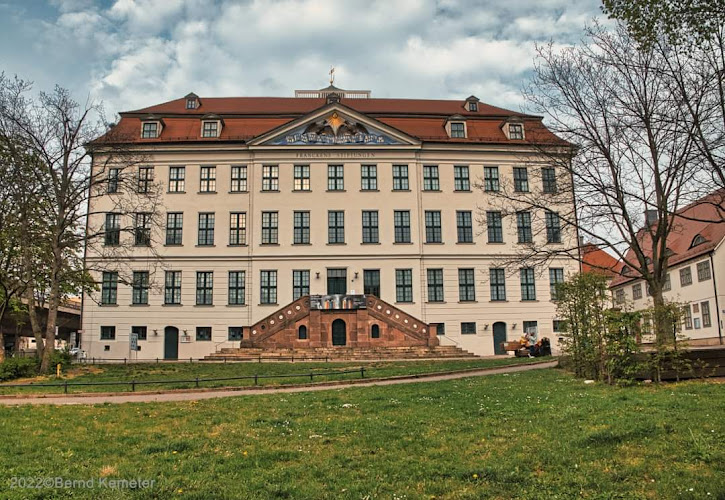
Francke Foundations
About Francke Foundations
Description
The Francke Foundations in Halle (Saale), Germany, stand as one of the most fascinating historic institutions in Europe. Originally established in the late 17th century by August Hermann Francke, a theologian and educator driven by an almost boundless sense of social responsibility, the site began as what might appear to be a simple orphanage but quickly evolved into a vast educational and cultural hub. It’s not just about the history, though – it’s about how the legacy still shapes education, culture, and social work today.
Back in its prime in the 18th century, the foundations were something of a revolutionary experiment in learning, with schools for poor children, an orphanage unlike many others of the time, and even training programs for teachers. Over time, what started modestly turned into an impressive baroque-style complex of schools, libraries, and missionary centers that attracted interest from across the German-speaking world and even further afield. Many people who visit are struck by how much remains intact – the historic timbered houses, the long baroque school buildings, and above all, the atmosphere that manages to stretch a bridge between centuries.
Some visitors describe it as awe-inspiring, others find it scholarly, maybe even a bit overwhelming, and a few feel it leans too much towards academic detail. But that’s part of its character: you don’t come here for splashy entertainment, you come to learn, to wander spaces where ideas that once changed Europe were tested, and to see a place that still functions with a sense of purpose. In fact, what makes the Francke Foundations really remarkable is that they’re not a sterile museum frozen in time; instead, they are a living complex where schools, research institutes, and social organizations still operate. So, when walking through the courtyards or stepping into the Cabinet of Curiosities, you’re not just peering into the past—you’re seeing continuity in action.
Speaking of that Cabinet of Curiosities, it is often a highlight. Think of it as the early modern version of a natural history and art museum blended together, with everything from rare shells to scientific instruments carefully preserved. For those who appreciate the quirky side of history, it’s a must. Then there’s the library, featuring thousands of historic volumes, including rare Bibles from the Canstein Bible Institute, one of the earliest large-scale publishing houses making scripture affordable to the common people. These collections really do give you a sense of how knowledge was shared and taught during a time when the world felt like it was expanding daily.
The architecture itself deserves equal attention. The long house with its baroque façades makes quite an impression, both inside and out, and there’s this almost eerie but gentle sense of time travel when moving through the varying buildings. At the same time, details like accessible entrances, restrooms, and thoughtful visitor services remind you this is still a functioning institution in the modern world. And honestly, that blend between heritage and ongoing mission makes visiting the Francke Foundations unlike most museums. It feels alive—like stepping into an educational experiment that began over 300 years ago and never fully ended.
It’s true that not everyone finds the setting equally engaging—some people may expect flashy exhibitions or an atmosphere tilted more toward art galleries. But most who visit come away impressed by the scope, the ingenuity, and the commitment to community welfare reflected here. For me personally, wandering through the site on a crisp autumn day, with golden leaves piling against the foundation walls, was one of those travel moments where history stops being “past” and instead becomes a palpable, living thing.
Key Features
More Details
Updated October 2, 2025
Table of Contents
Description
The Francke Foundations in Halle (Saale), Germany, stand as one of the most fascinating historic institutions in Europe. Originally established in the late 17th century by August Hermann Francke, a theologian and educator driven by an almost boundless sense of social responsibility, the site began as what might appear to be a simple orphanage but quickly evolved into a vast educational and cultural hub. It’s not just about the history, though – it’s about how the legacy still shapes education, culture, and social work today.
Back in its prime in the 18th century, the foundations were something of a revolutionary experiment in learning, with schools for poor children, an orphanage unlike many others of the time, and even training programs for teachers. Over time, what started modestly turned into an impressive baroque-style complex of schools, libraries, and missionary centers that attracted interest from across the German-speaking world and even further afield. Many people who visit are struck by how much remains intact – the historic timbered houses, the long baroque school buildings, and above all, the atmosphere that manages to stretch a bridge between centuries.
Some visitors describe it as awe-inspiring, others find it scholarly, maybe even a bit overwhelming, and a few feel it leans too much towards academic detail. But that’s part of its character: you don’t come here for splashy entertainment, you come to learn, to wander spaces where ideas that once changed Europe were tested, and to see a place that still functions with a sense of purpose. In fact, what makes the Francke Foundations really remarkable is that they’re not a sterile museum frozen in time; instead, they are a living complex where schools, research institutes, and social organizations still operate. So, when walking through the courtyards or stepping into the Cabinet of Curiosities, you’re not just peering into the past—you’re seeing continuity in action.
Speaking of that Cabinet of Curiosities, it is often a highlight. Think of it as the early modern version of a natural history and art museum blended together, with everything from rare shells to scientific instruments carefully preserved. For those who appreciate the quirky side of history, it’s a must. Then there’s the library, featuring thousands of historic volumes, including rare Bibles from the Canstein Bible Institute, one of the earliest large-scale publishing houses making scripture affordable to the common people. These collections really do give you a sense of how knowledge was shared and taught during a time when the world felt like it was expanding daily.
The architecture itself deserves equal attention. The long house with its baroque façades makes quite an impression, both inside and out, and there’s this almost eerie but gentle sense of time travel when moving through the varying buildings. At the same time, details like accessible entrances, restrooms, and thoughtful visitor services remind you this is still a functioning institution in the modern world. And honestly, that blend between heritage and ongoing mission makes visiting the Francke Foundations unlike most museums. It feels alive—like stepping into an educational experiment that began over 300 years ago and never fully ended.
It’s true that not everyone finds the setting equally engaging—some people may expect flashy exhibitions or an atmosphere tilted more toward art galleries. But most who visit come away impressed by the scope, the ingenuity, and the commitment to community welfare reflected here. For me personally, wandering through the site on a crisp autumn day, with golden leaves piling against the foundation walls, was one of those travel moments where history stops being “past” and instead becomes a palpable, living thing.
Key Highlights
Francke Foundations
Location
Places to Stay Near Francke Foundations
Find and Book a Tour
Explore More Travel Guides
No reviews found! Be the first to review!
Traveler Reviews for Francke Foundations
There are no reviews yet. Be the first one to write one.
Have you visited Francke Foundations? Help other travelers by sharing your review.
You Might Also Like
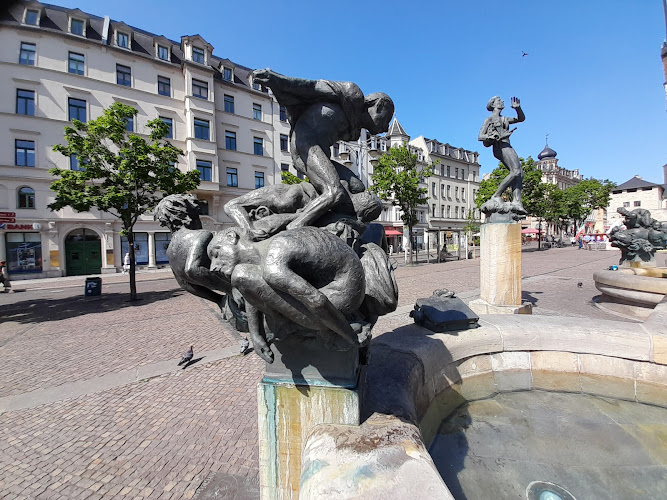
Göbelbrunnen
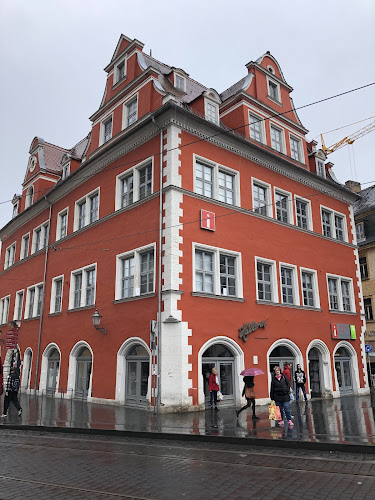
Marktschlößchen
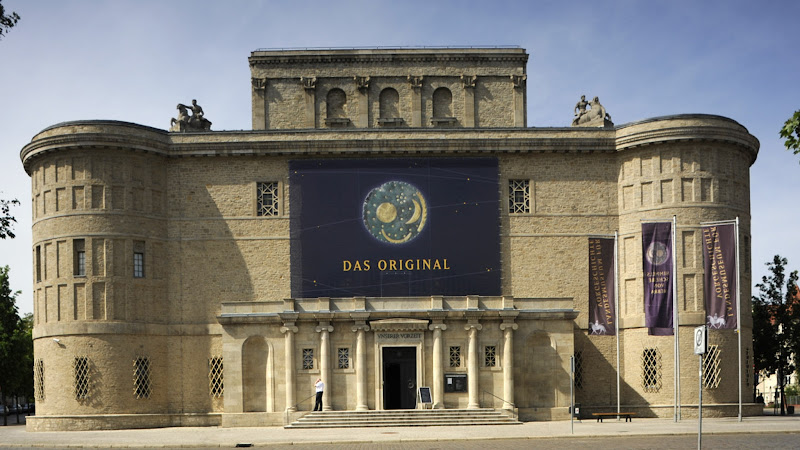
State Museum of Prehistory Halle (Saale)
Find Accommodations Nearby
Recommended Tours & Activities
Visitor Reviews
There are no reviews yet. Be the first one to write one.
Share Your Experience
Have you visited Francke Foundations? Help other travelers by leaving a review.