
Fortifications of Xi
About Fortifications of Xi
Key Features
More Details
Updated June 26, 2025
Bicycles on the Ancient City Wall, Xi’an, China | Smithsonian Photo Contest | Smithsonian Magazine
# Fortifications of Xi’an (Xi’an City Wall): how to visit, what to do, and what most guides skip
If you like city views with real historical context (not just a “photo stop”), the Fortifications of Xi’an—better known as the Xi’an City Wall—deliver. It’s widely described as one of the oldest, largest, and best-preserved city walls in China, and unlike many “ancient wall” sites, you can spend a full half-day here without repeating yourself.
What makes it special is scale: the wall forms a complete loop around Xi’an’s historic center, and you can experience it at ground level, from the ramparts, and from the gate towers—each angle telling a slightly different story about how the city defended itself and managed trade, taxation, and movement.
—
## Quick facts (so you can plan without guesswork)
– What it is: The defensive wall system encircling central Xi’an (Xi’an City Wall / Fortifications of Xi’an).
– When it was built (Ming era): Construction began in 1370 under the Hongwu Emperor and took about eight years.
– How big it is: Roughly 13.7 km (8.5 miles) in length; commonly cited height around 12 m, and width often cited around 12–15 m. China Guide
– Ticket price (commonly listed): CNY 54 for adults (on major visitor-information sources). China Guide
– Typical cycling time for a full loop: 2–3 hours. China Guide
Data-quality note (important): opening hours, ticketing rules, and bike rental policies can change seasonally and during events. Treat all times/prices as “most recently published,” not guaranteed. China Guide
—
## The history that actually helps you “read” what you’re seeing
The Ming-dynasty wall you walk on today wasn’t built in a vacuum. Sources commonly describe it as a Ming fortification built to strengthen the city’s defenses after the Ming came to power, and it incorporated earlier city-wall foundations from prior dynasties in parts of its footprint.
A detail many visitors miss: early phases relied heavily on tamped earth, with later strengthening and renovation—one cited example is reinforcement with brickwork during the Ming period. That’s why some sections feel “architecturally consistent” while others show subtle differences in texture and repair style if you look closely at the facing materials.
—
## Best ways to experience the wall (choose one, or combine two)
### 1) Walk a segment instead of trying to “do it all”
A full loop on foot is a commitment. The more satisfying approach for most travelers is picking a segment and walking it slowly, using the towers and gates as natural “chapters.”
Practical benefit: you’ll spend your time on the parts that feel most alive—gate complexes, viewpoints, and stretches where you can see both the old city grid and modern Xi’an side by side.
### 2) Cycle the top (the classic Xi’an wall experience)
Biking is popular because it matches the wall’s scale. Commonly published guidance pegs the loop at 2–3 hours depending on stops. China Guide
Bike rental pricing that’s frequently published:
– CNY 45 / 3 hours (single bike) and CNY 90 / 3 hours (tandem), with overtime charges listed by at least one major travel info site. China Guide
– One source also notes a deposit requirement (e.g., CNY 100) for rentals—another reminder to bring a payment method that works locally. Tours
Pro tip that saves frustration: cycling is fast, but the best viewpoints are often at gate towers and corners. Plan a few intentional stops, or you’ll finish the loop and realize you barely absorbed anything.
### 3) Go at night (for atmosphere + cooler temperatures)
Several major sources list the South Gate as open later (commonly up to 22:00), while other gates often list earlier closing times (commonly 20:00). China Guide
Night visits can be more comfortable in warm months and give you a very different sense of scale.
—
## Which gate should you enter from?
Many visitors default to the South Gate (Yongning Gate) because it’s prominent and widely referenced as having longer hours. China Guide
But you can choose strategically based on how you want the experience to feel:
– If you want the “main entrance” energy: South Gate (often the busiest, best for first-timers). China Guide
– If you want quieter walking: consider entering through a gate with earlier closing hours and fewer evening crowds (many gates are listed with 8:00–20:00 hours on visitor info). China Guide
Accessibility note: the wall involves elevation changes (stairs/ramps at entrances). If you’re traveling with mobility limitations, it’s worth checking on-site which entrances have the smoothest access on the day you visit (this can change with construction or crowd-control).
—
## What to look for on top of the wall (the “museum without labels” approach)
Even if you skip formal exhibits, you can make the visit richer by using a few cues:
– Corner towers and gate towers are your best “reading points.” Pause there and look outward: you’ll see how the wall controlled approach routes.
– Width matters: when a source tells you the top can be around 12–14 meters wide, it’s not trivia—it explains why you can have walkers, bikes, and patrol movement all sharing the same surface. Highlights
– The loop logic: the wall encloses roughly 14 km² (reported estimate) which helps you understand why it functioned as an organizing boundary, not just a defensive barrier.
—
## Timing, weather, and crowd strategy
– Best time of day: early morning for clearer photos and fewer bikes; evening for cooler temps and lighting. (Hours commonly listed as 8:00–22:00 for the South Gate area.) China Guide
– Allow enough time:
– Walk a segment: 60–120 minutes (with stops)
– Cycle the loop: 2–3 hours China Guide
If you’re traveling with kids, older relatives, or anyone who benefits from more breaks, choose a shorter segment and build in tower stops. That’s usually more enjoyable than pushing for the full loop.
—
## Safety, etiquette, and inclusivity (small things that matter)
– Bikes and pedestrians mix on top. If you’re walking, stay predictable—avoid drifting across the center of the path. If you’re cycling, slow down near clusters and gate approaches.
– Tandem bikes can be harder to control in crowded conditions; consider them when the wall is quieter. China Guide
– Heat and sun exposure: the wall is elevated and exposed; bring water and sun protection.
– Sensory considerations: evenings can be calmer, but popular entrances may be bright and noisy. If you’re sensitive to crowds, choose less central gates when possible (and go earlier).
—
—
## Outdated-data flags (what to double-check before publishing)
These are the details most likely to change and should be verified close to publish time:
– Opening hours by gate (South Gate often listed later than other gates). China Guide
– Ticket price and eligibility rules (commonly listed at CNY 54 for adults). China Guide
– Bike rental deposit + overtime rules (policies vary by operator and season). China Guide
—
If you want, I can also tailor this into a “walk-only” version (no cycling section) or a “photography-first” version (best corners, best skyline lines, best night angles)—same facts, different emphasis.
Table of Contents
Key Highlights
Fortifications of Xi
Location
Places to Stay Near Fortifications of Xi'an"This is one of my favorite things to do in China."
Find and Book a Tour
Explore More Travel Guides
No reviews found! Be the first to review!
Traveler Reviews for Fortifications of Xi
There are no reviews yet. Be the first one to write one.
Have you visited Fortifications of Xi? Help other travelers by sharing your review.
You Might Also Like
咸阳市博物馆
Du City God Temple
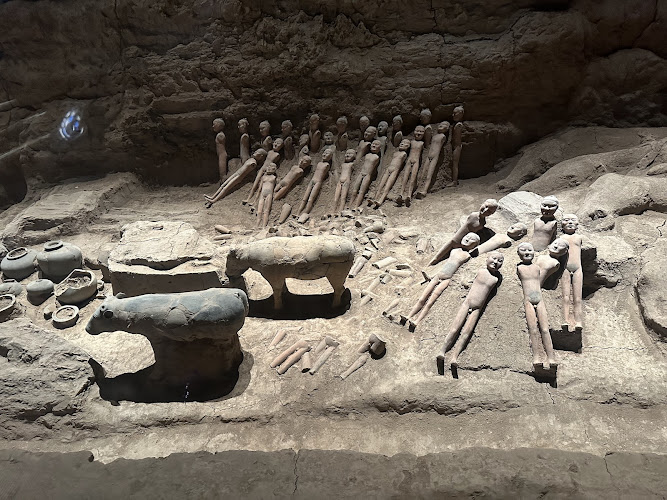
Hanyangling Museum
Find Accommodations Nearby
Recommended Tours & Activities
Visitor Reviews
There are no reviews yet. Be the first one to write one.
Share Your Experience
Have you visited Fortifications of Xi? Help other travelers by leaving a review.