
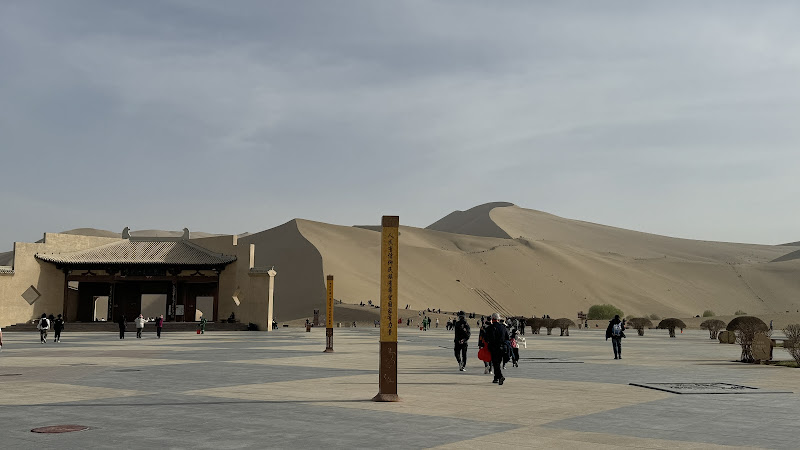
Dunhuang Minsu Museum
About Dunhuang Minsu Museum
Description
The Dunhuang Minsu Museum sits as a quietly compelling stop for travelers exploring Dunhuang, Jiuquan, Gansu, China. It is an art museum and local tourist attraction that concentrates on vernacular architecture, folk interiors, and the domestic crafts that shaped everyday life along the Silk Road. Visitors who expect only dusty artifacts are often surprised: the place feels lived-in, intentionally scaled so a person can stand in a recreated room and imagine children chasing chickens across stone thresholds, or hear the low clink of pottery as if from a kitchen a century ago.
Located in the 3MVG+RG7 area of Dunhuang, the museum’s design leans into authenticity rather than grand theatrics. Small courtyards, timber beams, and plastered walls create a sequence of spaces that read more like a neighborhood than a gallery. That matters, because what sets this museum apart is not just the objects on display but the way the surroundings frame them. The museum encourages a slow kind of seeing. People walk in pairs, linger at a loom, crouch to inspect carving marks, and end up learning more about daily life here than they might at a monument devoted to famous names.
Exhibits emphasize local art, household items, textiles, and reconstructed bedrooms and kitchens. There are hand-painted cupboards, carved wooden beams with faint traces of color, and ceramic jars whose shapes trace trade patterns that moved across Gansu province for centuries. Some rooms hold interactive displays targeted at families; others present quieter, museum-standard cases. Accessibility is part of the thoughtful mix: wheelchair accessible restroom facilities and well-placed restrooms make the museum easier for a broad range of visitors, including those traveling with children or mobility needs.
One memorable display is a compact multimedia station that layers oral histories over photographs. It’s not overdone. The recordings are short, and the voices are local—farmers, shopkeepers, and women who used to sew garments in dim light, now describing how they dyed cloth or mended shoes. That blend of objects and speech gives the museum a strong human heartbeat, an immediacy often missing in larger institutions. It’s the sort of detail that makes a traveler say afterwards: I actually felt like I met a few locals, even if only through their belongings.
For families, the Dunhuang Minsu Museum proves surprisingly forgiving. Children-friendly exhibits and tactile corners mean younger visitors can touch replicas or try on simple textile pieces, which helps translate a complex local history into something tactile and memorable. Staff are used to kids pressing their noses up to glass and tend to be patient. Parents will appreciate that the museum provides restroom facilities right on site, and that moving between rooms is straightforward—no long, confusing corridors.
From a cultural perspective, the museum occupies an interesting niche in Dunhuang’s broader tourist ecosystem. Dunhuang tends to be synonymous with the famous cave temples, but the Minsu Museum invites a different kind of attention: domestic culture instead of monumental religion. For travelers who have already seen the sprawling cave murals or those who want a more intimate, slower experience, the museum fills a useful gap. It’s an opportunity to imagine the rhythm of ordinary days, to notice how domestic design adapted to climate and the ebb and flow of trade caravans.
Practical details matter here too. The museum is generally well-kept and the displays are curated with clarity. However, English-language signage can vary; some labels are translated fully, others only partially. That’s not a fatal flaw—many visitors use photo-translation apps or simply allow the objects to speak for themselves. Still, it’s worth noting for travelers who rely heavily on English captions to guide their visit. On the positive side, the museum’s staff are often helpful and willing to point out highlights, even if their English is limited.
It’s also easy to underestimate how atmospheric the place can be. In mid-afternoon light, the courtyards throw long shadows and the old plaster seems to change color. Photographers find these moments rich, though the museum has a modest policy about flash and tripods—reasonable, given the fragility of some items. Expect to take more intimate, close-up shots rather than sweeping panoramas. And if a visitor lingers by a window seat, they might catch a faint scent of incense or tea wafting from a nearby teahouse—subtle sensory cues that connect the museum to the living city outside.
For visitors thinking about location specifics, the museum’s placement within Dunhuang, Jiuquan, Gansu, China (postal area 736205) makes it accessible as a day stop while touring the region. It’s compact enough to include without rearranging a busy itinerary, and deep enough to reward those who linger. The Minsu Museum isn’t trying to be the largest or the flashiest attraction in Gansu; it aims to be intimate, informative, and—importantly—useful for travelers who want context after seeing the major sites.
There are a few small, honest caveats to mention. Visitor flow can feel uneven: some days the museum hums with tour groups, other days it’s almost private. On crowded days, the intimate rooms can feel a bit cramped, and photography becomes a challenge. Meanwhile, a few parts of the museum are compact, deliberately so, which may disappoint visitors expecting sprawling galleries. Yet those design choices are part of the point: the museum replicates the scale of past domestic life, and feeling a bit close is, oddly, authentic.
Beyond the displays, the museum occasionally hosts short workshops and demonstrations—textile dyeing, simple paper crafts, or folk storytelling—often led by local artisans. These sessions are not daily, and schedules change seasonally, but they offer a hands-on glimpse into techniques passed down through generations. Travelers who plan ahead and hit one of these demonstrations walk away not just with photos but with a memory of working with their hands, which always seems to stick better than a brochure.
The Dunhuang Minsu Museum has become a favored stop for travelers who appreciate nuance. It’s not a flashy headline on the average guidebook’s front page, but for those who like to learn how people lived—what they cooked in, slept in, and sewed with—it provides plenty of quiet rewards. And if a visitor leaves with one unexpected takeaway, it’s likely this: domestic history is a powerful lens for understanding a place. The museum shows how everyday things—bowls, garments, beams—carry stories about trade, climate, and cultural exchange. That may sound obvious, but the museum’s gentle, human-focused presentation makes the lesson feel fresh.
In summary, the Dunhuang Minsu Museum serves as a charming complement to the larger historical sights in Dunhuang and the broader Jiuquan area. It offers wheelchair accessible restrooms and family-friendly amenities, emphasizes living traditions and household arts, and sits in the 3MVG+RG7 sector of Dunhuang, Gansu, China (736205). For travelers looking to deepen their understanding of local life—and perhaps to steal one or two craft tips from a demonstrator—this museum rewards attention. It’s an intimate, well-curated stop that invites curiosity and a slower pace, the kind of place where visitors often discover the small, human stories that linger long after the big sites have been checked off the list.
Key Features
More Details
Updated August 30, 2025
Table of Contents
Description
The Dunhuang Minsu Museum sits as a quietly compelling stop for travelers exploring Dunhuang, Jiuquan, Gansu, China. It is an art museum and local tourist attraction that concentrates on vernacular architecture, folk interiors, and the domestic crafts that shaped everyday life along the Silk Road. Visitors who expect only dusty artifacts are often surprised: the place feels lived-in, intentionally scaled so a person can stand in a recreated room and imagine children chasing chickens across stone thresholds, or hear the low clink of pottery as if from a kitchen a century ago.
Located in the 3MVG+RG7 area of Dunhuang, the museum’s design leans into authenticity rather than grand theatrics. Small courtyards, timber beams, and plastered walls create a sequence of spaces that read more like a neighborhood than a gallery. That matters, because what sets this museum apart is not just the objects on display but the way the surroundings frame them. The museum encourages a slow kind of seeing. People walk in pairs, linger at a loom, crouch to inspect carving marks, and end up learning more about daily life here than they might at a monument devoted to famous names.
Exhibits emphasize local art, household items, textiles, and reconstructed bedrooms and kitchens. There are hand-painted cupboards, carved wooden beams with faint traces of color, and ceramic jars whose shapes trace trade patterns that moved across Gansu province for centuries. Some rooms hold interactive displays targeted at families; others present quieter, museum-standard cases. Accessibility is part of the thoughtful mix: wheelchair accessible restroom facilities and well-placed restrooms make the museum easier for a broad range of visitors, including those traveling with children or mobility needs.
One memorable display is a compact multimedia station that layers oral histories over photographs. It’s not overdone. The recordings are short, and the voices are local—farmers, shopkeepers, and women who used to sew garments in dim light, now describing how they dyed cloth or mended shoes. That blend of objects and speech gives the museum a strong human heartbeat, an immediacy often missing in larger institutions. It’s the sort of detail that makes a traveler say afterwards: I actually felt like I met a few locals, even if only through their belongings.
For families, the Dunhuang Minsu Museum proves surprisingly forgiving. Children-friendly exhibits and tactile corners mean younger visitors can touch replicas or try on simple textile pieces, which helps translate a complex local history into something tactile and memorable. Staff are used to kids pressing their noses up to glass and tend to be patient. Parents will appreciate that the museum provides restroom facilities right on site, and that moving between rooms is straightforward—no long, confusing corridors.
From a cultural perspective, the museum occupies an interesting niche in Dunhuang’s broader tourist ecosystem. Dunhuang tends to be synonymous with the famous cave temples, but the Minsu Museum invites a different kind of attention: domestic culture instead of monumental religion. For travelers who have already seen the sprawling cave murals or those who want a more intimate, slower experience, the museum fills a useful gap. It’s an opportunity to imagine the rhythm of ordinary days, to notice how domestic design adapted to climate and the ebb and flow of trade caravans.
Practical details matter here too. The museum is generally well-kept and the displays are curated with clarity. However, English-language signage can vary; some labels are translated fully, others only partially. That’s not a fatal flaw—many visitors use photo-translation apps or simply allow the objects to speak for themselves. Still, it’s worth noting for travelers who rely heavily on English captions to guide their visit. On the positive side, the museum’s staff are often helpful and willing to point out highlights, even if their English is limited.
It’s also easy to underestimate how atmospheric the place can be. In mid-afternoon light, the courtyards throw long shadows and the old plaster seems to change color. Photographers find these moments rich, though the museum has a modest policy about flash and tripods—reasonable, given the fragility of some items. Expect to take more intimate, close-up shots rather than sweeping panoramas. And if a visitor lingers by a window seat, they might catch a faint scent of incense or tea wafting from a nearby teahouse—subtle sensory cues that connect the museum to the living city outside.
For visitors thinking about location specifics, the museum’s placement within Dunhuang, Jiuquan, Gansu, China (postal area 736205) makes it accessible as a day stop while touring the region. It’s compact enough to include without rearranging a busy itinerary, and deep enough to reward those who linger. The Minsu Museum isn’t trying to be the largest or the flashiest attraction in Gansu; it aims to be intimate, informative, and—importantly—useful for travelers who want context after seeing the major sites.
There are a few small, honest caveats to mention. Visitor flow can feel uneven: some days the museum hums with tour groups, other days it’s almost private. On crowded days, the intimate rooms can feel a bit cramped, and photography becomes a challenge. Meanwhile, a few parts of the museum are compact, deliberately so, which may disappoint visitors expecting sprawling galleries. Yet those design choices are part of the point: the museum replicates the scale of past domestic life, and feeling a bit close is, oddly, authentic.
Beyond the displays, the museum occasionally hosts short workshops and demonstrations—textile dyeing, simple paper crafts, or folk storytelling—often led by local artisans. These sessions are not daily, and schedules change seasonally, but they offer a hands-on glimpse into techniques passed down through generations. Travelers who plan ahead and hit one of these demonstrations walk away not just with photos but with a memory of working with their hands, which always seems to stick better than a brochure.
The Dunhuang Minsu Museum has become a favored stop for travelers who appreciate nuance. It’s not a flashy headline on the average guidebook’s front page, but for those who like to learn how people lived—what they cooked in, slept in, and sewed with—it provides plenty of quiet rewards. And if a visitor leaves with one unexpected takeaway, it’s likely this: domestic history is a powerful lens for understanding a place. The museum shows how everyday things—bowls, garments, beams—carry stories about trade, climate, and cultural exchange. That may sound obvious, but the museum’s gentle, human-focused presentation makes the lesson feel fresh.
In summary, the Dunhuang Minsu Museum serves as a charming complement to the larger historical sights in Dunhuang and the broader Jiuquan area. It offers wheelchair accessible restrooms and family-friendly amenities, emphasizes living traditions and household arts, and sits in the 3MVG+RG7 sector of Dunhuang, Gansu, China (736205). For travelers looking to deepen their understanding of local life—and perhaps to steal one or two craft tips from a demonstrator—this museum rewards attention. It’s an intimate, well-curated stop that invites curiosity and a slower pace, the kind of place where visitors often discover the small, human stories that linger long after the big sites have been checked off the list.
Key Highlights
Dunhuang Minsu Museum
Location
Places to Stay Near Dunhuang Minsu Museum
Find and Book a Tour
Explore More Travel Guides
No reviews found! Be the first to review!
Traveler Reviews for Dunhuang Minsu Museum
There are no reviews yet. Be the first one to write one.
Have you visited Dunhuang Minsu Museum? Help other travelers by sharing your review.
You Might Also Like
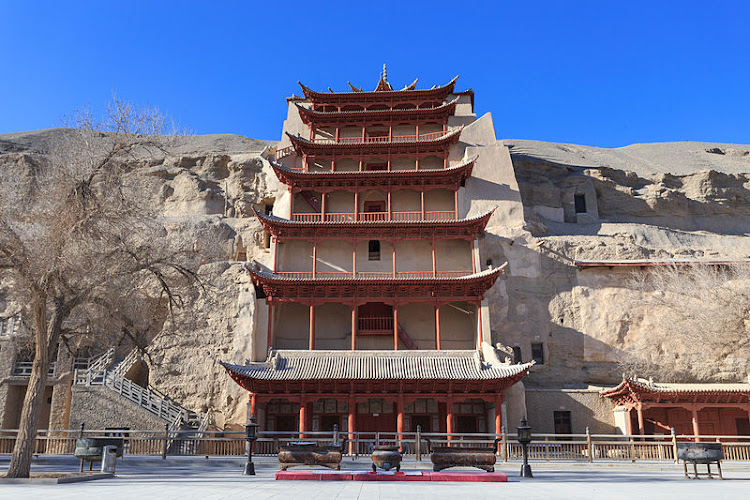
Mogao Caves
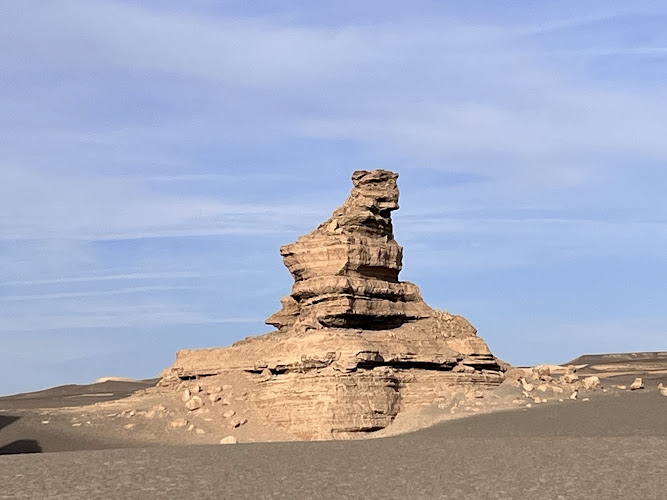
Geological Park Yadan Scenic Spot
Silk Road Int'l. Cultural Expo
Find Accommodations Nearby
Recommended Tours & Activities
Visitor Reviews
There are no reviews yet. Be the first one to write one.
Share Your Experience
Have you visited Dunhuang Minsu Museum? Help other travelers by leaving a review.