
Dreikönigenhaus
About Dreikönigenhaus
Key Features
More Details
Updated April 16, 2024
## Dreikönigenhaus (House of the Three Magi) in Trier: what it is, what to notice, and how to visit
If you walk down Simeonstraße from the Porta Nigra into Trier’s pedestrian centre, the Dreikönigenhaus is one of the easiest medieval buildings to miss—until you stop and look up. This is not a church, museum, or grand civic hall. It’s a 13th-century patrician residence in the form of an early Gothic “tower house”, built to be seen from the street and to signal status in a dense, competitive medieval city. Info
### Quick facts (so you can orient fast)
– Name: Dreikönigenhaus (House of the Three Magi) Info
– Address: Simeonstraße 20, 54290 Trier, Germany Mosel
– Type: Historic landmark / medieval tower house (patrician residence)
– Date: built around 1230 (sources describe construction around 1230; dendrochronology is cited in scholarly summaries) Info
– How you visit: view from outside (the building houses a café; sightseeing is described as exterior-only) Rheinland-Pfalz
—
## Why Dreikönigenhaus is worth 10 focused minutes
Trier is famous for Roman monuments, but the Dreikönigenhaus is a clean example of what came later: a wealthy urban family using architecture as a public statement. The façade is explicitly described as the “showpiece” side, designed to impress passersby on what is still one of the city’s main streets. Info
Two details make it especially interesting for slow-looking:
– The building is described as early Gothic, with a façade treatment that includes large paired (double) windows and decorative frieze elements. Info
– Its defensive logic is still visible in the building narrative: the original main access was not at ground level (a “high entrance” concept is described in architectural summaries).
—
## A short, sourced history you can trust
The official Trier tourism descriptions place the house’s construction around the year 1230 on today’s Simeonstraße. Info
The name “Dreikönigenhaus” is not presented as the medieval original name. In historical summaries, the name is linked to a later period: around 1680, an innkeeper (Johann Cornet) is said to have run a tavern there called “Zu den drei Königen” (To the Three Kings)—which is where the modern name is explained as coming from.
Architectural summaries also note that the house is a representative urban residence, associated with Trier’s wealthy civic class (Schöffen/Ratsherren families are specifically suggested as likely owners in historical writeups).
What to take away as a visitor: this is a medieval “power building” in miniature—less about fortification than about urban presence, built along a primary route near one of the city’s major gateways.
—
## What to look for on the façade (a practical “spotting guide”)
Stand across the pedestrian street so you can see the building as a single composition. Then work top-to-bottom:
### 1) The façade as a deliberately “public” surface
Official descriptions emphasize that the visible front was historically the decorated side: white plasterwork, large paired windows, and patterned friezes are explicitly mentioned in tourism summaries. Info
### 2) Paired windows and ornamental rhythm
The “double windows” are not just pretty—they’re part of the building’s medieval language of prosperity. You’ll often see visitors photograph the house head-on because the window rhythm reads clearly even in a quick snapshot. (This is also why it works well as a “walk-by landmark” on a Porta Nigra → Hauptmarkt route.) Info
### 3) The high-entrance concept (why ground-level doors aren’t the whole story)
Architectural summaries describe the original main access as a high entrance on the first upper floor, with later ground-floor openings added in subsequent eras. That’s a key medieval urban-security idea: access that can be controlled more easily than a street-level doorway.
—
## How to visit (real-world logistics)
### Location and approach
The Dreikönigenhaus sits on Simeonstraße, the central axis between the Porta Nigra and Trier’s pedestrian shopping core. If you begin at Porta Nigra and walk “into town,” you’re naturally funneled past it. Mosel
### How long to budget
– 10–15 minutes is enough for a meaningful stop: façade scan, a few photos, and a quick read-up.
– Combine it with a larger Altstadt (old town) walk if you’re doing Trier on foot (the building is presented as part of the city’s key “sights” set by the local tourism office). Info
### Interior access (set expectations early)
Multiple visitor-oriented sources state that the building houses a café and that sightseeing is only possible from outside. Plan for this as an exterior stop, not an interior tour. Rheinland-Pfalz
### Accessibility notes (inclusivity + practical reality)
– Street viewing: Simeonstraße is a pedestrian street; you can view the façade without needing stairs.
– Surface: like much of central Trier, expect typical historic-centre paving; that can be uneven in places (a general mobility consideration in old towns).
– Inside: because the building is described as café-occupied and exterior-only for sightseeing, assume no public interior access unless current signage indicates otherwise. Rheinland-Pfalz
—
## Photography tips that actually work here
– Best angle: step back and shoot straight-on to keep vertical lines clean; the façade’s symmetry reads well frontally.
– Best time: earlier in the day can reduce harsh contrast on street-facing façades (season and weather matter).
– Detail shot: pick a window pair + decorative band/frieze and frame tight—this is where the medieval “status messaging” shows. Info
—
—
## Outdated-data flags (what can change)
– Tenant/business inside (e.g., café) and any implied access rules can change with leases and renovations; treat exterior-only guidance as the default, but verify on-site signage. Rheinland-Pfalz
– Any listed “opening times” for a café are inherently time-sensitive; do not hardcode them in a timeless guide unless you’re maintaining it frequently. (The landmark itself is viewable from the street.) Rheinland-Pfalz
—
If you want, I can also generate a ready-to-paste WordPress block structure (Gutenberg-friendly headings + short intro excerpt + meta description) that matches your RealJourneyTravels publishing format—without adding any facts beyond what’s sourced above.
Table of Contents
Key Highlights
Dreikönigenhaus
Location
Places to Stay Near Dreikönigenhaus
Find and Book a Tour
Explore More Travel Guides
No reviews found! Be the first to review!
Traveler Reviews for Dreikönigenhaus
There are no reviews yet. Be the first one to write one.
Have you visited Dreikönigenhaus? Help other travelers by sharing your review.
You Might Also Like
Handwerkerbrunnen
Liebfrauenkirche, Trier
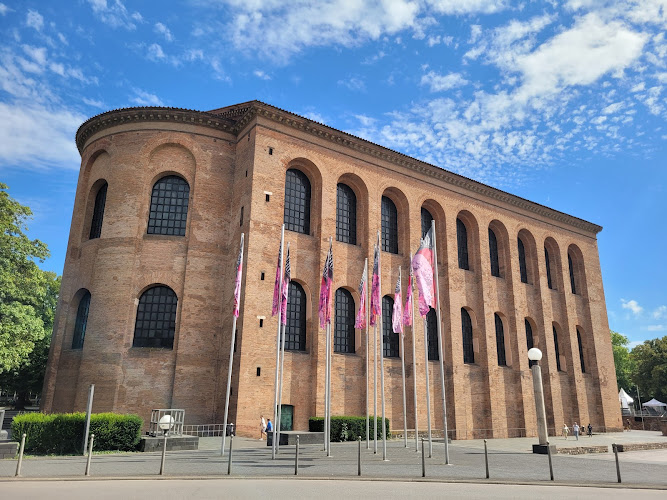
Konstantin-Basilika (Evangelische Kirche zum Erlöser)- Evangelische Kirchengemeinde Trier
Find Accommodations Nearby
Recommended Tours & Activities
Visitor Reviews
There are no reviews yet. Be the first one to write one.
Share Your Experience
Have you visited Dreikönigenhaus? Help other travelers by leaving a review.