University Irapuato, MexicoCommunity Guide

Division of Life Sciences (DICIVA) UGTO

QM3C+6V8, 36824 Ex-Hacienda del Copal, Gto., Mexico

Division of Life Sciences (DICIVA) UGTO
47 Photos

About & Overview

Description

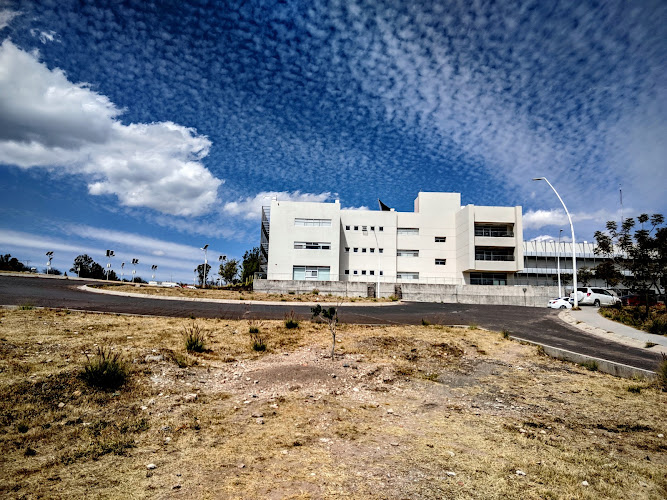
Perched on the outskirts of Irapuato in the Ex-Hacienda El Copal area, the Division of Life Sciences (DICIVA) of the University of Guanajuato is a quietly compelling destination for curious travelers. Founded as part of UGTO’s push to decentralize specialized teaching, DICIVA blends research laboratories, teaching greenhouses and field facilities across a semi-rural campus that reflects the region’s agricultural and biological heritage. Visitors find a working academic environment where plant science, animal health and applied biology come together — from experimental crops and demonstration plots to veterinary teaching spaces. What makes DICIVA special is its hands-on feel: it’s a place where science is visibly in action rather than hidden behind auditorium doors. Travelers interested in agroecology, biodiversity, or educational architecture will appreciate guided tours when available, informal conversations with students and faculty, and the chance to observe cutting-edge regional research. A visit offers cultural context for Guanajuato’s agricultural economy and a quieter, less touristy view of university life in central Mexico.

Highlights & Key Features

  • Research greenhouses and demonstration crop plots
  • Veterinary and animal science teaching facilities
  • Semi-rural campus with agricultural landscape views
  • Opportunities to observe applied research and student projects
  • Proximity to UGTO regional programs and interdisciplinary centers

Visitor Guide & Information

Description

The Division of Life Sciences, known locally as DICIVA, represents one of the most intriguing academic destinations within the University of Guanajuato (UGTO) system. Now, you might be wondering why a traveler would want to visit a university division focused on biological sciences, but hear me out. This isn’t just another sterile academic building – it’s a place where cutting-edge research meets colonial architecture, where the pursuit of understanding life itself happens against the backdrop of one of Mexico’s most historically rich regions.

I remember the first time someone told me about visiting university campuses as part of their travel itinerary, and I thought they were a bit mad. But there’s something genuinely special about educational institutions in Mexico, particularly those in Guanajuato. They’re woven into the fabric of the community in ways that universities in other countries just aren’t. DICIVA is no exception to this rule.

The facility serves as a hub for biological research, education, and scientific exploration. Students and researchers here work on everything from microbiology to ecology, making it a living, breathing center of scientific discovery. For travelers with an interest in science, education, or simply those who appreciate seeing how knowledge is created and shared, DICIVA offers a unique glimpse into Mexico’s contribution to the life sciences.

What makes this place particularly worthwhile for visitors is its accessibility – both literally and figuratively. The campus welcomes those who want to understand more about scientific research in Latin America, and the people you’ll encounter here are generally passionate about their work and happy to share their enthusiasm. And yes, the facility is designed with accessibility in mind, which isn’t always a given when you’re traveling through Mexico.

The atmosphere here differs significantly from your typical tourist attraction. There’s an energy that comes from young minds grappling with complex questions about life, health, and the natural world. You won’t find crowds of tourists snapping selfies, but you will find an authentic slice of academic life in Mexico.

Key Features

When considering what makes DICIVA worth including in your travel plans, several distinctive characteristics stand out:

• Full wheelchair accessibility throughout the campus, including designated parking areas that make visiting genuinely feasible for travelers with mobility considerations

• Research facilities that occasionally offer public lectures or open house events where visitors can learn about current projects in fields ranging from genetics to environmental science

• Architecture that blends modern academic needs with regional design sensibilities, creating a space that feels both functional and aesthetically connected to Guanajuato’s character

• Opportunities to interact with students and faculty from across Mexico and Latin America, providing cultural exchange possibilities that go beyond typical tourist experiences

• Library and study spaces that showcase how Mexican institutions are investing in scientific education and research infrastructure

• Gardens and outdoor spaces where various plant species are maintained for research purposes, creating unexpectedly pleasant areas for contemplation

• A generally welcoming atmosphere where curious visitors are met with openness rather than suspicion, as long as you’re respectful of the academic environment

• Connection to the broader UGTO system, which means you’re stepping into an institution with centuries of educational history

• Proximity to other university facilities and student areas, giving you a chance to experience authentic local life away from tourist-heavy zones

Best Time to Visit

Timing your visit to DICIVA requires thinking about the academic calendar, which operates quite differently than your standard tourist attraction schedule. The facility really comes alive during the semester periods, typically from August through December and from January through June. That’s when you’ll see the campus at its most active, with students moving between classes, research happening in full swing, and that particular buzz that educational institutions generate.

I’d suggest avoiding Mexican holiday periods if you want the full experience. During Christmas break (usually mid-December through early January) and the summer break (July and early August), the campus can feel a bit like a ghost town. Sure, some research continues year-round, but you’ll miss out on the human element that makes academic institutions interesting to visit.

The shoulder seasons – September through November and March through May – tend to be ideal. Weather in Guanajuato during these months is generally pleasant, and the academic year is in full swing. You’re not dealing with the intensity of exam periods, which happen in December and June, when students understandably have less time for casual conversations with visitors.

Weekdays are obviously better than weekends for experiencing the campus as a functioning academic community. Tuesday through Thursday typically see the most activity, as many Mexican universities have lighter Friday schedules and Mondays can be affected by various holidays and observances.

If you’re particularly interested in specific research areas, reaching out ahead of time might allow you to coordinate with public events, seminars, or presentations that happen regularly throughout the semester. The scientific community in Mexico is increasingly engaged with public outreach, and you might stumble upon something genuinely fascinating.

How to Get There

Getting to DICIVA involves first getting yourself to Guanajuato, which is well-connected to major Mexican cities. The nearest major airport is Del Bajío International Airport, located about 30 kilometers from the city. From there, you’ve got options – taxis, ride-sharing services, or shuttle buses that service the university areas.

Once you’re in Guanajuato proper, navigating to the Life Sciences division depends on which part of the dispersed UGTO campus system it’s located in. The university sprawls across the city and surrounding areas in a way that reflects Guanajuato’s unique topography and urban development. Local buses serve most university facilities, and drivers generally know where the different divisions are located.

Taxis remain one of the most straightforward options, especially if you’re not comfortable with Spanish or unfamiliar with the local bus system. But here’s the thing – Guanajuato’s bus system is actually quite manageable once you get the hang of it, and using it gives you a much more authentic experience of how students and locals actually move around the city.

If you’re staying in central Guanajuato, be prepared for a bit of a journey. The city’s layout doesn’t conform to any grid pattern, with tunnels, winding streets, and elevation changes that can make even short distances feel like an adventure. It’s part of the charm, really, though it can be frustrating when you’re trying to get somewhere specific.

For those with mobility considerations, the wheelchair-accessible parking at DICIVA makes driving or taking a taxi the most practical option. The facility has thought through accessibility in a way that deserves recognition, particularly given the challenging terrain throughout much of Guanajuato.

Tips for Visiting

Approaching DICIVA as a visitor requires a slightly different mindset than you’d bring to a museum or historical site. This is, first and foremost, a working academic institution. People here are trying to study, research, and teach. Your visit should respect that reality.

Start by dressing appropriately – not formal necessarily, but respectful. You’re not at the beach, and while Mexican universities aren’t particularly stuffy, showing up looking like you just rolled out of a hostel won’t help if you’re hoping to engage with anyone. Business casual works perfectly.

Learn a bit of Spanish if you haven’t already. While you’ll find English speakers, particularly among faculty and graduate students, the working language is Spanish. Even basic phrases show respect and open doors. I can’t stress this enough – attempting to communicate in Spanish, even poorly, makes a huge difference in how you’re received.

Consider timing your visit mid-morning, around 10 or 11 AM. Early enough that the day’s activities are underway, but past the morning rush. This gives you a better chance of finding people with a few minutes to chat or point you toward anything particularly interesting happening that day.

Don’t just wander into laboratories or research spaces uninvited. Common areas, libraries, and outdoor spaces are generally fine, but specialized facilities require permission. If you’re genuinely interested in specific research, contacting departments ahead of time can sometimes arrange brief tours or meetings.

Bring water and perhaps a snack. University cafeterias exist and are usually open to visitors, offering an affordable taste of what students eat daily. The food won’t be fancy, but it’s authentic and budget-friendly.

Photography deserves consideration. Public spaces are generally fine, but always ask before photographing people or inside research facilities. Some experiments or materials might have restrictions on photography for various reasons.

Take advantage of any public events, lectures, or seminars that might be scheduled. These are often free and open to the public, providing real insight into the research happening at DICIVA. Even if presentations are in Spanish, the visual components of scientific presentations often transcend language barriers.

The accessibility features aren’t just theoretical – they’re genuinely functional. If you or your traveling companions need wheelchair access, the designated parking and entrance systems actually work, which unfortunately isn’t always the case even when facilities claim accessibility.

Finally, remember that visiting DICIVA isn’t about ticking a box on a tourist checklist. It’s about engaging with a different aspect of Mexican society – the academic and scientific community that’s working to advance knowledge in the life sciences. Approach it with curiosity and respect, and you’ll likely come away with a richer understanding of contemporary Mexico beyond the usual tourist narratives.

Community & Insider Notes

Last modified August 17, 2026

Description

The Division of Life Sciences, known locally as DICIVA, represents one of the most intriguing academic destinations within the University of Guanajuato (UGTO) system. Now, you might be wondering why a traveler would want to visit a university division focused on biological sciences, but hear me out. This isn’t just another sterile academic building – it’s a place where cutting-edge research meets colonial architecture, where the pursuit of understanding life itself happens against the backdrop of one of Mexico’s most historically rich regions.

I remember the first time someone told me about visiting university campuses as part of their travel itinerary, and I thought they were a bit mad. But there’s something genuinely special about educational institutions in Mexico, particularly those in Guanajuato. They’re woven into the fabric of the community in ways that universities in other countries just aren’t. DICIVA is no exception to this rule.

The facility serves as a hub for biological research, education, and scientific exploration. Students and researchers here work on everything from microbiology to ecology, making it a living, breathing center of scientific discovery. For travelers with an interest in science, education, or simply those who appreciate seeing how knowledge is created and shared, DICIVA offers a unique glimpse into Mexico’s contribution to the life sciences.

What makes this place particularly worthwhile for visitors is its accessibility – both literally and figuratively. The campus welcomes those who want to understand more about scientific research in Latin America, and the people you’ll encounter here are generally passionate about their work and happy to share their enthusiasm. And yes, the facility is designed with accessibility in mind, which isn’t always a given when you’re traveling through Mexico.

The atmosphere here differs significantly from your typical tourist attraction. There’s an energy that comes from young minds grappling with complex questions about life, health, and the natural world. You won’t find crowds of tourists snapping selfies, but you will find an authentic slice of academic life in Mexico.

Key Features

When considering what makes DICIVA worth including in your travel plans, several distinctive characteristics stand out:

• Full wheelchair accessibility throughout the campus, including designated parking areas that make visiting genuinely feasible for travelers with mobility considerations

• Research facilities that occasionally offer public lectures or open house events where visitors can learn about current projects in fields ranging from genetics to environmental science

• Architecture that blends modern academic needs with regional design sensibilities, creating a space that feels both functional and aesthetically connected to Guanajuato’s character

• Opportunities to interact with students and faculty from across Mexico and Latin America, providing cultural exchange possibilities that go beyond typical tourist experiences

• Library and study spaces that showcase how Mexican institutions are investing in scientific education and research infrastructure

• Gardens and outdoor spaces where various plant species are maintained for research purposes, creating unexpectedly pleasant areas for contemplation

• A generally welcoming atmosphere where curious visitors are met with openness rather than suspicion, as long as you’re respectful of the academic environment

• Connection to the broader UGTO system, which means you’re stepping into an institution with centuries of educational history

• Proximity to other university facilities and student areas, giving you a chance to experience authentic local life away from tourist-heavy zones

Best Time to Visit

Timing your visit to DICIVA requires thinking about the academic calendar, which operates quite differently than your standard tourist attraction schedule. The facility really comes alive during the semester periods, typically from August through December and from January through June. That’s when you’ll see the campus at its most active, with students moving between classes, research happening in full swing, and that particular buzz that educational institutions generate.

I’d suggest avoiding Mexican holiday periods if you want the full experience. During Christmas break (usually mid-December through early January) and the summer break (July and early August), the campus can feel a bit like a ghost town. Sure, some research continues year-round, but you’ll miss out on the human element that makes academic institutions interesting to visit.

The shoulder seasons – September through November and March through May – tend to be ideal. Weather in Guanajuato during these months is generally pleasant, and the academic year is in full swing. You’re not dealing with the intensity of exam periods, which happen in December and June, when students understandably have less time for casual conversations with visitors.

Weekdays are obviously better than weekends for experiencing the campus as a functioning academic community. Tuesday through Thursday typically see the most activity, as many Mexican universities have lighter Friday schedules and Mondays can be affected by various holidays and observances.

If you’re particularly interested in specific research areas, reaching out ahead of time might allow you to coordinate with public events, seminars, or presentations that happen regularly throughout the semester. The scientific community in Mexico is increasingly engaged with public outreach, and you might stumble upon something genuinely fascinating.

How to Get There

Getting to DICIVA involves first getting yourself to Guanajuato, which is well-connected to major Mexican cities. The nearest major airport is Del Bajío International Airport, located about 30 kilometers from the city. From there, you’ve got options – taxis, ride-sharing services, or shuttle buses that service the university areas.

Once you’re in Guanajuato proper, navigating to the Life Sciences division depends on which part of the dispersed UGTO campus system it’s located in. The university sprawls across the city and surrounding areas in a way that reflects Guanajuato’s unique topography and urban development. Local buses serve most university facilities, and drivers generally know where the different divisions are located.

Taxis remain one of the most straightforward options, especially if you’re not comfortable with Spanish or unfamiliar with the local bus system. But here’s the thing – Guanajuato’s bus system is actually quite manageable once you get the hang of it, and using it gives you a much more authentic experience of how students and locals actually move around the city.

If you’re staying in central Guanajuato, be prepared for a bit of a journey. The city’s layout doesn’t conform to any grid pattern, with tunnels, winding streets, and elevation changes that can make even short distances feel like an adventure. It’s part of the charm, really, though it can be frustrating when you’re trying to get somewhere specific.

For those with mobility considerations, the wheelchair-accessible parking at DICIVA makes driving or taking a taxi the most practical option. The facility has thought through accessibility in a way that deserves recognition, particularly given the challenging terrain throughout much of Guanajuato.

Tips for Visiting

Approaching DICIVA as a visitor requires a slightly different mindset than you’d bring to a museum or historical site. This is, first and foremost, a working academic institution. People here are trying to study, research, and teach. Your visit should respect that reality.

Start by dressing appropriately – not formal necessarily, but respectful. You’re not at the beach, and while Mexican universities aren’t particularly stuffy, showing up looking like you just rolled out of a hostel won’t help if you’re hoping to engage with anyone. Business casual works perfectly.

Learn a bit of Spanish if you haven’t already. While you’ll find English speakers, particularly among faculty and graduate students, the working language is Spanish. Even basic phrases show respect and open doors. I can’t stress this enough – attempting to communicate in Spanish, even poorly, makes a huge difference in how you’re received.

Consider timing your visit mid-morning, around 10 or 11 AM. Early enough that the day’s activities are underway, but past the morning rush. This gives you a better chance of finding people with a few minutes to chat or point you toward anything particularly interesting happening that day.

Don’t just wander into laboratories or research spaces uninvited. Common areas, libraries, and outdoor spaces are generally fine, but specialized facilities require permission. If you’re genuinely interested in specific research, contacting departments ahead of time can sometimes arrange brief tours or meetings.

Bring water and perhaps a snack. University cafeterias exist and are usually open to visitors, offering an affordable taste of what students eat daily. The food won’t be fancy, but it’s authentic and budget-friendly.

Photography deserves consideration. Public spaces are generally fine, but always ask before photographing people or inside research facilities. Some experiments or materials might have restrictions on photography for various reasons.

Take advantage of any public events, lectures, or seminars that might be scheduled. These are often free and open to the public, providing real insight into the research happening at DICIVA. Even if presentations are in Spanish, the visual components of scientific presentations often transcend language barriers.

The accessibility features aren’t just theoretical – they’re genuinely functional. If you or your traveling companions need wheelchair access, the designated parking and entrance systems actually work, which unfortunately isn’t always the case even when facilities claim accessibility.

Finally, remember that visiting DICIVA isn’t about ticking a box on a tourist checklist. It’s about engaging with a different aspect of Mexican society – the academic and scientific community that’s working to advance knowledge in the life sciences. Approach it with curiosity and respect, and you’ll likely come away with a richer understanding of contemporary Mexico beyond the usual tourist narratives.

Key Highlights

  • Research greenhouses and demonstration crop plots
  • Veterinary and animal science teaching facilities
  • Semi-rural campus with agricultural landscape views
  • Opportunities to observe applied research and student projects
  • Proximity to UGTO regional programs and interdisciplinary centers

Location

Places to Stay Near Division of Life Sciences (DICIVA) UGTO

Find and Book a Tour

Explore More Travel Guides

No reviews found! Be the first to review!

Select a Rating5 Stars4 Stars3 Stars2 Stars1 Star

Division of Life Sciences (DICIVA) UGTO is a prominent Universidad located in Irapuato.

Visit us at: QM3C+6V8, 36824 Ex-Hacienda del Copal, Gto., Mexico.

Nearby Attractions (Within 5 km)

Explore verified points of interest within walking or short transit distance.

No neighboring places mapped within 5 km yet.

Find Places to Stay Nearby

Stay22 provides this accommodation search. We may earn a commission if you book through it; verify current prices and terms with the provider.

Recommended Experiences & Activities

GetYourGuide provides this tour inventory. We may earn a commission if you book through it; verify current availability, prices, and terms with the provider.

Top Viator Experiences & Guided Tours in Irapuato

We may earn a commission if you book through links on this page at no extra cost to you. All tours feature verified customer reviews and flexible cancellation options.

Traveler Reviews & Community Q&A

No traveler reviews yet. Share your experience below!

No traveler questions yet. Be the first to ask a local!

Real Journey Travels Community

Reset your password · Create an account