

Templo de Quetzalcóatl
About Templo de Quetzalcóatl
Description
The Templo de Quetzalcóatl stands as one of the most impressive architectural achievements within the ancient city of Teotihuacan, and honestly, it's the kind of place that makes you question everything you thought you knew about pre-Columbian civilizations. While the Pyramids of the Sun and Moon often steal the spotlight, this temple complex offers something different—something more intimate and detailed that speaks to the artistic sophistication of the people who built it over 1,800 years ago. Also known as the Temple of the Feathered Serpent, this structure represents the largest building within Teotihuacan's Ciudadela (Citadel) complex. When I first learned about this place, I was struck by how it challenges our modern assumptions about ancient cultures. The temple isn't just big—though it certainly is massive—but it's adorned with some of the most intricate stone carvings you'll find anywhere in Mesoamerica. The serpent heads that protrude from the pyramid's facade are both beautiful and slightly unsettling, which is exactly what makes them so captivating. What sets this temple apart from other structures at Teotihuacan is the preservation of its decorative elements. Many pyramids in the region were covered over by later constructions, but here you can still see the original sculptural work featuring the feathered serpent deity Quetzalcóatl alongside representations of Tlaloc, the rain god. The craftsmanship is remarkable—each serpent head weighs several tons and was carefully carved and positioned to create a repeating pattern across the temple's facade. The site has yielded some of the most significant archaeological discoveries in Mexican history, including burial chambers that have helped researchers understand the religious practices and social hierarchies of Teotihuacan's inhabitants. But you don't need to be an archaeologist to appreciate what you're seeing. The sheer scale and artistry speak for themselves.Key Features
- Monumental pyramid structure adorned with over 260 carved stone serpent heads representing the feathered serpent deity Quetzalcóatl
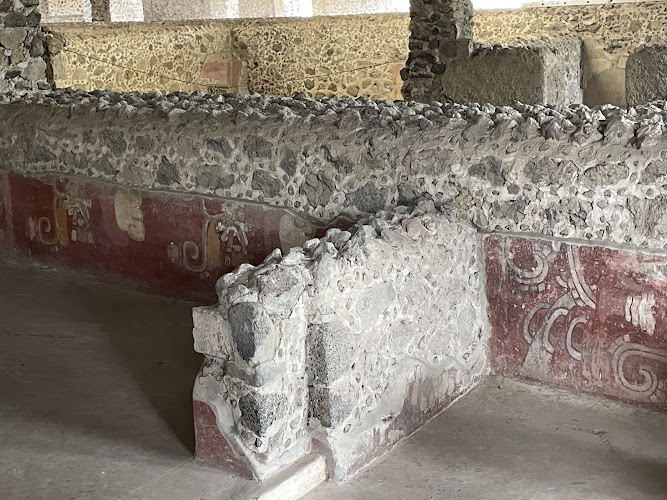
- Well-preserved polychrome paint traces that give visitors a glimpse of how colorful and vibrant the original structure would have appeared
- Seven-tiered pyramid design with platforms that once supported elaborate sculptural programs
- The Ciudadela complex surrounding the temple, which could accommodate approximately 100,000 people during ceremonies
- Alternating sculptural motifs featuring both Quetzalcóatl and Tlaloc, showing the duality important to Mesoamerican cosmology
- Archaeological excavations visible on-site that reveal the temple's construction techniques and multiple building phases
- Strategic positioning within the ancient city's ceremonial center, aligned with astronomical observations
- Evidence of mass burial sites discovered beneath the structure, providing insights into ritual practices
- Relatively fewer crowds compared to the Pyramids of the Sun and Moon, allowing for more contemplative viewing
- Accessible viewing platforms that let visitors appreciate the sculptural details up close
Best Time to Visit
Timing your visit to the Templo de Quetzalcóatl requires some strategic thinking, because let's face it, nobody wants to be examining ancient serpent carvings while melting under the Mexican sun. The archaeological zone of Teotihuacan experiences significant temperature variations throughout the year, and since there's virtually no shade around the pyramids, you'll want to plan accordingly. The optimal months for visiting fall between November and March when temperatures hover in the comfortable 60-75°F range during the day. I've heard from travelers who visited during December and early January that the weather was nearly perfect—cool mornings that warm up pleasantly by midday. And unlike some archaeological sites that get muddy during rainy seasons, Teotihuacan's dry winter months mean easier walking and better photo opportunities without hazy skies. Early morning visits are absolutely essential if you're traveling during the hotter months from April through September. The site opens at 9:00 AM, and arriving right when the gates open gives you a solid two to three hours before the sun becomes oppressive. Plus, you'll beat the tour bus crowds that typically arrive around 11:00 AM. There's something special about seeing the temple in morning light anyway—the angle of the sun brings out details in the stone carvings that get washed out later in the day. Weekdays are significantly less crowded than weekends, particularly Sundays when Mexican nationals enjoy free admission. If your schedule allows flexibility, aim for a Tuesday, Wednesday, or Thursday visit. The difference in crowd levels can be dramatic—sometimes you'll have entire sections of the Ciudadela to yourself on a quiet Tuesday morning. Avoid visiting during Mexican holidays and school vacation periods unless you enjoy navigating through seas of people. The weeks around Semana Santa (Easter week) and late July through August see particularly heavy visitation. Similarly, the spring equinox on March 21st attracts enormous crowds who come to absorb the pyramid's supposed mystical energies, so definitely skip that date unless you're specifically interested in that experience. Weather-wise, be aware that afternoon thunderstorms can roll in during the rainy season from June through September. These usually pass quickly, but they can make the stone surfaces slippery and viewing less pleasant. The upside? Post-storm light creates dramatic photography conditions if you're willing to wait it out.How to Get There
Getting to the Templo de Quetzalcóatl requires reaching Teotihuacan first, which sits about 30 miles northeast of Mexico City. You've got several options depending on your budget, comfort preferences, and sense of adventure. The most economical approach involves taking public transportation from Mexico City's Terminal del Norte bus station. Multiple bus lines run to Teotihuacan throughout the day, with departures roughly every 30-45 minutes. The journey takes about an hour, and tickets are remarkably cheap—usually around 50-100 pesos one way. Look for buses marked "Piramides" or "Teotihuacan." Once you arrive at the town of San Juan Teotihuacan, you'll need to catch a local taxi or walk approximately 20 minutes to reach the archaeological site's entrance. And here's a practical tip I wish someone had told me—there are multiple entrances to the Teotihuacan archaeological zone. For the most direct access to the Templo de Quetzalcóatl, you'll want to enter through Gate 1 (Puerta 1), which puts you right near the Ciudadela complex where the temple is located. If you enter through other gates, you'll need to walk considerably farther to reach the temple. Many travelers opt for organized tours departing from Mexico City, which handle all transportation logistics and typically include a bilingual guide. These tours usually last 8-10 hours and often combine Teotihuacan with stops at nearby attractions. The convenience factor is high, though you'll pay more—expect to spend anywhere from $40-80 USD per person. The trade-off is that you're on someone else's schedule, which might limit your time at the temple itself. Renting a car gives you maximum flexibility, though driving in Mexico City can be intense for those unfamiliar with local traffic patterns. Once you're out of the city, the drive becomes straightforward via Highway 132D. Paid parking is available at the archaeological site, usually costing around 50 pesos for the day. This option works particularly well if you're planning to explore the surrounding area or want to arrive extra early before public transportation starts running. Ride-sharing services like Uber or Didi operate from Mexico City to Teotihuacan, though the cost for a round trip can add up quickly—often $50-70 USD total. Some travelers arrange for their driver to wait while they explore the site, which provides convenience but limits your visiting time unless you're willing to pay for several hours of waiting.Tips for Visiting
Preparing properly for your visit to the Templo de Quetzalcóatl can mean the difference between an amazing experience and a miserable one. The site sits at about 7,500 feet elevation, which affects some visitors more than others. Take it easy your first few days in Mexico if you're coming from sea level—that altitude combined with walking around exposed pyramids can be surprisingly exhausting. Sun protection isn't optional here; it's absolutely mandatory. Bring a wide-brimmed hat, apply sunscreen with high SPF before you arrive, and reapply frequently. Sunglasses are essential not just for comfort but because squinting at serpent carvings for hours will give you a headache. I've seen too many tourists turn lobster-red after a few hours, and trust me, that's going to ruin the rest of your trip. Wear proper footwear—and I cannot stress this enough. The terrain around the pyramids involves uneven stones, dirt paths, and potentially slippery surfaces. Those cute sandals or brand-new stiff hiking boots? Leave them at the hotel. You want broken-in, comfortable walking shoes with good traction. You'll be covering significant distance, and blisters or twisted ankles don't make for good travel memories. Bring plenty of water because dehydration at altitude happens faster than you think. There are vendors on-site, but they charge premium prices, and you'll want more water than you imagine. I'd recommend at least one liter per person, possibly more if you're visiting during warmer months. Snacks are also smart since exploring the site thoroughly can take 3-4 hours. But here's something most guidebooks don't mention—the best time to photograph the Templo de Quetzalcóatl is actually mid-morning around 10:00-11:00 AM when the sun angle creates beautiful shadows that emphasize the three-dimensional quality of the serpent carvings. Too early and everything looks flat; too late and the harsh overhead light washes out details. Hiring a guide can dramatically enhance your understanding of what you're seeing. The serpent iconography and architectural symbolism aren't immediately obvious to casual observers. Licensed guides congregate near the entrance and typically charge $30-50 USD for a 2-3 hour tour covering the main structures. If you're budget-conscious, consider joining a small group to split costs. Respect the site rules about not climbing on the Templo de Quetzalcóatl itself. Unlike the Pyramids of the Sun and Moon where climbing is permitted, this temple is off-limits to prevent damage to the delicate carved surfaces. Security guards enforce this strictly, and violations can result in being asked to leave the entire archaeological zone. The site gets surprisingly cool in the mornings, even during warm months, so bringing a light jacket is wise. Temperatures can vary by 20-30 degrees between early morning and midday. Layering allows you to adjust as the day warms up. Plan your visit to include the on-site museum, which provides crucial context about the temple's construction, the discoveries made during excavations, and the civilization that built it. The museum is often overlooked by visitors rushing between pyramids, but it's climate-controlled and offers welcome respite while deepening your appreciation for what you're seeing. Finally, manage your expectations about crowd control. While the Templo de Quetzalcóatl sees fewer visitors than Teotihuacan's more famous pyramids, it's still a popular attraction. Finding completely empty moments requires patience and strategic positioning. Sometimes waiting just five minutes for a tour group to move along gives you that perfect, contemplative moment with the ancient serpent heads that makes the whole journey worthwhile.Key Features
- Monumental pyramid structure adorned with over 260 carved stone serpent heads representing the feathered serpent deity Quetzalcóatl
- Well-preserved polychrome paint traces that give visitors a glimpse of how colorful and vibrant the original structure would have appeared
- Seven-tiered pyramid design with platforms that once supported elaborate sculptural programs
- The Ciudadela complex surrounding the temple, which could accommodate approximately 100,000 people during ceremonies
- Alternating sculptural motifs featuring both Quetzalcóatl and Tlaloc, showing the duality important to Mesoamerican cosmology
- Archaeological excavations visible on-site that reveal the temple's construction techniques and multiple building phases
- Strategic positioning within the ancient city's ceremonial center, aligned with astronomical observations
- Evidence of mass burial sites discovered beneath the structure, providing insights into ritual practices
More Details
Updated March 30, 2026
Table of Contents
Description
The Templo de Quetzalcóatl stands as one of the most impressive architectural achievements within the ancient city of Teotihuacan, and honestly, it’s the kind of place that makes you question everything you thought you knew about pre-Columbian civilizations. While the Pyramids of the Sun and Moon often steal the spotlight, this temple complex offers something different—something more intimate and detailed that speaks to the artistic sophistication of the people who built it over 1,800 years ago.
Also known as the Temple of the Feathered Serpent, this structure represents the largest building within Teotihuacan’s Ciudadela (Citadel) complex. When I first learned about this place, I was struck by how it challenges our modern assumptions about ancient cultures. The temple isn’t just big—though it certainly is massive—but it’s adorned with some of the most intricate stone carvings you’ll find anywhere in Mesoamerica. The serpent heads that protrude from the pyramid’s facade are both beautiful and slightly unsettling, which is exactly what makes them so captivating.
What sets this temple apart from other structures at Teotihuacan is the preservation of its decorative elements. Many pyramids in the region were covered over by later constructions, but here you can still see the original sculptural work featuring the feathered serpent deity Quetzalcóatl alongside representations of Tlaloc, the rain god. The craftsmanship is remarkable—each serpent head weighs several tons and was carefully carved and positioned to create a repeating pattern across the temple’s facade.
The site has yielded some of the most significant archaeological discoveries in Mexican history, including burial chambers that have helped researchers understand the religious practices and social hierarchies of Teotihuacan’s inhabitants. But you don’t need to be an archaeologist to appreciate what you’re seeing. The sheer scale and artistry speak for themselves.
Key Features
- Monumental pyramid structure adorned with over 260 carved stone serpent heads representing the feathered serpent deity Quetzalcóatl
- Well-preserved polychrome paint traces that give visitors a glimpse of how colorful and vibrant the original structure would have appeared
- Seven-tiered pyramid design with platforms that once supported elaborate sculptural programs
- The Ciudadela complex surrounding the temple, which could accommodate approximately 100,000 people during ceremonies
- Alternating sculptural motifs featuring both Quetzalcóatl and Tlaloc, showing the duality important to Mesoamerican cosmology
- Archaeological excavations visible on-site that reveal the temple’s construction techniques and multiple building phases
- Strategic positioning within the ancient city’s ceremonial center, aligned with astronomical observations
- Evidence of mass burial sites discovered beneath the structure, providing insights into ritual practices
- Relatively fewer crowds compared to the Pyramids of the Sun and Moon, allowing for more contemplative viewing
- Accessible viewing platforms that let visitors appreciate the sculptural details up close
Best Time to Visit
Timing your visit to the Templo de Quetzalcóatl requires some strategic thinking, because let’s face it, nobody wants to be examining ancient serpent carvings while melting under the Mexican sun. The archaeological zone of Teotihuacan experiences significant temperature variations throughout the year, and since there’s virtually no shade around the pyramids, you’ll want to plan accordingly.
The optimal months for visiting fall between November and March when temperatures hover in the comfortable 60-75°F range during the day. I’ve heard from travelers who visited during December and early January that the weather was nearly perfect—cool mornings that warm up pleasantly by midday. And unlike some archaeological sites that get muddy during rainy seasons, Teotihuacan’s dry winter months mean easier walking and better photo opportunities without hazy skies.
Early morning visits are absolutely essential if you’re traveling during the hotter months from April through September. The site opens at 9:00 AM, and arriving right when the gates open gives you a solid two to three hours before the sun becomes oppressive. Plus, you’ll beat the tour bus crowds that typically arrive around 11:00 AM. There’s something special about seeing the temple in morning light anyway—the angle of the sun brings out details in the stone carvings that get washed out later in the day.
Weekdays are significantly less crowded than weekends, particularly Sundays when Mexican nationals enjoy free admission. If your schedule allows flexibility, aim for a Tuesday, Wednesday, or Thursday visit. The difference in crowd levels can be dramatic—sometimes you’ll have entire sections of the Ciudadela to yourself on a quiet Tuesday morning.
Avoid visiting during Mexican holidays and school vacation periods unless you enjoy navigating through seas of people. The weeks around Semana Santa (Easter week) and late July through August see particularly heavy visitation. Similarly, the spring equinox on March 21st attracts enormous crowds who come to absorb the pyramid’s supposed mystical energies, so definitely skip that date unless you’re specifically interested in that experience.
Weather-wise, be aware that afternoon thunderstorms can roll in during the rainy season from June through September. These usually pass quickly, but they can make the stone surfaces slippery and viewing less pleasant. The upside? Post-storm light creates dramatic photography conditions if you’re willing to wait it out.
How to Get There
Getting to the Templo de Quetzalcóatl requires reaching Teotihuacan first, which sits about 30 miles northeast of Mexico City. You’ve got several options depending on your budget, comfort preferences, and sense of adventure.
The most economical approach involves taking public transportation from Mexico City’s Terminal del Norte bus station. Multiple bus lines run to Teotihuacan throughout the day, with departures roughly every 30-45 minutes. The journey takes about an hour, and tickets are remarkably cheap—usually around 50-100 pesos one way. Look for buses marked “Piramides” or “Teotihuacan.” Once you arrive at the town of San Juan Teotihuacan, you’ll need to catch a local taxi or walk approximately 20 minutes to reach the archaeological site’s entrance.
And here’s a practical tip I wish someone had told me—there are multiple entrances to the Teotihuacan archaeological zone. For the most direct access to the Templo de Quetzalcóatl, you’ll want to enter through Gate 1 (Puerta 1), which puts you right near the Ciudadela complex where the temple is located. If you enter through other gates, you’ll need to walk considerably farther to reach the temple.
Many travelers opt for organized tours departing from Mexico City, which handle all transportation logistics and typically include a bilingual guide. These tours usually last 8-10 hours and often combine Teotihuacan with stops at nearby attractions. The convenience factor is high, though you’ll pay more—expect to spend anywhere from $40-80 USD per person. The trade-off is that you’re on someone else’s schedule, which might limit your time at the temple itself.
Renting a car gives you maximum flexibility, though driving in Mexico City can be intense for those unfamiliar with local traffic patterns. Once you’re out of the city, the drive becomes straightforward via Highway 132D. Paid parking is available at the archaeological site, usually costing around 50 pesos for the day. This option works particularly well if you’re planning to explore the surrounding area or want to arrive extra early before public transportation starts running.
Ride-sharing services like Uber or Didi operate from Mexico City to Teotihuacan, though the cost for a round trip can add up quickly—often $50-70 USD total. Some travelers arrange for their driver to wait while they explore the site, which provides convenience but limits your visiting time unless you’re willing to pay for several hours of waiting.
Tips for Visiting
Preparing properly for your visit to the Templo de Quetzalcóatl can mean the difference between an amazing experience and a miserable one. The site sits at about 7,500 feet elevation, which affects some visitors more than others. Take it easy your first few days in Mexico if you’re coming from sea level—that altitude combined with walking around exposed pyramids can be surprisingly exhausting.
Sun protection isn’t optional here; it’s absolutely mandatory. Bring a wide-brimmed hat, apply sunscreen with high SPF before you arrive, and reapply frequently. Sunglasses are essential not just for comfort but because squinting at serpent carvings for hours will give you a headache. I’ve seen too many tourists turn lobster-red after a few hours, and trust me, that’s going to ruin the rest of your trip.
Wear proper footwear—and I cannot stress this enough. The terrain around the pyramids involves uneven stones, dirt paths, and potentially slippery surfaces. Those cute sandals or brand-new stiff hiking boots? Leave them at the hotel. You want broken-in, comfortable walking shoes with good traction. You’ll be covering significant distance, and blisters or twisted ankles don’t make for good travel memories.
Bring plenty of water because dehydration at altitude happens faster than you think. There are vendors on-site, but they charge premium prices, and you’ll want more water than you imagine. I’d recommend at least one liter per person, possibly more if you’re visiting during warmer months. Snacks are also smart since exploring the site thoroughly can take 3-4 hours.
But here’s something most guidebooks don’t mention—the best time to photograph the Templo de Quetzalcóatl is actually mid-morning around 10:00-11:00 AM when the sun angle creates beautiful shadows that emphasize the three-dimensional quality of the serpent carvings. Too early and everything looks flat; too late and the harsh overhead light washes out details.
Hiring a guide can dramatically enhance your understanding of what you’re seeing. The serpent iconography and architectural symbolism aren’t immediately obvious to casual observers. Licensed guides congregate near the entrance and typically charge $30-50 USD for a 2-3 hour tour covering the main structures. If you’re budget-conscious, consider joining a small group to split costs.
Respect the site rules about not climbing on the Templo de Quetzalcóatl itself. Unlike the Pyramids of the Sun and Moon where climbing is permitted, this temple is off-limits to prevent damage to the delicate carved surfaces. Security guards enforce this strictly, and violations can result in being asked to leave the entire archaeological zone.
The site gets surprisingly cool in the mornings, even during warm months, so bringing a light jacket is wise. Temperatures can vary by 20-30 degrees between early morning and midday. Layering allows you to adjust as the day warms up.
Plan your visit to include the on-site museum, which provides crucial context about the temple’s construction, the discoveries made during excavations, and the civilization that built it. The museum is often overlooked by visitors rushing between pyramids, but it’s climate-controlled and offers welcome respite while deepening your appreciation for what you’re seeing.
Finally, manage your expectations about crowd control. While the Templo de Quetzalcóatl sees fewer visitors than Teotihuacan’s more famous pyramids, it’s still a popular attraction. Finding completely empty moments requires patience and strategic positioning. Sometimes waiting just five minutes for a tour group to move along gives you that perfect, contemplative moment with the ancient serpent heads that makes the whole journey worthwhile.
Key Highlights
- Monumental pyramid structure adorned with over 260 carved stone serpent heads representing the feathered serpent deity Quetzalcóatl
- Well-preserved polychrome paint traces that give visitors a glimpse of how colorful and vibrant the original structure would have appeared
- Seven-tiered pyramid design with platforms that once supported elaborate sculptural programs
- The Ciudadela complex surrounding the temple, which could accommodate approximately 100,000 people during ceremonies
- Alternating sculptural motifs featuring both Quetzalcóatl and Tlaloc, showing the duality important to Mesoamerican cosmology
- Archaeological excavations visible on-site that reveal the temple's construction techniques and multiple building phases
- Strategic positioning within the ancient city's ceremonial center, aligned with astronomical observations
- Evidence of mass burial sites discovered beneath the structure, providing insights into ritual practices
Location
Places to Stay Near Templo de Quetzalcóatl
Find and Book a Tour
Explore More Travel Guides
No reviews found! Be the first to review!
Templo de Quetzalcóatl is a prominent attractions located in San Juan Teotihuacán.
Visit us at: 55829 San Juan Teotihuacán, State of Mexico, Mexico.
Traveler Reviews for Templo de Quetzalcóatl
There are no reviews yet. Be the first one to write one.
Have you visited Templo de Quetzalcóatl? Help other travelers by sharing your review.
You Might Also Like
Palace Tetitla

Tonalkalco

Palacio de Zacuala
Find Accommodations Nearby
Recommended Tours & Activities
Visitor Reviews
There are no reviews yet. Be the first one to write one.
Share Your Experience
Have you visited Templo de Quetzalcóatl? Help other travelers by leaving a review.