
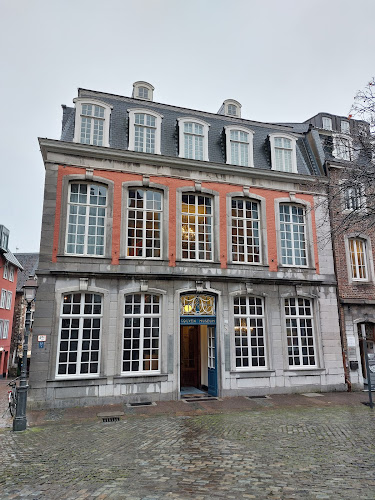
Couven-Museum
About Couven-Museum
Description
The Couven-Museum is presented as a finely restored 1660s house that transports a visitor back to the everyday life of Aachen's bourgeoisie across the 18th and early 19th centuries. It reads like an intimate time capsule: period rooms, middle-class furnishings, and decorative details remain arranged to show how people lived, dressed, and entertained themselves in those eras. The museum's strength lies less in blockbuster artifacts and more in its attention to domestic detail — think carefully placed porcelains, mirrored cabinets that still reflect the light just so, and textiles that whisper of fashions long out of wardrobe. For travelers who enjoy the slower, smell-and-feel part of history (yes, people still smell things in museums — not literally, one hopes), the Couven-Museum rewards patience and curiosity.
Visitors will find rooms staged across different styles — from late Baroque flourishes to Rococo ornamentation and the quieter lines of Biedermeier — giving a clear picture of stylistic evolution inside a single, continuous living space. The house itself, having been restored with a focus on authenticity, is as much an exhibit as the furniture and objects within it. The preservation work highlights original architectural features: staircases that have been walked a thousand times, plaster moldings, and doorways with proportions that speak to a different rhythm of life. Many people who step through its doors report a surprising sense of calm; it’s like walking into a neighborhood parlor from two centuries ago, minus the coal smoke and the awkward social calls.
The Couven-Museum is especially useful to travelers who are interested in social history rather than just grand monuments. Where cathedrals and town halls tell stories of power and ceremony, this museum tells the quieter story of middling urban life: household management, the role of private collections, and the tastes that shaped everyday interiors. There is a palpable educational value here. School groups, design students, and history buffs often linger in the period rooms, comparing small details — the shape of a chair leg, the way a mantelpiece is dressed — and leaving with a clearer sense of how aesthetic and practical needs intersected in ordinary homes of the past.
Practicalities are part of the experience. Restrooms are available on site and the museum provides an accessible restroom for wheelchair users, which matters. But the building’s historic footprint means certain modern conveniences are limited: there is no onsite restaurant, and accessible parking is not provided directly at the museum. These constraints don’t ruin the visit — they just nudge the practical traveler to plan accordingly. For example, combine the visit with a nearby café stop or slot the museum into a walking day around central Aachen so it feels less like a logistical challenge and more like a well-paced itinerary.
One of the lesser-known aspects that seasoned visitors appreciate is how the museum stages domestic tools and small inventories to illuminate household economics. It’s a surprisingly modern glimpse into how a middle-class family managed budgets, entertained guests, and displayed goods as a statement of taste and stability. The cabinets and shelves, when read closely, tell stories of trade, material culture, and the diffusion of styles across Europe. That kind of detail is the Couven-Museum’s secret sauce; it’s not shouting for attention, it’s quietly teaching you how to read a room.
Of course, not everything about the museum will delight every traveler. The rooms are compact, and at popular times they can feel snug. Signage and labels are informative but sometimes concise to the point of leaving a reader hungry for more context. And yes, while many praise the museum for its carefully conserved items and atmospheric presentation, some visitors note that the building’s small scale means the museum cannot display an enormous collection. That’s not really a flaw if one understands the place: its goal is immersive, close-up history rather than a comprehensive encyclopedic sweep.
The curatorial choices reward those who slow down. The sequence of rooms is curated to suggest a domestic narrative — places to receive guests, private family spaces, and modest work areas — and that storytelling approach makes it easy to imagine daily routines. It’s also a good site for photographers who prefer detail shots: close-ups of marquetry, embroidered textiles, and the play of natural light through old glass produce quietly beautiful images. The museum’s atmosphere suits reflective visitors more than rowdy ones; it’s perfect for people who like to stand a little longer in front of a cabinet and wonder who once used a particular silver spoon.
A few personal observations: the author remembers ducking into one small side room when the rain began outside and, for a dozen minutes, being the only person in the house. There was a small sigh of relief — not just from the weather — but because the space feels like a private conversation with the past. Experiences like that are why many travelers return, or recommend the place to friends who appreciate history served up without too much fanfare. That anecdote is mildly self-indulgent, but hey, travel is partly about those tiny intimate moments.
From a logistical and storytelling perspective, the Couven-Museum is also a good complement to other cultural stops in the city. It provides context for material culture and domestic life that visitors might not get from larger institutions focused on art or medieval monuments. If a traveler wants to understand how citizens of different social strata arranged their living spaces in the 1700s and 1800s, this museum will make abstract descriptions suddenly concrete. And while the museum doesn’t have an on-site restaurant, the lack of commercial bustle helps keep the mood intimate — a welcomed contrast to busier tourist hubs.
Accessibility aside, the museum offers onsite services to support visitors: staff are typically available for questions and short guided explanations (these can vary by season), and the arrangement of rooms encourages careful exploration. Small groups or solo travelers tend to get more out of the visit because there’s room to pause and absorb details. The presentation is deliberate: objects are not displayed like trophies but as components of lived environments, so the teaching moment is ongoing as one moves from room to room.
In short, the Couven-Museum provides a rewarding detour for travelers who enjoy material culture, design history, and the lived experience of earlier centuries. It’s not about large crowds or dramatic monuments; it’s about a quieter kind of discovery. Visitors who come with curiosity and a willingness to look closely will come away with a vivid sense of how middle-class life in Aachen evolved between the 17th and early 19th centuries. And if they leave with one practical takeaway, it is this: bring comfortable shoes and an appetite for detail, because the small scale is exactly what makes the museum memorable.
Key Features
More Details
Updated August 29, 2025
Table of Contents
Description
The Couven-Museum is presented as a finely restored 1660s house that transports a visitor back to the everyday life of Aachen’s bourgeoisie across the 18th and early 19th centuries. It reads like an intimate time capsule: period rooms, middle-class furnishings, and decorative details remain arranged to show how people lived, dressed, and entertained themselves in those eras. The museum’s strength lies less in blockbuster artifacts and more in its attention to domestic detail — think carefully placed porcelains, mirrored cabinets that still reflect the light just so, and textiles that whisper of fashions long out of wardrobe. For travelers who enjoy the slower, smell-and-feel part of history (yes, people still smell things in museums — not literally, one hopes), the Couven-Museum rewards patience and curiosity.
Visitors will find rooms staged across different styles — from late Baroque flourishes to Rococo ornamentation and the quieter lines of Biedermeier — giving a clear picture of stylistic evolution inside a single, continuous living space. The house itself, having been restored with a focus on authenticity, is as much an exhibit as the furniture and objects within it. The preservation work highlights original architectural features: staircases that have been walked a thousand times, plaster moldings, and doorways with proportions that speak to a different rhythm of life. Many people who step through its doors report a surprising sense of calm; it’s like walking into a neighborhood parlor from two centuries ago, minus the coal smoke and the awkward social calls.
The Couven-Museum is especially useful to travelers who are interested in social history rather than just grand monuments. Where cathedrals and town halls tell stories of power and ceremony, this museum tells the quieter story of middling urban life: household management, the role of private collections, and the tastes that shaped everyday interiors. There is a palpable educational value here. School groups, design students, and history buffs often linger in the period rooms, comparing small details — the shape of a chair leg, the way a mantelpiece is dressed — and leaving with a clearer sense of how aesthetic and practical needs intersected in ordinary homes of the past.
Practicalities are part of the experience. Restrooms are available on site and the museum provides an accessible restroom for wheelchair users, which matters. But the building’s historic footprint means certain modern conveniences are limited: there is no onsite restaurant, and accessible parking is not provided directly at the museum. These constraints don’t ruin the visit — they just nudge the practical traveler to plan accordingly. For example, combine the visit with a nearby café stop or slot the museum into a walking day around central Aachen so it feels less like a logistical challenge and more like a well-paced itinerary.
One of the lesser-known aspects that seasoned visitors appreciate is how the museum stages domestic tools and small inventories to illuminate household economics. It’s a surprisingly modern glimpse into how a middle-class family managed budgets, entertained guests, and displayed goods as a statement of taste and stability. The cabinets and shelves, when read closely, tell stories of trade, material culture, and the diffusion of styles across Europe. That kind of detail is the Couven-Museum’s secret sauce; it’s not shouting for attention, it’s quietly teaching you how to read a room.
Of course, not everything about the museum will delight every traveler. The rooms are compact, and at popular times they can feel snug. Signage and labels are informative but sometimes concise to the point of leaving a reader hungry for more context. And yes, while many praise the museum for its carefully conserved items and atmospheric presentation, some visitors note that the building’s small scale means the museum cannot display an enormous collection. That’s not really a flaw if one understands the place: its goal is immersive, close-up history rather than a comprehensive encyclopedic sweep.
The curatorial choices reward those who slow down. The sequence of rooms is curated to suggest a domestic narrative — places to receive guests, private family spaces, and modest work areas — and that storytelling approach makes it easy to imagine daily routines. It’s also a good site for photographers who prefer detail shots: close-ups of marquetry, embroidered textiles, and the play of natural light through old glass produce quietly beautiful images. The museum’s atmosphere suits reflective visitors more than rowdy ones; it’s perfect for people who like to stand a little longer in front of a cabinet and wonder who once used a particular silver spoon.
A few personal observations: the author remembers ducking into one small side room when the rain began outside and, for a dozen minutes, being the only person in the house. There was a small sigh of relief — not just from the weather — but because the space feels like a private conversation with the past. Experiences like that are why many travelers return, or recommend the place to friends who appreciate history served up without too much fanfare. That anecdote is mildly self-indulgent, but hey, travel is partly about those tiny intimate moments.
From a logistical and storytelling perspective, the Couven-Museum is also a good complement to other cultural stops in the city. It provides context for material culture and domestic life that visitors might not get from larger institutions focused on art or medieval monuments. If a traveler wants to understand how citizens of different social strata arranged their living spaces in the 1700s and 1800s, this museum will make abstract descriptions suddenly concrete. And while the museum doesn’t have an on-site restaurant, the lack of commercial bustle helps keep the mood intimate — a welcomed contrast to busier tourist hubs.
Accessibility aside, the museum offers onsite services to support visitors: staff are typically available for questions and short guided explanations (these can vary by season), and the arrangement of rooms encourages careful exploration. Small groups or solo travelers tend to get more out of the visit because there’s room to pause and absorb details. The presentation is deliberate: objects are not displayed like trophies but as components of lived environments, so the teaching moment is ongoing as one moves from room to room.
In short, the Couven-Museum provides a rewarding detour for travelers who enjoy material culture, design history, and the lived experience of earlier centuries. It’s not about large crowds or dramatic monuments; it’s about a quieter kind of discovery. Visitors who come with curiosity and a willingness to look closely will come away with a vivid sense of how middle-class life in Aachen evolved between the 17th and early 19th centuries. And if they leave with one practical takeaway, it is this: bring comfortable shoes and an appetite for detail, because the small scale is exactly what makes the museum memorable.
Key Highlights
Couven-Museum
Location
Places to Stay Near Couven-Museum
Find and Book a Tour
Explore More Travel Guides
No reviews found! Be the first to review!
Traveler Reviews for Couven-Museum
There are no reviews yet. Be the first one to write one.
Have you visited Couven-Museum? Help other travelers by sharing your review.
You Might Also Like

International Newspaper Museum
Elisenbrunnen
Archaeological Window
Find Accommodations Nearby
Recommended Tours & Activities
Visitor Reviews
There are no reviews yet. Be the first one to write one.
Share Your Experience
Have you visited Couven-Museum? Help other travelers by leaving a review.