About Córdoba Synagogue

Description

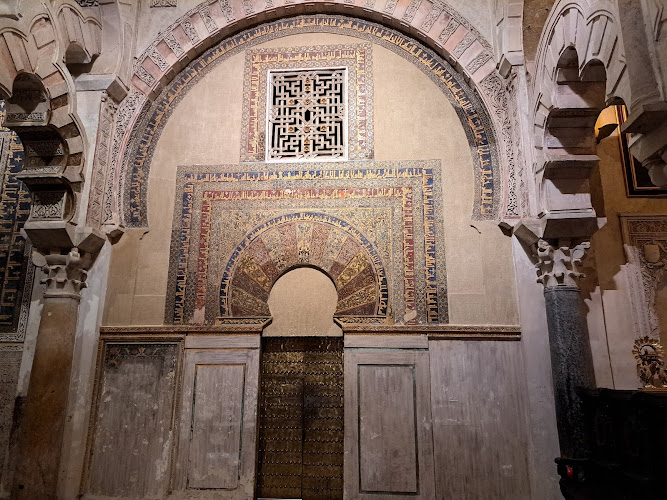
The Córdoba Synagogue is one of those places that quietly takes your breath away—not because of its size, but because of the centuries of stories it holds within its walls. Tucked away in Córdoba’s old Jewish Quarter, this 14th-century synagogue stands as one of the last remaining medieval synagogues in Spain, and the only one still intact in Andalusia. It was built around 1315, during a time when Jewish, Muslim, and Christian cultures intertwined in ways that shaped the architecture, language, and spirit of southern Spain.

Walking through its small courtyard and into the prayer hall, you can almost feel the echoes of the people who once gathered here. The stucco walls are covered in intricate Mudéjar patterns—Arabic-inspired geometric motifs and Hebrew inscriptions that shimmer softly when the light hits them just right. There’s something humbling about standing in a space that has witnessed so much: devotion, expulsion, rediscovery, and now, preservation. It’s not a grand building, but it’s powerful in its simplicity. The walls whisper history, and if you listen closely, you might just hear it.

Over the years, the synagogue has served many roles—a hospital, a chapel, even a school. Yet, despite all the transformations, the essence of its original purpose remains visible. Travelers often describe it as a quiet refuge amid the buzz of Córdoba’s historic center. And while it’s not the kind of place where you’ll spend hours, it’s one that will stay with you long after you leave. The craftsmanship, the symbolism, the sense of continuity—all of it speaks to the enduring spirit of Córdoba’s Jewish heritage.

Key Features

  • Historic Mudéjar Architecture: The synagogue’s design beautifully blends Islamic and Jewish artistic traditions, with intricate plasterwork and Hebrew calligraphy adorning the walls.
  • Stuccoed Prayer Hall: The main hall features detailed stucco decorations and a high ceiling that gives the small space a surprising sense of openness.
  • Women’s Balcony: A delicate upper gallery once reserved for women, accessible by a narrow staircase, adds to the building’s charm and authenticity.
  • Courtyard Entrance: A small courtyard leads to the main hall, offering a peaceful transition from the bustling streets outside.
  • Historical Inscriptions: Hebrew inscriptions and verses carved into the walls reveal clues about the community that once worshiped here.
  • Accessibility: The entrance is wheelchair accessible, though parking nearby can be limited, especially in the narrow lanes of the old quarter.

Many visitors comment on how surprisingly intimate the space feels. It’s not just another museum stop—it’s a place that invites reflection. The atmosphere is almost meditative, with sunlight filtering through the small windows, casting soft patterns across the walls. Even if you’re not particularly into architecture or religious history, the Córdoba Synagogue has a way of pulling you in. It’s a tangible reminder of coexistence, artistry, and resilience.

Best Time to Visit

If you ask me, the best time to visit the Córdoba Synagogue is during spring or early autumn. The weather is comfortably warm, and the city feels alive without being suffocatingly crowded. Summer in Córdoba can be intense—temperatures often soar above 40°C—and wandering through the narrow streets under that kind of heat can be a challenge. But in April or October, you can take your time exploring the Jewish Quarter, stopping for a coffee or a glass of local Montilla-Moriles wine without melting in the sun.

Morning visits are ideal if you want to enjoy the space in relative peace. The light is softer then, and you might even catch the sound of footsteps echoing faintly through the hall. Late afternoons can be beautiful too, especially when the golden light hits the stucco patterns, bringing them to life. Weekdays are generally quieter than weekends, which makes for a more contemplative experience.

And here’s a small tip from personal experience—try visiting after exploring the nearby Mosque-Cathedral. The contrast between the grandeur of one and the intimacy of the other really puts things into perspective. It’s like seeing two sides of Córdoba’s soul in one afternoon.

How to Get There

Reaching the Córdoba Synagogue is fairly straightforward, but expect a bit of walking through the maze-like streets of the old town. Honestly, that’s part of the charm. The Jewish Quarter is one of those places where getting a little lost feels like a privilege. You’ll stumble upon whitewashed walls, flower-filled patios, and quiet corners that seem frozen in time.

If you’re coming from the train station, you can take a short taxi ride or hop on one of the local buses heading toward the historic center. Once you’re in the old town, cars aren’t much use—many streets are too narrow for them anyway. I usually recommend wearing comfortable shoes because the cobblestones can be uneven, and you’ll want to wander freely without worrying about sore feet.

For those who prefer walking, it’s roughly a 20–25 minute stroll from the city center. You’ll pass through some of Córdoba’s most photogenic streets, so keep your camera handy. And even if you don’t have a perfect sense of direction, just follow the signs for “La Judería.” The synagogue is well-marked and easy to find once you’re in the heart of the quarter.

Tips for Visiting

Visiting the Córdoba Synagogue is a short but meaningful experience, and a few simple tips can help you make the most of it:

  • Go early or late in the day: The synagogue is small, so it can feel crowded quickly. Arriving early gives you a chance to enjoy the space in peace.
  • Combine it with nearby sites: The Jewish Quarter is packed with history—the Casa de Sefarad museum and the statue of Maimonides are just around the corner.
  • Take your time with the details: Don’t rush. The beauty of this place is in the tiny carvings, the inscriptions, and the play of light on plaster.
  • Mind accessibility: The entrance is wheelchair friendly, but parking nearby can be tricky. It’s best to use public transport or park outside the old town.
  • Respect the space: Though it’s a tourist attraction now, it’s still a sacred site. Keep voices low and avoid touching the walls or decorations.
  • Bring water and a hat: If you’re visiting in summer, Córdoba’s heat can be relentless. Staying hydrated will make your visit far more pleasant.

Something I’ve always loved about this spot is how it encourages a slower pace. You don’t need to rush through it or tick it off a list. Sit for a moment, look up at the ceiling, and imagine the prayers that once filled the air. There’s a quiet kind of beauty in that. And if you’re like me, you’ll leave with a sense of gratitude—for the craftsmanship, the preservation, and the chance to step into a piece of living history.

Every traveler who comes to Córdoba should see the synagogue at least once. It’s not flashy or grand, but it’s real. It’s human. And in a world that often moves too fast, that kind of authenticity is worth slowing down for.

Key Features

  • Key Features
  • Best Time to Visit
  • How to Get There
  • Tips for Visiting

More Details

Updated December 1, 2025

Description

The Córdoba Synagogue is one of those places that quietly takes your breath away—not because of its size, but because of the centuries of stories it holds within its walls. Tucked away in Córdoba’s old Jewish Quarter, this 14th-century synagogue stands as one of the last remaining medieval synagogues in Spain, and the only one still intact in Andalusia. It was built around 1315, during a time when Jewish, Muslim, and Christian cultures intertwined in ways that shaped the architecture, language, and spirit of southern Spain.

Walking through its small courtyard and into the prayer hall, you can almost feel the echoes of the people who once gathered here. The stucco walls are covered in intricate Mudéjar patterns—Arabic-inspired geometric motifs and Hebrew inscriptions that shimmer softly when the light hits them just right. There’s something humbling about standing in a space that has witnessed so much: devotion, expulsion, rediscovery, and now, preservation. It’s not a grand building, but it’s powerful in its simplicity. The walls whisper history, and if you listen closely, you might just hear it.

Over the years, the synagogue has served many roles—a hospital, a chapel, even a school. Yet, despite all the transformations, the essence of its original purpose remains visible. Travelers often describe it as a quiet refuge amid the buzz of Córdoba’s historic center. And while it’s not the kind of place where you’ll spend hours, it’s one that will stay with you long after you leave. The craftsmanship, the symbolism, the sense of continuity—all of it speaks to the enduring spirit of Córdoba’s Jewish heritage.

Key Features

  • Historic Mudéjar Architecture: The synagogue’s design beautifully blends Islamic and Jewish artistic traditions, with intricate plasterwork and Hebrew calligraphy adorning the walls.
  • Stuccoed Prayer Hall: The main hall features detailed stucco decorations and a high ceiling that gives the small space a surprising sense of openness.
  • Women’s Balcony: A delicate upper gallery once reserved for women, accessible by a narrow staircase, adds to the building’s charm and authenticity.
  • Courtyard Entrance: A small courtyard leads to the main hall, offering a peaceful transition from the bustling streets outside.
  • Historical Inscriptions: Hebrew inscriptions and verses carved into the walls reveal clues about the community that once worshiped here.
  • Accessibility: The entrance is wheelchair accessible, though parking nearby can be limited, especially in the narrow lanes of the old quarter.

Many visitors comment on how surprisingly intimate the space feels. It’s not just another museum stop—it’s a place that invites reflection. The atmosphere is almost meditative, with sunlight filtering through the small windows, casting soft patterns across the walls. Even if you’re not particularly into architecture or religious history, the Córdoba Synagogue has a way of pulling you in. It’s a tangible reminder of coexistence, artistry, and resilience.

Best Time to Visit

If you ask me, the best time to visit the Córdoba Synagogue is during spring or early autumn. The weather is comfortably warm, and the city feels alive without being suffocatingly crowded. Summer in Córdoba can be intense—temperatures often soar above 40°C—and wandering through the narrow streets under that kind of heat can be a challenge. But in April or October, you can take your time exploring the Jewish Quarter, stopping for a coffee or a glass of local Montilla-Moriles wine without melting in the sun.

Morning visits are ideal if you want to enjoy the space in relative peace. The light is softer then, and you might even catch the sound of footsteps echoing faintly through the hall. Late afternoons can be beautiful too, especially when the golden light hits the stucco patterns, bringing them to life. Weekdays are generally quieter than weekends, which makes for a more contemplative experience.

And here’s a small tip from personal experience—try visiting after exploring the nearby Mosque-Cathedral. The contrast between the grandeur of one and the intimacy of the other really puts things into perspective. It’s like seeing two sides of Córdoba’s soul in one afternoon.

How to Get There

Reaching the Córdoba Synagogue is fairly straightforward, but expect a bit of walking through the maze-like streets of the old town. Honestly, that’s part of the charm. The Jewish Quarter is one of those places where getting a little lost feels like a privilege. You’ll stumble upon whitewashed walls, flower-filled patios, and quiet corners that seem frozen in time.

If you’re coming from the train station, you can take a short taxi ride or hop on one of the local buses heading toward the historic center. Once you’re in the old town, cars aren’t much use—many streets are too narrow for them anyway. I usually recommend wearing comfortable shoes because the cobblestones can be uneven, and you’ll want to wander freely without worrying about sore feet.

For those who prefer walking, it’s roughly a 20–25 minute stroll from the city center. You’ll pass through some of Córdoba’s most photogenic streets, so keep your camera handy. And even if you don’t have a perfect sense of direction, just follow the signs for “La Judería.” The synagogue is well-marked and easy to find once you’re in the heart of the quarter.

Tips for Visiting

Visiting the Córdoba Synagogue is a short but meaningful experience, and a few simple tips can help you make the most of it:

  • Go early or late in the day: The synagogue is small, so it can feel crowded quickly. Arriving early gives you a chance to enjoy the space in peace.
  • Combine it with nearby sites: The Jewish Quarter is packed with history—the Casa de Sefarad museum and the statue of Maimonides are just around the corner.
  • Take your time with the details: Don’t rush. The beauty of this place is in the tiny carvings, the inscriptions, and the play of light on plaster.
  • Mind accessibility: The entrance is wheelchair friendly, but parking nearby can be tricky. It’s best to use public transport or park outside the old town.
  • Respect the space: Though it’s a tourist attraction now, it’s still a sacred site. Keep voices low and avoid touching the walls or decorations.
  • Bring water and a hat: If you’re visiting in summer, Córdoba’s heat can be relentless. Staying hydrated will make your visit far more pleasant.

Something I’ve always loved about this spot is how it encourages a slower pace. You don’t need to rush through it or tick it off a list. Sit for a moment, look up at the ceiling, and imagine the prayers that once filled the air. There’s a quiet kind of beauty in that. And if you’re like me, you’ll leave with a sense of gratitude—for the craftsmanship, the preservation, and the chance to step into a piece of living history.

Every traveler who comes to Córdoba should see the synagogue at least once. It’s not flashy or grand, but it’s real. It’s human. And in a world that often moves too fast, that kind of authenticity is worth slowing down for.

Key Highlights

  • Key Features
  • Best Time to Visit
  • How to Get There
  • Tips for Visiting

Location

Places to Stay Near Córdoba Synagogue

Find and Book a Tour

Explore More Travel Guides

No reviews found! Be the first to review!

Traveler Reviews for Córdoba Synagogue

There are no reviews yet. Be the first one to write one.

Share Your Experience

Have you visited Córdoba Synagogue? Help other travelers by sharing your review.

Find Accommodations Nearby

Recommended Tours & Activities

Visitor Reviews

There are no reviews yet. Be the first one to write one.

Share Your Experience

Have you visited Córdoba Synagogue? Help other travelers by leaving a review.