
Clifton Suspension Bridge
About Clifton Suspension Bridge
Description
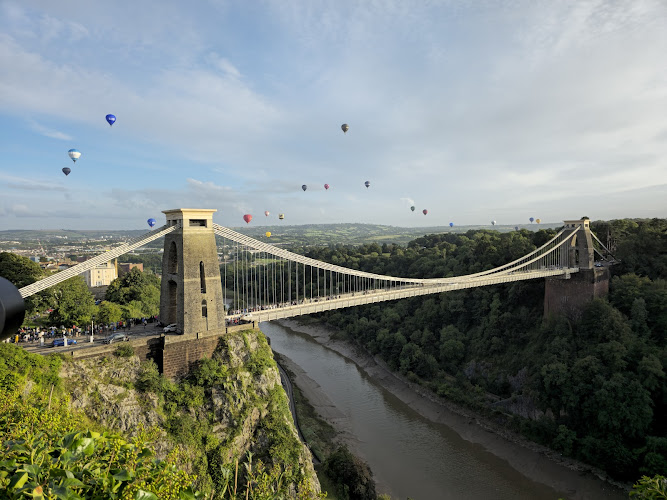
Standing 245 feet above the Avon Gorge, the Clifton Suspension Bridge represents one of those rare moments when Victorian engineering meets sheer artistic beauty. I've always thought there's something almost defiant about this structure - imagine proposing to build a massive suspension bridge across a limestone gorge back in the 1830s when most people were still getting around on horseback. Isambard Kingdom Brunel was only 24 years old when he won the design competition for this bridge, though he sadly never lived to see it completed in 1864. The bridge stretches 1,352 feet across the gorge, creating this spectacular connection between Clifton in Bristol and Leigh Woods in North Somerset. What strikes most visitors first isn't actually the technical specifications (though engineering enthusiasts absolutely geek out over the Egyptian-influenced towers and the wrought iron chains). It's that breathtaking moment when you realize you're walking suspended over one of Britain's most dramatic natural landscapes, with the River Avon winding far below and the surrounding countryside spreading out in every direction. This isn't just another pretty bridge though. It's a working piece of infrastructure that around 12,000 vehicles cross every single day, along with countless pedestrians and cyclists. And here's something that always amazes me - it cost £100,000 to build back in the 1860s, which seemed absolutely astronomical at the time. Today, it would cost upwards of £10 million to construct something similar, making it one of the best investments Bristol ever made.Key Features
The Clifton Suspension Bridge offers travelers several distinctive experiences and features that make it genuinely worth the visit:- The observation deck provides unobstructed panoramic views across the Avon Gorge, with sight lines extending across Bristol on clear days - photographers consistently rate the golden hour here as exceptional for capturing the bridge's silhouette
- Victorian engineering at its finest, with the original chains and towers standing as testament to 19th-century innovation - the bridge sways slightly when you walk across it, which is completely normal and actually shows the brilliant flexibility of Brunel's design
- The visitor center houses fascinating exhibitions about the bridge's construction, including the five men who tragically died during its building and the more than 500 who have unfortunately jumped from it (there are now suicide prevention measures in place)
- Both towers feature unique Egyptian-inspired architecture that was all the rage during the Victorian era - these aren't your typical industrial structures but genuinely beautiful pieces of design work
- Free pedestrian access means you can walk or cycle across whenever you fancy, day or night - though vehicles pay a toll that helps maintain this historic structure
- The surrounding Clifton and Leigh Woods areas offer excellent walking trails with multiple vantage points for viewing the bridge from below, which honestly provides even more dramatic perspectives than standing on it
- Wheelchair accessible facilities including restrooms make this attraction genuinely inclusive for visitors with mobility requirements
- The bridge is beautifully illuminated at night, transforming it into something almost magical when the lights reflect off the gorge walls
Best Time to Visit
Here's where I'm gonna be brutally honest with you - this bridge is stunning year-round, but your experience will vary dramatically depending on when you show up. I've visited in every season, and each has its merits and drawbacks. Summer months from June through August bring the longest daylight hours, which means you can visit after work or dinner and still get those incredible sunset photographs everyone's after. But (and this is a big but) you'll be sharing the experience with coach loads of tourists, school groups, and half of Bristol's population enjoying the good weather. The observation deck can get genuinely crowded, and finding a parking spot nearby becomes an Olympic sport. Spring and autumn are, in my opinion, the sweet spot for visiting. Late April through May offers wildflowers blooming across Leigh Woods, while September and October provide that gorgeous autumn color that makes the gorge look like something from a painting. The weather's usually cooperative enough for a pleasant walk, and the crowds thin out considerably once school terms begin. Plus, the lower angle of sunlight during these months creates more dramatic shadows across the gorge. Winter visiting requires a bit more fortitude. It gets properly cold up there with winds whipping through the gorge, and you'll definitely want layers. However, if you can handle the chill, winter mornings occasionally produce spectacular mist effects where the bridge appears to float above the clouds filling the gorge. I witnessed this once in January, and it remains one of my favorite Bristol memories despite nearly losing feeling in my fingers. For the absolute best experience, aim for weekday mornings between April and June or September and October. You'll avoid weekend crowds, get decent weather, and have much better chances of capturing those Instagram-worthy shots without photobombing tourists in every frame. Early mornings around 7-8am are particularly magical when the light hits just right and you might have the bridge almost to yourself.How to Get There
Getting to the Clifton Suspension Bridge is reasonably straightforward, though Bristol's geography and traffic patterns can complicate things if you're not prepared. The bridge sits in the Clifton area, which is essentially Bristol's posh neighborhood perched on the edge of the gorge. If you're driving, multiple car parks serve the area, though none are massive. The Clifton Observatory car park provides the closest access to the bridge itself, but it fills up quickly on weekends and during peak tourist season. Alternative parking exists along Bridge Road and in the Leigh Woods area on the opposite side, though you'll face competition from locals and dog walkers. Traffic congestion around Clifton can be frustrating, especially during rush hours when you're competing with Bristol's notoriously snarled commuter traffic. Public transport actually works quite well for reaching the bridge. Several bus routes serve Clifton, with the number 8 from Bristol city center being particularly convenient - it drops you within a ten-minute walk of the bridge. Bristol Temple Meads train station connects to the national rail network, and from there you can catch buses or take a taxi covering the roughly three-mile journey. The walk from central Bristol to the bridge takes about 45 minutes and passes through some lovely Georgian architecture if you've got the time and energy. For the adventurous, cycling is increasingly popular. Bristol's working on improving cycling infrastructure, and several routes wind through Clifton to the bridge. Just be prepared for some fairly steep hills - Clifton doesn't sit at gorge level, after all. Bike racks are available near the bridge for securing your ride while you explore on foot. Taxis and ride-sharing services operate throughout Bristol and can drop you right at the bridge entrance, which is honestly the easiest option if you're visiting as part of a broader Bristol itinerary and don't want the hassle of parking.Tips for Visiting
After multiple visits and watching countless tourists make the same mistakes, I've compiled some practical advice that'll genuinely improve your experience at the Clifton Suspension Bridge. First up - dress for the weather, then add an extra layer. The gorge creates its own microclimate, and wind speeds on the bridge can be significantly higher than elsewhere in Bristol. I've seen summer visitors in t-shirts absolutely freezing while trying to take photos because they didn't anticipate the wind chill. Comfortable walking shoes are essential too, especially if you plan to explore the surrounding areas. The pedestrian walkways on the bridge itself aren't particularly wide, and they're shared spaces with cyclists. Stay alert and don't stop suddenly in the middle for photos - there are designated viewing areas where you can safely pause without creating pedestrian traffic jams. And speaking of photos, the best shots of the bridge often come from the viewing points below rather than from on the bridge itself. The Clifton Observatory and the White Lion Bar area provide excellent elevated perspectives, while walks down into the gorge offer those dramatic looking-up shots. Timing your visit around the vehicular traffic patterns makes a surprising difference. The bridge remains open to vehicles, and watching massive trucks rumble across while you're walking can feel slightly unnerving (though it's perfectly safe). Early mornings and late evenings see less traffic and create a more peaceful atmosphere. Don't skip the visitor center even though it's small. The historical information adds genuine context to what you're seeing, and understanding the engineering challenges Brunel faced makes the bridge itself more impressive. The staff are knowledgeable and happy to answer questions, plus they stock some decent locally-made souvenirs if you're into that sort of thing. Combine your bridge visit with exploring the surrounding areas - Clifton Village has excellent cafes and restaurants, while the Observatory and Camera Obscura next to the bridge offer quirky Victorian entertainment that's surprisingly engaging. Leigh Woods on the opposite side provides extensive walking trails through ancient woodland, and the views looking back toward Bristol and the bridge are genuinely spectacular. Check the weather forecast before visiting, particularly wind speeds. The bridge occasionally closes to pedestrians during extreme weather conditions, and there's nothing more disappointing than making the journey only to find access restricted. The bridge's official channels provide real-time updates on closures. Finally, respect the bridge's somber history. While it's primarily a tourist attraction and engineering marvel, it's also been the site of numerous tragedies. The Samaritans maintain a presence here, and you'll notice emergency phones and signage related to mental health support. It's worth being mindful of this aspect while enjoying your visit. The Clifton Suspension Bridge genuinely deserves its reputation as one of Britain's most remarkable structures. It manages to be simultaneously a triumph of Victorian engineering, a beautiful piece of architectural design, and a functional piece of infrastructure still serving its original purpose more than 150 years after completion. Whether you're an engineering enthusiast, a photography lover, or simply someone who appreciates remarkable views, this bridge delivers an experience that justifies the journey to Bristol.Key Features
- Designed from an original concept by Isambard Kingdom Brunel; completed 1864
- Dramatic views across the Avon Gorge and River Avon
- Victorian stone towers and wrought-iron suspension chains
- Visitor centre and museum in the Victorian vaults with displays about construction and maintenance
- Nearby walking routes, viewpoints and Clifton Village cafés
More Details
Updated March 30, 2026
Table of Contents
Description
Standing 245 feet above the Avon Gorge, the Clifton Suspension Bridge represents one of those rare moments when Victorian engineering meets sheer artistic beauty. I’ve always thought there’s something almost defiant about this structure – imagine proposing to build a massive suspension bridge across a limestone gorge back in the 1830s when most people were still getting around on horseback. Isambard Kingdom Brunel was only 24 years old when he won the design competition for this bridge, though he sadly never lived to see it completed in 1864.
The bridge stretches 1,352 feet across the gorge, creating this spectacular connection between Clifton in Bristol and Leigh Woods in North Somerset. What strikes most visitors first isn’t actually the technical specifications (though engineering enthusiasts absolutely geek out over the Egyptian-influenced towers and the wrought iron chains). It’s that breathtaking moment when you realize you’re walking suspended over one of Britain’s most dramatic natural landscapes, with the River Avon winding far below and the surrounding countryside spreading out in every direction.
This isn’t just another pretty bridge though. It’s a working piece of infrastructure that around 12,000 vehicles cross every single day, along with countless pedestrians and cyclists. And here’s something that always amazes me – it cost £100,000 to build back in the 1860s, which seemed absolutely astronomical at the time. Today, it would cost upwards of £10 million to construct something similar, making it one of the best investments Bristol ever made.
Key Features
The Clifton Suspension Bridge offers travelers several distinctive experiences and features that make it genuinely worth the visit:
- The observation deck provides unobstructed panoramic views across the Avon Gorge, with sight lines extending across Bristol on clear days – photographers consistently rate the golden hour here as exceptional for capturing the bridge’s silhouette
- Victorian engineering at its finest, with the original chains and towers standing as testament to 19th-century innovation – the bridge sways slightly when you walk across it, which is completely normal and actually shows the brilliant flexibility of Brunel’s design
- The visitor center houses fascinating exhibitions about the bridge’s construction, including the five men who tragically died during its building and the more than 500 who have unfortunately jumped from it (there are now suicide prevention measures in place)
- Both towers feature unique Egyptian-inspired architecture that was all the rage during the Victorian era – these aren’t your typical industrial structures but genuinely beautiful pieces of design work
- Free pedestrian access means you can walk or cycle across whenever you fancy, day or night – though vehicles pay a toll that helps maintain this historic structure
- The surrounding Clifton and Leigh Woods areas offer excellent walking trails with multiple vantage points for viewing the bridge from below, which honestly provides even more dramatic perspectives than standing on it
- Wheelchair accessible facilities including restrooms make this attraction genuinely inclusive for visitors with mobility requirements
- The bridge is beautifully illuminated at night, transforming it into something almost magical when the lights reflect off the gorge walls
Best Time to Visit
Here’s where I’m gonna be brutally honest with you – this bridge is stunning year-round, but your experience will vary dramatically depending on when you show up. I’ve visited in every season, and each has its merits and drawbacks.
Summer months from June through August bring the longest daylight hours, which means you can visit after work or dinner and still get those incredible sunset photographs everyone’s after. But (and this is a big but) you’ll be sharing the experience with coach loads of tourists, school groups, and half of Bristol’s population enjoying the good weather. The observation deck can get genuinely crowded, and finding a parking spot nearby becomes an Olympic sport.
Spring and autumn are, in my opinion, the sweet spot for visiting. Late April through May offers wildflowers blooming across Leigh Woods, while September and October provide that gorgeous autumn color that makes the gorge look like something from a painting. The weather’s usually cooperative enough for a pleasant walk, and the crowds thin out considerably once school terms begin. Plus, the lower angle of sunlight during these months creates more dramatic shadows across the gorge.
Winter visiting requires a bit more fortitude. It gets properly cold up there with winds whipping through the gorge, and you’ll definitely want layers. However, if you can handle the chill, winter mornings occasionally produce spectacular mist effects where the bridge appears to float above the clouds filling the gorge. I witnessed this once in January, and it remains one of my favorite Bristol memories despite nearly losing feeling in my fingers.
For the absolute best experience, aim for weekday mornings between April and June or September and October. You’ll avoid weekend crowds, get decent weather, and have much better chances of capturing those Instagram-worthy shots without photobombing tourists in every frame. Early mornings around 7-8am are particularly magical when the light hits just right and you might have the bridge almost to yourself.
How to Get There
Getting to the Clifton Suspension Bridge is reasonably straightforward, though Bristol’s geography and traffic patterns can complicate things if you’re not prepared. The bridge sits in the Clifton area, which is essentially Bristol’s posh neighborhood perched on the edge of the gorge.
If you’re driving, multiple car parks serve the area, though none are massive. The Clifton Observatory car park provides the closest access to the bridge itself, but it fills up quickly on weekends and during peak tourist season. Alternative parking exists along Bridge Road and in the Leigh Woods area on the opposite side, though you’ll face competition from locals and dog walkers. Traffic congestion around Clifton can be frustrating, especially during rush hours when you’re competing with Bristol’s notoriously snarled commuter traffic.
Public transport actually works quite well for reaching the bridge. Several bus routes serve Clifton, with the number 8 from Bristol city center being particularly convenient – it drops you within a ten-minute walk of the bridge. Bristol Temple Meads train station connects to the national rail network, and from there you can catch buses or take a taxi covering the roughly three-mile journey. The walk from central Bristol to the bridge takes about 45 minutes and passes through some lovely Georgian architecture if you’ve got the time and energy.
For the adventurous, cycling is increasingly popular. Bristol’s working on improving cycling infrastructure, and several routes wind through Clifton to the bridge. Just be prepared for some fairly steep hills – Clifton doesn’t sit at gorge level, after all. Bike racks are available near the bridge for securing your ride while you explore on foot.
Taxis and ride-sharing services operate throughout Bristol and can drop you right at the bridge entrance, which is honestly the easiest option if you’re visiting as part of a broader Bristol itinerary and don’t want the hassle of parking.
Tips for Visiting
After multiple visits and watching countless tourists make the same mistakes, I’ve compiled some practical advice that’ll genuinely improve your experience at the Clifton Suspension Bridge.
First up – dress for the weather, then add an extra layer. The gorge creates its own microclimate, and wind speeds on the bridge can be significantly higher than elsewhere in Bristol. I’ve seen summer visitors in t-shirts absolutely freezing while trying to take photos because they didn’t anticipate the wind chill. Comfortable walking shoes are essential too, especially if you plan to explore the surrounding areas.
The pedestrian walkways on the bridge itself aren’t particularly wide, and they’re shared spaces with cyclists. Stay alert and don’t stop suddenly in the middle for photos – there are designated viewing areas where you can safely pause without creating pedestrian traffic jams. And speaking of photos, the best shots of the bridge often come from the viewing points below rather than from on the bridge itself. The Clifton Observatory and the White Lion Bar area provide excellent elevated perspectives, while walks down into the gorge offer those dramatic looking-up shots.
Timing your visit around the vehicular traffic patterns makes a surprising difference. The bridge remains open to vehicles, and watching massive trucks rumble across while you’re walking can feel slightly unnerving (though it’s perfectly safe). Early mornings and late evenings see less traffic and create a more peaceful atmosphere.
Don’t skip the visitor center even though it’s small. The historical information adds genuine context to what you’re seeing, and understanding the engineering challenges Brunel faced makes the bridge itself more impressive. The staff are knowledgeable and happy to answer questions, plus they stock some decent locally-made souvenirs if you’re into that sort of thing.
Combine your bridge visit with exploring the surrounding areas – Clifton Village has excellent cafes and restaurants, while the Observatory and Camera Obscura next to the bridge offer quirky Victorian entertainment that’s surprisingly engaging. Leigh Woods on the opposite side provides extensive walking trails through ancient woodland, and the views looking back toward Bristol and the bridge are genuinely spectacular.
Check the weather forecast before visiting, particularly wind speeds. The bridge occasionally closes to pedestrians during extreme weather conditions, and there’s nothing more disappointing than making the journey only to find access restricted. The bridge’s official channels provide real-time updates on closures.
Finally, respect the bridge’s somber history. While it’s primarily a tourist attraction and engineering marvel, it’s also been the site of numerous tragedies. The Samaritans maintain a presence here, and you’ll notice emergency phones and signage related to mental health support. It’s worth being mindful of this aspect while enjoying your visit.
The Clifton Suspension Bridge genuinely deserves its reputation as one of Britain’s most remarkable structures. It manages to be simultaneously a triumph of Victorian engineering, a beautiful piece of architectural design, and a functional piece of infrastructure still serving its original purpose more than 150 years after completion. Whether you’re an engineering enthusiast, a photography lover, or simply someone who appreciates remarkable views, this bridge delivers an experience that justifies the journey to Bristol.
Key Highlights
- Designed from an original concept by Isambard Kingdom Brunel; completed 1864
- Dramatic views across the Avon Gorge and River Avon
- Victorian stone towers and wrought-iron suspension chains
- Visitor centre and museum in the Victorian vaults with displays about construction and maintenance
- Nearby walking routes, viewpoints and Clifton Village cafés
Location
Places to Stay Near Clifton Suspension Bridge
Find and Book a Tour
Explore More Travel Guides
No reviews found! Be the first to review!
Clifton Suspension Bridge is a prominent attractions located in Bristol.
Visit us at: Bristol, United Kingdom.
Traveler Reviews for Clifton Suspension Bridge
There are no reviews yet. Be the first one to write one.
Have you visited Clifton Suspension Bridge? Help other travelers by sharing your review.
Nearby Attractions
You Might Also Like

Clifton Observatory

Tyntesfield
Blaise Hamlet
Find Accommodations Nearby
Recommended Tours & Activities
Visitor Reviews
There are no reviews yet. Be the first one to write one.
Share Your Experience
Have you visited Clifton Suspension Bridge? Help other travelers by leaving a review.