
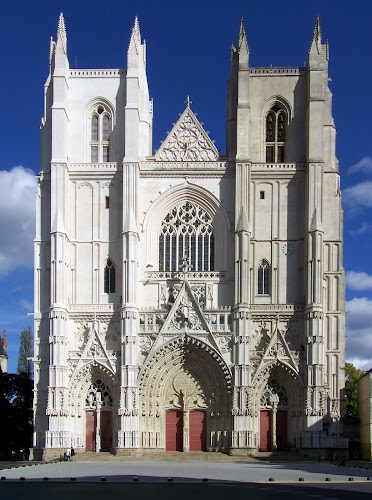
Cathédrale Saint-Pierre-et-Saint-Paul de Nantes
About Cathédrale Saint-Pierre-et-Saint-Paul de Nantes
Description
The Cathédrale Saint-Pierre-et-Saint-Paul de Nantes is one of those places that quietly takes your breath away before you even realize it. Standing tall in the heart of Nantes, this Gothic masterpiece has been watching over the city since the 15th century. Construction began way back in 1434 and, believe it or not, it took nearly 457 years to complete. That’s right—almost half a millennium of craftsmanship, patience, and devotion. And somehow, every stone still speaks of that long, layered history.
What makes this cathedral so special isn’t just its size or its age (though both are impressive). It’s the feeling you get stepping inside—a mix of awe and calm, like walking into a living piece of history that still hums with quiet energy. The light streaming through the stained glass windows paints soft colors on the white walls, and for a moment, the noise of the city just melts away. I remember my first visit; I was caught off guard by how bright it was inside. Many Gothic cathedrals feel dark and heavy, but this one feels almost airy, as if the centuries of prayers have lightened it somehow.
The cathedral has seen its share of challenges—fires, wars, and even a devastating blaze in 2020 that destroyed its grand organ. Yet, each time, the people of Nantes have brought it back to life. That resilience seems to echo in the very stones. It’s not just a monument; it’s a symbol of endurance and faith. And while most visitors come for the architecture, they often leave remembering the atmosphere—the way the silence feels sacred, even if you’re not religious at all.
Key Features
- Gothic Architecture: The cathedral’s soaring vaults and intricate stone carvings are textbook examples of late Gothic design, yet there’s a simplicity to its white façade that sets it apart from other French cathedrals.
- The Tomb of François II and Marguerite de Foix: One of the most remarkable Renaissance sculptures in France, this marble tomb is a masterpiece of symmetry and symbolism. It’s worth spending a few extra minutes just tracing the details with your eyes.
- Stained Glass Windows: The light play here is extraordinary—especially on sunny afternoons. The windows tell biblical stories, but even if you don’t follow the narrative, the artistry alone is mesmerizing.
- Historic Organ: Though damaged in recent years, the organ remains an integral part of the cathedral’s identity. Restoration efforts are ongoing, and locals speak of it with deep affection.
- Crypt and Exhibitions: Beneath the main floor lies an archaeological crypt that houses rotating exhibitions about the cathedral’s history and the city’s religious heritage.
- Twin Towers: The façade is flanked by two massive towers that dominate Nantes’ skyline. They make for fantastic photo ops, especially at sunset when the light turns golden.
Best Time to Visit
If you’re anything like me, you’ll want to avoid the big crowds that tend to gather around midday. Early morning is magical—the streets are quieter, and the soft light filtering through the stained glass feels almost otherworldly. Late afternoon is another good window, particularly if you’re a photographer chasing that warm glow.
Spring and early autumn are arguably the best seasons to visit. The weather is mild, and the city feels alive but not overwhelmed. Summer can be beautiful too, but it’s busier, and the heat sometimes makes the interior feel a bit stuffy. Winter has its charm, though—the cathedral looks hauntingly beautiful when the air is crisp, and the Christmas decorations in Nantes add a cozy touch.
If you happen to be in town during a religious festival or a special concert, don’t miss it. The acoustics inside are phenomenal. Even if you’re not particularly into choral music, hearing voices rise and echo through those ancient arches can give you goosebumps.
How to Get There
Getting to the cathedral is pretty straightforward since it’s right in the central part of Nantes. If you’re staying nearby, it’s easily walkable from most major attractions. The tram system is reliable and efficient—just hop on a line heading toward the city center and get off near the Bouffay or Commerce stops. From there, it’s a short stroll through charming streets lined with cafés and little shops.
For those driving, parking can be tricky (as is often the case in European city centers), but there are several public car parks within a few minutes’ walk. Honestly, though, I’d recommend leaving the car behind. Nantes is a city best explored on foot—you’ll stumble upon hidden courtyards, street art, and bakeries that smell so good you’ll forget where you were headed in the first place.
If you’re arriving by train, the main station (Gare de Nantes) is about a 15-minute walk away. Taxis and rideshares are available, but the walk is pleasant, especially if you follow the signs toward the historic center. Along the way, you’ll pass some lovely old buildings and maybe even catch a glimpse of the Loire River.
Tips for Visiting
Here’s the thing about visiting a place like this—it’s not just about checking it off your list. It’s about slowing down enough to actually feel it. So take your time. Sit quietly for a few minutes inside. Let the light and the silence work their magic.
- Dress Respectfully: It’s still an active place of worship, so modest clothing is appreciated. You don’t have to be overly formal, but avoid beachwear or loud attire.
- Photography: Photos are allowed, but be discreet during services. The best shots are often from the back of the nave looking toward the altar, where you can capture the full grandeur of the interior.
- Combine Your Visit: The cathedral pairs perfectly with a stroll through the Bouffay district nearby—full of medieval charm and great places to grab a coffee or a crêpe afterward.
- Take a Guided Tour: If you’re curious about the details (and trust me, there are many), guided tours are available in multiple languages. They’re worth it for the stories alone.
- Accessibility: The main entrance is accessible, and staff are usually very accommodating. If you have mobility concerns, it’s best to check ahead for current access routes during restoration work.
- Respect the Quiet: Even when it’s busy, there’s a hush that hangs in the air. Try to keep voices low—it’s part of what makes the experience so powerful.
- Look Up: Seriously. The ceiling vaults are breathtaking, and many visitors miss the intricate details carved high above their heads.
One last thing—don’t rush out once you’re done inside. Step outside and walk around the exterior. The stonework changes subtly depending on the angle of the light, and you’ll notice details that aren’t visible from the front. Sometimes I like to sit on a nearby bench with a coffee and just watch people come and go—it’s a small reminder of how this cathedral isn’t just a relic of the past but a living part of the city’s rhythm.
The Cathédrale Saint-Pierre-et-Saint-Paul de Nantes isn’t the kind of place that shouts for attention. It doesn’t need to. Its beauty lies in its quiet strength, its centuries of stories, and the way it continues to inspire wonder in anyone who steps through its doors. Whether you’re a lover of architecture, history, or simply the feeling of being in a space that has witnessed so much human life, this cathedral will leave its mark on you. And honestly, that’s the best kind of souvenir there is.
Key Features
- Key Features
- Best Time to Visit
- How to Get There
- Tips for Visiting
More Details
Updated November 30, 2025
Table of Contents
- Description
- Key Features
- Best Time to Visit
- How to Get There
- Tips for Visiting
- Key Highlights
- Location
- Places to Stay Near Cathédrale Saint-Pierre-et-Saint-Paul de Nantes
- Find and Book a Tour
- Explore More Travel Guides
- Nearby Places You Might Like
- Traveler Reviews for Cathédrale Saint-Pierre-et-Saint-Paul de Nantes
- Share Your Experience
Description
The Cathédrale Saint-Pierre-et-Saint-Paul de Nantes is one of those places that quietly takes your breath away before you even realize it. Standing tall in the heart of Nantes, this Gothic masterpiece has been watching over the city since the 15th century. Construction began way back in 1434 and, believe it or not, it took nearly 457 years to complete. That’s right—almost half a millennium of craftsmanship, patience, and devotion. And somehow, every stone still speaks of that long, layered history.
What makes this cathedral so special isn’t just its size or its age (though both are impressive). It’s the feeling you get stepping inside—a mix of awe and calm, like walking into a living piece of history that still hums with quiet energy. The light streaming through the stained glass windows paints soft colors on the white walls, and for a moment, the noise of the city just melts away. I remember my first visit; I was caught off guard by how bright it was inside. Many Gothic cathedrals feel dark and heavy, but this one feels almost airy, as if the centuries of prayers have lightened it somehow.
The cathedral has seen its share of challenges—fires, wars, and even a devastating blaze in 2020 that destroyed its grand organ. Yet, each time, the people of Nantes have brought it back to life. That resilience seems to echo in the very stones. It’s not just a monument; it’s a symbol of endurance and faith. And while most visitors come for the architecture, they often leave remembering the atmosphere—the way the silence feels sacred, even if you’re not religious at all.
Key Features
- Gothic Architecture: The cathedral’s soaring vaults and intricate stone carvings are textbook examples of late Gothic design, yet there’s a simplicity to its white façade that sets it apart from other French cathedrals.
- The Tomb of François II and Marguerite de Foix: One of the most remarkable Renaissance sculptures in France, this marble tomb is a masterpiece of symmetry and symbolism. It’s worth spending a few extra minutes just tracing the details with your eyes.
- Stained Glass Windows: The light play here is extraordinary—especially on sunny afternoons. The windows tell biblical stories, but even if you don’t follow the narrative, the artistry alone is mesmerizing.
- Historic Organ: Though damaged in recent years, the organ remains an integral part of the cathedral’s identity. Restoration efforts are ongoing, and locals speak of it with deep affection.
- Crypt and Exhibitions: Beneath the main floor lies an archaeological crypt that houses rotating exhibitions about the cathedral’s history and the city’s religious heritage.
- Twin Towers: The façade is flanked by two massive towers that dominate Nantes’ skyline. They make for fantastic photo ops, especially at sunset when the light turns golden.
Best Time to Visit
If you’re anything like me, you’ll want to avoid the big crowds that tend to gather around midday. Early morning is magical—the streets are quieter, and the soft light filtering through the stained glass feels almost otherworldly. Late afternoon is another good window, particularly if you’re a photographer chasing that warm glow.
Spring and early autumn are arguably the best seasons to visit. The weather is mild, and the city feels alive but not overwhelmed. Summer can be beautiful too, but it’s busier, and the heat sometimes makes the interior feel a bit stuffy. Winter has its charm, though—the cathedral looks hauntingly beautiful when the air is crisp, and the Christmas decorations in Nantes add a cozy touch.
If you happen to be in town during a religious festival or a special concert, don’t miss it. The acoustics inside are phenomenal. Even if you’re not particularly into choral music, hearing voices rise and echo through those ancient arches can give you goosebumps.
How to Get There
Getting to the cathedral is pretty straightforward since it’s right in the central part of Nantes. If you’re staying nearby, it’s easily walkable from most major attractions. The tram system is reliable and efficient—just hop on a line heading toward the city center and get off near the Bouffay or Commerce stops. From there, it’s a short stroll through charming streets lined with cafés and little shops.
For those driving, parking can be tricky (as is often the case in European city centers), but there are several public car parks within a few minutes’ walk. Honestly, though, I’d recommend leaving the car behind. Nantes is a city best explored on foot—you’ll stumble upon hidden courtyards, street art, and bakeries that smell so good you’ll forget where you were headed in the first place.
If you’re arriving by train, the main station (Gare de Nantes) is about a 15-minute walk away. Taxis and rideshares are available, but the walk is pleasant, especially if you follow the signs toward the historic center. Along the way, you’ll pass some lovely old buildings and maybe even catch a glimpse of the Loire River.
Tips for Visiting
Here’s the thing about visiting a place like this—it’s not just about checking it off your list. It’s about slowing down enough to actually feel it. So take your time. Sit quietly for a few minutes inside. Let the light and the silence work their magic.
- Dress Respectfully: It’s still an active place of worship, so modest clothing is appreciated. You don’t have to be overly formal, but avoid beachwear or loud attire.
- Photography: Photos are allowed, but be discreet during services. The best shots are often from the back of the nave looking toward the altar, where you can capture the full grandeur of the interior.
- Combine Your Visit: The cathedral pairs perfectly with a stroll through the Bouffay district nearby—full of medieval charm and great places to grab a coffee or a crêpe afterward.
- Take a Guided Tour: If you’re curious about the details (and trust me, there are many), guided tours are available in multiple languages. They’re worth it for the stories alone.
- Accessibility: The main entrance is accessible, and staff are usually very accommodating. If you have mobility concerns, it’s best to check ahead for current access routes during restoration work.
- Respect the Quiet: Even when it’s busy, there’s a hush that hangs in the air. Try to keep voices low—it’s part of what makes the experience so powerful.
- Look Up: Seriously. The ceiling vaults are breathtaking, and many visitors miss the intricate details carved high above their heads.
One last thing—don’t rush out once you’re done inside. Step outside and walk around the exterior. The stonework changes subtly depending on the angle of the light, and you’ll notice details that aren’t visible from the front. Sometimes I like to sit on a nearby bench with a coffee and just watch people come and go—it’s a small reminder of how this cathedral isn’t just a relic of the past but a living part of the city’s rhythm.
The Cathédrale Saint-Pierre-et-Saint-Paul de Nantes isn’t the kind of place that shouts for attention. It doesn’t need to. Its beauty lies in its quiet strength, its centuries of stories, and the way it continues to inspire wonder in anyone who steps through its doors. Whether you’re a lover of architecture, history, or simply the feeling of being in a space that has witnessed so much human life, this cathedral will leave its mark on you. And honestly, that’s the best kind of souvenir there is.
Key Highlights
- Key Features
- Best Time to Visit
- How to Get There
- Tips for Visiting
Location
Places to Stay Near Cathédrale Saint-Pierre-et-Saint-Paul de Nantes
Find and Book a Tour
Explore More Travel Guides
No reviews found! Be the first to review!
Traveler Reviews for Cathédrale Saint-Pierre-et-Saint-Paul de Nantes
There are no reviews yet. Be the first one to write one.
Have you visited Cathédrale Saint-Pierre-et-Saint-Paul de Nantes? Help other travelers by sharing your review.
You Might Also Like
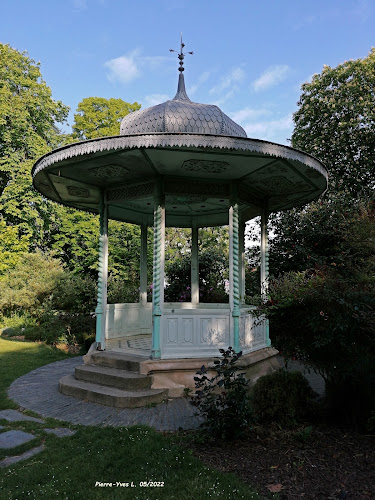
Parc de Procé
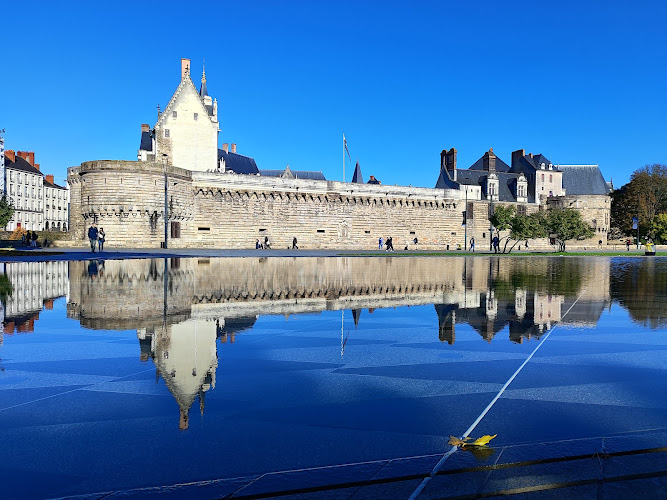
Miroir d'eau
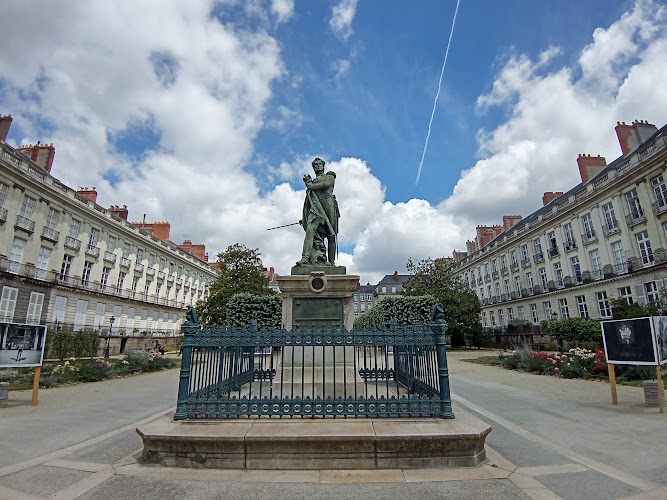
Cours Cambronne
Find Accommodations Nearby
Recommended Tours & Activities
Visitor Reviews
There are no reviews yet. Be the first one to write one.
Share Your Experience
Have you visited Cathédrale Saint-Pierre-et-Saint-Paul de Nantes? Help other travelers by leaving a review.