
Catedral Metropolitana de Santa María la Real de Pamplona
About Catedral Metropolitana de Santa María la Real de Pamplona
Key Features
More Details
Updated June 11, 2025
## Visiting the Catedral Metropolitana de Santa María la Real de Pamplona
Gothic cloisters, royal tombs & the first great cathedral on the Camino Francés
Rising above Pamplona’s old town, the Catedral Metropolitana de Santa María la Real de Pamplona is one of those places that reshapes how you see the city. It’s not just “another Spanish cathedral”: it’s a Gothic complex with a world-class cloister, a royal pantheon, a major diocesan museum, and the first cathedral many pilgrims meet after crossing the Pyrenees.
In many review datasets it consistently sits around 4.5/5 for visitors — and once you walk from the sober Neoclassical façade into the soaring Gothic nave, that number makes sense.
Below is a practical, detail-rich guide focused on what you’ll actually experience on the ground: architecture worth slowing down for, how it connects to the Camino de Santiago, and what to know before you go (including accessibility and up-to-date museum patterns).
—
### Why this cathedral matters in Pamplona
A few reasons this belongs near the top of your Pamplona itinerary:
– Key stop on the Camino Francés – The cathedral is the first major cathedral on the Way of St James when entering Spain from Roncesvalles, and it can provide and stamp official pilgrim credentials. de Pamplona
– One of Spain’s most important Gothic complexes – The ensemble of church, 13th–14th-century Gothic cloister, Barbazana Chapel, refectory, and canons’ rooms is considered the most significant Gothic monumental complex in Navarra, with a cloister that’s exceptionally highly regarded at European level. de Pamplona
– Royal mausoleum of the kings of Navarre – Mediaeval kings of Navarre were crowned here, and several were buried in the cathedral, including Charles III “the Noble” and Queen Eleanor of Castile, whose alabaster tomb is a major Gothic artwork.
– Living heritage, not a frozen monument – The cathedral still hosts daily worship and continues to evolve; for example, in 2025 it reintroduced two historic “gigantes” figures, recreated using a mix of 3D modeling, sustainable materials and traditional polychromy, as part of a project to recover its festive heritage. SER
If you only have time for one major historic interior in Pamplona’s old town, this is the one.
—
## A quick historical timeline (without the dust)
You don’t need to memorise kings and dates, but a basic timeline helps the architecture click into place.
### From Roman Pompaelo to Romanesque cathedral
– The cathedral stands on the oldest part of Roman Pompaelo; excavations in the 1990s uncovered 1st-century BCE streets and buildings beneath the complex.
– A Christian church here was destroyed in 924 during an expedition by Caliph Abd-al-Rahman III.
– Under Sancho III “the Great” (1004–1035) a new temple rose, later replaced by a Romanesque cathedral built roughly between 1100 and 1127.
### Collapse and Gothic rebuild
– In 1391 the Romanesque cathedral largely collapsed, leaving mainly the façade and parts of the chevet standing.
– Construction of the current Gothic church began around 1394 and continued until 1501, heavily influenced by French Gothic models — understandable given Navarra’s historic ties across the Pyrenees.
### A Neoclassical face for a Gothic body
– The Gothic façade didn’t survive. The present Neoclassical front and twin towers were designed by Ventura Rodríguez in 1783 and completed in the later 18th century.
– This means you get a rare contrast: a sober, temple-like exterior leading into a fully Gothic interior.
—
## Architectural highlights you’ll actually notice
### The Neoclassical façade: more than just a doorway
From C. Dormitalería you see the porticoed façade with twin towers — very different from the usual Gothic west front:
– Temple front – Pediment, columns, and clean lines reflect late-18light-century Neoclassicism rather than medieval ornament.
– Bell towers – The towers house multiple bronze bells; among them is the famous bell “María”, which weighs around 10–12 tonnes and is considered the largest bell still in use in Spain, audible up to roughly 14 km. de Pamplona
Even if you’re not a bell enthusiast, knowing that “María” swings overhead gives the whole structure a very physical sense of weight and history.
—
### The French-Gothic interior: three naves, high vaults, dense art
Step inside and the mood shifts completely:
– Plan & proportions – A cruciform ground plan with a central nave and four shorter aisles, all covered by rib vaults with some original polychromy.
– Dimensions – The central nave rises to about 25 m high and 12 m wide, with side aisles around 7 m wide and 12–13 m high, giving a tall but not overwhelming scale that feels readable as you walk.
– Side chapels – Between the buttresses you’ll find Gothic, Renaissance and Baroque side chapels with retables from the 15th–17th centuries; if you like tracking styles, this is an easy place to see the transition from late Gothic to Spanish Baroque on one circuit of the nave.
Look out for:
– The Renaissance choir stalls (1541), now near the presbytery, separated from the nave by an elaborate Gothic iron grille from 1517 that’s considered one of the most intricate in Spain.
– A Romanesque, silver-plated image of Santa María la Real / Santa María del Sagrario, a 12th-century sculpture that remains a devotional focus in the presbytery. de Pamplona
—
### The royal mausoleum of Charles III and Eleanor of Castile
Near the choir you encounter one of Navarra’s key royal monuments:
– The alabaster and black marble tomb of King Charles III “the Noble” (r. 1387–1425) and Queen Eleanor of Castile was created between 1413 and 1419 by Jehan Lome de Tournay and a team of sculptors from France and the Burgundian Low Countries. de Pamplona
– The effigies lie on a freestanding “bed” surrounded by carved mourners. The king’s face is thought to be a portrait, carved while he was alive; the queen’s features are more idealised.
This tomb started a fashion for elaborate royal funerary monuments in Navarre, and it’s one of the most compelling reasons to visit even if churches usually aren’t your thing.
—
### The Gothic cloister: a European-level highlight
The cloister is arguably the star of the entire complex:
– Construction – Built roughly between 1280 and 1330, replacing an earlier Romanesque cloister. de Pamplona
– Style – Pure French-influenced Gothic with delicate traceried arches, ribbed vaults and an unusually rich sculptural programme.
– Status – The cathedral’s own documentation calls it “one of the best preserved cloisters in Europe”, and it’s widely cited as one of the most significant Gothic cloisters in Spain. de Pamplona
What to watch for as you walk:
– The Puerta del Amparo, the doorway from the church into the cloister, depicting the Dormition of the Virgin with a statue of the Virgin on the mullion. de Pamplona
– The “Puerta Preciosa” (Precious Door), which leads to the former canons’ dormitory and narrates the life of the Virgin Mary in sculpted detail.
– Burials of figures such as Bishop Arnaldo de Barbazán, the Count of Gages (a viceroy of Navarre), and guerrilla leader Francisco Espoz y Mina, spanning Gothic to Neoclassical periods.
– A lavatory closed by a wrought-iron grid; tradition holds that its iron came from weapons captured at the Battle of Las Navas de Tolosa (1212) — a good example of how military and ecclesiastical history intersect here.
On a practical level: the cloister is also where you’ll feel the light and quiet most intensely, a useful reset if you’ve just come from busy pintxo bars around Plaza del Castillo.
—
### Beyond the cloister: refectory, kitchen, cillería and sacristies
The complex is unusually complete; you’re not just seeing a church, but the infrastructure of a medieval religious community.
Highlights:
– Refectory – A 14th-century, rib-vaulted dining hall that now forms the main space of the Diocesan Museum.
– Stone kitchen – Adjacent to the refectory with a distinctive pyramidal stone chimney, giving a sense of how self-contained the canons’ life once was.
– Cillería – A long, narrow Romanesque storeroom that survives as one of the few architectural remnants from the earlier phase, with arrow-slit windows and a reconstructed doorway decorated with chessboard and star motifs.
– Sacristies – Two contrasting rooms behind the chevet: one a restrained Baroque space derived from Renaissance models, the other a Rococo showpiece with silk-covered walls, mirrors, paintings, and a Baroque marble fountain.
If you enjoy “behind the scenes” spaces more than altarpieces, this side of the visit will probably be your favourite.
—
## The Diocesan Museum & Occidens exhibition
The Diocesan Museum of Pamplona Cathedral is integrated into the same complex and repurposes the former community spaces:
– It holds religious art not only from the cathedral but also from many churches around Navarra, some of them now abandoned — which means you’re seeing pieces that would otherwise be locked away.
– Collections include Romanesque, Gothic, Renaissance and Baroque sculpture and painting, plus gold- and silver-work from the 13th to 18th centuries.
– Stand-out pieces include a 13th-century Holy Sepulchre reliquary from Paris, a 14th-century Lignum Crucis reliquary, and a 16th-century processional monstrance.
As of the latest official information, the museum promotes an interpretive route under the title “Occidens”, exploring the development of Western culture through the cathedral’s spaces and collections. This is an evolving exhibition concept, so specific room texts or multimedia elements may change; checking the official website before your visit is wise if you’re heading there mainly for Occidens-style content. de Pamplona
—
## Visiting information, hours & accessibility
### Opening hours & worship schedule
There are two overlapping realities: the worshipping cathedral and the museum/tour route.
Table of Contents
- Key Highlights
- Location
- Places to Stay Near Catedral Metropolitana de Santa María la Real de Pamplona"By far one of the best things to do in Pamplona, apart from ..."
- Find and Book a Tour
- Explore More Travel Guides
- Nearby Places You Might Like
- Traveler Reviews for Catedral Metropolitana de Santa María la Real de Pamplona
- Share Your Experience
Key Highlights
Catedral Metropolitana de Santa María la Real de Pamplona
Location
Places to Stay Near Catedral Metropolitana de Santa María la Real de Pamplona"By far one of the best things to do in Pamplona, apart from ..."
Find and Book a Tour
Explore More Travel Guides
No reviews found! Be the first to review!
Traveler Reviews for Catedral Metropolitana de Santa María la Real de Pamplona
There are no reviews yet. Be the first one to write one.
Have you visited Catedral Metropolitana de Santa María la Real de Pamplona? Help other travelers by sharing your review.
You Might Also Like
La Vuelta del Castillo - Gazteluko Ibilaldia
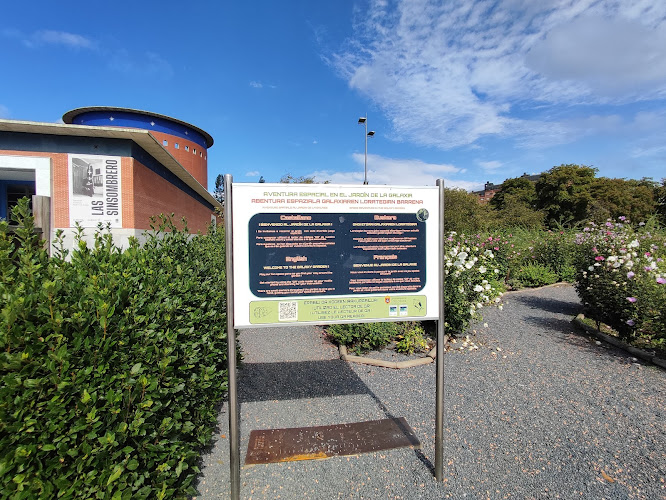
Galaxia Garden

Palacio de Ezpeleta
Find Accommodations Nearby
Recommended Tours & Activities
Visitor Reviews
There are no reviews yet. Be the first one to write one.
Share Your Experience
Have you visited Catedral Metropolitana de Santa María la Real de Pamplona? Help other travelers by leaving a review.