
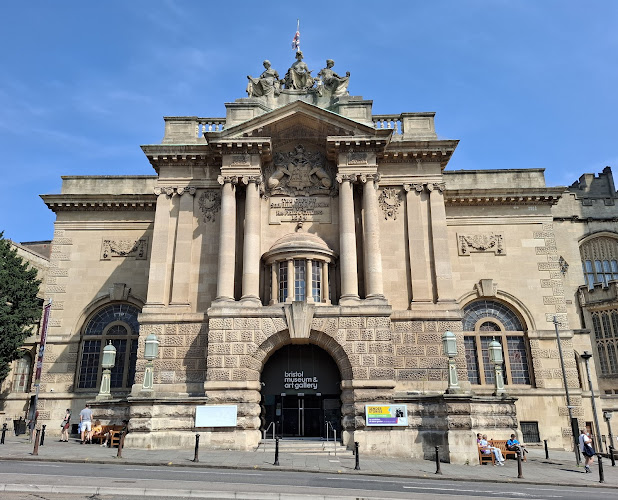
Bristol Museum & Art Gallery
About Bristol Museum & Art Gallery
Description
The Bristol Museum & Art Gallery stands as one of the Southwest's most impressive cultural institutions, offering visitors an unexpectedly diverse collection that spans millions of years of history. And honestly, when you first walk through those doors, you might feel a bit overwhelmed by just how much there is to see – in the best possible way. I remember my first visit here, thinking I'd breeze through in an hour or so. Three hours later, I was still discovering new galleries and exhibitions I hadn't even known existed. The building itself dates back to the Edwardian era, and there's something quite charming about exploring natural history specimens and contemporary art within those grand old walls. What makes this place genuinely special is its eclectic nature. You'll find everything from ancient Egyptian artifacts to local street art by Banksy, who grew up in Bristol. The museum doesn't try to be just one thing, and that's exactly what works about it. One moment you're staring at genuine dinosaur fossils, the next you're examining a beautifully preserved Romany caravan that tells stories of traveling communities across Britain. The geology and archaeology collections are particularly impressive for a regional museum. We're talking genuine treasures here – minerals that sparkle under the gallery lights, fossils that transport you back to when Britain was covered in tropical seas, and artifacts from ancient civilizations that somehow ended up in this corner of England. The art collections span multiple floors and centuries, featuring works from Old Masters through to contemporary pieces. There's a real focus on regional artists too, which gives you a sense of Bristol's creative heritage beyond just the obvious street art connections. The natural history section houses everything from taxidermied animals to geological specimens, and there's something weirdly fascinating about seeing a stuffed polar bear in the middle of Bristol on a rainy Tuesday afternoon.Key Features
- Extensive natural history collection featuring genuine dinosaur fossils and prehistoric specimens that'll make any dino-enthusiast weak at the knees
- Outstanding archaeology galleries showcasing Egyptian mummies, Roman artifacts, and local historical finds from Bristol's rich past
- Impressive art collection spanning multiple centuries, including works by renowned artists and a special focus on regional creators
- Famous Banksy artwork displayed throughout, including pieces that caused quite a stir when they first appeared
- Beautifully preserved Romany caravan exhibit that offers insight into traveling communities and their cultural heritage
- Extensive geology collection with minerals, crystals, and rock formations that showcase Earth's incredible diversity
- Wheelchair accessible entrance and facilities, making the museum genuinely accessible for visitors with mobility needs
- On-site cafe serving decent refreshments – because museum fatigue is real and sometimes you just need a cup of tea
- Well-stocked gift shop offering unique souvenirs, books, and locally-made items you won't find everywhere else
- Changing facilities for families with young children, recognizing that cultural visits with little ones require practical amenities
- Free admission to permanent collections, which is increasingly rare for museums of this caliber
- Regular temporary exhibitions that keep the experience fresh even for repeat visitors
Best Time to Visit
Timing your visit to the Bristol Museum & Art Gallery can make a real difference to your experience. Weekday mornings, particularly Tuesday through Thursday, tend to be the quietest times. You'll have more breathing room around the exhibits and won't find yourself queueing to get a proper look at the star attractions. School holidays are predictably busier, especially when the weather outside is less than ideal (which, let's face it, happens fairly often in Bristol). But don't let that put you off if those are your only options – the museum handles crowds reasonably well, and there's enough space that you can usually find quieter galleries if one area feels too packed. Weekend afternoons get pretty lively, particularly Saturdays. Sundays are slightly calmer, and there's something rather pleasant about a Sunday afternoon spent wandering through museums while everyone else is recovering from the night before or watching football. The museum is open throughout most of the year, closing only on major holidays. Winter months can actually be lovely for visiting – fewer tourists, and there's something cozy about ducking into a warm museum when it's cold and drizzly outside. Plus, the natural lighting through those big Victorian windows has a different quality in winter that really suits some of the art galleries. Special exhibitions often debut in autumn or spring, so if you're keen on seeing temporary shows alongside the permanent collections, checking their exhibition calendar before planning your trip makes sense. Summer brings more international visitors, which adds to the atmosphere but also means slightly longer waits at the cafe and gift shop. Early arrivals get the best experience, regardless of the day. Getting there within the first hour of opening means you'll essentially have the place largely to yourself for a while. And trust me, having a massive gallery practically to yourself feels rather special – almost like the museum has opened just for you.How to Get There
Getting to the Bristol Museum & Art Gallery is refreshingly straightforward, especially if you're already in the city center. The museum sits in a prominent position that's hard to miss once you're in the right neighborhood, and Bristol's compact city center means most transportation options work pretty well. If you're arriving by train, Bristol Temple Meads station is your destination. From there, you've got several options. The number 8 or 9 buses will get you fairly close, or it's about a 25-minute walk if you fancy stretching your legs and getting a feel for the city. The walk takes you through some interesting parts of Bristol, though it does involve a bit of an uphill stretch – just so you know what you're in for. For those driving, parking near the museum itself is limited. There's no dedicated parking lot at the venue, which can be annoying if you're not expecting it. However, several nearby car parks serve the area reasonably well. The Trenchard Street car park and the Park Street car park are your closest options, both within a ten-minute walk. Weekend parking is generally easier to find than weekday parking, but do check rates because city center parking in Bristol isn't exactly cheap. Bristol's bus network is actually quite decent, and numerous routes pass close to the museum. The stop you want depends on where you're coming from, but the museum's central location means you're rarely more than a short walk from wherever the bus drops you. Cycling is increasingly popular in Bristol, and there are bike racks near the museum where you can secure your bicycle. The city's been working on improving cycling infrastructure, though the hills around the museum area can be challenging if you're not used to them. Taxis and ride-sharing services know the location well – just tell them you're heading to the Bristol Museum & Art Gallery and they'll get you there without issue. It's one of those landmarks that every local driver knows. Walking from the city center is probably the most pleasant option if the weather's cooperating. The museum is situated in a lovely part of Bristol with attractive Georgian architecture along the way, and you'll pass cafes and shops that might be worth exploring before or after your visit.Tips for Visiting
Pack patience and comfortable shoes – this sounds obvious, but you'll be doing more walking than you probably expect. Those gallery floors get tiring after a while, and nobody enjoys museum visits when their feet are screaming at them. Don't try to see everything in one visit. Seriously, this is a mistake I see people making all the time. They rush through trying to tick off every gallery and end up exhausted and not really appreciating anything. Pick a few areas that genuinely interest you and spend proper time with them. The museum will still be there if you want to come back. The cafe gets busy around lunchtime, so if you're planning to eat there, either go early (around 11:30) or wait until after 1:30. Or better yet, bring snacks. Nobody says you can't step outside for a proper lunch and come back – admission is free, after all. Photography is generally allowed in most areas, but flash photography isn't permitted for conservation reasons. And please, I'm begging you, don't be that person who spends the entire visit looking at everything through their phone screen. Take a few photos, sure, but actually experience the place with your own eyes. Families with young children should know that while the museum is definitely kid-friendly, it's not specifically a children's museum. Some exhibits might fascinate young minds (dinosaurs always do), while others might have them fidgeting within minutes. The changing facilities are located on specific floors, so scout these out early if you've got little ones in tow. Check what temporary exhibitions are on before you visit. Sometimes these require timed tickets even though general admission is free, and you don't want to miss something special because you didn't plan ahead. The gift shop deserves more than a cursory glance on your way out. They stock some genuinely interesting books and locally-made items that actually make decent souvenirs, rather than the usual tourist tat. Weekday mornings see school groups coming through, particularly during term time. These groups are usually well-supervised and stick to specific areas, but if you're seeking peace and quiet, you might want to avoid the natural history galleries between 10:30 and noon on weekdays. The museum's free admission doesn't mean you shouldn't support it. There are donation boxes throughout, and considering the quality of what you're seeing, throwing in a few pounds helps maintain these collections for future visitors. Lastly, give yourself permission to have favorites and skip things that don't interest you. Not everyone needs to spend time in every single gallery, and that's absolutely fine. This is your visit – make it work for you rather than following some imaginary rulebook about how to "properly" experience a museum.Key Features
- Extensive natural history collection featuring genuine dinosaur fossils and prehistoric specimens that'll make any dino-enthusiast weak at the knees
- Outstanding archaeology galleries showcasing Egyptian mummies, Roman artifacts, and local historical finds from Bristol's rich past
- Impressive art collection spanning multiple centuries, including works by renowned artists and a special focus on regional creators
- Famous Banksy artwork displayed throughout, including pieces that caused quite a stir when they first appeared
- Beautifully preserved Romany caravan exhibit that offers insight into traveling communities and their cultural heritage
- Extensive geology collection with minerals, crystals, and rock formations that showcase Earth's incredible diversity
- Wheelchair accessible entrance and facilities, making the museum genuinely accessible for visitors with mobility needs
- On-site cafe serving decent refreshments – because museum fatigue is real and sometimes you just need a cup of tea
More Details
Updated March 30, 2026
Table of Contents
Description
The Bristol Museum & Art Gallery stands as one of the Southwest’s most impressive cultural institutions, offering visitors an unexpectedly diverse collection that spans millions of years of history. And honestly, when you first walk through those doors, you might feel a bit overwhelmed by just how much there is to see – in the best possible way.
I remember my first visit here, thinking I’d breeze through in an hour or so. Three hours later, I was still discovering new galleries and exhibitions I hadn’t even known existed. The building itself dates back to the Edwardian era, and there’s something quite charming about exploring natural history specimens and contemporary art within those grand old walls.
What makes this place genuinely special is its eclectic nature. You’ll find everything from ancient Egyptian artifacts to local street art by Banksy, who grew up in Bristol. The museum doesn’t try to be just one thing, and that’s exactly what works about it. One moment you’re staring at genuine dinosaur fossils, the next you’re examining a beautifully preserved Romany caravan that tells stories of traveling communities across Britain.
The geology and archaeology collections are particularly impressive for a regional museum. We’re talking genuine treasures here – minerals that sparkle under the gallery lights, fossils that transport you back to when Britain was covered in tropical seas, and artifacts from ancient civilizations that somehow ended up in this corner of England.
The art collections span multiple floors and centuries, featuring works from Old Masters through to contemporary pieces. There’s a real focus on regional artists too, which gives you a sense of Bristol’s creative heritage beyond just the obvious street art connections. The natural history section houses everything from taxidermied animals to geological specimens, and there’s something weirdly fascinating about seeing a stuffed polar bear in the middle of Bristol on a rainy Tuesday afternoon.
Key Features
- Extensive natural history collection featuring genuine dinosaur fossils and prehistoric specimens that’ll make any dino-enthusiast weak at the knees
- Outstanding archaeology galleries showcasing Egyptian mummies, Roman artifacts, and local historical finds from Bristol’s rich past
- Impressive art collection spanning multiple centuries, including works by renowned artists and a special focus on regional creators
- Famous Banksy artwork displayed throughout, including pieces that caused quite a stir when they first appeared
- Beautifully preserved Romany caravan exhibit that offers insight into traveling communities and their cultural heritage
- Extensive geology collection with minerals, crystals, and rock formations that showcase Earth’s incredible diversity
- Wheelchair accessible entrance and facilities, making the museum genuinely accessible for visitors with mobility needs
- On-site cafe serving decent refreshments – because museum fatigue is real and sometimes you just need a cup of tea
- Well-stocked gift shop offering unique souvenirs, books, and locally-made items you won’t find everywhere else
- Changing facilities for families with young children, recognizing that cultural visits with little ones require practical amenities
- Free admission to permanent collections, which is increasingly rare for museums of this caliber
- Regular temporary exhibitions that keep the experience fresh even for repeat visitors
Best Time to Visit
Timing your visit to the Bristol Museum & Art Gallery can make a real difference to your experience. Weekday mornings, particularly Tuesday through Thursday, tend to be the quietest times. You’ll have more breathing room around the exhibits and won’t find yourself queueing to get a proper look at the star attractions.
School holidays are predictably busier, especially when the weather outside is less than ideal (which, let’s face it, happens fairly often in Bristol). But don’t let that put you off if those are your only options – the museum handles crowds reasonably well, and there’s enough space that you can usually find quieter galleries if one area feels too packed.
Weekend afternoons get pretty lively, particularly Saturdays. Sundays are slightly calmer, and there’s something rather pleasant about a Sunday afternoon spent wandering through museums while everyone else is recovering from the night before or watching football.
The museum is open throughout most of the year, closing only on major holidays. Winter months can actually be lovely for visiting – fewer tourists, and there’s something cozy about ducking into a warm museum when it’s cold and drizzly outside. Plus, the natural lighting through those big Victorian windows has a different quality in winter that really suits some of the art galleries.
Special exhibitions often debut in autumn or spring, so if you’re keen on seeing temporary shows alongside the permanent collections, checking their exhibition calendar before planning your trip makes sense. Summer brings more international visitors, which adds to the atmosphere but also means slightly longer waits at the cafe and gift shop.
Early arrivals get the best experience, regardless of the day. Getting there within the first hour of opening means you’ll essentially have the place largely to yourself for a while. And trust me, having a massive gallery practically to yourself feels rather special – almost like the museum has opened just for you.
How to Get There
Getting to the Bristol Museum & Art Gallery is refreshingly straightforward, especially if you’re already in the city center. The museum sits in a prominent position that’s hard to miss once you’re in the right neighborhood, and Bristol’s compact city center means most transportation options work pretty well.
If you’re arriving by train, Bristol Temple Meads station is your destination. From there, you’ve got several options. The number 8 or 9 buses will get you fairly close, or it’s about a 25-minute walk if you fancy stretching your legs and getting a feel for the city. The walk takes you through some interesting parts of Bristol, though it does involve a bit of an uphill stretch – just so you know what you’re in for.
For those driving, parking near the museum itself is limited. There’s no dedicated parking lot at the venue, which can be annoying if you’re not expecting it. However, several nearby car parks serve the area reasonably well. The Trenchard Street car park and the Park Street car park are your closest options, both within a ten-minute walk. Weekend parking is generally easier to find than weekday parking, but do check rates because city center parking in Bristol isn’t exactly cheap.
Bristol’s bus network is actually quite decent, and numerous routes pass close to the museum. The stop you want depends on where you’re coming from, but the museum’s central location means you’re rarely more than a short walk from wherever the bus drops you.
Cycling is increasingly popular in Bristol, and there are bike racks near the museum where you can secure your bicycle. The city’s been working on improving cycling infrastructure, though the hills around the museum area can be challenging if you’re not used to them.
Taxis and ride-sharing services know the location well – just tell them you’re heading to the Bristol Museum & Art Gallery and they’ll get you there without issue. It’s one of those landmarks that every local driver knows.
Walking from the city center is probably the most pleasant option if the weather’s cooperating. The museum is situated in a lovely part of Bristol with attractive Georgian architecture along the way, and you’ll pass cafes and shops that might be worth exploring before or after your visit.
Tips for Visiting
Pack patience and comfortable shoes – this sounds obvious, but you’ll be doing more walking than you probably expect. Those gallery floors get tiring after a while, and nobody enjoys museum visits when their feet are screaming at them.
Don’t try to see everything in one visit. Seriously, this is a mistake I see people making all the time. They rush through trying to tick off every gallery and end up exhausted and not really appreciating anything. Pick a few areas that genuinely interest you and spend proper time with them. The museum will still be there if you want to come back.
The cafe gets busy around lunchtime, so if you’re planning to eat there, either go early (around 11:30) or wait until after 1:30. Or better yet, bring snacks. Nobody says you can’t step outside for a proper lunch and come back – admission is free, after all.
Photography is generally allowed in most areas, but flash photography isn’t permitted for conservation reasons. And please, I’m begging you, don’t be that person who spends the entire visit looking at everything through their phone screen. Take a few photos, sure, but actually experience the place with your own eyes.
Families with young children should know that while the museum is definitely kid-friendly, it’s not specifically a children’s museum. Some exhibits might fascinate young minds (dinosaurs always do), while others might have them fidgeting within minutes. The changing facilities are located on specific floors, so scout these out early if you’ve got little ones in tow.
Check what temporary exhibitions are on before you visit. Sometimes these require timed tickets even though general admission is free, and you don’t want to miss something special because you didn’t plan ahead.
The gift shop deserves more than a cursory glance on your way out. They stock some genuinely interesting books and locally-made items that actually make decent souvenirs, rather than the usual tourist tat.
Weekday mornings see school groups coming through, particularly during term time. These groups are usually well-supervised and stick to specific areas, but if you’re seeking peace and quiet, you might want to avoid the natural history galleries between 10:30 and noon on weekdays.
The museum’s free admission doesn’t mean you shouldn’t support it. There are donation boxes throughout, and considering the quality of what you’re seeing, throwing in a few pounds helps maintain these collections for future visitors.
Lastly, give yourself permission to have favorites and skip things that don’t interest you. Not everyone needs to spend time in every single gallery, and that’s absolutely fine. This is your visit – make it work for you rather than following some imaginary rulebook about how to “properly” experience a museum.
Key Highlights
- Extensive natural history collection featuring genuine dinosaur fossils and prehistoric specimens that'll make any dino-enthusiast weak at the knees
- Outstanding archaeology galleries showcasing Egyptian mummies, Roman artifacts, and local historical finds from Bristol's rich past
- Impressive art collection spanning multiple centuries, including works by renowned artists and a special focus on regional creators
- Famous Banksy artwork displayed throughout, including pieces that caused quite a stir when they first appeared
- Beautifully preserved Romany caravan exhibit that offers insight into traveling communities and their cultural heritage
- Extensive geology collection with minerals, crystals, and rock formations that showcase Earth's incredible diversity
- Wheelchair accessible entrance and facilities, making the museum genuinely accessible for visitors with mobility needs
- On-site cafe serving decent refreshments – because museum fatigue is real and sometimes you just need a cup of tea
Location
Places to Stay Near Bristol Museum & Art Gallery
Find and Book a Tour
Explore More Travel Guides
No reviews found! Be the first to review!
Bristol Museum & Art Gallery is a prominent museums located in Bristol.
Visit us at: Queens Rd, Bristol BS8 1RL.
Traveler Reviews for Bristol Museum & Art Gallery
There are no reviews yet. Be the first one to write one.
Have you visited Bristol Museum & Art Gallery? Help other travelers by sharing your review.
You Might Also Like

Bristol Cathedral
Clifton Down

Snuff Mills
Find Accommodations Nearby
Recommended Tours & Activities
Visitor Reviews
There are no reviews yet. Be the first one to write one.
Share Your Experience
Have you visited Bristol Museum & Art Gallery? Help other travelers by leaving a review.