About Bergenhus Fortress Museum

Description

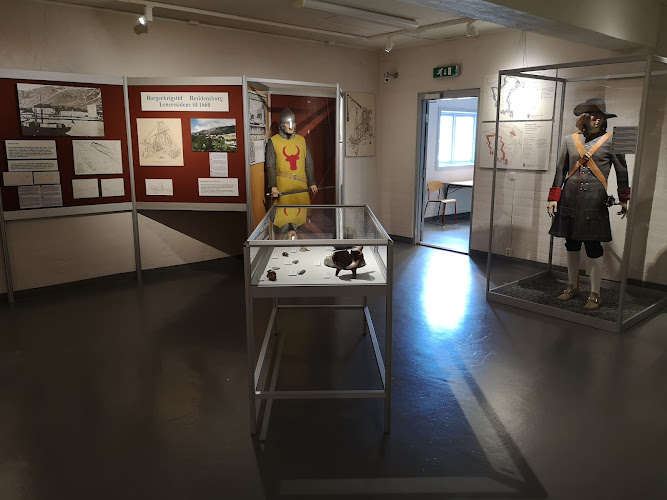
The Bergenhus Fortress Museum offers a compact but unexpectedly rich dive into Bergen's military past and the city's more recent, darker chapters. It sits inside the old fortress area and focuses squarely on two things that, oddly, belong together: the medieval roots of a defensive stronghold and the 20th-century story of occupation and resistance. Visitors will find a mix of artifacts, photographs, maps and text panels that explain why this patch of stone and grass has mattered for centuries. The tone is factual and often quiet; the exhibits don't shout, they show — uniforms, small personal items, blunt wartime documents and interpretive displays that make complex history readable, even to someone who isn't a history nerd.

Admission is free, which surprises people. Free usually means small or hastily thrown together, but that's not the case here. The museum uses its modest space well. A short walk through the rooms gives a clear timeline: early fortress construction and medieval architecture; the role of the site during Norway's development; and then, in a shift that grabs attention, exhibits about the German occupation and the Norwegian resistance during the Second World War. That latter section is the one that tends to linger in visitors' heads — partly because it highlights personal stories, acts of courage, and the everyday choices ordinary people faced under occupation. The curators balance national-level context and local anecdotes, so the story of Bergen becomes tangible.

Architecturally the fortress setting is a draw on its own. If someone expects sterile museum galleries, they'll be pleasantly surprised by the stone halls, vaulted rooms and the feel of an old fortification that has been used, adapted and preserved through ages. The medieval elements and remnants whisper about another time, and the juxtaposition with modern wartime artefacts creates a kind of temporal dialogue that is quietly compelling. People who enjoy military history will appreciate the more technical displays — maps, defensive plans, weaponry — while those who prefer human stories will linger over letters, photos and resistance artifacts. It manages that rare thing: being relevant to different kinds of curiosity without trying to be everything at once.

Practical notes that matter: the museum is accessible. There is a wheelchair-friendly entrance, accessible parking and restroom facilities suitable for visitors with mobility needs. That matters when museums of old fortifications can be notoriously unfriendly to wheels and strollers. Families will find the place kid-friendly; children tend to engage with the uniforms and visual displays, and while some of the historical material is serious, the layout allows for short visits that still feel worthwhile. There is no on-site restaurant, so plan accordingly — but the fortress sits in a lively part of Bergen, so a decent coffee or snack is never far away.

One small truth worth sharing: because it is free and somewhat tucked into the fortress complex, the museum sometimes flies under the radar of hurried tourists. That is both a blessing and a curse. It often means less crowding and a chance to absorb the exhibits without elbowing for a placard. On the other hand, some visitors arrive expecting a large, glossy museum and find the compactness disappointing. The best way to approach the museum is with curiosity and modest expectations: plan for a purposeful 45–75 minute visit, bring attention rather than expectations, and the place will repay the time. The writer remembers stepping in on a rainy afternoon and coming out with a new appreciation for how ordinary Bergen residents navigated extraordinary times. The memory stuck — little objects and photos have this weird, stubborn ability to make history feel like a neighbor's story rather than a textbook chapter.

For travelers who care about context, the museum complements nearby heritage sites and gives a useful local perspective on Norway's national history. It also quietly highlights the fortress's role through the ages: from medieval defensive hub to modern-day memorial space. The displays about the occupation are especially well curated; they do not dwell in sensationalism but present facts and testimonies that encourage reflection. It is easy to imagine teachers bringing school groups here for that reason, and indeed the museum accommodates younger visitors with clear signage and accessible routes.

Finally, a word on expectations: the Bergenhus Fortress Museum is not a blockbuster destination, and it doesn't pretend to be. Its strength lies in authenticity and focus. If someone wants sweeping immersive experiences with dramatic multimedia, they might find this place understated. If someone values well-focused exhibitions, personal stories of wartime resilience, and the atmospheric backdrop of an ancient fortress, this museum delivers. It rewards the thoughtful visitor — the kind who notices small details, asks a few questions, and likes history that feels lived-in rather than staged.

Key Features

Bergenhus Fortress Museum

More Details

Updated August 29, 2025

Description

The Bergenhus Fortress Museum offers a compact but unexpectedly rich dive into Bergen’s military past and the city’s more recent, darker chapters. It sits inside the old fortress area and focuses squarely on two things that, oddly, belong together: the medieval roots of a defensive stronghold and the 20th-century story of occupation and resistance. Visitors will find a mix of artifacts, photographs, maps and text panels that explain why this patch of stone and grass has mattered for centuries. The tone is factual and often quiet; the exhibits don’t shout, they show — uniforms, small personal items, blunt wartime documents and interpretive displays that make complex history readable, even to someone who isn’t a history nerd.

Admission is free, which surprises people. Free usually means small or hastily thrown together, but that’s not the case here. The museum uses its modest space well. A short walk through the rooms gives a clear timeline: early fortress construction and medieval architecture; the role of the site during Norway’s development; and then, in a shift that grabs attention, exhibits about the German occupation and the Norwegian resistance during the Second World War. That latter section is the one that tends to linger in visitors’ heads — partly because it highlights personal stories, acts of courage, and the everyday choices ordinary people faced under occupation. The curators balance national-level context and local anecdotes, so the story of Bergen becomes tangible.

Architecturally the fortress setting is a draw on its own. If someone expects sterile museum galleries, they’ll be pleasantly surprised by the stone halls, vaulted rooms and the feel of an old fortification that has been used, adapted and preserved through ages. The medieval elements and remnants whisper about another time, and the juxtaposition with modern wartime artefacts creates a kind of temporal dialogue that is quietly compelling. People who enjoy military history will appreciate the more technical displays — maps, defensive plans, weaponry — while those who prefer human stories will linger over letters, photos and resistance artifacts. It manages that rare thing: being relevant to different kinds of curiosity without trying to be everything at once.

Practical notes that matter: the museum is accessible. There is a wheelchair-friendly entrance, accessible parking and restroom facilities suitable for visitors with mobility needs. That matters when museums of old fortifications can be notoriously unfriendly to wheels and strollers. Families will find the place kid-friendly; children tend to engage with the uniforms and visual displays, and while some of the historical material is serious, the layout allows for short visits that still feel worthwhile. There is no on-site restaurant, so plan accordingly — but the fortress sits in a lively part of Bergen, so a decent coffee or snack is never far away.

One small truth worth sharing: because it is free and somewhat tucked into the fortress complex, the museum sometimes flies under the radar of hurried tourists. That is both a blessing and a curse. It often means less crowding and a chance to absorb the exhibits without elbowing for a placard. On the other hand, some visitors arrive expecting a large, glossy museum and find the compactness disappointing. The best way to approach the museum is with curiosity and modest expectations: plan for a purposeful 45–75 minute visit, bring attention rather than expectations, and the place will repay the time. The writer remembers stepping in on a rainy afternoon and coming out with a new appreciation for how ordinary Bergen residents navigated extraordinary times. The memory stuck — little objects and photos have this weird, stubborn ability to make history feel like a neighbor’s story rather than a textbook chapter.

For travelers who care about context, the museum complements nearby heritage sites and gives a useful local perspective on Norway’s national history. It also quietly highlights the fortress’s role through the ages: from medieval defensive hub to modern-day memorial space. The displays about the occupation are especially well curated; they do not dwell in sensationalism but present facts and testimonies that encourage reflection. It is easy to imagine teachers bringing school groups here for that reason, and indeed the museum accommodates younger visitors with clear signage and accessible routes.

Finally, a word on expectations: the Bergenhus Fortress Museum is not a blockbuster destination, and it doesn’t pretend to be. Its strength lies in authenticity and focus. If someone wants sweeping immersive experiences with dramatic multimedia, they might find this place understated. If someone values well-focused exhibitions, personal stories of wartime resilience, and the atmospheric backdrop of an ancient fortress, this museum delivers. It rewards the thoughtful visitor — the kind who notices small details, asks a few questions, and likes history that feels lived-in rather than staged.

Key Highlights

Bergenhus Fortress Museum

Location

Places to Stay Near Bergenhus Fortress Museum

Find and Book a Tour

Explore More Travel Guides

No reviews found! Be the first to review!

Traveler Reviews for Bergenhus Fortress Museum

There are no reviews yet. Be the first one to write one.

Share Your Experience

Have you visited Bergenhus Fortress Museum? Help other travelers by sharing your review.

Find Accommodations Nearby

Recommended Tours & Activities

Visitor Reviews

There are no reviews yet. Be the first one to write one.

Share Your Experience

Have you visited Bergenhus Fortress Museum? Help other travelers by leaving a review.