
Angarsk
About Angarsk
Key Features
More Details
Updated April 15, 2024
## Angarsk, Irkutsk Oblast: Practical Guide for Visiting a Siberian Industrial City
Angarsk (Ангарск) sits in Irkutsk Oblast, southeastern Siberia, about 50–51 km from Irkutsk. It was founded in 1948 as a planned industrial settlement and received city status in 1951. Today it serves as the administrative center of Angarsky District and lies on the Trans-Siberian Railway close to the Kitoy River (a tributary of the Angara). Coordinates: 52.5155702, 103.91716.
### Why Angarsk matters
Angarsk grew around oil refining and petrochemicals and remains one of Eastern Siberia’s major industrial hubs. The city’s economy includes Russia’s Angarsk Petrochemical Company (ANKhK) and the Angarsk Electrochemical (Electrolysis) Combine (AECC)—a Rosatom/TVEL subsidiary producing uranium hexafluoride and other chemical products. Britannica
—
## Quick Facts
– Region: Irkutsk Oblast, Russia. Angarsk is among the oblast’s largest cities (after Irkutsk and Bratsk).
– Founded / City status: 1948 / 1951.
– Rail: On the Trans-Siberian Railway, between Irkutsk and Baykalsk.
– Climate (Köppen Dwb): Cold, dry winters; warm, wetter summers. Mean annual temperature about 1.1 °C; ~429 mm precipitation per year. Data
—
## Getting There & Around
### From Irkutsk (IKT airport / city)
– Train: Direct suburban and regional trains Angarsk ↔ Irkutsk-Pass typically take ~40–55 min; multiple departures daily (sources list 4–11+ daily depending on timetable). Pricing varies by service.
– Bus: Direct buses Irkutsk Bus Station ↔ Angarsk around 43–45 min; at least daily service (operators and frequencies change—confirm current timetables).
– Distance: Road distance roughly 45–47 km.
Tip: If you’re traveling the Trans-Siberian, Angarsk appears as a through-station near Irkutsk; it’s a convenient base for riders continuing toward Lake Baikal or Ulan-Ude.
—
## What to See (Shortlist)
### Angarsk Clock Museum
Frequently described as Russia’s only dedicated clock museum, this downtown collection showcases historical clocks and watches from multiple countries and eras. It’s a compact, high-signal stop for design and engineering enthusiasts. (Always verify opening hours locally.)
> Information accuracy note: Attraction operations and exhibits can change; confirm hours, ticketing, and temporary closures on the ground or via recent listings to avoid outdated details.
### Industrial heritage (context)
While most heavy facilities aren’t tourism venues, Angarsk’s identity is inseparable from oil refining and nuclear-chemical industries:
– Angarsk Petrochemical Company (ANKhK / Rosneft): one of Russia’s largest refining sites, with technological units spanning catalytic reforming, cracking, hydrotreating, coking, bitumen, and petrochemicals (e.g., methanol, butanols).
– Angarsk Electrochemical Combine (AECC / Rosatom-TVEL): manufactures uranium hexafluoride and other specialty chemicals; major employer since the 1950s. (Industrial access is restricted; view from public areas only.)
—
## Day Trips & Regional Pairings
### Irkutsk (≈50 km; 40–55 min by rail)
Historic wooden architecture and museums on the Angara River; common jumping-off point for Lake Baikal. Britannica
### Lake Baikal corridor
While Angarsk isn’t on the lake, riders often connect via Irkutsk to Listvyanka, Slyudyanka, and Baikalsk on the south shore using bus or rail. (Routes and frequencies vary by season; check current timetables from Irkutsk Bus Station and RZD.)
—
## When to Go (Weather & Seasonality)
Angarsk’s continental climate means large seasonal swings:
– Winter (Nov–Mar): Very cold, dry, and long; the snowy period lasts roughly Oct 15–Apr 29. If you plan winter photography or rail travel, build weather slack into itineraries. Spark
– Summer (Jun–Aug): Warmest months; July is typically the wettest month. Expect more rainfall and afternoon convection; carry rain gear. Spark
– Annual baseline: ~1.1 °C average; ~429 mm precipitation. Data
—
## Brief History & Urban Form
– Origins: Construction of the planned settlement began shortly after WWII (planning decisions in 1945; rapid build-out by 1948). The city was granted official status in 1951.
– Planned industrial city: Like other mid-20th-century Siberian projects (e.g., Magnitogorsk, Komsomolsk-na-Amure), Angarsk was purpose-built to support large-scale industry and rail logistics along the Trans-Siberian. Library of Congress
—
## On-the-Ground Logistics
– Rail hub: Use Angarsk or Angarsk-1 station (naming can vary across booking platforms). Suburban “электричка” services connect to Irkutsk-Pass; long-distance trains align with the main Trans-Siberian corridor. (Check RZD or local aggregators for current schedules.)
– Buses: Regular intercity buses link Angarsk with Irkutsk and other regional towns; schedules fluctuate and are often posted only in Russian.
—
## Responsible Notes & Data Freshness
– Operational changes: Industrial facilities, transport timetables, and museum hours can change with little public notice. Always verify same-week schedules before travel. Evidence in this guide draws from operator pages and recent aggregators; where frequencies are cited (e.g., trains “four times a day”), treat them as typical not guaranteed.
– Attractions: The Clock Museum claim (the “only” one in Russia) appears in visitor listings; treat superlatives cautiously and confirm locally.
– Geopolitical context: Transport networks and access rules in Russia have been volatile in recent years. Check official advisories and carriers for the latest constraints before booking; this guide avoids policy claims that shift quickly.
—
## Snapshot Itinerary (24–36 Hours)
– Day 1 – Arrival & City Core
– Arrive from Irkutsk by train (≈40–55 min).
– Walk the central district; visit the Clock Museum (plan ~60–90 min).
– Evening rail back to Irkutsk or overnight locally (accommodation stock is modest; check current listings).
– Day 2 – Railway Day or Baikal Gateway
– Morning train to Irkutsk-Pass; connect to buses toward Listvyanka/Slyudyanka/Baikalsk for Lake Baikal viewpoints.
—
## Essential Summary
Angarsk isn’t a classic resort town—it’s a working Siberian city with a tangible industrial story, a rare clock museum, and fast rail into Irkutsk and onward to Lake Baikal. If you’re already crossing Siberia on the Trans-Siberian, Angarsk is a low-friction add-on that reveals how planned mid-century industry shaped modern Siberia. For smooth travel, anchor your timings to current RZD/Bus Station schedules, and treat all superlatives and frequencies as time-sensitive details to be re-checked right before departure.
Table of Contents
Key Highlights
Angarsk
Location
Places to Stay Near Angarsk
Find and Book a Tour
Explore More Travel Guides
No reviews found! Be the first to review!
Traveler Reviews for Angarsk
There are no reviews yet. Be the first one to write one.
Have you visited Angarsk? Help other travelers by sharing your review.
You Might Also Like
Khudozhestvennyy Tsentr

Kurazhnyye Gorki, Park Attraktsionov
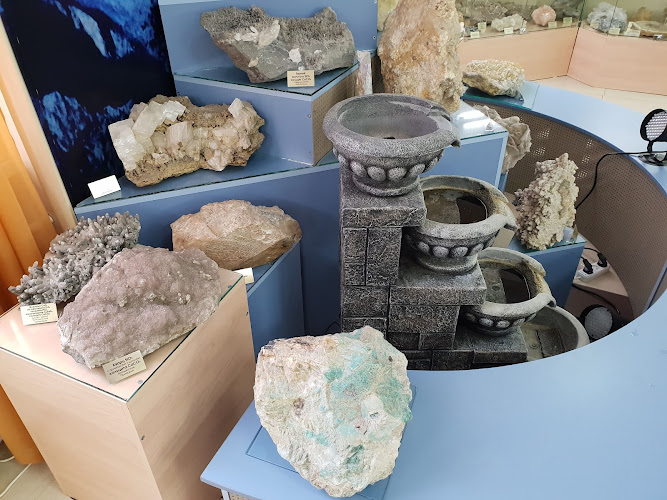
Museum of Minerals
Find Accommodations Nearby
Recommended Tours & Activities
Visitor Reviews
There are no reviews yet. Be the first one to write one.
Share Your Experience
Have you visited Angarsk? Help other travelers by leaving a review.