
Ancient Latrines
About Ancient Latrines
Description
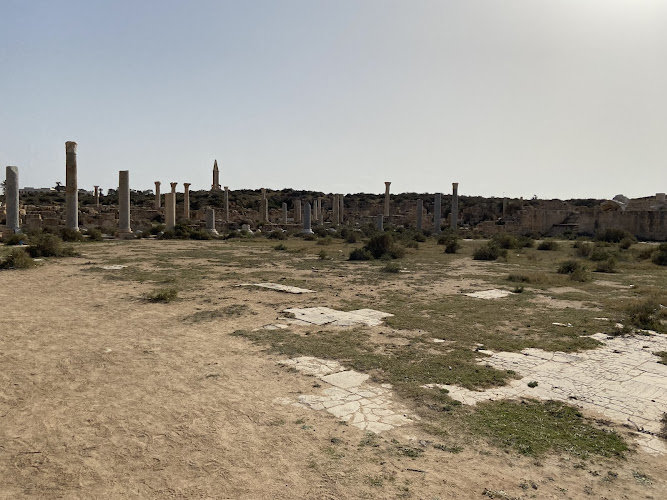
Hidden among the ruins of the ancient Roman city of Sabratah in northwestern Libya, the Ancient Latrines stand as an unexpectedly fascinating piece of history. It’s not every day that travelers find themselves intrigued by old public toilets, but here’s the thing—these latrines aren’t just dusty relics of daily life; they’re proof of how advanced—and yes, hygienic—the Romans truly were. The Ancient Latrines of Sabratah Libya reflect the city’s once-thriving maritime and trading hub along the Mediterranean coast, echoing life at a time when Sabratah was a proud part of the Roman Empire’s province of Africa Nova. And I’ll be honest—I’ve walked through fancy bathhouses and grand theatres across the Mediterranean, but there’s something oddly grounding about standing where ordinary Romans literally did their business two millennia ago.
Sabratah was one of the “Three Cities” of ancient Tripolitania—alongside Leptis Magna and Oea—and its ruins today form a UNESCO World Heritage site known for its well-preserved Roman theatre, temples, and forum baths. The Ancient Latrines, though smaller in scale, are set among these grand ruins, revealing the attention Romans placed on cleanliness, engineering, and public welfare. And considering these were built around the 2nd century AD, you can’t help but admire the ingenuity behind their construction. Marble seating, a sophisticated drainage system, and running water—all designed long before indoor plumbing became a modern concept. It’s no exaggeration to say that walking through Sabratah’s archaeological site gives a peek into one of the ancient world’s most remarkable urban planning achievements.
Now, ancient Rome wasn’t all emperors and gladiators; daily life took center stage here. The Ancient Latrines were strategically built near the baths and the forum—places where socializing was almost as important as maintaining hygiene. Archaeologists have noted how these facilities were connected by carefully engineered sewage channels leading to the sea, making them an essential part of city planning. When you stand inside the remains, still surrounded by bits of mosaic floor and weatherworn marble, it’s almost funny to think this place once buzzed with casual conversations among citizens discussing trade, politics, or perhaps complaining about the local magistrate while sharing the space. The Romans sure had a different notion of privacy!
Located close to the seaward baths, the Ancient Latrines of Sabratah Libya represent the sophistication that made the Roman cities in North Africa both functional and comfortable. There’s a touch of humility to this site, too—it reminds visitors that civilizations rise not just through temples and theatres, but through thoughtful civic infrastructure. Honestly, that’s what drew me in. I’ve always been fascinated by how everyday facilities—like a communal toilet—can tell us more about a society’s priorities than its most lavish temples.
Key Features
- Remarkably preserved Roman Engineering: The Ancient Latrines feature a semicircular layout with marble seats and carved stone channels that once carried flowing water beneath them—a remarkable sign of advanced sanitation from the 2nd century AD.
- Part of a grand complex: Situated near the seaward baths and the forum, visitors can visualize the latrines as part of a vibrant complex central to Sabratah’s public life.
- Fine mosaic details: Though time has taken its toll, remnants of small geometric mosaics can still be seen on the floor, a reminder of the aesthetic refinement even in utilitarian spaces.
- Connection to public baths: The latrines were linked to the baths through underground water channels, showing the Romans’ efficient use of resources and understanding of urban hygiene.
- Historical context: Built during the flourishing Roman Empire era in North Africa, likely under the influence of Emperor Septimius Severus, who was himself from nearby Leptis Magna.
- Children-friendly learning spot: While the topic might raise giggles, kids often find these ruins genuinely interesting—it’s history made fun, real, and surprisingly relatable.
- Archaeological significance: Provides rare insight into daily Roman life beyond grand monuments, shedding light on the social etiquette and technology of sanitation in ancient cities.
In a way, the latrines of Sabratah connect more directly with the real heartbeat of the ancient city than many temples or forums can. They speak to shared spaces, comfort, and the Roman idea of “public good.” And it’s wild to realize that what was constructed nearly two thousand years ago is still standing strong against time, desert dust, and the salty Mediterranean breeze.
Best Time to Visit
Most travelers, myself included, find that exploring Sabratah’s archaeological site is best done between October and April. The coastal air is gentle around this time, and the North African sun is warm without being overbearing. Summer, on the other hand, can be pretty intense—heat bouncing off the marble ruins can quickly turn your stroll into a challenge. The late afternoon light, when the sun begins to dip over the Mediterranean, paints the stone with golden hues. That’s when the Ancient Latrines, modest though they may be, look almost poetic. You can stand quietly there, imagining the waves washing just beyond the port, and how the Romans, centuries ago, might’ve heard that same sound echo through town.
Early morning visits are also fantastic if you prefer to have the site nearly to yourself. The place feels more intimate then—less chatter, more history settling in around you. And if you’re bringing children, afternoons might suit better. It’s not a huge site to cover, so kids won’t get tired too quickly, and the subject of ancient Roman toilets seems to fascinate them endlessly (I’ve seen kids captivated by trying to figure out how people used to flush things back then!).
How to Get There
The Ancient Latrines lie within the central cluster of Sabratah’s ruins, about 70 km west of Tripoli on the Mediterranean coast. The city itself was once a Phoenician trading post before Rome absorbed it into its empire, and reaching it today gives travelers a glimpse into both history and coastal scenery. From Tripoli, the drive along the coastal highway takes around an hour and a half. It’s a simple route—just follow the main road westbound until you near the gates of Sabratah’s archaeological site. Public transport options aren’t the most reliable in this region, so if you can, hiring a local driver or joining a private excursion makes things smoother.
Once inside the heritage site complex, pathways are fairly well marked. The Ancient Latrines are easy to locate near the seaward baths and not far from the Temple of Liber Pater. The surrounding ruins make for an easy walking circuit, so wear good shoes. Believe me, ancient pavements and sandals don’t always get along. The whole area is compact enough that, even without a guide, you’ll find yourself stumbling upon the latrines naturally as you explore the other famous monuments like the Roman theatre or the basilica. Though the site is expansive, everything connects logically—just as the Romans intended when they built their well-planned cities across North Africa.
And if you happen to come in by organized tour, you’ll likely be taken along a route that passes right by the latrines, sandwiched between the baths and the forum area. Don’t underestimate this stop. Many visitors breeze past without realizing how sophisticated the place is. I’d honestly recommend slowing down and giving it five extra minutes of your attention.
Tips for Visiting
First and foremost, bring water and a hat. Sabratah can get hot quickly, and while the sea is near, shade is scarce across the ruins. Comfortable walking shoes and a light long-sleeved shirt go a long way. As for photography, mornings and late afternoons give the most dramatic shadows for capturing the marble texture of the Ancient Latrines and surrounding temples.
- Take a guide – Even if you usually prefer exploring solo, a local guide can offer insights into how the latrines were used, how they connected to the city’s water system, and why their preservation matters so much. The details they share often make all the difference.
- Respect the ruins – Avoid sitting or climbing on the structures. The marble and stone have survived earthquakes and centuries of wind off the Mediterranean coast, but human touch can wear them down faster now.
- Visit other sites nearby – Don’t skip the Roman theatre Sabratha is famous for, or the mosaic-laden seaward baths. They help you place the latrines in the full picture of city life. If you’ve been to Leptis Magna or Oea (modern Tripoli), you’ll notice similarities—it’s like visiting three chapters of the same grand story.
- Bring the kids – This might sound odd, but children usually find the Ancient Latrines both funny and educational. It brings history down to earth, quite literally. It’s good for sparking curiosity about ancient civilizations.
- Time your visit – Plan for late afternoon light, especially if you’re into photography or sketching. The ruins glow as the sun sets, giving the ancient city a dreamy, almost cinematic quality.
- Carry small bills – If you plan to tip your guide or buy refreshments outside the site, Libyan dinars in small denominations make transactions easier.
What sets Sabratah’s Ancient Latrines apart is that they’re not about glamour—they’re about understanding human ingenuity. The UNESCO World Heritage Site designation ensures its protection, but it’s through visits and appreciation that places like these continue to live beyond textbooks. Next time you step into that semicircular stone arrangement, think of the generations who used it before you—not royals or senators, but regular citizens who helped make this Roman city thrive. There’s something almost humbling about that.
In the end, the Ancient Latrines in Sabratah Libya aren’t just remnants of old stone—they’re a quiet testament to progress, resilience, and the peculiar beauty of ordinary life preserved by time. And sometimes, that’s exactly what makes history feel real.
Key Features
- Well-preserved stone seating and drainage channels showing Roman sanitation engineering
- Context within the broader Sabratah archaeological complex (theater, temples, mosaics)
- Accessible layout for close-up viewing and photography
- Interpretive value for social history and daily life in Roman North Africa
- Scenic coastal backdrop linking the site to ancient maritime trade routes
More Details
Updated October 20, 2025
Table of Contents
Description
Hidden among the ruins of the ancient Roman city of Sabratah in northwestern Libya, the Ancient Latrines stand as an unexpectedly fascinating piece of history. It’s not every day that travelers find themselves intrigued by old public toilets, but here’s the thing—these latrines aren’t just dusty relics of daily life; they’re proof of how advanced—and yes, hygienic—the Romans truly were. The Ancient Latrines of Sabratah Libya reflect the city’s once-thriving maritime and trading hub along the Mediterranean coast, echoing life at a time when Sabratah was a proud part of the Roman Empire’s province of Africa Nova. And I’ll be honest—I’ve walked through fancy bathhouses and grand theatres across the Mediterranean, but there’s something oddly grounding about standing where ordinary Romans literally did their business two millennia ago.
Sabratah was one of the “Three Cities” of ancient Tripolitania—alongside Leptis Magna and Oea—and its ruins today form a UNESCO World Heritage site known for its well-preserved Roman theatre, temples, and forum baths. The Ancient Latrines, though smaller in scale, are set among these grand ruins, revealing the attention Romans placed on cleanliness, engineering, and public welfare. And considering these were built around the 2nd century AD, you can’t help but admire the ingenuity behind their construction. Marble seating, a sophisticated drainage system, and running water—all designed long before indoor plumbing became a modern concept. It’s no exaggeration to say that walking through Sabratah’s archaeological site gives a peek into one of the ancient world’s most remarkable urban planning achievements.
Now, ancient Rome wasn’t all emperors and gladiators; daily life took center stage here. The Ancient Latrines were strategically built near the baths and the forum—places where socializing was almost as important as maintaining hygiene. Archaeologists have noted how these facilities were connected by carefully engineered sewage channels leading to the sea, making them an essential part of city planning. When you stand inside the remains, still surrounded by bits of mosaic floor and weatherworn marble, it’s almost funny to think this place once buzzed with casual conversations among citizens discussing trade, politics, or perhaps complaining about the local magistrate while sharing the space. The Romans sure had a different notion of privacy!
Located close to the seaward baths, the Ancient Latrines of Sabratah Libya represent the sophistication that made the Roman cities in North Africa both functional and comfortable. There’s a touch of humility to this site, too—it reminds visitors that civilizations rise not just through temples and theatres, but through thoughtful civic infrastructure. Honestly, that’s what drew me in. I’ve always been fascinated by how everyday facilities—like a communal toilet—can tell us more about a society’s priorities than its most lavish temples.
Key Features
- Remarkably preserved Roman Engineering: The Ancient Latrines feature a semicircular layout with marble seats and carved stone channels that once carried flowing water beneath them—a remarkable sign of advanced sanitation from the 2nd century AD.
- Part of a grand complex: Situated near the seaward baths and the forum, visitors can visualize the latrines as part of a vibrant complex central to Sabratah’s public life.
- Fine mosaic details: Though time has taken its toll, remnants of small geometric mosaics can still be seen on the floor, a reminder of the aesthetic refinement even in utilitarian spaces.
- Connection to public baths: The latrines were linked to the baths through underground water channels, showing the Romans’ efficient use of resources and understanding of urban hygiene.
- Historical context: Built during the flourishing Roman Empire era in North Africa, likely under the influence of Emperor Septimius Severus, who was himself from nearby Leptis Magna.
- Children-friendly learning spot: While the topic might raise giggles, kids often find these ruins genuinely interesting—it’s history made fun, real, and surprisingly relatable.
- Archaeological significance: Provides rare insight into daily Roman life beyond grand monuments, shedding light on the social etiquette and technology of sanitation in ancient cities.
In a way, the latrines of Sabratah connect more directly with the real heartbeat of the ancient city than many temples or forums can. They speak to shared spaces, comfort, and the Roman idea of “public good.” And it’s wild to realize that what was constructed nearly two thousand years ago is still standing strong against time, desert dust, and the salty Mediterranean breeze.
Best Time to Visit
Most travelers, myself included, find that exploring Sabratah’s archaeological site is best done between October and April. The coastal air is gentle around this time, and the North African sun is warm without being overbearing. Summer, on the other hand, can be pretty intense—heat bouncing off the marble ruins can quickly turn your stroll into a challenge. The late afternoon light, when the sun begins to dip over the Mediterranean, paints the stone with golden hues. That’s when the Ancient Latrines, modest though they may be, look almost poetic. You can stand quietly there, imagining the waves washing just beyond the port, and how the Romans, centuries ago, might’ve heard that same sound echo through town.
Early morning visits are also fantastic if you prefer to have the site nearly to yourself. The place feels more intimate then—less chatter, more history settling in around you. And if you’re bringing children, afternoons might suit better. It’s not a huge site to cover, so kids won’t get tired too quickly, and the subject of ancient Roman toilets seems to fascinate them endlessly (I’ve seen kids captivated by trying to figure out how people used to flush things back then!).
How to Get There
The Ancient Latrines lie within the central cluster of Sabratah’s ruins, about 70 km west of Tripoli on the Mediterranean coast. The city itself was once a Phoenician trading post before Rome absorbed it into its empire, and reaching it today gives travelers a glimpse into both history and coastal scenery. From Tripoli, the drive along the coastal highway takes around an hour and a half. It’s a simple route—just follow the main road westbound until you near the gates of Sabratah’s archaeological site. Public transport options aren’t the most reliable in this region, so if you can, hiring a local driver or joining a private excursion makes things smoother.
Once inside the heritage site complex, pathways are fairly well marked. The Ancient Latrines are easy to locate near the seaward baths and not far from the Temple of Liber Pater. The surrounding ruins make for an easy walking circuit, so wear good shoes. Believe me, ancient pavements and sandals don’t always get along. The whole area is compact enough that, even without a guide, you’ll find yourself stumbling upon the latrines naturally as you explore the other famous monuments like the Roman theatre or the basilica. Though the site is expansive, everything connects logically—just as the Romans intended when they built their well-planned cities across North Africa.
And if you happen to come in by organized tour, you’ll likely be taken along a route that passes right by the latrines, sandwiched between the baths and the forum area. Don’t underestimate this stop. Many visitors breeze past without realizing how sophisticated the place is. I’d honestly recommend slowing down and giving it five extra minutes of your attention.
Tips for Visiting
First and foremost, bring water and a hat. Sabratah can get hot quickly, and while the sea is near, shade is scarce across the ruins. Comfortable walking shoes and a light long-sleeved shirt go a long way. As for photography, mornings and late afternoons give the most dramatic shadows for capturing the marble texture of the Ancient Latrines and surrounding temples.
- Take a guide – Even if you usually prefer exploring solo, a local guide can offer insights into how the latrines were used, how they connected to the city’s water system, and why their preservation matters so much. The details they share often make all the difference.
- Respect the ruins – Avoid sitting or climbing on the structures. The marble and stone have survived earthquakes and centuries of wind off the Mediterranean coast, but human touch can wear them down faster now.
- Visit other sites nearby – Don’t skip the Roman theatre Sabratha is famous for, or the mosaic-laden seaward baths. They help you place the latrines in the full picture of city life. If you’ve been to Leptis Magna or Oea (modern Tripoli), you’ll notice similarities—it’s like visiting three chapters of the same grand story.
- Bring the kids – This might sound odd, but children usually find the Ancient Latrines both funny and educational. It brings history down to earth, quite literally. It’s good for sparking curiosity about ancient civilizations.
- Time your visit – Plan for late afternoon light, especially if you’re into photography or sketching. The ruins glow as the sun sets, giving the ancient city a dreamy, almost cinematic quality.
- Carry small bills – If you plan to tip your guide or buy refreshments outside the site, Libyan dinars in small denominations make transactions easier.
What sets Sabratah’s Ancient Latrines apart is that they’re not about glamour—they’re about understanding human ingenuity. The UNESCO World Heritage Site designation ensures its protection, but it’s through visits and appreciation that places like these continue to live beyond textbooks. Next time you step into that semicircular stone arrangement, think of the generations who used it before you—not royals or senators, but regular citizens who helped make this Roman city thrive. There’s something almost humbling about that.
In the end, the Ancient Latrines in Sabratah Libya aren’t just remnants of old stone—they’re a quiet testament to progress, resilience, and the peculiar beauty of ordinary life preserved by time. And sometimes, that’s exactly what makes history feel real.
Key Highlights
- Well-preserved stone seating and drainage channels showing Roman sanitation engineering
- Context within the broader Sabratah archaeological complex (theater, temples, mosaics)
- Accessible layout for close-up viewing and photography
- Interpretive value for social history and daily life in Roman North Africa
- Scenic coastal backdrop linking the site to ancient maritime trade routes
Location
Places to Stay Near Ancient Latrines
Find and Book a Tour
Explore More Travel Guides
No reviews found! Be the first to review!
Traveler Reviews for Ancient Latrines
There are no reviews yet. Be the first one to write one.
Have you visited Ancient Latrines? Help other travelers by sharing your review.
Nearby Attractions
You Might Also Like

Serapaeum (Sabratha)
Basilica of Justinian
Baptistry
Find Accommodations Nearby
Recommended Tours & Activities
Visitor Reviews
There are no reviews yet. Be the first one to write one.
Share Your Experience
Have you visited Ancient Latrines? Help other travelers by leaving a review.