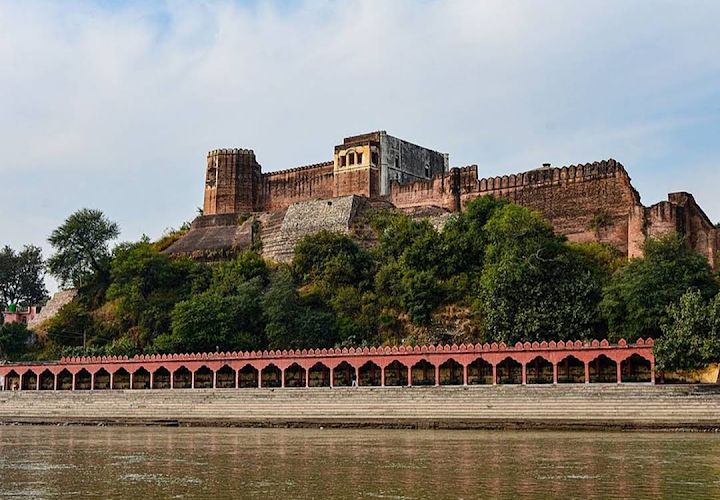
Akhnoor Fort stands as a testament to centuries of history along the banks of the Chenab River, where the rushing waters have witnessed countless battles, dynasties, and stories that shaped the region.
Highlights & Key Features
Key Features
Best Time to Visit
How to Get There
Tips for Visiting
Visitor Guide & Information
Description
The fortress dates back to the Dogra dynasty, though various accounts suggest the site has been strategically important for much longer. What makes this place special is how it manages to blend historical significance with natural beauty in a way that doesn’t feel forced or overdone. When I first heard about Akhnoor Fort from a fellow traveler in Jammu, they described it as “unexpectedly captivating,” and honestly, that’s pretty accurate.
The fort itself shows its age – and that’s part of its charm. Unlike some heavily restored monuments that feel more like theme parks than historical sites, Akhnoor retains an authentic, weathered character. The stone walls tell stories through their cracks and moss-covered surfaces, while the strategic position overlooking the river makes it immediately clear why this location was chosen for defense purposes.
What really sets Akhnoor Fort apart is its accessibility combined with a sense of discovery. It’s not overrun with crowds like some more famous monuments, which means you can actually explore at your own pace and maybe even find a quiet corner to sit and contemplate the river flowing below. The surrounding landscape adds another dimension to the visit – the Chenab River provides a constantly changing backdrop depending on the season and time of day you visit.
Key Features
The fortress offers several distinctive elements that make it worth the journey:
• Riverside Location – The fort’s position along the Chenab River provides exceptional panoramic views and creates a unique atmosphere where history meets natural beauty. The sound of flowing water adds an almost meditative quality to your exploration.
• Architectural Remnants – While much of the original structure has succumbed to time and weather, the remaining walls, bastions, and foundations offer fascinating insights into Dogra-era military architecture and defensive strategies.
• Photography Opportunities – The combination of ancient stonework, river vistas, and surrounding hills creates endless possibilities for photography enthusiasts. Golden hour here is particularly spectacular, with the setting sun casting warm light across the weathered stones.
• Exploration Potential – Unlike heavily regulated monument sites, Akhnoor Fort allows for genuine exploration. You can wander through various sections, discover hidden corners, and really get a feel for how the fortress functioned.
• Picnic and Outdoor Activities – The grounds around the fort provide excellent spaces for outdoor activities, making it ideal for families who want to combine education with recreation. Kids can run around safely while adults soak in the historical atmosphere.
• Strategic Viewing Points – Several elevated positions within the fort complex offer commanding views of the surrounding territory, helping visitors understand the military significance of the location.
• Accessible Facilities – The site includes wheelchair-accessible entrances and parking, making it more inclusive than many historical sites in the region.
• Free Parking – No need to worry about parking fees or hunting for spaces – the dedicated parking area makes arrival stress-free.
Best Time to Visit
Timing your visit to Akhnoor Fort can really make or break the experience. The region experiences fairly extreme temperature variations throughout the year, so picking the right season matters more than you might think.
October through March represents the sweet spot for visiting. During these months, the weather is pleasantly cool without being uncomfortably cold, and you can explore the fort grounds without melting under the harsh sun. I’d particularly recommend November and February – the skies tend to be clear, the river looks beautiful, and the temperature sits in that perfect range where you can walk around comfortably.
Winter mornings can be quite chilly, so if you’re planning an early visit between December and January, bring a good jacket. But there’s something magical about watching the mist rise off the Chenab River as the sun climbs higher – it’s worth braving the cold.
Summer months from April to September? Well, let’s just say they’re challenging. Temperatures can soar pretty high, and wandering around exposed stone fortifications in June heat isn’t most people’s idea of a good time. If you absolutely must visit during summer, aim for early morning hours before 9 AM or late afternoon after 4 PM. Carry plenty of water – this isn’t negotiable.
Monsoon season brings its own considerations. While the rain-washed landscape looks fresh and the river swells dramatically, wet stone surfaces can be slippery, and some areas might become difficult to access. If you don’t mind getting a bit wet and want to see the fort in a different light, monsoon visits have their own appeal.
Weekdays generally see fewer visitors than weekends, giving you more space to explore and photograph without crowds. Local festivals and holidays can bring larger groups, which changes the atmosphere – sometimes in good ways, sometimes not.
How to Get There
Getting to Akhnoor Fort requires some planning, but it’s definitely manageable even for independent travelers. The fort sits approximately 28 kilometers from Jammu city, making it an easy day trip or half-day excursion.
If you’re coming from Jammu, you’ve got several options. Hiring a taxi is probably the most convenient choice – you can negotiate a round-trip fare with waiting time included, which typically works out reasonably. Most taxi drivers in Jammu know the fort well and can provide some local insights during the journey.
Public buses run from Jammu to Akhnoor town fairly regularly, and from there the fort is a short auto-rickshaw ride away. This option takes longer and requires a bit more patience, but it’s considerably cheaper and gives you a more authentic experience of local transportation. Just be prepared for potentially crowded buses during peak hours.
For those who prefer driving themselves, the route from Jammu to Akhnoor is well-maintained and straightforward. You’ll take the Akhnoor Road heading northwest out of Jammu city, following it for about 45 minutes to an hour depending on traffic. Navigation apps work reliably in this area, though honestly the route is simple enough that you probably won’t need constant guidance.
The nearest airport is Jammu Airport, about 40 kilometers away. From there, you’ll need to arrange ground transportation to the fort. Railway travelers should know that Jammu Tawi is the closest major railway station, and from there you can easily find taxis or buses heading toward Akhnoor.
One thing worth mentioning – since Akhnoor is relatively close to sensitive border areas, it’s wise to carry proper identification documents. Security checkpoints aren’t unusual in this region, and having your ID ready saves time and hassle.
Tips for Visiting
After learning from both my own experiences and countless conversations with other travelers, here are some practical tips that’ll make your Akhnoor Fort visit smoother and more enjoyable.
First off, wear comfortable walking shoes with good grip. The terrain around the fort includes uneven surfaces, loose stones, and occasionally steep sections. Those fashionable sandals might look great in photos, but they won’t feel great after an hour of exploring. Trust me on this one.
Bring your own water and snacks. While there might be vendors around, don’t count on finding exactly what you want when you need it. A small backpack with water bottles, some fruit, and maybe a few energy bars will keep you fueled for exploration without relying on uncertain food options.
Sun protection is non-negotiable regardless of season. Even on cloudy days, the reflection off the river and light-colored stones can lead to unexpected sunburn. Sunscreen, sunglasses, and a hat should be in your bag. And speaking of bags, keep them light – you’ll be walking quite a bit, and a heavy backpack gets old fast.
Photography enthusiasts should plan for multiple visits if possible. The fort looks completely different at various times of day, and capturing its full character really benefits from experiencing it in different light conditions. Early morning offers softer light and fewer people, while late afternoon provides that golden glow everyone loves.
If you’re bringing children, keep a close eye on them near the river and on elevated portions of the fort. While the site is generally safe, it’s not a playground with safety barriers everywhere. But don’t let that scare you off – it’s actually quite good for kids who enjoy exploring and learning through discovery rather than just reading plaques.
Check current conditions before traveling, especially during monsoon season or if there’s been political tension in the region. Occasionally access might be restricted for security reasons, and you don’t want to make the journey only to find the site closed.
Respect the historical site. I know this seems obvious, but some visitors treat ancient monuments like personal photo studios, climbing on fragile structures or carving initials into ancient stones. Don’t be that person. Future generations deserve to experience this place too.
Hiring a local guide can add tremendous value to your visit. They’ll point out details you’d otherwise miss and share stories that bring the stones to life. You can usually arrange this informally with guides who hang around the entrance, though agreeing on a price beforehand prevents awkward negotiations later.
Plan for at least two to three hours if you want to properly explore the fort and enjoy the riverside scenery. Rushing through defeats the purpose – this isn’t a place to quickly tick off your list. It rewards slower, more contemplative exploration.
Finally, manage your expectations appropriately. Akhnoor Fort isn’t the Taj Mahal or Red Fort. It’s a partially ruined riverside fortress with historical significance and natural beauty. If you come expecting perfectly preserved grandeur, you might be disappointed. But if you come ready to discover a less-known piece of history in a beautiful setting, you’ll likely leave thoroughly satisfied.
The fort offers something increasingly rare in our over-touristed world – a chance to experience history without fighting through crowds or feeling like you’re in a commercial tourist trap. And really, isn’t that worth the journey?
Akhnoor Fort stands as a testament to centuries of history along the banks of the Chenab River, where the rushing waters have witnessed countless battles, dynasties, and stories that shaped the region. This isn’t just another old fort you’ll tick off your bucket list – it’s a place where you can actually feel the weight of history beneath your feet while enjoying some seriously gorgeous riverside views.
The fortress dates back to the Dogra dynasty, though various accounts suggest the site has been strategically important for much longer. What makes this place special is how it manages to blend historical significance with natural beauty in a way that doesn’t feel forced or overdone. When I first heard about Akhnoor Fort from a fellow traveler in Jammu, they described it as “unexpectedly captivating,” and honestly, that’s pretty accurate.
The fort itself shows its age – and that’s part of its charm. Unlike some heavily restored monuments that feel more like theme parks than historical sites, Akhnoor retains an authentic, weathered character. The stone walls tell stories through their cracks and moss-covered surfaces, while the strategic position overlooking the river makes it immediately clear why this location was chosen for defense purposes.
What really sets Akhnoor Fort apart is its accessibility combined with a sense of discovery. It’s not overrun with crowds like some more famous monuments, which means you can actually explore at your own pace and maybe even find a quiet corner to sit and contemplate the river flowing below. The surrounding landscape adds another dimension to the visit – the Chenab River provides a constantly changing backdrop depending on the season and time of day you visit.
Key Features
The fortress offers several distinctive elements that make it worth the journey:
• Riverside Location – The fort’s position along the Chenab River provides exceptional panoramic views and creates a unique atmosphere where history meets natural beauty. The sound of flowing water adds an almost meditative quality to your exploration.
• Architectural Remnants – While much of the original structure has succumbed to time and weather, the remaining walls, bastions, and foundations offer fascinating insights into Dogra-era military architecture and defensive strategies.
• Photography Opportunities – The combination of ancient stonework, river vistas, and surrounding hills creates endless possibilities for photography enthusiasts. Golden hour here is particularly spectacular, with the setting sun casting warm light across the weathered stones.
• Exploration Potential – Unlike heavily regulated monument sites, Akhnoor Fort allows for genuine exploration. You can wander through various sections, discover hidden corners, and really get a feel for how the fortress functioned.
• Picnic and Outdoor Activities – The grounds around the fort provide excellent spaces for outdoor activities, making it ideal for families who want to combine education with recreation. Kids can run around safely while adults soak in the historical atmosphere.
• Strategic Viewing Points – Several elevated positions within the fort complex offer commanding views of the surrounding territory, helping visitors understand the military significance of the location.
• Accessible Facilities – The site includes wheelchair-accessible entrances and parking, making it more inclusive than many historical sites in the region.
• Free Parking – No need to worry about parking fees or hunting for spaces – the dedicated parking area makes arrival stress-free.
Best Time to Visit
Timing your visit to Akhnoor Fort can really make or break the experience. The region experiences fairly extreme temperature variations throughout the year, so picking the right season matters more than you might think.
October through March represents the sweet spot for visiting. During these months, the weather is pleasantly cool without being uncomfortably cold, and you can explore the fort grounds without melting under the harsh sun. I’d particularly recommend November and February – the skies tend to be clear, the river looks beautiful, and the temperature sits in that perfect range where you can walk around comfortably.
Winter mornings can be quite chilly, so if you’re planning an early visit between December and January, bring a good jacket. But there’s something magical about watching the mist rise off the Chenab River as the sun climbs higher – it’s worth braving the cold.
Summer months from April to September? Well, let’s just say they’re challenging. Temperatures can soar pretty high, and wandering around exposed stone fortifications in June heat isn’t most people’s idea of a good time. If you absolutely must visit during summer, aim for early morning hours before 9 AM or late afternoon after 4 PM. Carry plenty of water – this isn’t negotiable.
Monsoon season brings its own considerations. While the rain-washed landscape looks fresh and the river swells dramatically, wet stone surfaces can be slippery, and some areas might become difficult to access. If you don’t mind getting a bit wet and want to see the fort in a different light, monsoon visits have their own appeal.
Weekdays generally see fewer visitors than weekends, giving you more space to explore and photograph without crowds. Local festivals and holidays can bring larger groups, which changes the atmosphere – sometimes in good ways, sometimes not.
How to Get There
Getting to Akhnoor Fort requires some planning, but it’s definitely manageable even for independent travelers. The fort sits approximately 28 kilometers from Jammu city, making it an easy day trip or half-day excursion.
If you’re coming from Jammu, you’ve got several options. Hiring a taxi is probably the most convenient choice – you can negotiate a round-trip fare with waiting time included, which typically works out reasonably. Most taxi drivers in Jammu know the fort well and can provide some local insights during the journey.
Public buses run from Jammu to Akhnoor town fairly regularly, and from there the fort is a short auto-rickshaw ride away. This option takes longer and requires a bit more patience, but it’s considerably cheaper and gives you a more authentic experience of local transportation. Just be prepared for potentially crowded buses during peak hours.
For those who prefer driving themselves, the route from Jammu to Akhnoor is well-maintained and straightforward. You’ll take the Akhnoor Road heading northwest out of Jammu city, following it for about 45 minutes to an hour depending on traffic. Navigation apps work reliably in this area, though honestly the route is simple enough that you probably won’t need constant guidance.
The nearest airport is Jammu Airport, about 40 kilometers away. From there, you’ll need to arrange ground transportation to the fort. Railway travelers should know that Jammu Tawi is the closest major railway station, and from there you can easily find taxis or buses heading toward Akhnoor.
One thing worth mentioning – since Akhnoor is relatively close to sensitive border areas, it’s wise to carry proper identification documents. Security checkpoints aren’t unusual in this region, and having your ID ready saves time and hassle.
Tips for Visiting
After learning from both my own experiences and countless conversations with other travelers, here are some practical tips that’ll make your Akhnoor Fort visit smoother and more enjoyable.
First off, wear comfortable walking shoes with good grip. The terrain around the fort includes uneven surfaces, loose stones, and occasionally steep sections. Those fashionable sandals might look great in photos, but they won’t feel great after an hour of exploring. Trust me on this one.
Bring your own water and snacks. While there might be vendors around, don’t count on finding exactly what you want when you need it. A small backpack with water bottles, some fruit, and maybe a few energy bars will keep you fueled for exploration without relying on uncertain food options.
Sun protection is non-negotiable regardless of season. Even on cloudy days, the reflection off the river and light-colored stones can lead to unexpected sunburn. Sunscreen, sunglasses, and a hat should be in your bag. And speaking of bags, keep them light – you’ll be walking quite a bit, and a heavy backpack gets old fast.
Photography enthusiasts should plan for multiple visits if possible. The fort looks completely different at various times of day, and capturing its full character really benefits from experiencing it in different light conditions. Early morning offers softer light and fewer people, while late afternoon provides that golden glow everyone loves.
If you’re bringing children, keep a close eye on them near the river and on elevated portions of the fort. While the site is generally safe, it’s not a playground with safety barriers everywhere. But don’t let that scare you off – it’s actually quite good for kids who enjoy exploring and learning through discovery rather than just reading plaques.
Check current conditions before traveling, especially during monsoon season or if there’s been political tension in the region. Occasionally access might be restricted for security reasons, and you don’t want to make the journey only to find the site closed.
Respect the historical site. I know this seems obvious, but some visitors treat ancient monuments like personal photo studios, climbing on fragile structures or carving initials into ancient stones. Don’t be that person. Future generations deserve to experience this place too.
Hiring a local guide can add tremendous value to your visit. They’ll point out details you’d otherwise miss and share stories that bring the stones to life. You can usually arrange this informally with guides who hang around the entrance, though agreeing on a price beforehand prevents awkward negotiations later.
Plan for at least two to three hours if you want to properly explore the fort and enjoy the riverside scenery. Rushing through defeats the purpose – this isn’t a place to quickly tick off your list. It rewards slower, more contemplative exploration.
Finally, manage your expectations appropriately. Akhnoor Fort isn’t the Taj Mahal or Red Fort. It’s a partially ruined riverside fortress with historical significance and natural beauty. If you come expecting perfectly preserved grandeur, you might be disappointed. But if you come ready to discover a less-known piece of history in a beautiful setting, you’ll likely leave thoroughly satisfied.
The fort offers something increasingly rare in our over-touristed world – a chance to experience history without fighting through crowds or feeling like you’re in a commercial tourist trap. And really, isn’t that worth the journey?
Akhnoor Fort, Jammu: Riverfront stronghold with Harappan roots
Perched above the right bank of the Chenab River about 28–30 km northwest of Jammu City, Akhnoor Fort is both a commanding Dogra-era stronghold and a doorway into far older history uncovered on the same hill (the Manda archaeological site). It’s a protected National Monument under the Archaeological Survey of India (ASI) and one of the most rewarding half-day historical outings from Jammu.
Quick facts (verified)
Location: Akhnoor town, Jammu district, on the right bank of the Chenab (ancient “Asikni”) about 28 km from Jammu City.
Protection status: Declared a National Monument in 1982; under ASI jurisdiction.
Getting there: Approx. 35 km from Jammu Airport, 33 km from Jammu Tawi railway station, 30 km from Jammu Bus Stand (district tourism figures).jammu.nic.in
Why Akhnoor Fort matters
A Dogra-era bastion with distinctive riverfront architecture
Akhnoor’s ramparts rise directly above the Chenab, with high fortification walls, regularly spaced bastions, and two-storeyed watchtowers at the corners—classic north-Indian fort vocabulary adapted to a river bluff. A wall divides the complex, with a two-storeyed palace block to the south featuring arched facades and surviving mural paintings around the courtyard. Access historically existed both from the riverside and the northern landward approach. Conservation work has been ongoing.
Built between 1762 and 1802—note the differing attributions
Construction began in 1762 under Raja Tej (Tegh) Singh. Completion dates and the ruler credited vary across official and scholarly references:
– The Jammu district administration credits Raja Alam Singh with completion in 1802.jammu.nic.in
– Wikipedia’s history summary, drawing on government/tourism sources, attributes completion in 1802 to Raja Dhian Singh.
Given the inconsistency, it’s safest to frame the fort’s finishing phase as circa 1802 with attribution differences in the records. (If you need a single name for signage or print, cite the relevant source alongside it.)
Jia Pota Ghat: a coronation that shaped Jammu & Kashmir
Immediately below the fort on the riverfront is Jia Pota Ghat, where Maharaja Ranjit Singh ceremonially crowned Gulab Singh as Raja of Jammu on 17 June 1822—an event often cited as foundational to the modern Dogra state. The ghat’s name honors the Jia Pota tree (Putranjiva roxburghii) that shaded the ceremony; a commemorative tablet marks the spot.jammu.nic.in
The deeper layer: Akhnoor’s Harappan link (Manda)
Beneath and around the fort lies Manda, an archaeological site investigated by the ASI in the 1970s. Finds include Harappan Red Ware, dish-on-stand goblets, copper pins, bone arrowheads, and sherds with Harappan graffiti, followed by early historic and Kushan-period layers. Many researchers regard Akhnoor/Manda as the northernmost Harappan outpost in India (excluding Shortugai in Afghanistan), likely positioned to tap timber from the Himalayan foothills via the Chenab.
What this means for visitors: while the fort itself is late-18th/early-19th century, the hill records a three-phase cultural sequence—Harappan, Early Historic, and Kushan—making Akhnoor one of the few places in North India where you read Dogra political history against the backdrop of Bronze Age trade and logistics.
What you’ll see on site
River-edge silhouette: The fort’s battlemented skyline above the Chenab is the classic Akhnoor photograph, especially from across the river.jammu.nic.in
Corner towers and bastions: Two-storeyed towers with merlons anchor the corners; bastions punctuate the curtain walls at regular intervals.
Palace courtyard and murals: Inside the southern palace wing, look for decorated arches and traces of mural painting on courtyard-facing walls. These fragments offer a rare glimpse of late-Dogra aesthetic choices in a frontier setting.
Jia Pota Ghat below: Combine the fort visit with a short walk/drive to the ghat—the coronation tablet anchors an interpretive narrative of Dogra state formation right on the riverbank.jammu.nic.in
Planning your visit (practical, verified details only)
Travel time & approach: From central Jammu, allow ~1 hour each way depending on traffic; the district page lists 30 km from the bus stand, 33 km from Jammu Tawi station, 35 km from the airport. Roads are all-weather; local autos and taxis are common.jammu.nic.in
Status & care: The site is ASI-protected; ongoing conservation is noted in summaries. Treat mural areas and wall surfaces as fragile heritage.
About timings & fees: Several travel listings state daytime visiting hours and no entry fee, but the official district page does not publish daily timings or tariff. For absolute certainty, verify on arrival in Akhnoor town or through the District Jammu tourism contacts before setting out. I’m deliberately not asserting hours/fees here to avoid propagating outdated information.jammu.nic.in
Context for history-minded travelers
Frontier geography: Akhnoor sits where the Chenab exits the hills toward the plains. A fort here controlled river movement and road passages at a strategic bend—explaining both the Dogra investment in fortification and the earlier Harappan interest in timber and transport.
From Akhnoor to modern rail feats: The Chenab valley continues to feature world-class engineering, including the Chenab Railway Bridge (Udhampur–Srinagar–Baramulla line), the world’s highest railway arch bridge over the Chenab—context that underscores the river’s enduring strategic importance (though the bridge is far upstream from Akhnoor).
Accessibility & responsible visiting
Terrain: Expect stairs and uneven surfaces typical of hill forts. There is no authoritative, published step-free route map for Akhnoor Fort at present; plan accordingly if mobility is a concern. (This is a transparency note due to lack of official access documentation online.)
Respect the site: As an ASI-protected monument, avoid touching mural surfaces, climbing parapets, or littering. Local guidelines take precedence on photography restrictions around sensitive areas.
Summary: what sets Akhnoor apart
If you want one site near Jammu that layers Dogra statecraft over Bronze-Age trade archaeology, Akhnoor is it. You get fort architecture with intact silhouettes, a riverfront coronation story that helped shape the region’s modern polity, and Harappan-to-Kushan cultural deposits documented by ASI—all within an easy day trip from the city.jammu.nic.in
Sources & verification
District Jammu (official): Architectural features, ASI status, Manda context, Jia Pota coronation; distances from airport/station/bus stand. Last updated Oct 25, 2025.jammu.nic.in
Akhnoor Fort (encyclopedic summary): River location, construction span (1762–1802), architectural details, conservation note, National Monument status. (Note the completion-year attribution differences across sources.)
Explore verified points of interest within walking or short transit distance.
No neighboring places mapped within 5 km yet.
Find Places to Stay Nearby
Stay22 provides this accommodation search. We may earn a commission if you book through it; verify current prices and terms with the provider.
🗺️
Interactive accommodation map requires marketing cookies to display live rates.
Recommended Experiences & Activities
GetYourGuide provides this tour inventory. We may earn a commission if you book through it; verify current availability, prices, and terms with the provider.
Top Viator Experiences & Guided Tours in IN
We may earn a commission if you book through links on this page at no extra cost to you. All tours feature verified customer reviews and flexible cancellation options.