
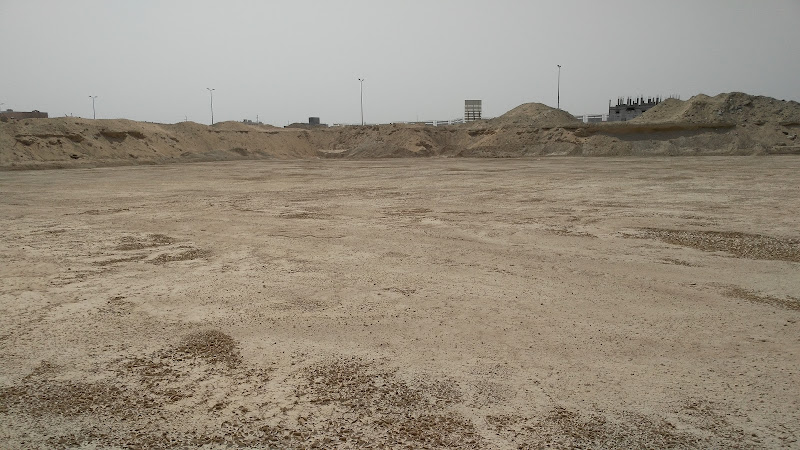
متحف الاحساء الاقليمي
About متحف الاحساء الاقليمي
Description
Matahaf Al‑Ahsa Al‑Iqlimi — the Al‑Ahsa Regional Museum for archaeology and heritage — is one of those places that quietly surprises travelers who carve out a few hours in Hofuf. It’s not just a building full of glass cases and dusty labels. It’s a thoughtful, steadily evolving heritage museum devoted to telling the long, layered story of Al‑Ahsa Oasis in the Eastern Province of Saudi Arabia, from Stone Age toolmakers and the Dilmun period merchants to Islamic scholars, Ottoman-era builders, and the modern Saudi state. And then there’s the curveball: a compact Roman‑style amphitheater within the complex. No, not an ancient ruin teleported from the Mediterranean; think stepped, semi‑circular seating crafted as an educational forum and cultural stage. It looks classical, it photographs beautifully, and it’s used for talks, school groups, and community programs. I’ve seen a curator demonstrate ancient pottery firing techniques there — it turns a museum visit into an event rather than a stroll.
If Al‑Ahsa Oasis is the world’s living classroom on oasis life — date palms, qanats, wind towers, mud-brick forts, the whole works — the museum is the index at the back of the book. Exhibits move chronologically and thematically, so you can walk a path from stone tools and shell beads dug from prehistoric sites to inscribed tablets and trade-route maps from the Dilmun period, when the Gulf linked Arabia, Mesopotamia, and beyond. There are models, too, and they’re not the cardboard‑cutout kind. One diorama that stuck with me shows a caravan cutting across the desert toward Al‑Uqair Port, with labels pointing out commodities (think incense, dates, textiles) and how those made Al‑Ahsa prosperous. It’s the sort of display that turns a “huh, so that’s where it came from” into “oh, I get why this place mattered.”
The Islamic period galleries dig into scholarship and craft. You’ll find Qur’anic calligraphy examples, coins, ceramics, and everyday tools that show how life actually worked in the oasis towns. That practical lens is a running theme: rather than idealized, sepia‑soft nostalgia, the museum leans on archaeology, documents, and oral histories to show how wells were dug, how palm fronds were turned into baskets and roofs, and how families built their courtyard homes to breathe in the summer heat. If you’ve already walked through Ibrahim Palace’s robust arches and seen the old barracks nearby, you’ll recognize architectural notes echoed in the museum displays. And when the Ottoman period surfaces — with uniforms, weapons, and administrative papers — it suddenly connects why so many local landmarks wear those familiar domes and buttresses. It’s context, and honestly, that’s what a good museum should give you.
What I personally enjoy, and forgive the tangent, is how the curators frame Al‑Ahsa within the Arabian Peninsula’s bigger conversation. They don’t stop at “here’s an old jar.” They jump to language, routes, and contact — how merchants tracked stars, why certain scripts spread here before others, where the earliest writing in the region echoed from. One wallboard maps links to Mesopotamia and the Levant; another charts the evolution of trade networks across Bahrain Island and into Eastern Arabia. If you’ve read about Dilmun and thought it’s just something in a textbook, this is where it clicks. That bit of pottery suddenly sits in a web of dates and ships and bargains struck in shaded souqs.
Back to that amphitheater. The stepped seating draws you in the way a courtyard does. It’s small, intimate — the kind of place teachers gather their students to recap after a gallery walk. On one visit, a group of teenagers sat along the rim while a guide described, in quick, animated Arabic, how ancient water channels were engineered to feed date palms. I don’t speak Arabic fluently, but you don’t need every word to feel the lesson land. The setting makes it stick. Form meets function: Roman‑inspired form, local function. Expect cameras to come out; it’s a favorite spot for photos, and yes, I’m guilty too.
Most travelers arrive expecting a quick in‑and‑out and stay longer than planned. Part of that is simple comfort. You step out of the Hofuf heat into well‑cooled galleries (a blessing, let’s be honest), and the storyline gently ushers you forward. Lighting is good, the artifact labels are generally clear, and the flow is sensible: pre‑Islamic to Islamic, then the Ottoman era into the Saudi unification narrative. A couple of galleries weave in crafts and daily life: a Bedouin tent set with textiles and coffee tools, a mud‑brick wall mock‑up to show construction methods, and a case of date agriculture tools that finally explains why certain pruners look like they belong in a sci‑fi movie.
Is everything perfect? Not exactly, and that’s part of the charm but also a fair heads‑up. Some labels lean Arabic‑first with shorter English summaries; if you’re a detail hound, you might want a guide or translation app. On a recent weekday, one wing was being refreshed with new panels, and, well, museum updates take the time they take. A couple of display cases weren’t lit. None of this ruins the experience — the core story still lands, and staff are friendly if you ask questions — but if you’re expecting a mega‑museum with every bell and whistle, adjust the lens. This is a regional museum focused on Al‑Ahsa’s heritage, done with care, and still growing.
For photography lovers, the museum is a sweet spot. Glass glare is lighter than in many places, and the diorama lighting is balanced enough that a smartphone does fine. The amphitheater’s curves and shadows make a quietly dramatic backdrop — I’ve seen travelers line up their shot so the steps frame a display poster in the distance. Social types will get their share of keepers.
What makes this museum special, and why it tends to win over even skeptical teens and tired parents, is the way it plugs you into the wider Al‑Ahsa day out. You don’t need to be a historian to appreciate how the exhibits preface a stroll through the Qaisariyah Souq, or an afternoon up at Jebel Al‑Qarah’s caves. The museum explains the palm‑frond crafts you’ll see in the market, the mud‑brick patterns on neighborhood walls, the reason Ibrahim Palace looks the way it does. It’s actionable context — the kind that makes everything else on your itinerary more interesting. Learn here, then go look out there. That’s the trick.
The museum’s narrative also does justice to Al‑Ahsa’s deep continuity. People lived, prayed, traded, wrote, and argued here across thousands of years, through empires that rose and fell. The galleries visualize that continuity through objects: grindstones from prehistory, delicate beads that traveled farther than you might think, inscribed stones and coins that carried administrators’ power, and devotional items that anchored faith in daily life. By the time you get to the sections on the Saudi state and the modern era, the story isn’t a jump cut. It’s a slow pan — Al‑Ahsa adapting and contributing, again and again, while remaining itself. You come away with a feel for the oasis as a cultural engine, not a footnote.
Families will appreciate how accessible it is. There’s room for strollers, benches to regroup, clean facilities, and staff who know how to steer younger visitors toward the tactile bits: models with buttons, a few interactive screens, and displays that invite pointing and “what’s that?” moments. The amphitheater sometimes hosts school or community programs; if you wander in during one, it’s fine to sit quietly and watch. Those unscripted minutes can be the most memorable — I once learned more about traditional palm weaving from a grandmother explaining it to her grandson than from any caption.
If you’re building an itinerary across the Eastern Province, consider pairing the museum with a visit to Ibrahim Palace and a late afternoon in Al‑Ahsa Oasis among the palms. The themes echo from case to real‑world scene: water control, defensive architecture, market culture, and the mix of influences you’d expect from a region that sat along the Gulf’s trade arteries. For travelers who care about “why” as much as “wow,” it’s a rich loop. And look, if museums aren’t usually your thing, think of this one as a decoder ring — a compact, friendly primer that makes the rest of Al‑Ahsa sing a little louder.
Practical expectations? Budgets and curation choices can show around the edges — an under-lit case here, a gallery under update there. Sometimes operating hours flex for events or maintenance, and English translations aren’t exhaustive. But the core is heartfelt and grounded in scholarship. The storyline is coherent; the amphitheater elevates the visit beyond the standard walk‑through; and the staff’s pride in local heritage is the kind of intangible that makes a place stick in your memory.
Here’s my quick “why go” in one breath: because Al‑Ahsa is one of the world’s great oases, its history is a braid of ancient trade, Islamic learning, Ottoman governance, and modern Saudi identity, and this museum is the best single stop to make sense of that braid — with a photogenic, Roman‑style amphitheater that turns learning into a shared, human moment. If that sounds like your kind of travel day, you’ll come out with stories, not just snapshots. And probably a new respect for palm trees. I know I did.
Key Features
More Details
Updated November 1, 2025
Table of Contents
Description
Matahaf Al‑Ahsa Al‑Iqlimi — the Al‑Ahsa Regional Museum for archaeology and heritage — is one of those places that quietly surprises travelers who carve out a few hours in Hofuf. It’s not just a building full of glass cases and dusty labels. It’s a thoughtful, steadily evolving heritage museum devoted to telling the long, layered story of Al‑Ahsa Oasis in the Eastern Province of Saudi Arabia, from Stone Age toolmakers and the Dilmun period merchants to Islamic scholars, Ottoman-era builders, and the modern Saudi state. And then there’s the curveball: a compact Roman‑style amphitheater within the complex. No, not an ancient ruin teleported from the Mediterranean; think stepped, semi‑circular seating crafted as an educational forum and cultural stage. It looks classical, it photographs beautifully, and it’s used for talks, school groups, and community programs. I’ve seen a curator demonstrate ancient pottery firing techniques there — it turns a museum visit into an event rather than a stroll.
If Al‑Ahsa Oasis is the world’s living classroom on oasis life — date palms, qanats, wind towers, mud-brick forts, the whole works — the museum is the index at the back of the book. Exhibits move chronologically and thematically, so you can walk a path from stone tools and shell beads dug from prehistoric sites to inscribed tablets and trade-route maps from the Dilmun period, when the Gulf linked Arabia, Mesopotamia, and beyond. There are models, too, and they’re not the cardboard‑cutout kind. One diorama that stuck with me shows a caravan cutting across the desert toward Al‑Uqair Port, with labels pointing out commodities (think incense, dates, textiles) and how those made Al‑Ahsa prosperous. It’s the sort of display that turns a “huh, so that’s where it came from” into “oh, I get why this place mattered.”
The Islamic period galleries dig into scholarship and craft. You’ll find Qur’anic calligraphy examples, coins, ceramics, and everyday tools that show how life actually worked in the oasis towns. That practical lens is a running theme: rather than idealized, sepia‑soft nostalgia, the museum leans on archaeology, documents, and oral histories to show how wells were dug, how palm fronds were turned into baskets and roofs, and how families built their courtyard homes to breathe in the summer heat. If you’ve already walked through Ibrahim Palace’s robust arches and seen the old barracks nearby, you’ll recognize architectural notes echoed in the museum displays. And when the Ottoman period surfaces — with uniforms, weapons, and administrative papers — it suddenly connects why so many local landmarks wear those familiar domes and buttresses. It’s context, and honestly, that’s what a good museum should give you.
What I personally enjoy, and forgive the tangent, is how the curators frame Al‑Ahsa within the Arabian Peninsula’s bigger conversation. They don’t stop at “here’s an old jar.” They jump to language, routes, and contact — how merchants tracked stars, why certain scripts spread here before others, where the earliest writing in the region echoed from. One wallboard maps links to Mesopotamia and the Levant; another charts the evolution of trade networks across Bahrain Island and into Eastern Arabia. If you’ve read about Dilmun and thought it’s just something in a textbook, this is where it clicks. That bit of pottery suddenly sits in a web of dates and ships and bargains struck in shaded souqs.
Back to that amphitheater. The stepped seating draws you in the way a courtyard does. It’s small, intimate — the kind of place teachers gather their students to recap after a gallery walk. On one visit, a group of teenagers sat along the rim while a guide described, in quick, animated Arabic, how ancient water channels were engineered to feed date palms. I don’t speak Arabic fluently, but you don’t need every word to feel the lesson land. The setting makes it stick. Form meets function: Roman‑inspired form, local function. Expect cameras to come out; it’s a favorite spot for photos, and yes, I’m guilty too.
Most travelers arrive expecting a quick in‑and‑out and stay longer than planned. Part of that is simple comfort. You step out of the Hofuf heat into well‑cooled galleries (a blessing, let’s be honest), and the storyline gently ushers you forward. Lighting is good, the artifact labels are generally clear, and the flow is sensible: pre‑Islamic to Islamic, then the Ottoman era into the Saudi unification narrative. A couple of galleries weave in crafts and daily life: a Bedouin tent set with textiles and coffee tools, a mud‑brick wall mock‑up to show construction methods, and a case of date agriculture tools that finally explains why certain pruners look like they belong in a sci‑fi movie.
Is everything perfect? Not exactly, and that’s part of the charm but also a fair heads‑up. Some labels lean Arabic‑first with shorter English summaries; if you’re a detail hound, you might want a guide or translation app. On a recent weekday, one wing was being refreshed with new panels, and, well, museum updates take the time they take. A couple of display cases weren’t lit. None of this ruins the experience — the core story still lands, and staff are friendly if you ask questions — but if you’re expecting a mega‑museum with every bell and whistle, adjust the lens. This is a regional museum focused on Al‑Ahsa’s heritage, done with care, and still growing.
For photography lovers, the museum is a sweet spot. Glass glare is lighter than in many places, and the diorama lighting is balanced enough that a smartphone does fine. The amphitheater’s curves and shadows make a quietly dramatic backdrop — I’ve seen travelers line up their shot so the steps frame a display poster in the distance. Social types will get their share of keepers.
What makes this museum special, and why it tends to win over even skeptical teens and tired parents, is the way it plugs you into the wider Al‑Ahsa day out. You don’t need to be a historian to appreciate how the exhibits preface a stroll through the Qaisariyah Souq, or an afternoon up at Jebel Al‑Qarah’s caves. The museum explains the palm‑frond crafts you’ll see in the market, the mud‑brick patterns on neighborhood walls, the reason Ibrahim Palace looks the way it does. It’s actionable context — the kind that makes everything else on your itinerary more interesting. Learn here, then go look out there. That’s the trick.
The museum’s narrative also does justice to Al‑Ahsa’s deep continuity. People lived, prayed, traded, wrote, and argued here across thousands of years, through empires that rose and fell. The galleries visualize that continuity through objects: grindstones from prehistory, delicate beads that traveled farther than you might think, inscribed stones and coins that carried administrators’ power, and devotional items that anchored faith in daily life. By the time you get to the sections on the Saudi state and the modern era, the story isn’t a jump cut. It’s a slow pan — Al‑Ahsa adapting and contributing, again and again, while remaining itself. You come away with a feel for the oasis as a cultural engine, not a footnote.
Families will appreciate how accessible it is. There’s room for strollers, benches to regroup, clean facilities, and staff who know how to steer younger visitors toward the tactile bits: models with buttons, a few interactive screens, and displays that invite pointing and “what’s that?” moments. The amphitheater sometimes hosts school or community programs; if you wander in during one, it’s fine to sit quietly and watch. Those unscripted minutes can be the most memorable — I once learned more about traditional palm weaving from a grandmother explaining it to her grandson than from any caption.
If you’re building an itinerary across the Eastern Province, consider pairing the museum with a visit to Ibrahim Palace and a late afternoon in Al‑Ahsa Oasis among the palms. The themes echo from case to real‑world scene: water control, defensive architecture, market culture, and the mix of influences you’d expect from a region that sat along the Gulf’s trade arteries. For travelers who care about “why” as much as “wow,” it’s a rich loop. And look, if museums aren’t usually your thing, think of this one as a decoder ring — a compact, friendly primer that makes the rest of Al‑Ahsa sing a little louder.
Practical expectations? Budgets and curation choices can show around the edges — an under-lit case here, a gallery under update there. Sometimes operating hours flex for events or maintenance, and English translations aren’t exhaustive. But the core is heartfelt and grounded in scholarship. The storyline is coherent; the amphitheater elevates the visit beyond the standard walk‑through; and the staff’s pride in local heritage is the kind of intangible that makes a place stick in your memory.
Here’s my quick “why go” in one breath: because Al‑Ahsa is one of the world’s great oases, its history is a braid of ancient trade, Islamic learning, Ottoman governance, and modern Saudi identity, and this museum is the best single stop to make sense of that braid — with a photogenic, Roman‑style amphitheater that turns learning into a shared, human moment. If that sounds like your kind of travel day, you’ll come out with stories, not just snapshots. And probably a new respect for palm trees. I know I did.
Key Highlights
متحف الاحساء الاقليمي
Location
Places to Stay Near متحف الاحساء الاقليمي
Find and Book a Tour
Explore More Travel Guides
No reviews found! Be the first to review!
Traveler Reviews for متحف الاحساء الاقليمي
There are no reviews yet. Be the first one to write one.
Have you visited متحف الاحساء الاقليمي? Help other travelers by sharing your review.
You Might Also Like
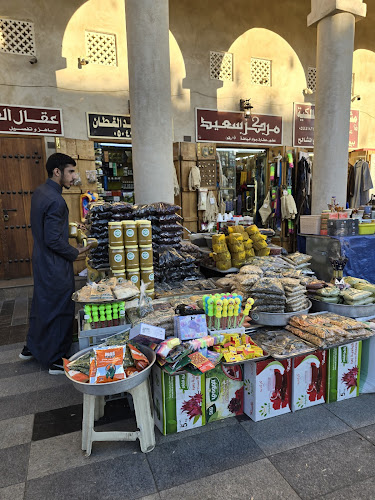
Qaisariya Al-Ahsa Souq

Al Hofuf 36423

Ibrahim Palace
Find Accommodations Nearby
Recommended Tours & Activities
Visitor Reviews
There are no reviews yet. Be the first one to write one.
Share Your Experience
Have you visited متحف الاحساء الاقليمي? Help other travelers by leaving a review.