

Last modified March 24, 2026
Planning a trip to Santorini and wondering about your transportation options? Bolt isn’t available in Santorini as of 2026. The Estonian ride-hailing app made a splashy return to Greece in early 2025, kicking off in Athens, then Crete, but it hasn’t made its way to the islands like Santorini.
Still, you’ve got options. Santorini has a few ride-hailing apps tied to licensed taxis, but getting a ride here isn’t as straightforward as in Athens or other big cities. The taxi scene is its own beast.
Honestly, knowing how transportation works here will save you time, money, and a headache or two. Let’s dig into the apps that do work, why drivers sometimes turn you down, and what you should actually expect.
Key Takeaways
- Bolt only runs in Athens and Heraklion, Crete—not in Santorini
- Uber works in Santorini, but only for licensed taxis (no private drivers)
- Taxis are limited and demand is high, so ride-hailing isn’t as reliable as on the mainland
Is Bolt Available in Santorini?
Nope—Bolt hasn’t landed in Santorini yet, even though they started up in Athens back in January 2025. Right now, the app only runs in a couple of Greek cities, so Santorini is still waiting for this budget-friendly option.
Bolt’s Presence in Greece

Bolt came to Greece later than a lot of people expected. It finally launched in Athens in January 2025, long after rivals like FREENOW (formerly TaxiBeat) had already carved out their space.
Bolt didn’t rush things. Unlike its fast rollouts in South Africa, Poland, or Spain, it only partnered with licensed taxi drivers in Greece right from the start. This way, they sidestepped the legal mess that Uber got tangled in years ago.
You’ll get the same professional taxi drivers as you’d hail on the street, but with the perks of in-app payments and more transparency. The app’s available for both iOS and Android, and it works pretty much as you’d expect from any ride-hailing platform.
Current Bolt Cities in 2026

Bolt is sticking to just two Greek spots: Athens and Heraklion, Crete.
Athens was the obvious first move. It’s the capital, has the most traffic, and gave Bolt a good test run. Heraklion joined in late 2025, which seemed promising for more expansion.
But after that? Nothing. Santorini, Mykonos, Rhodes, Corfu—none of them have Bolt. Even Thessaloniki, the country’s second-biggest city, is still waiting. Honestly, with its bigger year-round population, Thessaloniki will probably get Bolt before Santorini ever does.
Why Isn’t Bolt in Santorini?

Honestly? Santorini just doesn’t have enough year-round action to make Bolt worth it.
Tourist islands like this are packed from April to October, then nearly empty the rest of the year. It’s tough to build a driver network that can handle the summer rush and survive the off-season.
Santorini already has Uber and a decent number of traditional taxis. The island’s tiny—just 28 square miles—so most rides are short, and that limits how much drivers can earn. Bolt probably looked at the numbers and decided to stick with cities that have steadier demand.
Also, FREENOW and Uber have been here for years, building trust with both drivers and tourists. For Bolt, breaking in now would mean spending a lot on marketing and driver perks just to catch up.
Comparing Bolt to Other Ride-Hailing Apps

In Athens, where all three apps compete, Bolt often wins on price—especially with those new-user deals. But on Santorini, Uber is your only app-based choice.
Uber connects you with licensed taxis here, but don’t expect it to work as smoothly as it does in Athens. Last time I visited, I had to wait 20-30 minutes for a ride during busy evenings. The small driver pool means instant pickups are rare.
Traditional taxis are still your safest bet in Santorini, especially in places like Fira or Oia. You’ll find taxi stands at the airport, ferry port, and the big hotels. The catch? You’ll probably need cash, and sometimes drivers claim their card machine is “broken.” It’s a classic.
| App | Available in Santorini? | Payment Options | Average Wait Time |
|---|---|---|---|
| Bolt | No | N/A | N/A |
| Uber | Yes | Card, PayPal, digital wallets | 10-30 minutes |
| FREENOW | No | N/A | N/A |
Countries like Austria, Germany, France, and Ireland have much wider Bolt coverage since they have more cities with steady populations. Estonia, Bolt’s home turf, obviously has the most complete service. Greece is still catching up, and the islands are pretty low on the list.
What Ride-Hailing Apps Can You Use in Santorini?
Honestly, your ride-hailing app choices in Santorini are slim. Uber connects with licensed taxis only, and Bolt just doesn’t work here.
Uber in Santorini: What to Expect

Yes, Uber works in Santorini, but don’t get too excited. The app matches you with licensed taxi drivers—no private ride-share folks.
Open Uber here and you’ll see options like Uber Taxi, Uber Comfort, and maybe Uber Van. These aren’t your typical Uber rides. They’re regular taxis that accept rides through the app.
Usually, you’ll get a yellow taxi with the standard TAXI sign. You still get some perks—like seeing your driver’s rating and car info before they show up.
Heads up: pickup times can be long. Santorini doesn’t have many taxis, and in peak season (summer, basically), you might wait 30-45 minutes or more. If you’re out in Oia at sunset, it could be even longer.
Paying through the app is a lifesaver, honestly. Not all taxis in Greece take cards, so being able to pay digitally means one less thing to worry about.
How Uber in Santorini Differs From Elsewhere

If you’ve used Uber in Athens or back home, it’s a different story in Santorini. The regular UberX service—where anyone can drive their own car—doesn’t exist anywhere in Greece.
Back in 2018, taxi associations and local authorities pressured Uber to drop UberX because of legal issues. The taxi industry argued it wasn’t fair competition, and they won.
So Uber adapted. Now, in Greece (Santorini included), the app only works with licensed professional drivers in legal taxis with permits and taximeters.
You’re basically calling a regular taxi through Uber. The difference? You can track your ride, pay in the app, and check driver ratings.
Pricing is a bit different too. In most cities, Uber gives you an upfront fare. In Santorini, you’re usually charged by the taximeter, just like a regular cab.
FREENOW and Other App Alternatives
FREENOW is big in Athens and Thessaloniki, but it doesn’t run in Santorini. Frustrating, I know.
Bolt isn’t available in Greece at all, so don’t bother downloading it for this trip. Some websites mention local taxi apps, but honestly? Most are clunky or barely work.
So here’s what you can realistically use in Santorini:
- Uber (for licensed taxis)
- Regular taxi stands
- Pre-booked transfers via hotels or tour companies
- Public buses (cheap, but routes are limited)
- Rental cars, ATVs, or scooters
A lot of travelers just rent their own wheels because the taxi situation is rough, especially in busy months. Plus, it gives you way more freedom.
Local Regulations and Authorities
Greek taxi rules are strict, and the authorities enforce them. The laws are meant to protect the local taxi industry.
Every taxi in Santorini needs a license from local authorities. Drivers have to meet certain requirements, and their cars need to pass inspections.
That’s why regular Uber (with non-professional drivers) isn’t allowed. The law just doesn’t permit it, and the taxi unions are strong.
Licenses are limited and pricey, so you won’t see new drivers popping up easily.
For visitors, this means the taxi shortage probably isn’t going away soon. The system is designed to keep supply low, which bumps up prices and wait times when it’s busy.
See Related: Most Famous Villas in Greece for Exclusive Aegean Hideaways

Santorini has fewer than 30 licensed taxis for the whole island, and rideshare apps like Bolt don’t work here. You’ll be dealing with traditional taxis, which don’t use meters and can be tough to find in high season.
Finding a Taxi in Santorini

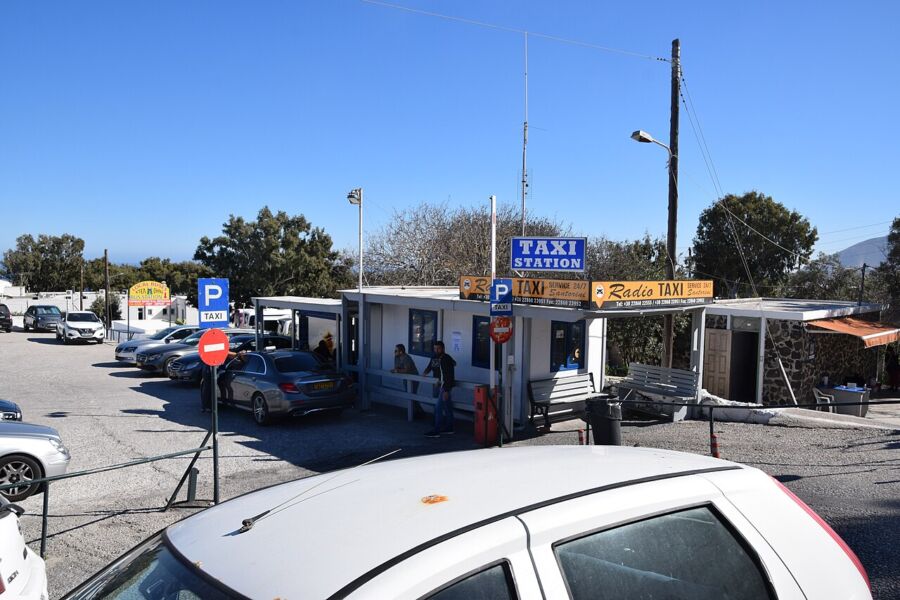
The silver-gray taxis with yellow markings are notoriously tricky to track down. They don’t cruise the streets like in big cities, and there’s no app to call one instantly.
Your best bet? Head to official taxi stands in Fira, at the airport, or by the ferry port. Even then, expect long waits in summer when everyone’s fighting for the same handful of cars. Some hotels and restaurants can call a taxi for you, but there’s no guarantee it’ll show up when you need it.
The taxi shortage is real. I’ve heard plenty of stories about travelers waiting over an hour at the airport just to get to their hotel. Savvy folks book private transfers ahead of time instead of rolling the dice.
Uber Taxi vs. Local Taxis
Uber, Bolt, and Lyft don’t actually operate in Santorini. There’s no rideshare here. You’re left with traditional taxis or private transfer companies.
So, you can’t check driver ratings, track your route, or pay through an app. It’s old-school: you negotiate the price with the driver before you get in. That’s key, since these taxis don’t have meters.
Drivers will quote you a flat rate for your destination. Always agree on the price first, or you might get an unpleasant surprise later. Prices go up after 10 PM and again after midnight, so plan accordingly.
Availability and Wait Times

The taxi situation gets worse during busy times. Early morning flights and cruise ship arrivals create a rush with almost no supply.
Peak times to avoid needing a taxi:
- Airport arrivals (morning, early afternoon)
- Ferry port when cruise ships dock
- Saturday changeover days for villas
- Late evenings after Oia sunsets
You could wait anywhere from 30 minutes to over an hour for a taxi during peak times. Taxis only take four people max, so bigger groups need to split up or look for other options. With so few cars, drivers pretty much make their own rules in high season.
Airport Transfers and Advance Bookings
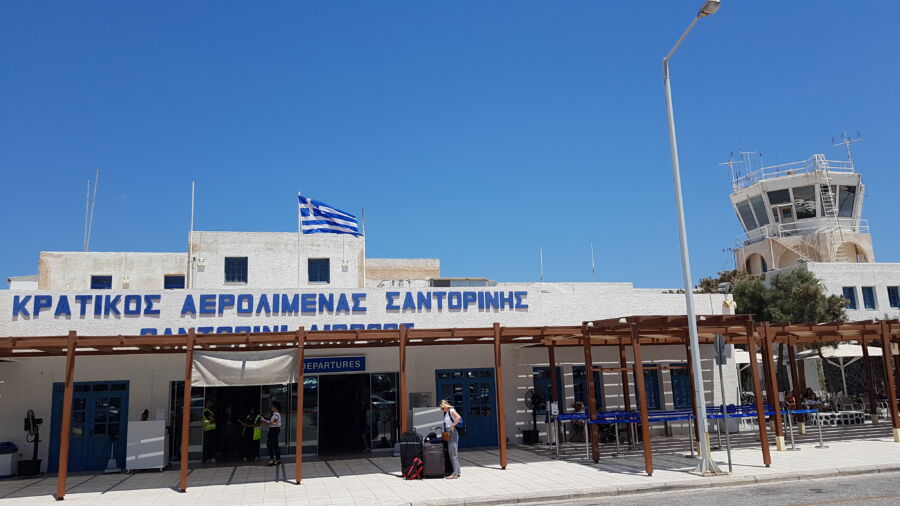
Pre-booking your airport transfer is honestly the smartest move for getting around Santorini. Private transfer companies are way more reliable than hoping for a taxi when you land.
They’ll meet you at the airport with a sign, help with bags, and charge a fixed rate you’ve already paid online. No haggling, no waiting, no stress after a long flight. Many companies have vehicles for bigger groups, too.
Expect to pay EUR 25-40 for a private transfer from the airport to most villages, depending on distance. It’s pricier than the bus (EUR 1.60-2.50), but after a long journey, it’s worth it. Otherwise, you’re stuck in a long taxi queue hoping one shows up.
Alternative Ways to Get Around Santorini

Santorini’s got more than just ride-hailing apps for getting around. There’s the reliable KTEL bus network, rental vehicles, and private transfers. Each option comes with its own pros and cons, depending on your budget, schedule, and how much freedom you want while exploring the island.
Public Buses in Santorini

The KTEL bus system is honestly one of Santorini’s best-kept secrets. These green and white buses link up all the main towns and beaches, starting from the main hub in Fira.
You’ll see buses heading to Oia, Akrotiri, Perissa, Kamari, and just about anywhere you’d want to go. In the summer (June through September), they run every 20-30 minutes on the busy routes. Off-season? The schedule slows down a lot.
A single ticket usually lands between €1.80 and €2.80, depending on how far you’re going. You can grab tickets at kiosks near bus stops or just pay the driver when you hop on.
The catch? Buses get packed in peak season, especially from Fira to Oia before sunset. Sometimes you’re left standing the whole 25-minute ride, which isn’t ideal after a long day. On top of that, the last buses leave pretty early—usually around 8 or 9 PM—so late dinners might mean you’re scrambling for a taxi or walking.
Car Rentals: Do You Need a Car?

Whether you need a car in Santorini really depends on your style. I’ve done both—sometimes I rent, sometimes I don’t. There’s no universal answer.
Renting a car gives you total freedom to check out hidden beaches, tiny villages, and wineries whenever you want. No waiting for buses or paying for pricey taxis. Driving here isn’t too bad—the roads are mostly paved and signs are clear.
But parking in Fira and Oia? It’s a headache in summer. You can circle for half an hour and still end up in a paid lot. The old village streets weren’t built for this much traffic.
Daily rental costs:
- Small car: €35-€50
- SUV: €60-€80
- Includes basic insurance
Gas isn’t cheap (about €2 per liter), though the island’s small so you won’t use much. Most rental places want to see an international driving permit with your regular license.
Scooters and Micro-Mobility
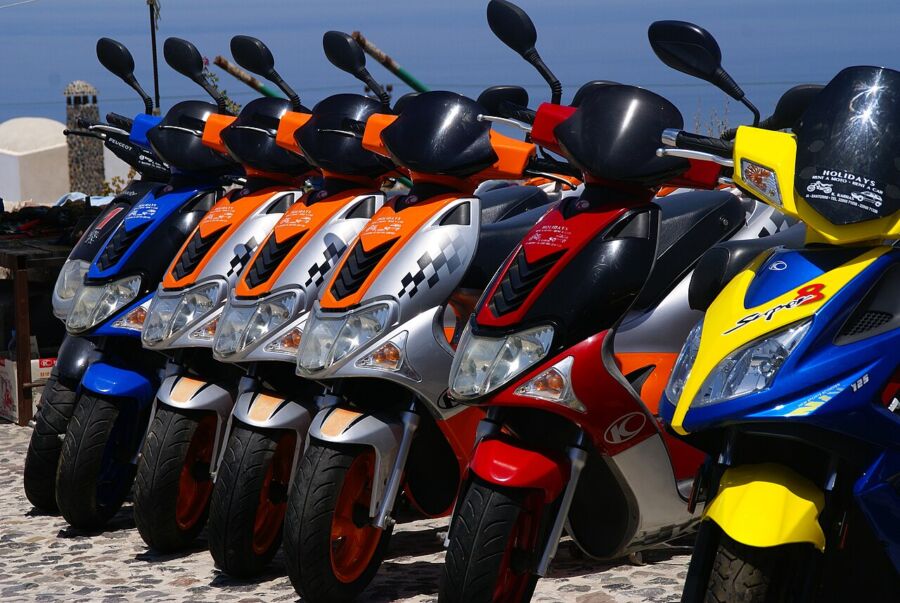
Scooters and ATVs (quads) are everywhere and, honestly, they’re a blast for getting around. They’re cheaper than cars, parking is way easier, and you get that wind-in-your-hair feeling.
ATVs rent for about €25-€40 a day, depending on the engine size. Scooters come in a little cheaper at €20-€30 daily. Anything over 50cc officially requires a motorcycle license, though how closely that’s checked seems to depend on the day.
The roads can be tricky—Santorini’s got some steep hills and sharp turns, and the wind can get intense up on the cliffs. I’ve seen more than a few tourists with scrapes from taking a corner too fast.
And Greek drivers? They don’t mess around. They’ll pass you on blind curves without a second thought. If you’re not confident on two wheels, maybe skip this option.
Pre-Booked Private Transfers

Private transfers are the most comfortable way to get around Santorini, but they’re also the most expensive. You book a driver in advance, and they’ll pick you up right at your hotel or rental.
This is especially handy for airport or port transfers if you’ve got luggage. A private ride from the airport to Oia runs about €35-€50. Sure, the bus is only €2, but the convenience is on a whole different level.
You can also book a driver for full-day tours. Expect to pay €150-€200 for 4-5 hours, with stops at all the best spots. Most drivers speak English and double as informal guides, tossing out recommendations along the way.
Hotels and tour companies can set this up, or you can book online ahead of time. Prices jump around a lot, so definitely compare before you commit.
Bolt: Expansion, Features, and Where You Can Use It Instead

Bolt runs in over 45 countries across Europe and beyond, offering ride-hailing and scooter services through a pretty simple app for iOS and Android. Bolt isn’t in Santorini yet, but knowing where it does work can help you plan transportation elsewhere in Europe.
Bolt’s European Reach

Bolt’s a big deal in European cities—giving Uber a run for its money. You’ll spot Bolt in Germany, France, Spain, Poland, Ireland, Estonia, Austria, and plenty of other places.
They started in Estonia back in 2013 and have grown fast. In France, you can grab a Bolt in Paris and some other cities. Germany has Bolt in Berlin, Munich, Hamburg. Spain? Madrid and Barcelona are covered.
Poland’s actually one of Bolt’s busiest markets—Warsaw, Krakow, and more. Ireland has Bolt in Dublin and Cork. Vienna’s got it in Austria.
But don’t expect Bolt everywhere within those countries. They stick to bigger cities and touristy spots where there’s enough demand.
How Bolt Works in Major Cities

Bolt’s app works a lot like other ride-hailing apps. Download it, sign up, and you’re set.
The app shows you nearby drivers. Enter your destination, see the price upfront, and tap to book. Payment’s automatic through the app with your card.
Bolt usually offers a few options: Economy for the cheapest ride, Comfort for newer cars with more space, and XL for groups.
One nice perk? Bolt often undercuts competitors on price. They take a smaller cut from drivers, so you pay less. In cities like Lisbon or Prague, you might save 20-30% compared to other apps.
Bolt App Features and User Experience
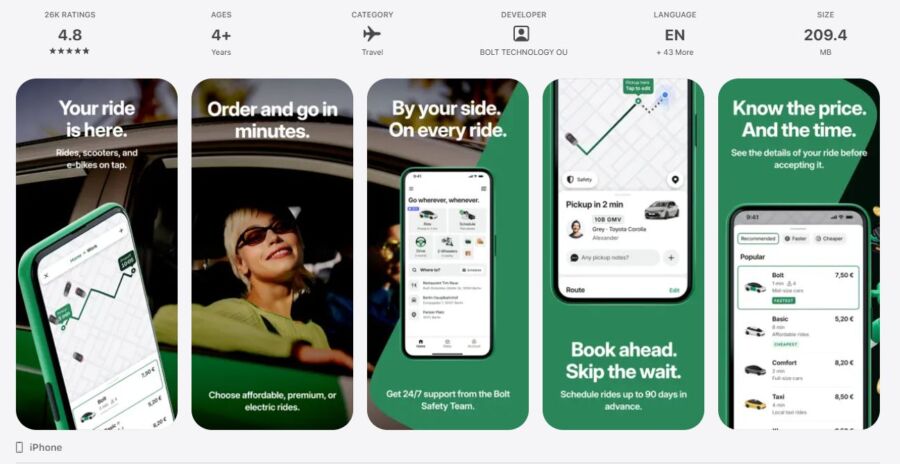
Bolt’s app keeps it simple—no clutter or endless menus.
Some handy features:
- Real-time driver tracking with accurate ETAs
- Safety features like ride sharing and emergency contacts
- Multiple payment methods (cards, sometimes cash)
- Upfront price estimates
- Driver ratings and ride history
They also offer Bolt Food for delivery and Bolt Business for company accounts in some cities. You can schedule rides in advance, but this isn’t everywhere yet.
Drivers tend to be decent—Bolt checks applicants and keeps up a rating system. Customer support usually replies quickly via in-app chat, but it depends on the city.
See Related: Hidden Boutique Hotels in Europe That Redefine Luxury
Santorini Transportation Tips for 2026
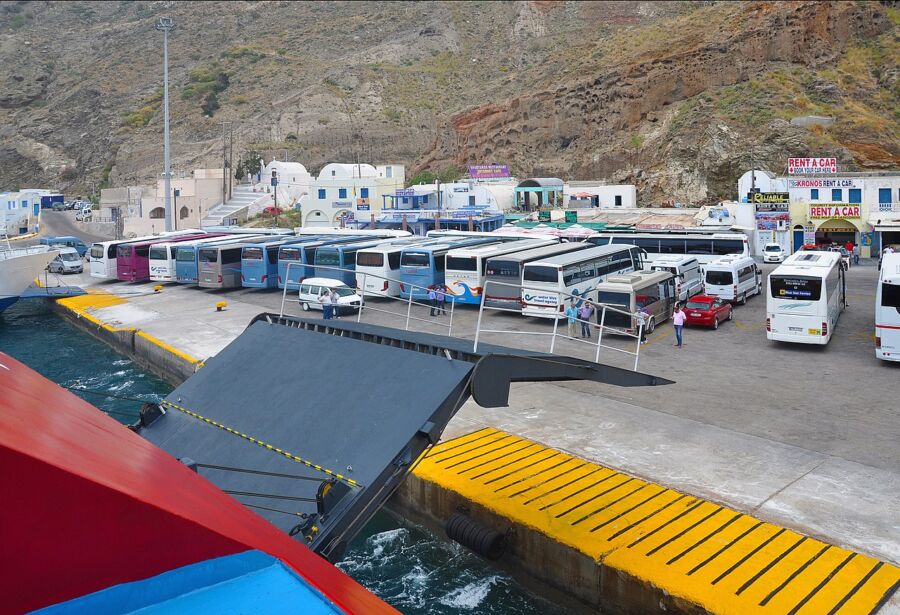
Navigating Santorini well means knowing when to book, how to stay safe, and which option gives you the best value for your budget.
Booking Rides During High Season

June through September, Santorini is packed. Ride-hailing apps like Uber and FREENOW technically work, but drivers are scarce during peak hours.
Here’s what I wish I’d known: book your ride at least 15-20 minutes before you need it. If you’re heading for the Oia sunset, request by 5:30 PM or risk a 30-40 minute wait.
The airport and ferry port are the real choke points. When cruise ships come in, every driver heads there first. Arrive in the afternoon in July or August and you might wait 45 minutes for a ride. Pre-booked private transfers save you the hassle, though they’ll cost more.
Safety Advice for App-Based Rides

All app rides in Santorini use licensed taxi drivers with meters, so they’re safer than random street taxis. Still, double-check a few things before getting in.
Match the license plate to what your app shows. The taxi license should be visible on the dashboard. If something feels off, just cancel—better safe than sorry.
The apps track your route by GPS, so drivers can’t take you on “scenic” detours to jack up the fare. Share your ride details with a friend in the app, especially if it’s late.
Watch out for drivers who ask you to cancel in-app and pay cash. Don’t do it—you lose all protections and price guarantees.
Comparing Costs: Apps vs. Taxis vs. Car Rentals

Here’s what it really costs, which can make or break your Santorini budget. A ride from Fira to Oia is about €20-25 with Uber or FREENOW. Street taxis charge €25-30, sometimes more if the meter “malfunctions.”
Car rentals start at €35-45 per day for a compact, but parking in Oia and Fira is a nightmare. You’ll spend ages circling, and parking fees tack on another €10-15 a day.
Daily Transportation Cost Comparison:
| Transport Type | Daily Cost | Best For |
|---|---|---|
| Ride-hailing apps | €60-80 (3-4 rides) | Solo travelers, no driving stress |
| Car rental | €50-60 (rental+gas+parking) | Exploring out-of-the-way spots, flexibility |
| KTEL bus | €10-15 | Budget travelers, main routes only |
| Street taxis | €80-100 | Last resort, when apps aren’t available |
If you’re staying 3-4 days and want to explore all over, renting a car probably makes sense. For shorter trips focused on the main towns, apps are better value—you dodge the parking drama and can enjoy a glass of wine without worrying about driving.
See Related: Paros or Naxos for Couples: Ultimate Greek Island Showdown
Frequently Asked Questions

Bolt isn’t in Santorini, which leaves a lot of travelers scratching their heads about how to get around this gorgeous island.
Can one hail a Bolt ride upon arriving at Santorini’s airport?
Nope, Bolt isn’t at Santorini’s airport. The service just doesn’t exist on the island.
When you land at JTR, your choices are regular taxis, pre-booked transfers, or renting a car. The taxi stand sits right outside arrivals. Prices are fixed for common routes, but always double-check before you get in.
What alternatives are available for Uber in Santorini?
Neither Uber nor Bolt are in Santorini, so you’ll be using more old-school options. Local taxis are the closest thing to rideshares, but they work differently than what you might know.
You can also arrange private transfers through your hotel or a local company. These cost more but someone’s waiting for you when you arrive.
The KTEL bus system covers the main routes between towns like Fira, Oia, and the beaches. Buses run often during tourist season and cost just a couple of euros.
What transportation options do visitors have on Santorini island without a personal vehicle?
Walking works great if you’re staying in Fira, Oia, or Imerovigli. These towns are compact and linked by scenic footpaths—honestly, the best views are on foot.
The public bus system runs frequently in peak season. Buses connect the main villages, popular beaches, and the port. A single fare is about €2, and you can usually buy tickets at kiosks or from the driver.
Taxis exist but there aren’t many. You’ll often need to call ahead, and during busy months, you might wait a while.
Which ridesharing services operate alongside Bolt in Thessaloniki, Greece?
A bit off-topic, but in Thessaloniki, you’ll find both Bolt and Beat. Uber left Greece a while ago. Beat’s popular in bigger Greek cities and works a lot like other rideshare apps you’ve probably used.
What are the most cost-effective ways to explore Santorini?
The KTEL bus is by far the cheapest option. For under €10, you can visit several villages and beaches in one day.
Walking between nearby towns saves money and gives you epic photo ops. The Fira to Oia hike takes about three hours and costs nothing—except maybe a bottle of water.
Renting an ATV or scooter is about €20-30 per day, which is great if you split it with someone. Just make sure you’re comfortable driving one on those winding roads with the local traffic.
Are local taxis in Santorini a reliable alternative to ridesharing apps?
Yes and no. Santorini taxis are reliable—they’re licensed, insured, and know the island inside out. But honestly, they’re not always around when you need them.
With just about 35 taxis for the whole island during peak season, you can’t expect one to show up in three minutes like Bolt or Uber in bigger cities.
You really need to call ahead, especially if you want a pickup from a restaurant or have an early morning flight. Most hotels and restaurants will call a taxi for you, and honestly, that’s usually way less stressful than trying to sort it out on your own.