Last modified August 17, 2026
Picking between Away and Monos carry-ons is honestly tough—they’re like twins at first glance. Both brands sell sleek, polycarbonate hardshell luggage for $275.
Away gives you more packing capacity at 41 liters versus Monos’s 28 liters, but Monos is a bit lighter and has smoother zippers with a comfier handle. So it really depends: do you want more space, or do you care more about weight and comfort on the go?
Both suitcases hold up well in durability tests and share features like spinner wheels and TSA locks. Still, those little differences start to matter when you’re sprinting through an airport or trying to cram in souvenirs. How you pack—and what annoys you most—will probably decide the winner.
Key Takeaways
- Away offers 13 liters more space, while Monos is half a pound lighter and has a better handle
- Both cost $275 and use tough polycarbonate shells with similar warranties
- Monos stands out for smooth zippers and maneuverability; Away wins for capacity and organization
Quick Comparison: Away vs Monos Carry On

Both Away and Monos offer polycarbonate hardshell carry-ons at $275, but they differ in capacity, weight, and handle comfort. Away’s The Carry-On holds 41 liters, while Monos fits just 28 liters, though Monos is about half a pound lighter.
Key Similarities and Differences
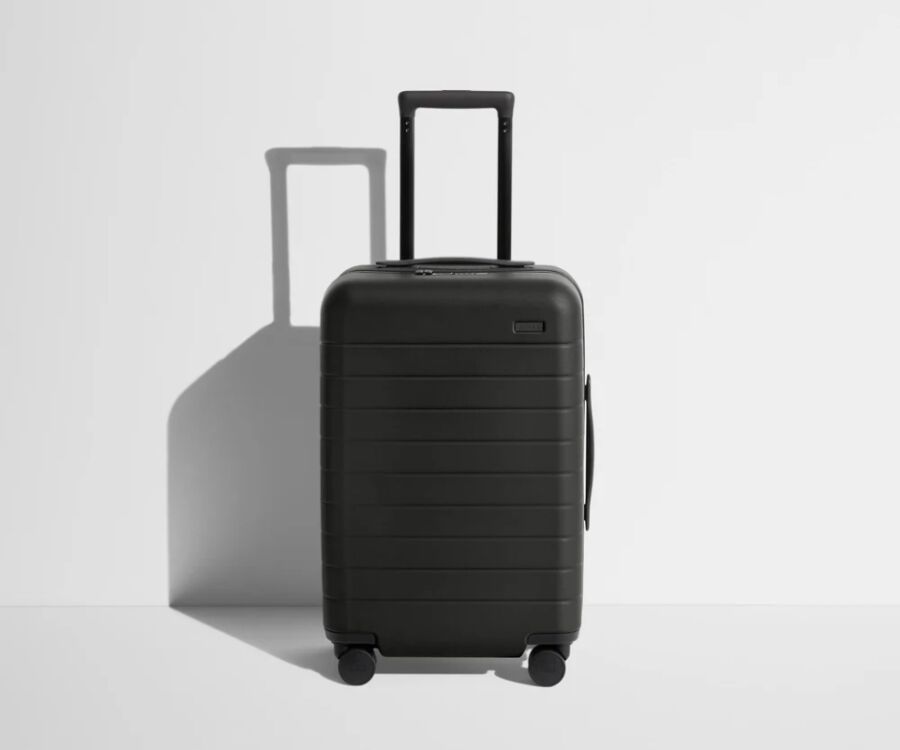
At first glance, you might mix them up. Both use durable polycarbonate shells, have 360-degree spinner wheels, and include TSA locks. Each brand offers over 10 color choices, all in that clean, minimalist style.
But here’s the kicker: Away The Carry-On gives you way more packing space—41 liters compared to Monos’s 28. That’s a big deal if you want to maximize what you bring.
Monos has smoother zippers, and the handle feels nicer in your hand. Away added an underside grab handle near the wheels in their 2023 update, which makes pulling it out of overhead bins a lot easier.
Monos weighs 7.01 pounds, Away is 7.5. Not a massive difference, but if you’re counting every ounce, Monos edges ahead.
Away has three mesh pockets, a laundry bag, and a hanging pocket. Monos adds more organization—two shoe bags and extra pouches. Some travelers love all the compartments; others just find them in the way.
Carry-On Size and Weight
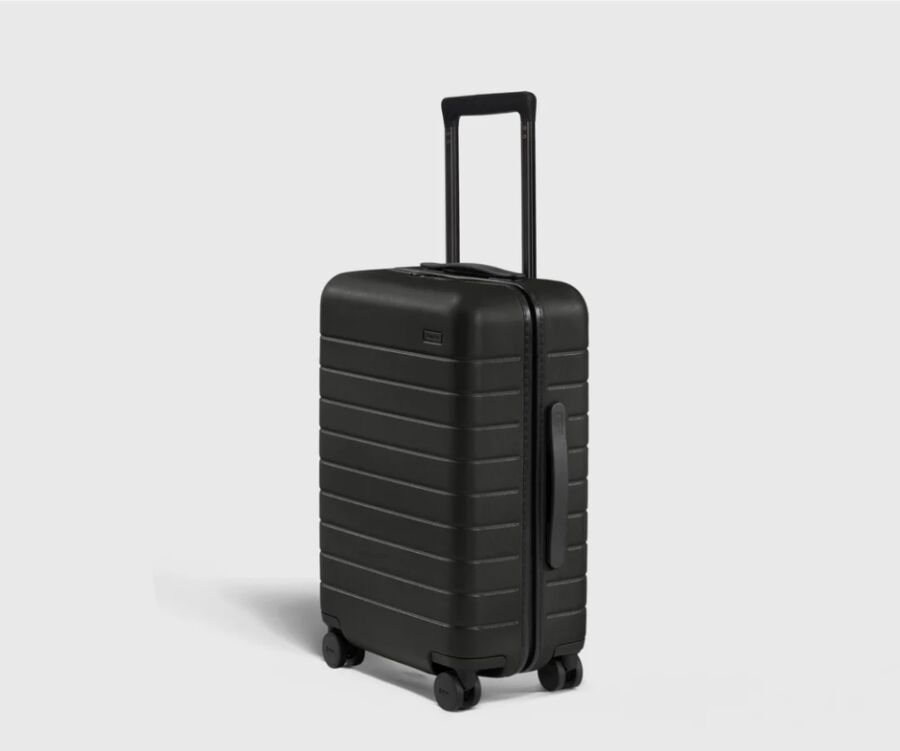
Away The Carry-On measures 21.7″ x 14.4″ x 9″ and weighs 7.5 pounds empty. It fits most airline carry-on rules.
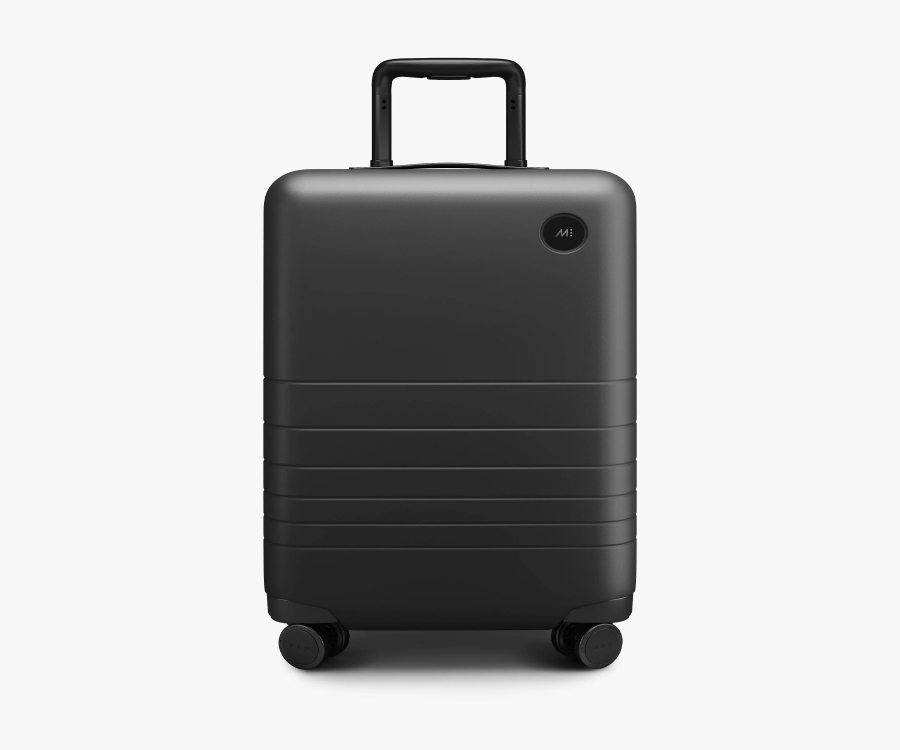
Monos Carry-On is 22″ x 14″ x 9″ and weighs 7.01 pounds. The sizes are basically the same, so both will fit overhead.
The Monos Carry-On Pro has extra features and materials, and frequent travelers seem to love those upgrades.
Target Travelers for Each Brand
Away is great for travelers who need as much space as possible. If you take longer trips with just a carry-on or tend to overpack, those extra 13 liters are a lifesaver. That underside handle also makes a real difference when you’re grabbing your bag from tight spots.
Monos is ideal if you want organization and a lighter bag. The lighter weight helps when you’re hustling through airports, and those smooth zippers are surprisingly satisfying when you’re rushing to repack. If you love pockets and compartments for shoes and toiletries, Monos might just be your best friend.
Both brands have earned their reputation—they’re durable, stylish, and backed by solid warranties. It really boils down to whether you care more about space (Away) or lightness and organization (Monos).
Design and Materials
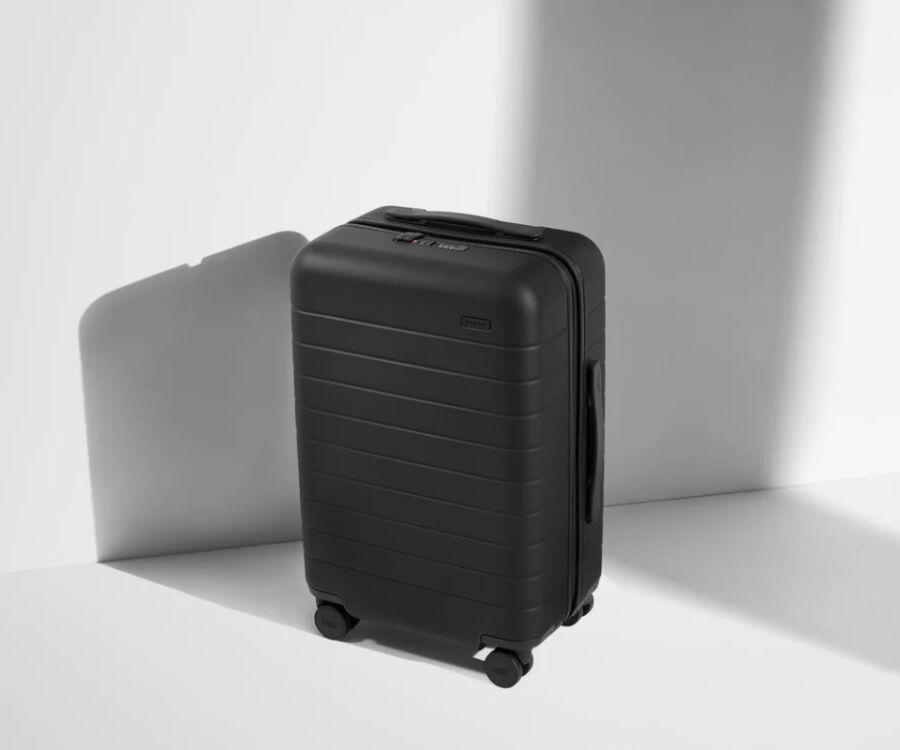
Both brands use polycarbonate shells, but the handle designs and color options set them apart. Away offers more materials across its range, while Monos sticks to perfecting one style.
Exterior Shell: Polycarbonate vs Hybrid

Away and Monos both go with 100% polycarbonate for their hardshells, which means great impact resistance without the weight of aluminum. This material flexes instead of cracking, so it survives rough baggage handling better than ABS.
Monos uses some recycled polycarbonate, which is nice if you care about sustainability. Away’s laundry bag is 100% recycled polyester, but their shell isn’t made from recycled stuff.
Both brands line their interiors with polyester. Monos says all their interior fabric is recycled, while Away only uses recycled material for the laundry bag.
Handle Comfort and Durability
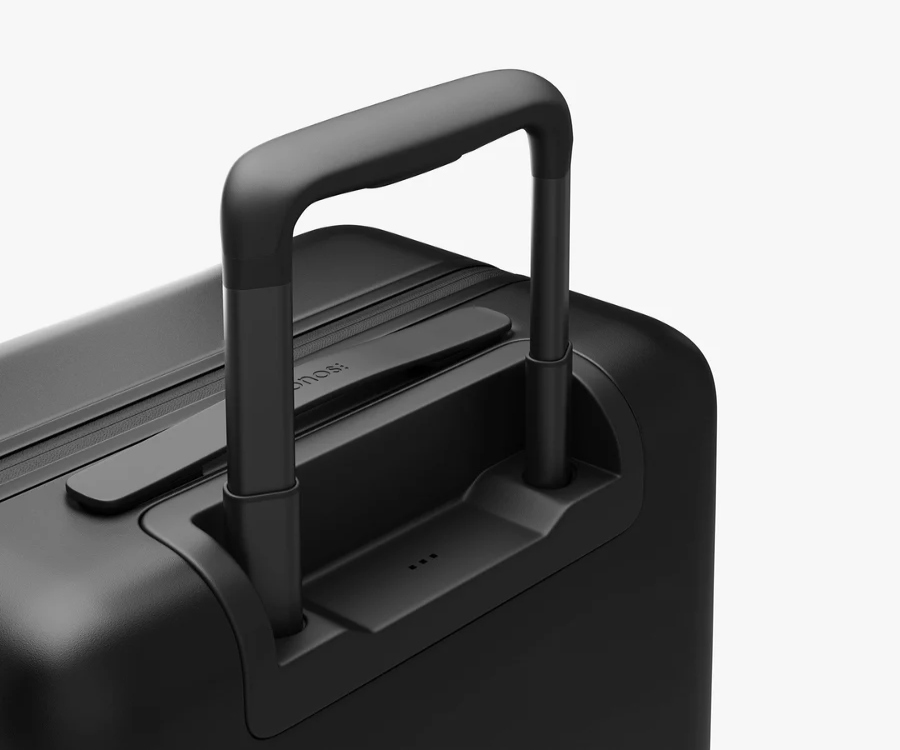
The telescopic handle is more important than you’d think. Monos uses aluminum tubes with four height settings, which is handy if you’re tall. Testers noticed the handle can wobble at full extension and sometimes jams if you overpack.
Away’s handle only adjusts to two heights and feels less sturdy. There’s no padding on the grip, so it’s not the comfiest for long walks. Still, that underside handle near the wheels makes lifting from bins much easier.
Monos hides the release button underneath, but some people accidentally press it while gripping. Away puts the button on top, so it’s less likely you’ll hit it by mistake.
Color Options and Aesthetics
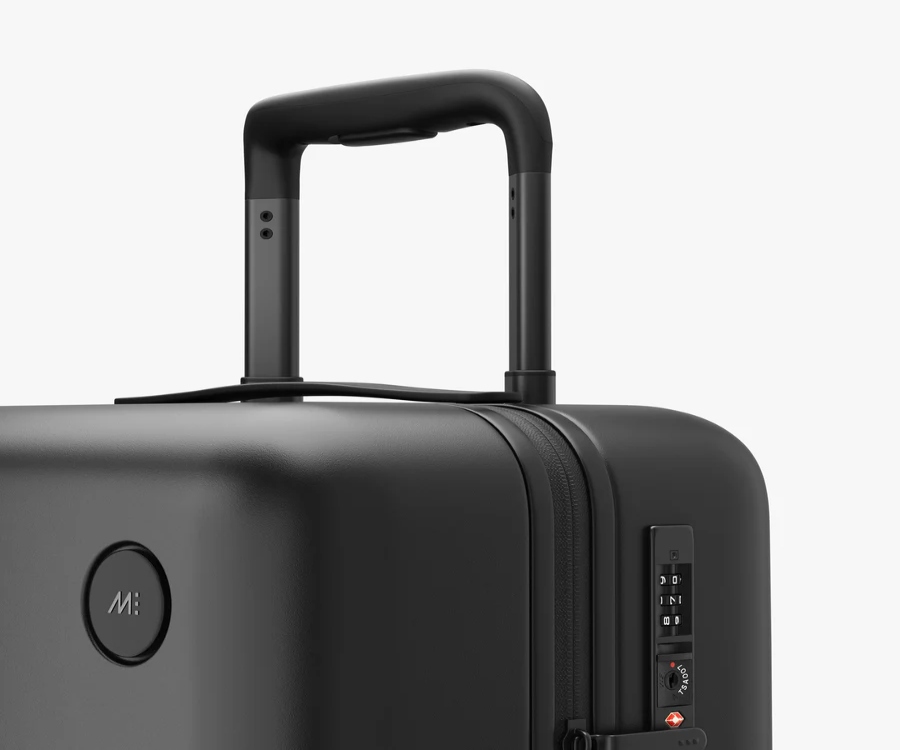
Honestly, it’s hard to tell these apart at the airport—they both stick to minimalist, modern looks. Away offers over 10 solid colors, from black to bright pink. Monos matches that and sometimes drops limited-edition shades like glossy blue.
Both use reverse coil zippers, but Monos’s zippers just feel smoother. Away puts the TSA lock on the top; Monos puts it on the side.
See Related: Hardside Luggage vs Softside Luggage: Ultimate Buyer’s Guide
Functionality and Features

Both Away and Monos pack in smart organization and security, but their approaches to the interior and handles differ. The wheels on both roll well, but you’ll notice small differences in real use.
Interior Organization and Packing Cubes
Away gives you three mesh pockets, a laundry bag, and a hanging pocket. Their compression straps help you squeeze more in. You can actually fit a surprising amount.
Monos goes further: a laundry bag, two shoe bags, a hanging pocket, and a zippered pouch. Their fabric compression panel keeps things tidy. But honestly, if you’re a light packer, all those extras might just get in the way.
Both brands sell packing cubes separately. Away’s set of four is $48, Monos’s compressible version is $95. That’s a pretty big price jump if you’re outfitting your whole suitcase with extras.
Locks and Security Essentials
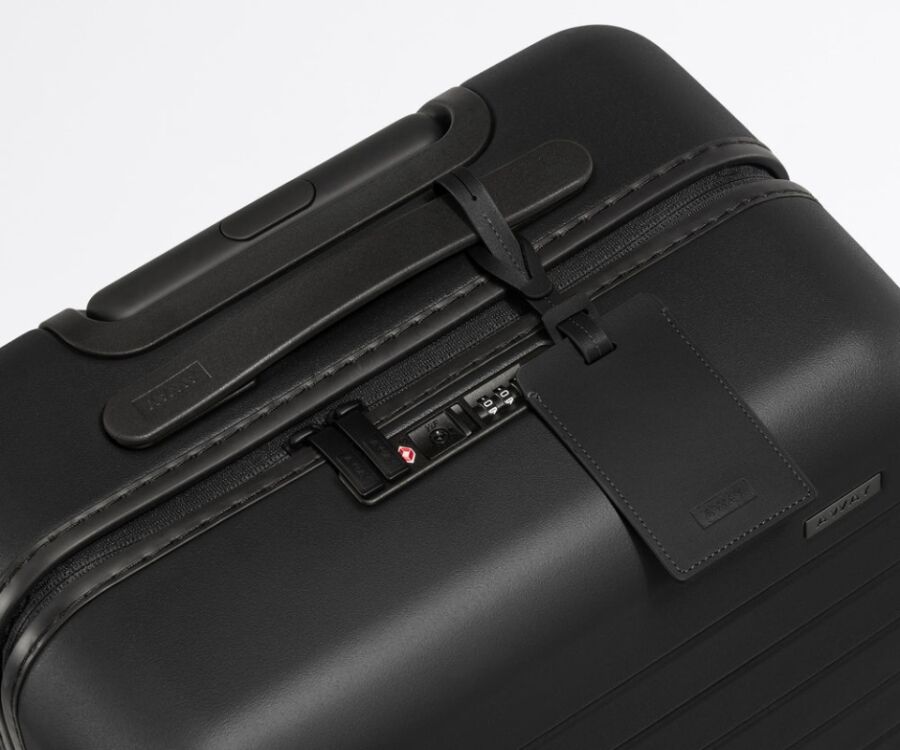
Both carry-ons have TSA-approved combo locks built into the zippers. You set your own code, and only you (and TSA) can get in.
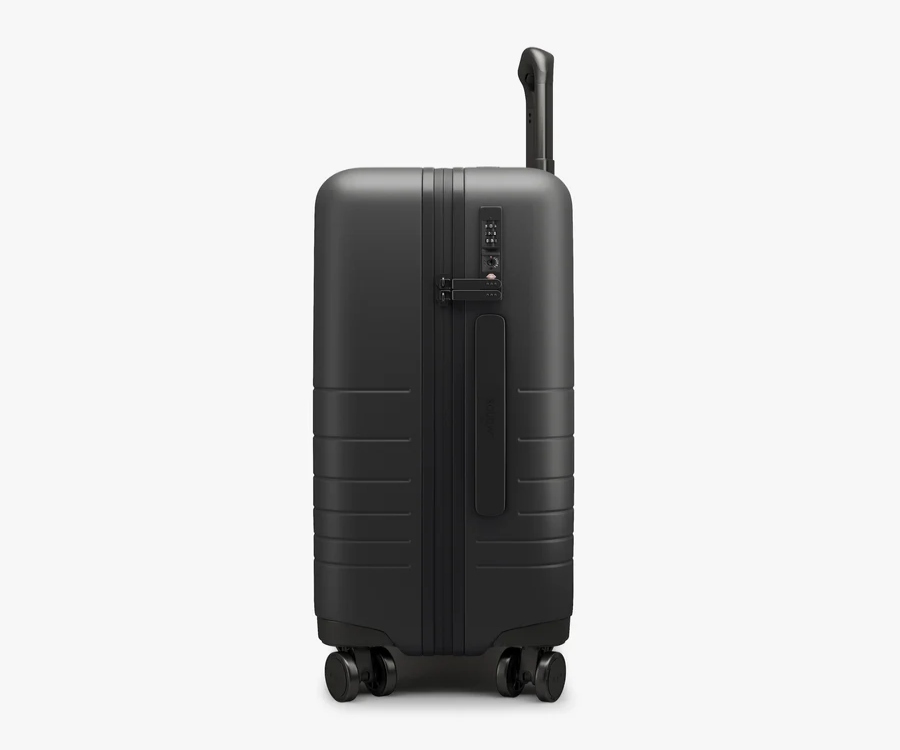
Away puts the lock on top; Monos puts it on the side. It doesn’t really change security, but some folks like the side placement because it’s less obvious.
Both use reverse coil zippers for added strength. Monos’s zippers stand out for their smoothness—seriously, it’s noticeable. Away’s are fine, just not quite as slick.
Wheel Performance and Maneuverability

Both have 360-degree spinner wheels that roll any way you need. That’s a must in crowded airports.
Away’s wheels handle all sorts of floors—tile, carpet, whatever. They turn easily, though the telescopic handle can feel a bit loose, which makes rolling over thick carpet a little trickier.
Monos wheels glide smoothly on every surface, even when you overpack. The handle extends to four heights, which tall folks appreciate. But if you stuff the bag full, the handle sometimes won’t lock right, and it’s easy to accidentally hit the hidden release button, which drops the handle when you least expect it.
Monos Carry-On Lineup: Models and Innovations
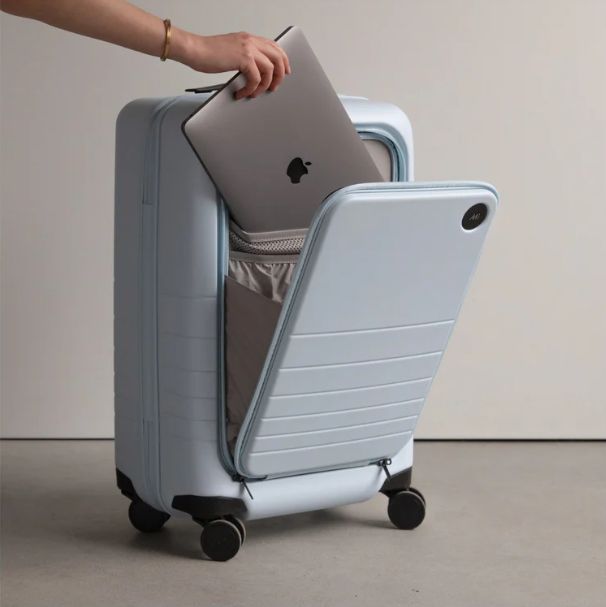
Monos builds their carry-on range around four core hardside models, each adding features and space. The Carry-On Pro Plus stands out with its external front pocket and the most room inside, while the Classic Carry-On is the most affordable way in.
Classic Carry-On vs Carry-On Plus
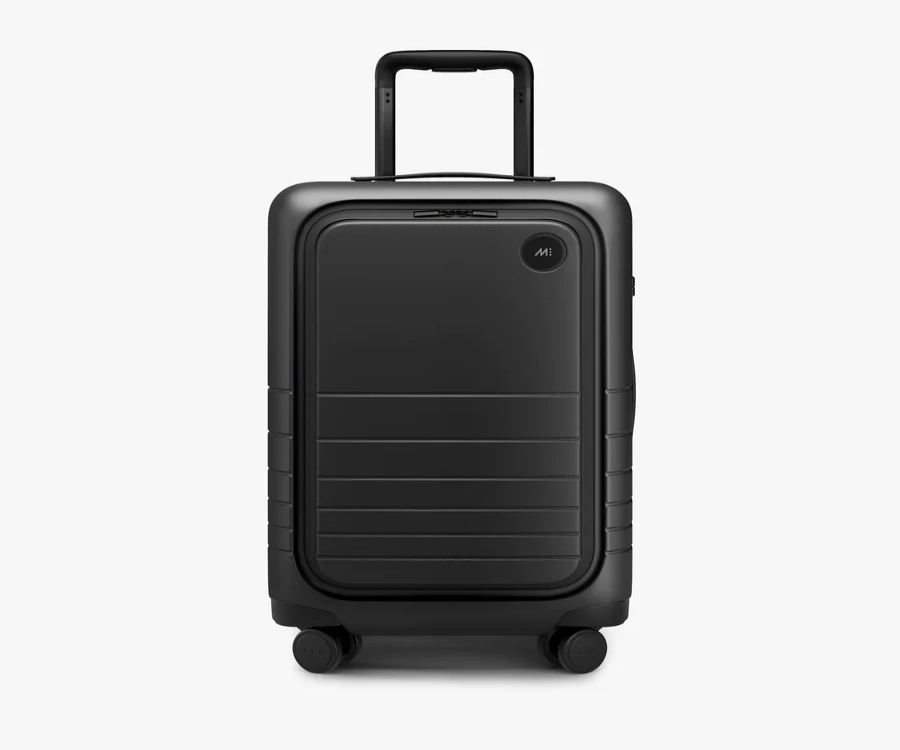
The Classic Carry-On covers the basics—polycarbonate shell, smooth wheels, and a simple interior with compression straps and a zippered divider. It’s the smallest, which works if you fly budget airlines with tight size limits.
The Carry-On Plus adds expandability. Unzip the expansion zipper, and you get about two extra inches of depth. Super handy if you come home with more than you left with.
Both have the same interior setup: compression straps on one side, a zippered divider with a mesh pocket on the other. The main difference is whether you want that extra space or prefer to keep things compact.
Carry-On Pro and Pro Plus
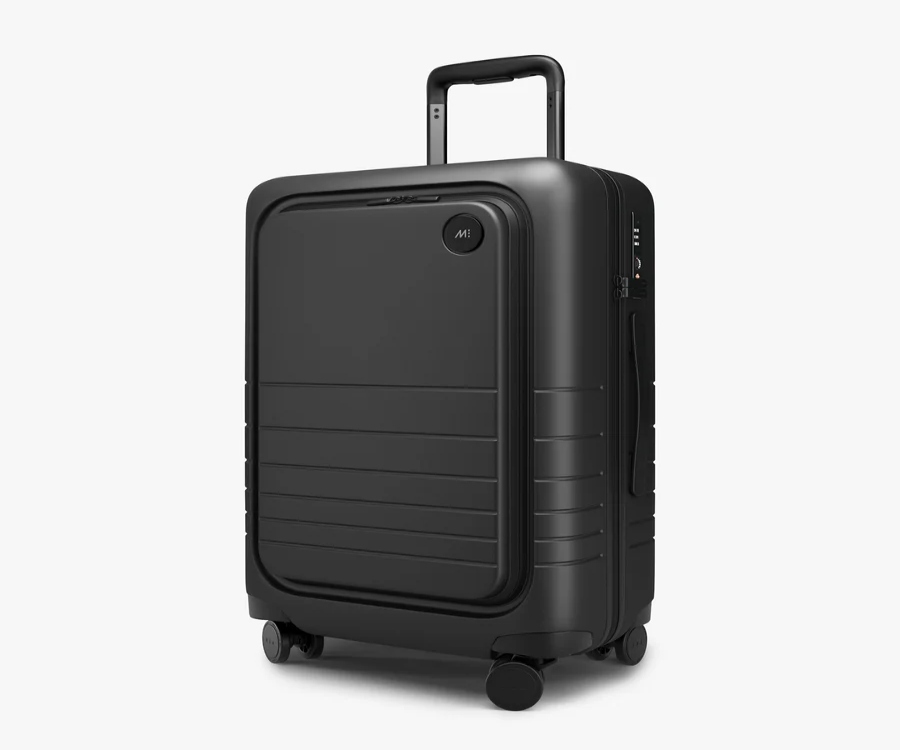
The Carry-On Pro adds an external front pocket that opens on a hinge. Inside: three sleeves and three zippered pockets. It’s perfect for keeping your laptop, tablet, chargers, and documents separate and easy to reach. Neither Monos nor Away offers another hardside with external storage.
The Carry-On Pro Plus takes everything from the Pro and makes it expandable, plus you get a bit more packing space even before it’s expanded. It’s the most feature-rich hardside carry-on Monos makes.
Both Pro models use the same four-position telescopic handle, made from extruded aluminum. It’s stiffer and less wobbly than most.
Specialty Options and Accessories

Monos rounds out their lineup with the Metro Duffel, which doubles as a personal item or weekend bag. It’s made from recycled materials and fits a 16-inch laptop.
You can also grab accessories like packing cubes, laundry bags, and toiletry cases designed to fit their carry-ons. They even sell AirTag holders that attach inside, so you can track your bag without the tag bouncing around.
See Related: DELSY PARIS Helium Aero Hardside Luggage Review: Worth It?
Away Carry-On Variations: Flexibility and Upgrades
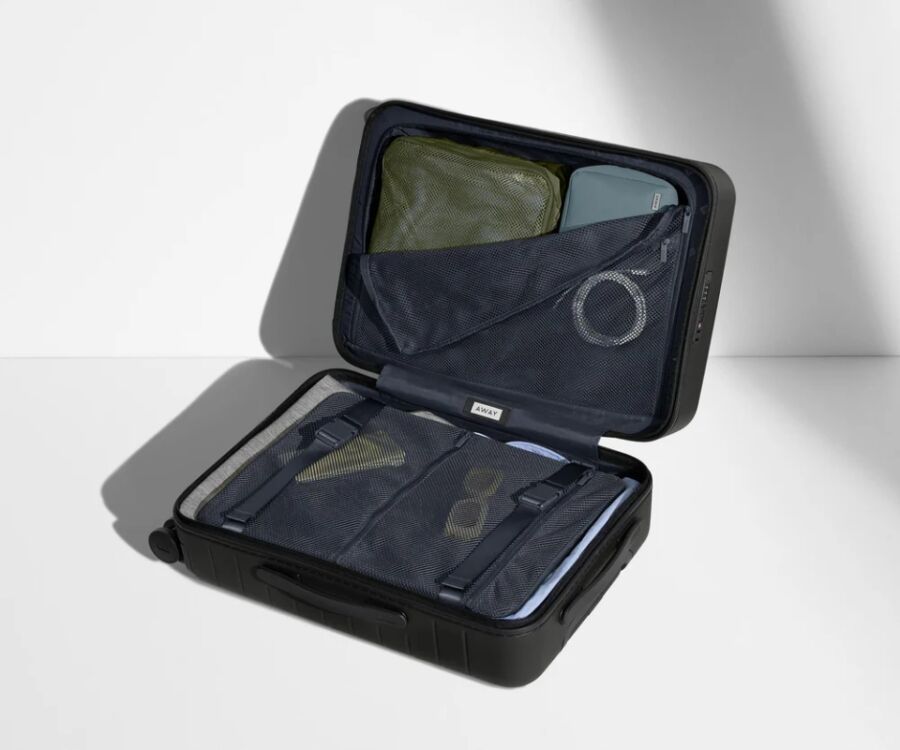
Away offers three carry-on sizes and several material choices to fit your travel style. The lineup includes standard and larger dimensions, expandable versions for extra space, and premium aluminum builds for added durability.
The Carry-On vs The Bigger Carry-On
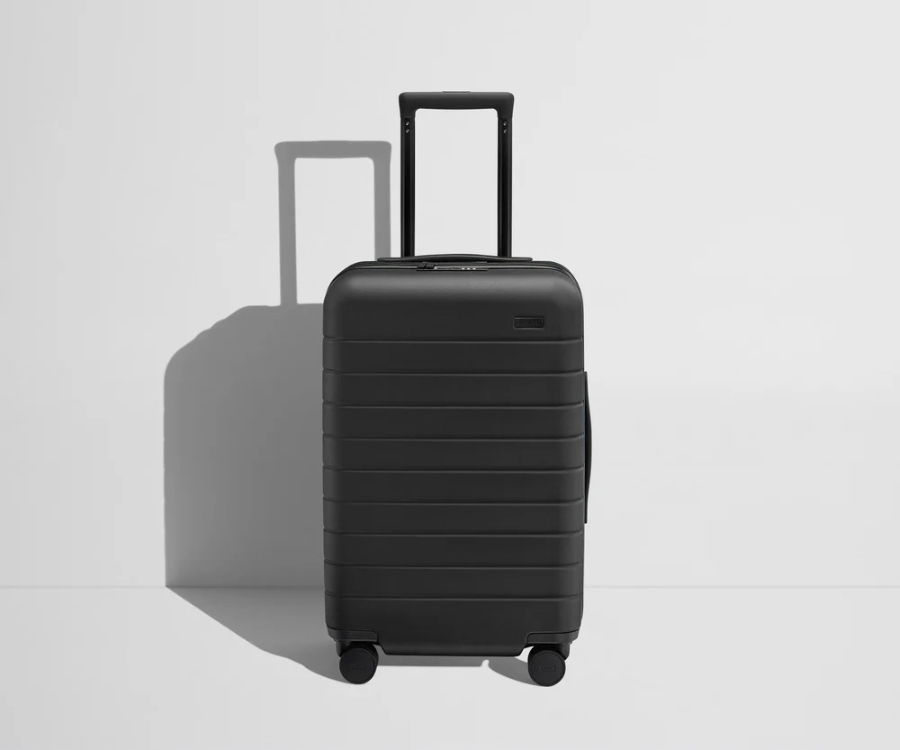
Away’s standard carry-on comes in at 21.7″ x 14.4″ x 9″ and holds 41 liters. It weighs 7.5 pounds when empty. Most airlines let this size slide right into the overhead bin without fuss.
The Bigger Carry-On gets about 1.5 inches taller, bumping you up to 51 liters of space. That means you can squeeze in a couple extra outfits or something bulky like a winter jacket. It measures 22.7″ x 14.2″ x 9.6″ and weighs 8.1 pounds.
But here’s the hitch: that extra size starts flirting with the limits for some budget airlines. If you’re hopping on Frontier, Spirit, or flying internationally with strict rules, stick to the standard. The bigger version works best for domestic flights on major airlines with roomier bins.
Expandable and Aluminum Choices

Away’s Flex collection lets you unzip the outer shell and snag an extra 2.25 inches of space. Suddenly your carry-on feels more like a medium checked bag. You can toss in souvenirs or last-minute finds without dragging a second bag through the airport.
The aluminum carry-on keeps the same dimensions as the standard but weighs in at 9.1 pounds—so, about 1.6 pounds heavier. The metal shell shrugs off dents better than polycarbonate, but it’ll show scratches faster. You’re paying $425 instead of $275 for that upgrade, which is a pretty big jump.
There’s also a nylon option at just 5.6 pounds. These softer bags squeeze into tight spots way easier than a hardshell.
Signature Features and Add-ons
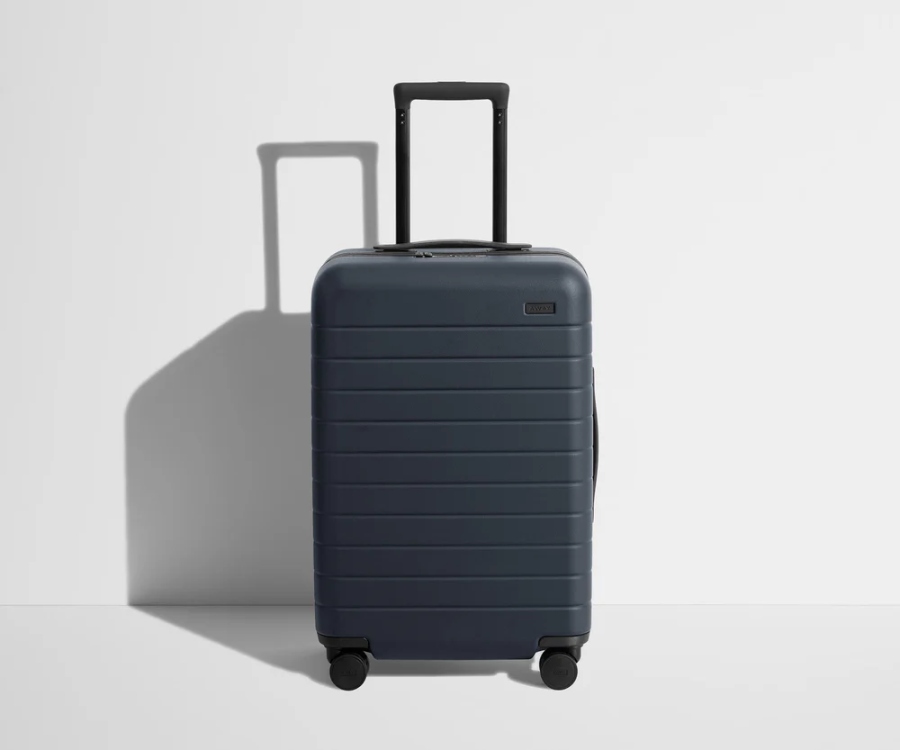
Every Away carry-on includes an ejectable battery for charging your phone up to four times. (You’ll need to pop it out before you board, though.) Inside, you get compression straps, a water-resistant laundry bag, and mesh pockets for sorting your stuff.
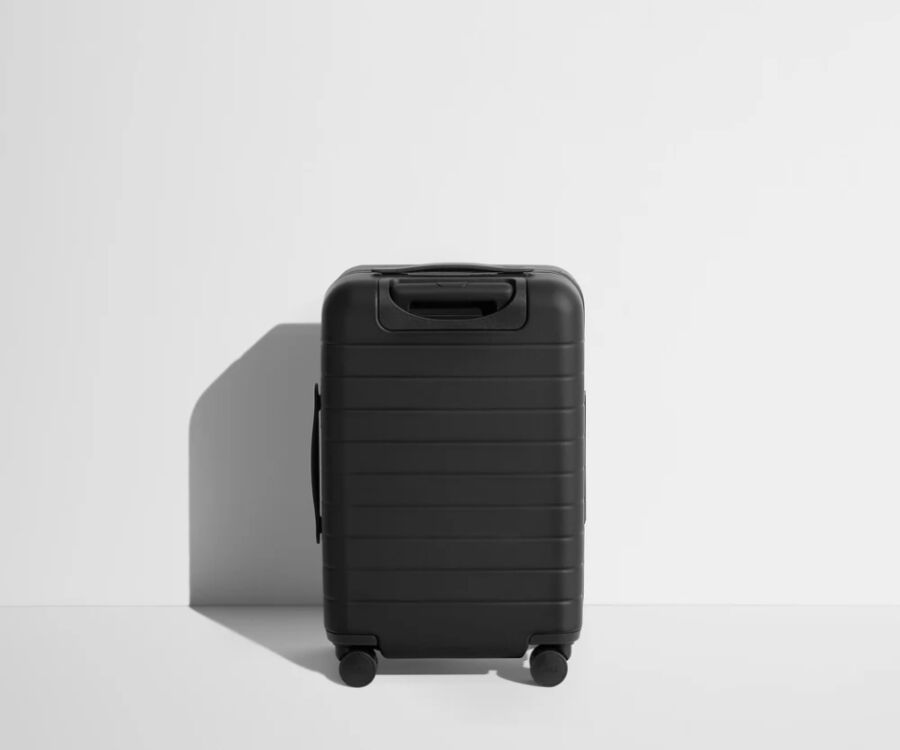
All the carry-ons have an extra grab handle near the wheels, which makes yanking them out of overhead bins much less awkward. TSA-approved locks come standard.
Durability, Warranty, and Customer Experience

Both brands use polycarbonate shells that stand up to travel abuse, but they handle scratches differently and have their own approach to customer service. Away stands out for customer service that actually follows through on warranty claims, while Monos offers a roomier carry-on that stays lightweight.
Scratch Resistance and Wear
Monos luggage shows scuffs more easily than Away, even though they use the same polycarbonate. Maybe it’s the finish or the color, but you’ll spot it after a few trips.
Away’s shell just seems to resist scratches better. Mine’s been through three years of airports and still looks pretty good. The scuffs that do show up are minor and don’t mess with how the bag works.
Neither brand has real durability problems beyond some cosmetic wear. The zippers, wheels, and handles hold up well on both. If you want your travel gear to look new after years, Away wins. But if a few scratches don’t bother you, Monos is just as sturdy.
Lifetime Warranty Policies
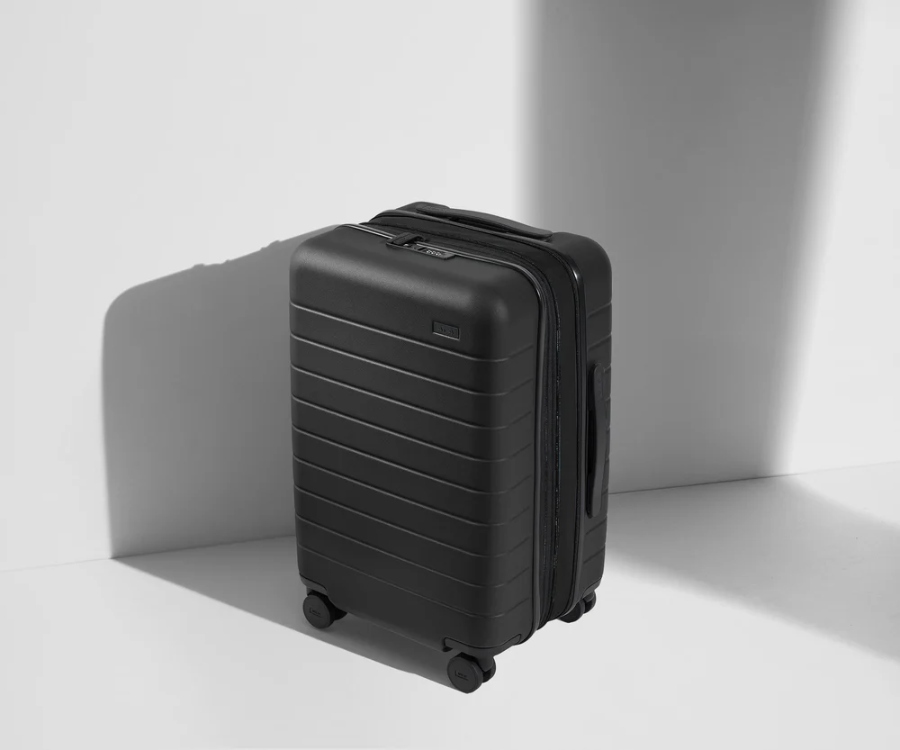
Both companies promise a lifetime warranty on their luggage, but Away actually comes through. Their warranty covers everything from busted zippers to stuck handles, and they’ll send you the part or swap out the bag.
Away’s customer service actually helps. They don’t bury you in fine print or make you jump through hoops to get help. Something breaks? They fix it or send you a new one. Simple.
Monos also covers their products for life, but you’ll find fewer rave reviews about their claims process. The coverage is there, but Away’s reputation for honoring it stands out.
Trials, Returns, and Customer Support
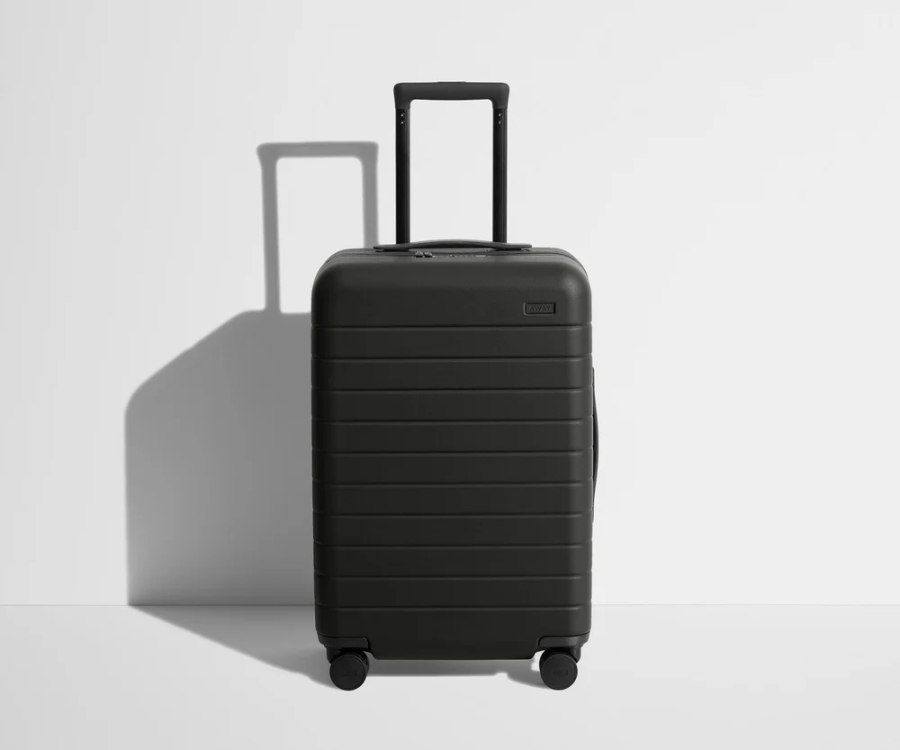
Away gives you free returns for 100 days, so you get over three months to actually use your bag on trips. That’s enough time to see if it fits your packing style.
Monos also has a 100-day trial, so you’re covered there. The difference comes in how they deal with problems after you buy.
Away’s support team responds fast and fixes issues without making you feel like you’re asking too much. They replace parts quickly and don’t argue about what’s covered. You can reach them easily, and they seem to genuinely care about making things right.
Monos has decent support, but it’s just not as strong as Away’s. If you’re dropping a few hundred bucks on a carry-on, knowing the company will look after you matters.
See Related: Best Travel Bags for Suits: Ultimate Guide to Staying Wrinkle-Free
Frequently Asked Questions

Both brands price their carry-ons at $275, but Away offers more internal storage space while Monos provides smoother zippers and weighs slightly less. The differences in warranties, durability features, and customer satisfaction can help you decide which suitcase fits your travel needs better.
What distinct features set Away carry-ons apart from Monos?
Away adds an extra grab handle near the wheels, making it easier to pull your bag from overhead bins. You also get 41 liters of storage space in Away’s carry-on, compared to just 28 liters in the standard Monos.u003cbru003eThe lock placement is different too—Away puts theirs on top, Monos on the side. It’s a small thing, but it does change how you pack and get to your stuff.u003cbru003eAway includes a u003ca href=u0022https://www.realjourneytravels.com/topic/away-travel-small-toiletry-bag/u0022u003ecleaning spongeu003c/au003e that actually works for buffing out scratches. Their expandable Flex carry-on gives you an extra 2.25 inches, but that might push you over airline size limits for carry-ons.
How do Away and Monos carry-on warranties compare?
Away offers a limited lifetime warranty on their carry-ons, covering manufacturing defects as long as you own the bag. Monos gives you a similar limited lifetime warranty. u003cbru003eBoth protect you against things like broken wheels, handles, and zipper failures that come from defects, not regular wear and tear. Keep your proof of purchase for both. Neither warranty covers airline damage, which is pretty standard.
Can you provide a side-by-side durability comparison of Away and Monos carry-on luggage?
Both suitcases use polycarbonate shells that can handle drops without denting or cracking. Lab tests dropped both bags from three feet at different angles—no real damage.u003cbru003eAway did better in scratch resistance. The surface barely scuffed, even after getting scratched with wire, and the included sponge took care of most marks.u003cbru003eMonos scuffed more in testing, but their cleaning sponge removed scratches too. Real travelers have found both bags hold up well through lots of trips. Monos zippers glide smoother than Away’s, but some users said the Monos telescopic handle got tricky to lock when overstuffed.
Which carry-on offers better value for money: Away or Monos?
Both cost $275, so it’s about features, not price. Away gives you 41 liters of space—much more than Monos’s 28 liters.u003cbru003eMonos is about half a pound lighter, which might matter if you’re close to airline weight limits. You also get more organizational extras, like shoe bags and extra pouches.u003cbru003eIf you need to pack a lot, Away’s bigger capacity is the better value. If you care more about weight and smoother zippers, Monos could be worth it even with less space.
What are the differences in size and weight restrictions for Away and Monos carry-ons?
The Away carry-on is 21.7u0022 x 14.4u0022 x 9u0022 and weighs 7.5 pounds empty. Monos is slightly bigger at 22u0022 x 14u0022 x 9u0022, but lighter at 7.01 pounds.u003cbru003eBoth fit most airline carry-on rules. The small size differences won’t keep you from bringing them onboard.u003cbru003eAway’s u003ca href=u0022https://www.realjourneytravels.com/topic/mens-carry-on-travel-backpack-expandable-business-backpack-grey-17-laptop/u0022u003eexpandable versionu003c/au003e adds 2.25 inches, which could make it too big for some airlines. Monos expandable adds just 1.6 inches, so it usually stays within limits.
How does customer satisfaction with Monos compare to that of Away for frequent travelers?
Frequent travelers rave about Monos and its smooth wheels and zippers. Those 360-degree spinner wheels just glide over airport carpets and tile floors, even when the bag’s packed to the brim.u003cbru003eAway fans like the extra storage space and the bottom handle—though some folks complain the handle feels a bit flimsy and tends to wobble, especially on longer trips. That can get annoying if you’re hauling the suitcase for hours.u003cbru003eBoth brands seem to hold up well for people who travel a lot. Monos gets kudos for being lighter, which makes lugging it up stairs less of a pain. Away’s big draw is that you can cram more stuff inside, which is a lifesaver for longer journeys.


