
Alice-Denkmal
About Alice-Denkmal
Key Features
More Details
Updated April 15, 2024
## Alice-Denkmal (Alice Monument), Darmstadt: An Art-Nouveau Obelisk with a Public-Health Backstory
Standing on Wilhelminenplatz, a few steps north of the domed Catholic church of St. Ludwig, the Alice-Denkmal is one of Darmstadt’s most distinctive turn-of-the-century memorials. Commissioned by Grand Duke Ernst Ludwig in memory of his mother—Alice, Grand Duchess of Hesse and by Rhine, born Princess Alice of the United Kingdom (1843–1878)—the monument was unveiled on 12 September 1902 and remains a finely crafted example of Jugendstil (German Art Nouveau).
### Why this monument matters
Alice was Queen Victoria’s third child and married the future Grand Duke Ludwig IV in 1862. In Hesse she became closely associated with nursing, women’s welfare, and public health, particularly through her support of the nascent Red Cross movement and training of nurses—work that shaped her legacy long after her early death in 1878. The monument reflects that esteem: its dedicatory inscription states it was “gewidmet von Frauen und Jungfrauen Hessens” (“dedicated by the women and maidens of Hesse”), signaling a rare, public, female-led commemoration in the early 1900s.
### Reading the design: what to look for on site
– Setting and plan. The memorial occupies the Wilhelminenplatz, one of the city’s central squares. It sits on a circular stepped podium, above a granite base with four diagonal wings that cradle semi-circular basins; water spouts feed these basins when the fountain is operating. The vertical accent is a roughly 10-metre obelisk—not Egyptian in detail but modern for its time—built from white Euville (Euviller) limestone and adorned with restrained Jugendstil ornament.
– Figures and foliage. Four over-life-size female figures stand at the corners and support the plinth of the obelisk. Between them rise stylized tree trunks whose branching forms create a vegetal canopy framing a gilded bronze relief portrait of Alice. This blending of figure, flora, and portrait typifies regional Jugendstil sculpture, marrying symbolism (care, nurture) with the city’s turn-of-the-century design language.
– Makers. The memorial was designed and executed by a small team: Ludwig Habich (sculptor/medallist), Franz Rank (sculptor-architect), and Adolf Zeller (architect). Period sources and the city’s lexicon confirm this authorship and the 1902 completion date.
– Inscription. Around the base runs the multi-line dedication to Alice “In Verehrung, Liebe und Dankbarkeit … Errichtet im Jahre 1902.” If you’re documenting the site, capture a close-up of this band; it’s the key to the memorial’s social history.
### Restoration and current condition
The city reports a restoration completed in 2022, including work on the fountain basins. If you find older photos showing dry or damaged basins, note that they may be outdated relative to the 2022 conservation status. Always check for current scaffolding or maintenance notices on site.
### Practical visiting tips
– Pinpointing the location. The monument stands at Wilhelminenplatz, 64283 Darmstadt, at approximately 49.86906 N, 8.65197 E, a short visual alignment from the prominent dome of St. Ludwig (the “Käseglocke”). The church’s address (Wilhelminenplatz 9) is a reliable wayfinding anchor.
– Getting there by transit. Darmstadt’s tram network hubs at Luisenplatz, a ~5-minute walk from Wilhelminenplatz; numerous tram and bus lines converge there throughout the day, with additional NightLiner coverage on weekend nights. For navigation, use Luisenplatz as your transit destination and walk up Wilhelminenstraße to the square. (Network details evolve—verify specific lines/times in the RMV/HEAG apps before travel.)
– Light for photography. The obelisk’s pale limestone catches low sun beautifully. Morning light illuminates the relief and female figures without harsh contrast from the St. Ludwig dome behind; late golden hour also works when the square is calmer. (On overcast days, the gilded relief still reads well against the stone.)
– Combine with nearby sights. Step into St. Ludwig to see a Pantheon-inspired rotunda (1820s, architect Georg Moller), whose refurbished interior (2002–2005) contrasts dramatically with the monument’s stonework outside—an easy pairing for art-and-architecture walks. Tourismus
– Accessibility notes. Wilhelminenplatz is level with broad approaches; kerbs around the basins are low. The surrounding streets have typical city paving; wheelchair users should still watch for occasional seams and tram-track crossings near Luisenplatz. (Local infrastructure changes periodically; check the latest city accessibility maps if needed.)
### A short biography for context
– Alice of the United Kingdom (1843–1878) married Ludwig (Louis) of Hesse in 1862, later becoming Grand Duchess. Her work in nursing and public health—especially during the Austro-Prussian and Franco-Prussian war years—cemented her reputation in Hesse. She died in Darmstadt during a diphtheria outbreak in 1878. The 1902 memorial deliberately foregrounds women as commissioners and subjects—a notable choice amid male-dominated civic statuary of the era.
### Orientation details (for planners, researchers, and photographers)
– Creators and date: Ludwig Habich, Franz Rank, Adolf Zeller; inaugurated 12 September 1902.
– Materials: Granite base; obelisk in white Euville limestone; gilt bronze relief; water basins and spouts integrated at the plinth.
– Type/Style: Jugendstil memorial obelisk with allegorical female supporters and vegetal motifs; civic fountain ensemble.
– Setting: Wilhelminenplatz (central Darmstadt), just north of St. Ludwig; easily tied into a downtown walking loop via Luisenplatz.
– Recent works: 2022 restoration concluded by the city; older guidebook references to inactive basins may no longer be accurate—treat them as potentially outdated.
### Research leads and image resources
If you’re preparing deeper coverage (or licensing photos), the following vetted sources expand the record and provide publishable metadata:
– Darmstadt Stadtlexikon entry (German): concise historical overview and authorship.
– Monument catalog listings & period documentation; images via the Deutsche Digitale Bibliothek and Wikimedia Commons categories/files. (For Commons, check individual file licenses before reuse.) Digitale Bibliothek
– Public statuary database (vanderkrogt.net) summarizing date, subject, and makers—useful for cross-checking names and dates.
—
Address for maps: Wilhelminenplatz, 64283 Darmstadt, Germany. For a straightforward on-the-ground route, set your transit app to Luisenplatz (tram/bus) and walk north-east along Wilhelminenstraße to the square; the Alice-Denkmal is on the plaza with St. Ludwig’s dome in sight. (Transit patterns and stop names can change; verify before departure.)
Data hygiene note: Crowd-sourced review snippets sometimes call the stone “sandstone” and quote fixed heights; official/encyclopedic sources specify Euville limestone and describe the obelisk as about 10 m—use those figures for accuracy. If you consult older photos showing unrestored basins, treat them as pre-2022 images.
Everything above reflects documented facts from municipal/encyclopedic references current through 2025; where conditions (water features, transit frequency) can fluctuate, I’ve flagged them accordingly.
Table of Contents
Key Highlights
Alice-Denkmal
Location
Places to Stay Near Alice-Denkmal
Find and Book a Tour
Explore More Travel Guides
No reviews found! Be the first to review!
Traveler Reviews for Alice-Denkmal
There are no reviews yet. Be the first one to write one.
Have you visited Alice-Denkmal? Help other travelers by sharing your review.
You Might Also Like
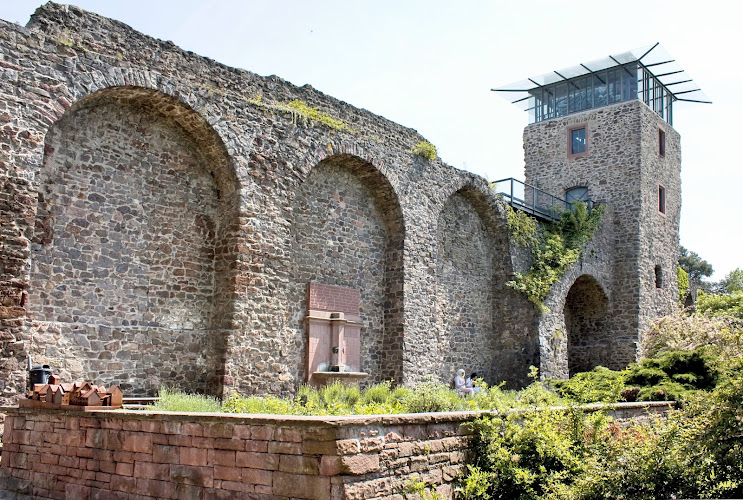
Altstadtmuseum Hinkelsturm
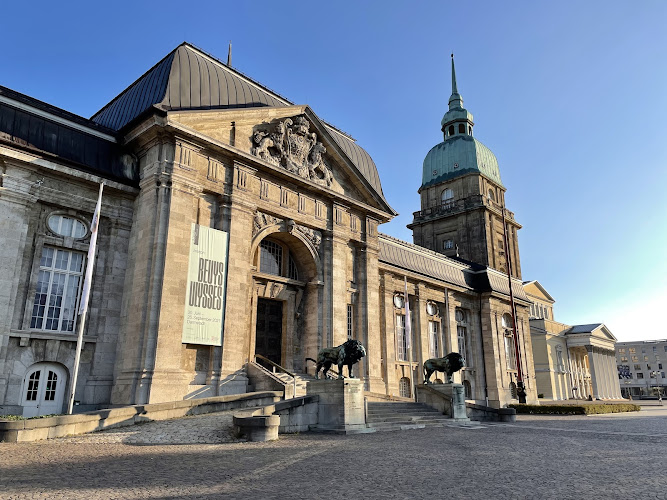
Hessisches Landesmuseum Darmstadt
Darmstadt
Find Accommodations Nearby
Recommended Tours & Activities
Visitor Reviews
There are no reviews yet. Be the first one to write one.
Share Your Experience
Have you visited Alice-Denkmal? Help other travelers by leaving a review.