
Gedenkstein
About Gedenkstein
Key Features
More Details
Updated April 15, 2024
## Gedenkstein (Barbarossa Memorial Stone) at Valkhof, Nijmegen — What It Is and Why It Matters
At Valkhof in Nijmegen (Kelfkensbos 59), the “Gedenkstein” is best understood as the memorial stone connected to Emperor Frederik (Frederick) Barbarossa’s 1155 rebuilding of the Valkhof palace/citadel. The stone is historically significant not because it’s decorative, but because it’s a primary medieval “statement” about power, legitimacy, and Nijmegen’s imagined Roman past. Nijmegen
### Quick facts (grounded)
– Place name (your dataset): Gedenkstein
– Location context: Valkhof (historic hill/park area tied to the former Valkhof castle complex) Nijmegen
– City: Nijmegen, Netherlands
– Coordinates (your dataset): 51.8478033, 5.8707323
– Historical association: Emperor Barbarossa’s rebuilding work at Valkhof in 1155 Nijmegen
– Where it can be seen today: The memorial stone is described as viewable in the Valkhof Museum Nijmegen
> Note on naming: some sources refer to this as “Gedenksteen van Barbarossa” (Dutch) — literally “Barbarossa memorial stone.” Gelderland
—
## The story behind the Gedenkstein
### 1155: Barbarossa, Nijmegen, and a political message carved in stone
Into Nijmegen’s historical timeline notes that in 1155 Barbarossa had a memorial stone placed to mark the rebuilding of the palace at Valkhof, and that the stone’s inscription refers to an origin story in which the castle was supposedly founded by Julius Caesar—a claim the source explicitly says does not match historical facts. Nijmegen
This matters because it shows two things at once:
1. Medieval rulers used “Roman origin” stories to amplify status and continuity.
2. The stone isn’t only about construction; it’s about authority and prestige—Barbarossa aligning himself with Rome’s most famous name. Nijmegen
### The stone itself: reused Roman material (spolia)
Mijn Gelderland adds a key physical detail: the memorial stone is a marble block carved from a Roman fluted column (the back reportedly still shows the column form). This kind of reuse—spolia—was common across Europe: older Roman stone was valuable, durable, and symbolically powerful. Gelderland
Mijn Gelderland also states:
– The stone was moved to the city hall in 1665, and
– The inscription was likely recut at that time over a weathered original text (with traces still recognizable). Gelderland
Those details are unusually useful for visitors because they explain why you may see the object presented not only as a medieval artifact, but also as a multi-period object: Roman stone → medieval message → early modern intervention. Gelderland
—
## How the Gedenkstein fits into Valkhof’s bigger history
Valkhof is a layered site: Roman-era significance, a Carolingian palts, and then Barbarossa’s 12th-century rebuilding. Monumenten.nl (Rijksmonumentenregister summary) describes Valkhof as a surviving complex where parts of the 1155 rebuild and earlier structures remain, including:
– St. Nicolaaskapel (St. Nicholas Chapel) — built around 1030 (later altered in the Gothic period).
– Barbarossa-ruïne — a surviving apse and wall fragments connected to the palace chapel associated with Barbarossa’s period.
– Additional remains like a 12th-century wall tower fragment, parts of a late 14th-century ring wall, and the Valkhof hill with planting and subsurface foundations.
So even if your visit begins with “Gedenkstein,” you’re standing in a place where architecture and archaeology preserve multiple centuries at once—some above ground, some below.
—
## Where to see the Gedenkstein today
### The reliable answer: Valkhof Museum
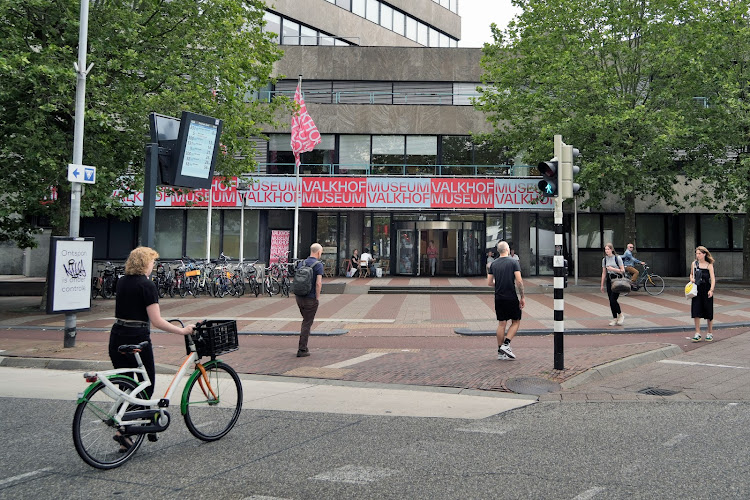
Into Nijmegen explicitly states the memorial stone “can be seen today in the Valkhof Museum.” Nijmegen
That’s a crucial point for travel planning: “Gedenkstein” might read like an outdoor marker, but the historically attested Barbarossa memorial stone is treated as a museum object in current descriptions.
### Museum location status and what may change
Visit Nijmegen’s official tourism listing says Valkhof Museum is currently associated with Keizer Karelplein 33 and is preparing for the opening of a renewed museum at Kelfkensbos 59, with reopening stated as summer 2026. Nijmegen
Outdated-data flag: “Summer 2026” is forward-looking and can slip due to construction, funding, permits, or collection moves. Treat it as a plan, not a guarantee, and verify close to your travel dates. Nijmegen
—
## Visiting Valkhof (the site) in a way that makes the history legible
If you want Valkhof to feel like more than a pleasant green space, anchor your walk around three “time markers” that are documented in reputable summaries:
### 1) Start with what still stands from ~1030
Monumenten.nl identifies the St. Nicolaaskapel as a core survivor built around 1030, with later modifications.
This gives you a pre-Barbarossa baseline—useful context before you think about 1155.
### 2) Move to Barbarossa’s surviving architectural fragment
The Barbarossa-ruïne is described as part of the 1155 palace complex (an apse with Romanesque decoration and reused columns).
This ties directly to the same political moment as the memorial stone.
### 3) Then connect the physical site to the museum object
Once you’ve oriented yourself on the hill, the Gedenkstein makes more sense: it’s a textual artifact commemorating a rebuild whose traces you can still stand beside. Nijmegen
—
## Practical details you can rely on (and what you shouldn’t assume)
### What you can rely on from sources in hand
– Valkhof is identified and address-listed as Kelfkensbos 59, 6511 TB Nijmegen on Into Nijmegen’s location page. Nijmegen
– The memorial stone’s link to 1155 and Barbarossa is consistent across independent sources used here. Nijmegen
– The museum’s stated reopening plan at Kelfkensbos 59 in summer 2026 appears in an official tourism listing (Visit Nijmegen). Nijmegen
### What you shouldn’t assume without checking
– Exact display status of the Gedenkstein on the day you visit (objects can be off-view during renovations, loans, or collection moves).
– Any onsite plaque text or exact outdoor placement for a “Gedenkstein” marker at Valkhof park—those specifics vary and weren’t confirmed in the sources above.
—
## Why this stop is worth your time (in plain terms)
If you like travel that rewards attention, the Gedenkstein is a compact example of how European cities build identity through layered narratives:
– Roman material reused for medieval prestige (spolia). Gelderland
– A ruler (Barbarossa) using inscription to claim continuity with Rome—even when the story doesn’t match historical evidence. Nijmegen
– A site (Valkhof) where the built environment still preserves multiple political eras in one small area.
That combination is rare: many places have ruins, many have museums, but fewer let you connect standing architecture to a specific commemorative object tied to a known rebuilding event. Nijmegen
—
## If you want, I can also produce:
– A short, fact-only excerpt (150–250 words) for your site’s “Quick Visit” box, sourced strictly from the citations above.
– A schema-ready JSON-LD draft (TouristAttraction + geo + sameAs citations) that avoids unverifiable claims.
Table of Contents
Key Highlights
Gedenkstein
Location
Places to Stay Near Gedenkstein
Find and Book a Tour
Explore More Travel Guides
No reviews found! Be the first to review!
Traveler Reviews for Gedenkstein
There are no reviews yet. Be the first one to write one.
Have you visited Gedenkstein? Help other travelers by sharing your review.
You Might Also Like
Besiendershuis

Nationaal Fietsmuseum Velorama
Valkhof Museum
Find Accommodations Nearby
Recommended Tours & Activities
Visitor Reviews
There are no reviews yet. Be the first one to write one.
Share Your Experience
Have you visited Gedenkstein? Help other travelers by leaving a review.