
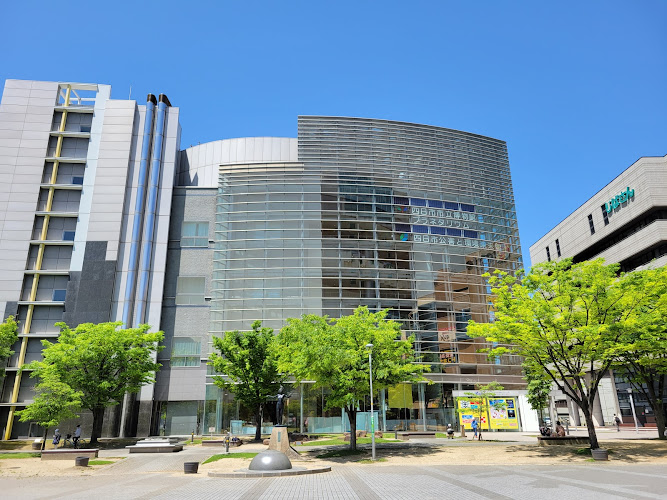
Yokkaichi Municipal Museum
About Yokkaichi Municipal Museum
Description
The Yokkaichi Municipal Museum sits as a thoughtful, sometimes surprising, repository of local memory and forward-looking ideas in Yokkaichi, Mie Prefecture. It is a place where the gritty chapters of an industrial city — the factories, the port, the air that once made headlines — are presented alongside stories of community resilience and environmental recovery. Visitors can expect an experience that blends local history, social lessons, and a touch of cosmic wonder thanks to the planetarium tucked inside the building.
Unlike glossy national museums that sometimes feel distant, the Yokkaichi Municipal Museum speaks in a plain, honest voice. Exhibits trace the town from Edo-period fisheries and agricultural hamlets through rapid industrialization in the 20th century, to the environmental challenges and policy responses that followed. There is an emphasis on environmental issues because Yokkaichi itself became a case study in how industry, health, and community intersect. The museum does not shy away from unpleasant facts; rather, it frames them as part of an educational arc that leads to present-day initiatives and public awareness campaigns.
Inside, the layout is practical and easy to follow. The permanent exhibition rooms contain artifacts, photographs, and documents that anchor Yokkaichi’s past to its present: tools from local craftsmen, maps of the port and river channels, and archives recording community protests and medical statistics from pollution incidents. There are interactive panels and scale models that help make complex issues — like air pollution and industrial development — more tangible for visitors who don’t speak the deep language of environmental science. And yes, there are placards in simple English in key areas, which is comforting if one is traveling from abroad and needs quick context before digging deeper.
The planetarium is the surprise everyone enjoys. It is modest in size but ambitious in content: shows vary from traditional star narratives to themed presentations that connect the cosmos to environmental stewardship — like linking the fragility of Earth’s atmosphere to the very stars patrons are watching. For travelers who have spent their afternoon walking the city streets or visiting the port, the planetarium offers a calming, contemplative counterpoint. It’s the kind of place where, after a heavy exhibit about industrial pollution, one might suddenly find oneself staring at a simulated Milky Way and thinking about scale: how small, yet how consequential, human actions can be.
Accessibility is solid here. The museum offers a wheelchair-accessible entrance and restroom, which matters a lot when one is hauling luggage or traveling with older relatives. Restroom facilities are available, though there is no on-site restaurant. So plan snacks or allocate time to explore nearby cafes after the visit. Families with kids often find the museum approachable; interactive corners and the planetarium’s kid-friendly programs make it a recommended stop for families traveling in Mie Prefecture. School groups are common on weekdays, which gives the place a lively, educational atmosphere — sometimes noisy, but in that wholesome, slightly chaotic way that indicates engagement.
One of the museum’s most effective strategies is its localness. It does not try to be Tokyo; it embraces Yokkaichi’s specific narrative. That means stories are granular: the names of neighborhoods affected by industrial expansion, first-person accounts from residents, and photos from community archives that bring authenticity. There’s a small but meaningful section on the port economy and how trade patterns shaped the city, and yes, a candid section on the pollution incidents that once brought national attention. Those exhibits are respectful, thorough, and often accompanied by oral histories — recorded voices of people who lived through the changes. That human dimension is why many visitors leave feeling they’ve witnessed something more than a museum show — they’ve met a city’s conscience.
Practical travelers will appreciate that the museum doubles as a learning center. It organizes temporary exhibitions, lectures, and workshops that reflect contemporary issues: sustainability innovators, local artists interpreting environmental themes, and community efforts to restore rivers and green spaces. These rotating programs keep the museum from feeling static. On a recent weekday, the museum hosted a small workshop on urban greening that drew retirees and young parents alike. The writer noticed the palpable sense of civic pride in that room; it was infectious and, if one is honest, slightly inspiring.
For those who keep score in travel terms — photography spots, moment-of-awe, unique detours — the museum offers a few small delights. The archival photographs on display can be stunning: panoramas of the industrial coastline, children playing by a river now cleaned, portraits of community organizers. The planetarium’s dark dome creates a nice contrast to the city’s daylight industrial palette; it’s a restful photo-op for those who travel with cameras, though flash is obviously out of the question. But the best images are not always the ones framed by a lens; they’re the impressions left by personal stories, by the juxtaposition of industrial might and environmental recovery, and by how a community narrates its own past.
It’s worth noting the tone: the museum balances sober historical accounting with hopeful practicalities. It does not sugarcoat the health implications and social costs of pollution, but it highlights the city’s response: legislation, healthcare initiatives, and public education. In that sense, the museum is both memorial and manual. Visitors often leave with concrete takeaways — new vocabulary (terms like air pollution countermeasures, monitoring stations), a timeline that clarifies how policy followed protest, and resources for further reading found at the information desk. Staff are polite and helpful; the museum’s quieter, staff-led tours provide richer context if one has time.
Travelers should also be prepared for the museum’s scale. It is manageable in a single afternoon, though someone who reads every placard could easily spend more time. It is not overwhelming, and that’s actually a plus: the compactness invites reflection rather than sensory overload. And for those who like to combine stops, the museum’s location makes it convenient to pair with walks along the waterfront or to explore nearby civic parks and local markets. There’s a nice rhythm to a day that includes the museum — morning exhibits, late afternoon planetarium — that many visitors find satisfying.
In terms of visitor sentiment, impressions run the gamut. Some people arrive expecting a grand national institution and are surprised by the museum’s municipal modesty; others are delighted by the candid local storytelling and the educational depth concerning environmental history. In short, expectations matter. Travelers who come with curiosity, rather than a checklist of blockbuster galleries, tend to enjoy it more. The museum rewards patience and interest. It’s one of those places that feels like an honest conversation between the city and the stranger who stopped by for an afternoon.
Finally, an honest aside: the writer once visited on a rainy day and ended up staying longer than planned. The planetarium show was a cozy refuge, and afterward a staff member pointed out a small exhibit about community gardens that had unexpectedly practical tips for urban greening. The writer walked out feeling like the visit had mattered — not just as a tick on a travel itinerary, but as a short lesson in how cities reckon with their past and try, sometimes clumsily but earnestly, to build a better future. That sense of civic dialogue is, in the writer’s opinion, the museum’s greatest strength.
All told, the Yokkaichi Municipal Museum is well-suited to travelers who want to understand the real story of an industrial Japanese city, who appreciate museums that pose questions rather than settle arguments, and who might enjoy a planetarium finale after absorbing a sometimes heavy but ultimately instructive local history. It offers accessibility for a range of visitors, hands-on learning for kids, and exhibits that tie local events to global themes — environment, public health, and community activism. It’s not a showy must-see on every tourist map, but for those who care about context and history, it’s a quietly powerful stop in Mie Prefecture.
Key Features
More Details
Updated August 29, 2025
Table of Contents
Description
The Yokkaichi Municipal Museum sits as a thoughtful, sometimes surprising, repository of local memory and forward-looking ideas in Yokkaichi, Mie Prefecture. It is a place where the gritty chapters of an industrial city — the factories, the port, the air that once made headlines — are presented alongside stories of community resilience and environmental recovery. Visitors can expect an experience that blends local history, social lessons, and a touch of cosmic wonder thanks to the planetarium tucked inside the building.
Unlike glossy national museums that sometimes feel distant, the Yokkaichi Municipal Museum speaks in a plain, honest voice. Exhibits trace the town from Edo-period fisheries and agricultural hamlets through rapid industrialization in the 20th century, to the environmental challenges and policy responses that followed. There is an emphasis on environmental issues because Yokkaichi itself became a case study in how industry, health, and community intersect. The museum does not shy away from unpleasant facts; rather, it frames them as part of an educational arc that leads to present-day initiatives and public awareness campaigns.
Inside, the layout is practical and easy to follow. The permanent exhibition rooms contain artifacts, photographs, and documents that anchor Yokkaichi’s past to its present: tools from local craftsmen, maps of the port and river channels, and archives recording community protests and medical statistics from pollution incidents. There are interactive panels and scale models that help make complex issues — like air pollution and industrial development — more tangible for visitors who don’t speak the deep language of environmental science. And yes, there are placards in simple English in key areas, which is comforting if one is traveling from abroad and needs quick context before digging deeper.
The planetarium is the surprise everyone enjoys. It is modest in size but ambitious in content: shows vary from traditional star narratives to themed presentations that connect the cosmos to environmental stewardship — like linking the fragility of Earth’s atmosphere to the very stars patrons are watching. For travelers who have spent their afternoon walking the city streets or visiting the port, the planetarium offers a calming, contemplative counterpoint. It’s the kind of place where, after a heavy exhibit about industrial pollution, one might suddenly find oneself staring at a simulated Milky Way and thinking about scale: how small, yet how consequential, human actions can be.
Accessibility is solid here. The museum offers a wheelchair-accessible entrance and restroom, which matters a lot when one is hauling luggage or traveling with older relatives. Restroom facilities are available, though there is no on-site restaurant. So plan snacks or allocate time to explore nearby cafes after the visit. Families with kids often find the museum approachable; interactive corners and the planetarium’s kid-friendly programs make it a recommended stop for families traveling in Mie Prefecture. School groups are common on weekdays, which gives the place a lively, educational atmosphere — sometimes noisy, but in that wholesome, slightly chaotic way that indicates engagement.
One of the museum’s most effective strategies is its localness. It does not try to be Tokyo; it embraces Yokkaichi’s specific narrative. That means stories are granular: the names of neighborhoods affected by industrial expansion, first-person accounts from residents, and photos from community archives that bring authenticity. There’s a small but meaningful section on the port economy and how trade patterns shaped the city, and yes, a candid section on the pollution incidents that once brought national attention. Those exhibits are respectful, thorough, and often accompanied by oral histories — recorded voices of people who lived through the changes. That human dimension is why many visitors leave feeling they’ve witnessed something more than a museum show — they’ve met a city’s conscience.
Practical travelers will appreciate that the museum doubles as a learning center. It organizes temporary exhibitions, lectures, and workshops that reflect contemporary issues: sustainability innovators, local artists interpreting environmental themes, and community efforts to restore rivers and green spaces. These rotating programs keep the museum from feeling static. On a recent weekday, the museum hosted a small workshop on urban greening that drew retirees and young parents alike. The writer noticed the palpable sense of civic pride in that room; it was infectious and, if one is honest, slightly inspiring.
For those who keep score in travel terms — photography spots, moment-of-awe, unique detours — the museum offers a few small delights. The archival photographs on display can be stunning: panoramas of the industrial coastline, children playing by a river now cleaned, portraits of community organizers. The planetarium’s dark dome creates a nice contrast to the city’s daylight industrial palette; it’s a restful photo-op for those who travel with cameras, though flash is obviously out of the question. But the best images are not always the ones framed by a lens; they’re the impressions left by personal stories, by the juxtaposition of industrial might and environmental recovery, and by how a community narrates its own past.
It’s worth noting the tone: the museum balances sober historical accounting with hopeful practicalities. It does not sugarcoat the health implications and social costs of pollution, but it highlights the city’s response: legislation, healthcare initiatives, and public education. In that sense, the museum is both memorial and manual. Visitors often leave with concrete takeaways — new vocabulary (terms like air pollution countermeasures, monitoring stations), a timeline that clarifies how policy followed protest, and resources for further reading found at the information desk. Staff are polite and helpful; the museum’s quieter, staff-led tours provide richer context if one has time.
Travelers should also be prepared for the museum’s scale. It is manageable in a single afternoon, though someone who reads every placard could easily spend more time. It is not overwhelming, and that’s actually a plus: the compactness invites reflection rather than sensory overload. And for those who like to combine stops, the museum’s location makes it convenient to pair with walks along the waterfront or to explore nearby civic parks and local markets. There’s a nice rhythm to a day that includes the museum — morning exhibits, late afternoon planetarium — that many visitors find satisfying.
In terms of visitor sentiment, impressions run the gamut. Some people arrive expecting a grand national institution and are surprised by the museum’s municipal modesty; others are delighted by the candid local storytelling and the educational depth concerning environmental history. In short, expectations matter. Travelers who come with curiosity, rather than a checklist of blockbuster galleries, tend to enjoy it more. The museum rewards patience and interest. It’s one of those places that feels like an honest conversation between the city and the stranger who stopped by for an afternoon.
Finally, an honest aside: the writer once visited on a rainy day and ended up staying longer than planned. The planetarium show was a cozy refuge, and afterward a staff member pointed out a small exhibit about community gardens that had unexpectedly practical tips for urban greening. The writer walked out feeling like the visit had mattered — not just as a tick on a travel itinerary, but as a short lesson in how cities reckon with their past and try, sometimes clumsily but earnestly, to build a better future. That sense of civic dialogue is, in the writer’s opinion, the museum’s greatest strength.
All told, the Yokkaichi Municipal Museum is well-suited to travelers who want to understand the real story of an industrial Japanese city, who appreciate museums that pose questions rather than settle arguments, and who might enjoy a planetarium finale after absorbing a sometimes heavy but ultimately instructive local history. It offers accessibility for a range of visitors, hands-on learning for kids, and exhibits that tie local events to global themes — environment, public health, and community activism. It’s not a showy must-see on every tourist map, but for those who care about context and history, it’s a quietly powerful stop in Mie Prefecture.
Key Highlights
Yokkaichi Municipal Museum
Location
Places to Stay Near Yokkaichi Municipal Museum
Find and Book a Tour
Explore More Travel Guides
No reviews found! Be the first to review!
Traveler Reviews for Yokkaichi Municipal Museum
There are no reviews yet. Be the first one to write one.
Have you visited Yokkaichi Municipal Museum? Help other travelers by sharing your review.
You Might Also Like
3 Chome Tomida

Yokkaichi Dome
Tomida
Find Accommodations Nearby
Recommended Tours & Activities
Visitor Reviews
There are no reviews yet. Be the first one to write one.
Share Your Experience
Have you visited Yokkaichi Municipal Museum? Help other travelers by leaving a review.