
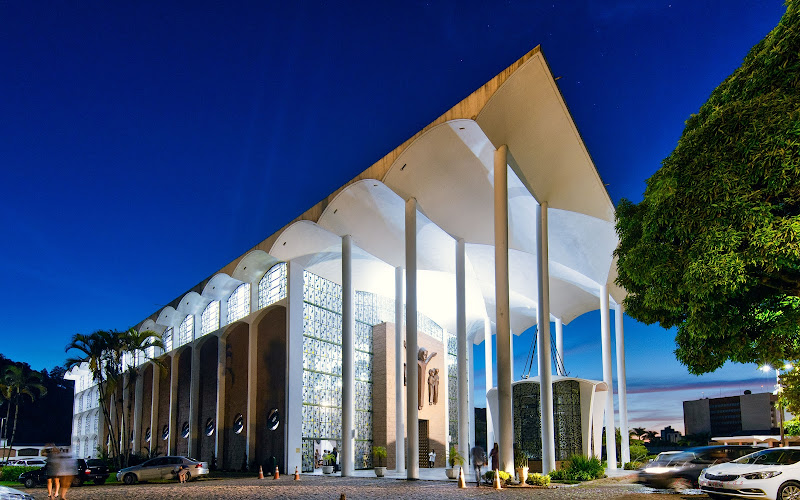
Catedral São Paulo Apóstolo
About Catedral São Paulo Apóstolo
Description
Catedral São Paulo Apóstolo is one of those places that quietly surprises you. It doesn’t scream for attention from afar, and that’s kind of the point. Built in 1958, this Catholic cathedral leans into a modern architectural language that still feels grounded in tradition. Think clean lines, warm wood, and a sense of calm that hits you right as you step inside. I remember walking in on a random weekday afternoon, mostly to escape the heat, and ended up sitting there way longer than planned. That happens here.
The cathedral serves as an active religious center, not just a postcard stop. You’ll see locals coming in for a few minutes of prayer, families attending Mass, and the occasional tourist quietly looking up at the ceiling, trying to take it all in. And yes, you’ll probably hear the electronic bells at some point. They’re surprisingly charming, not gimmicky. Paired with the old German clock inside, it creates this odd but wonderful mix of old-school craftsmanship and mid-century innovation.
What makes Catedral São Paulo Apóstolo especially interesting for travelers is how human it feels. It’s not polished to perfection, and honestly, that’s refreshing. Some corners show age, some design choices feel very much of their time, and a few visitors will surely have mixed feelings. But the overwhelming impression is warmth. The wood carvings, in particular, give the interior a tactile, almost handmade feel. You don’t just look at this place, you sort of feel it.
From a travel perspective, it’s a meaningful stop even if you’re not religious. Sacred spaces tend to tell stories about the communities around them, and this one speaks of post-war optimism, faith adapting to modern life, and a city growing fast but trying to hold onto its soul. If you like places with layers, not just photo ops, this cathedral earns your time.
Key Features
- Modern-style Catholic cathedral completed in 1958, reflecting post-war architectural ideas
- Electronic bell system that still marks time and services in a unique way
- Traditional German clock inside, a detail many visitors miss if they rush
- Handcrafted wood carvings that add warmth and character to the interior
- Active congregation, offering a glimpse into local religious life
- Wheelchair accessible entrance, restrooms, and parking, making visits easier for all
- On-site restrooms, which travelers quietly appreciate more than they admit
- Clothing recycling initiatives tied to the church’s community work
Best Time to Visit
The best time to visit Catedral São Paulo Apóstolo really depends on what you’re after. If you want a quiet, reflective experience, weekday mornings or early afternoons are ideal. That’s when the light filters in softly and the place feels almost meditative. I once visited just after lunch, when the city outside was buzzing, and inside it felt like someone had turned the volume knob way down. Bliss.
If you’re curious about local culture and don’t mind a bit more movement, attending a Mass can be eye-opening. Weekends, especially Sunday mornings, are busier and more communal. You’ll hear singing, see families dressed up, and feel the building come alive in a different way. But be prepared for crowds and limited space to wander.
Seasonally, there’s no bad time to go, since it’s indoors and well-maintained. During hotter months, it doubles as a cool refuge, and during rainy days, it’s a solid plan B when outdoor sightseeing falls apart. And yes, I’ve ducked in during a sudden downpour and ended up learning more than I expected. Travel wins like that are underrated.
How to Get There
Getting to Catedral São Paulo Apóstolo is generally straightforward, especially if you’re staying within the city. Public transportation is the most common option, with buses and other local transit routes stopping nearby. If you’re the kind of traveler who likes to watch daily life through a bus window, this is a good excuse.
For those driving, parking is available and accessible, which isn’t always a given near religious landmarks. Ride-hailing services also work well, and most drivers know the cathedral by name, even if they shorten it or pronounce it a bit creatively.
Walking is another option if you’re already exploring the surrounding area. The neighborhood itself gives context to the cathedral, and approaching it on foot lets you notice details you’d miss otherwise. Just keep an eye on service times if you’re aiming to enter right away.
Tips for Visiting
First tip, and this comes from personal trial and error: slow down. This isn’t a place to rush through in ten minutes. Sit for a bit. Look at the wood carvings. Listen to the ambient sounds. Even if you’re not religious, there’s value in pausing.
Dress respectfully, especially during service hours. You don’t need to overthink it, but modest clothing goes a long way. And yes, I’ve seen tourists turned away during Mass because they didn’t realize what was happening. Awkward.
Photography is usually allowed outside of services, but keep it discreet. Flash photography feels intrusive here, and honestly, the atmosphere is better remembered than captured. Some of my favorite travel memories live only in my head, not my camera roll.
Take advantage of the accessibility features if you need them. The cathedral does a good job accommodating visitors with mobility challenges, which is something more travelers care about than ever. It’s nice not having to worry about stairs or tight spaces.
Finally, pay attention to the little things. The German clock. The sound of the bells. The way the light hits the wood. These are the details that stick with you. Catedral São Paulo Apóstolo isn’t about spectacle. It’s about presence. And if you let it, it’ll give you a moment of calm you didn’t know you needed.
Key Features
- Modern-style Catholic cathedral completed in 1958, reflecting post-war architectural ideas
- Electronic bell system that still marks time and services in a unique way
- Traditional German clock inside, a detail many visitors miss if they rush
- Handcrafted wood carvings that add warmth and character to the interior
- Active congregation, offering a glimpse into local religious life
- Wheelchair accessible entrance, restrooms, and parking, making visits easier for all
- On-site restrooms, which travelers quietly appreciate more than they admit
- Clothing recycling initiatives tied to the church’s community work
More Details
Updated December 31, 2025
Table of Contents
Description
Catedral São Paulo Apóstolo is one of those places that quietly surprises you. It doesn’t scream for attention from afar, and that’s kind of the point. Built in 1958, this Catholic cathedral leans into a modern architectural language that still feels grounded in tradition. Think clean lines, warm wood, and a sense of calm that hits you right as you step inside. I remember walking in on a random weekday afternoon, mostly to escape the heat, and ended up sitting there way longer than planned. That happens here.
The cathedral serves as an active religious center, not just a postcard stop. You’ll see locals coming in for a few minutes of prayer, families attending Mass, and the occasional tourist quietly looking up at the ceiling, trying to take it all in. And yes, you’ll probably hear the electronic bells at some point. They’re surprisingly charming, not gimmicky. Paired with the old German clock inside, it creates this odd but wonderful mix of old-school craftsmanship and mid-century innovation.
What makes Catedral São Paulo Apóstolo especially interesting for travelers is how human it feels. It’s not polished to perfection, and honestly, that’s refreshing. Some corners show age, some design choices feel very much of their time, and a few visitors will surely have mixed feelings. But the overwhelming impression is warmth. The wood carvings, in particular, give the interior a tactile, almost handmade feel. You don’t just look at this place, you sort of feel it.
From a travel perspective, it’s a meaningful stop even if you’re not religious. Sacred spaces tend to tell stories about the communities around them, and this one speaks of post-war optimism, faith adapting to modern life, and a city growing fast but trying to hold onto its soul. If you like places with layers, not just photo ops, this cathedral earns your time.
Key Features
- Modern-style Catholic cathedral completed in 1958, reflecting post-war architectural ideas
- Electronic bell system that still marks time and services in a unique way
- Traditional German clock inside, a detail many visitors miss if they rush
- Handcrafted wood carvings that add warmth and character to the interior
- Active congregation, offering a glimpse into local religious life
- Wheelchair accessible entrance, restrooms, and parking, making visits easier for all
- On-site restrooms, which travelers quietly appreciate more than they admit
- Clothing recycling initiatives tied to the church’s community work
Best Time to Visit
The best time to visit Catedral São Paulo Apóstolo really depends on what you’re after. If you want a quiet, reflective experience, weekday mornings or early afternoons are ideal. That’s when the light filters in softly and the place feels almost meditative. I once visited just after lunch, when the city outside was buzzing, and inside it felt like someone had turned the volume knob way down. Bliss.
If you’re curious about local culture and don’t mind a bit more movement, attending a Mass can be eye-opening. Weekends, especially Sunday mornings, are busier and more communal. You’ll hear singing, see families dressed up, and feel the building come alive in a different way. But be prepared for crowds and limited space to wander.
Seasonally, there’s no bad time to go, since it’s indoors and well-maintained. During hotter months, it doubles as a cool refuge, and during rainy days, it’s a solid plan B when outdoor sightseeing falls apart. And yes, I’ve ducked in during a sudden downpour and ended up learning more than I expected. Travel wins like that are underrated.
How to Get There
Getting to Catedral São Paulo Apóstolo is generally straightforward, especially if you’re staying within the city. Public transportation is the most common option, with buses and other local transit routes stopping nearby. If you’re the kind of traveler who likes to watch daily life through a bus window, this is a good excuse.
For those driving, parking is available and accessible, which isn’t always a given near religious landmarks. Ride-hailing services also work well, and most drivers know the cathedral by name, even if they shorten it or pronounce it a bit creatively.
Walking is another option if you’re already exploring the surrounding area. The neighborhood itself gives context to the cathedral, and approaching it on foot lets you notice details you’d miss otherwise. Just keep an eye on service times if you’re aiming to enter right away.
Tips for Visiting
First tip, and this comes from personal trial and error: slow down. This isn’t a place to rush through in ten minutes. Sit for a bit. Look at the wood carvings. Listen to the ambient sounds. Even if you’re not religious, there’s value in pausing.
Dress respectfully, especially during service hours. You don’t need to overthink it, but modest clothing goes a long way. And yes, I’ve seen tourists turned away during Mass because they didn’t realize what was happening. Awkward.
Photography is usually allowed outside of services, but keep it discreet. Flash photography feels intrusive here, and honestly, the atmosphere is better remembered than captured. Some of my favorite travel memories live only in my head, not my camera roll.
Take advantage of the accessibility features if you need them. The cathedral does a good job accommodating visitors with mobility challenges, which is something more travelers care about than ever. It’s nice not having to worry about stairs or tight spaces.
Finally, pay attention to the little things. The German clock. The sound of the bells. The way the light hits the wood. These are the details that stick with you. Catedral São Paulo Apóstolo isn’t about spectacle. It’s about presence. And if you let it, it’ll give you a moment of calm you didn’t know you needed.
Key Highlights
- Modern-style Catholic cathedral completed in 1958, reflecting post-war architectural ideas
- Electronic bell system that still marks time and services in a unique way
- Traditional German clock inside, a detail many visitors miss if they rush
- Handcrafted wood carvings that add warmth and character to the interior
- Active congregation, offering a glimpse into local religious life
- Wheelchair accessible entrance, restrooms, and parking, making visits easier for all
- On-site restrooms, which travelers quietly appreciate more than they admit
- Clothing recycling initiatives tied to the church’s community work
Location
Places to Stay Near Catedral São Paulo Apóstolo
Find and Book a Tour
Explore More Travel Guides
No reviews found! Be the first to review!
Traveler Reviews for Catedral São Paulo Apóstolo
There are no reviews yet. Be the first one to write one.
Have you visited Catedral São Paulo Apóstolo? Help other travelers by sharing your review.
You Might Also Like
89012-400

Glaspark Blumenau Museum

Blumenau
Find Accommodations Nearby
Recommended Tours & Activities
Visitor Reviews
There are no reviews yet. Be the first one to write one.
Share Your Experience
Have you visited Catedral São Paulo Apóstolo? Help other travelers by leaving a review.