
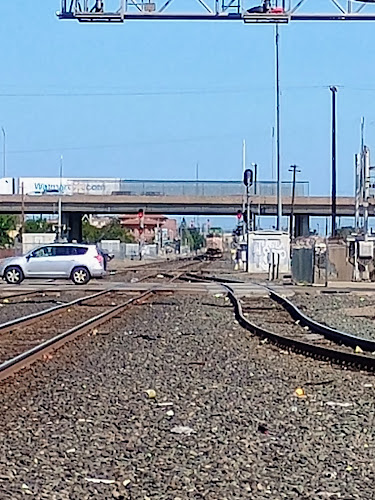
Stockton Diamond
About Stockton Diamond
Description
The Stockton Diamond is one of those places that sounds mysterious until you actually stand near it and feel the ground hum. It’s not a gemstone, and it’s not a park bench photo-op. It’s a working rail junction where major freight lines cross paths, forming a literal diamond shape in the tracks. For travelers who are curious about American railroads, logistics, and the way cities quietly move goods behind the scenes, this spot hits a nerve in a good way.
This train yard junction sits in Stockton, California, a city that’s long been tied to agriculture and transportation. The Diamond is where east–west and north–south rail traffic intersect, meaning long freight trains carrying everything from produce to consumer goods roll through daily. And yes, they’re loud, slow, and unapologetically industrial. That’s the point. If you’re expecting polished signage or a visitor center, you’ll be disappointed. But if you enjoy authentic infrastructure and places that still work for a living, you’ll probably be hooked.
I remember the first time I saw it, honestly by accident. I was driving through Stockton, killing time before meeting a friend, and noticed a line of cars stopped longer than usual at a crossing. Then came this massive freight train, followed by another one cutting across it. I got out of the car (safely, of course) and just watched. It felt like seeing the circulatory system of the country in motion. Not pretty-pretty, but fascinating.
For travelers, especially those into railfanning, photography, or offbeat urban exploration, the Stockton Diamond offers a rare look at a functional rail intersection that hasn’t been turned into a theme attraction. It’s raw. It’s real. And it tells a story about how Stockton connects to the rest of the U.S. in a way most people drive past without noticing.
Key Features
- Active diamond crossing where major freight rail lines intersect
- Frequent train movements throughout the day and night
- Prime spot for observing long-haul freight operations up close
- Strong ties to Stockton’s agricultural and industrial history
- Interesting vantage points for rail photography (from public areas)
- Unfiltered look at modern American logistics in action
What stands out most is how busy it can be. You might wait ten minutes and see nothing, then suddenly two massive trains roll through back-to-back. And when they cross, the sound changes. There’s this metallic echo that sort of rattles your chest. I know that sounds dramatic, but if you’ve been around trains, you get it.
Best Time to Visit
Timing your visit to the Stockton Diamond is less about seasons and more about patience and daylight. Trains run year-round, rain or shine, so there’s no “closed” season. That said, late morning through mid-afternoon tends to offer the best balance for travelers. You get good natural light for photos, and the area feels more active and easier to read visually.
Early mornings can be surprisingly quiet, or suddenly chaotic. It’s a gamble. I’ve stood there at 7 a.m. with a coffee and nothing happened for half an hour, then boom, a freight rolled in like it was late for work. Evenings can be dramatic, especially as the sun drops and the engines light up, but visibility drops fast and you’ll want to be extra aware of your surroundings.
Weather-wise, spring and fall are easier on the body. Summers in Stockton can be hot, like “why did I wear black?” hot. If you do visit in summer, bring water and don’t linger longer than you’re comfortable. Winter is mild compared to many places, but fog can roll in and reduce visibility, which changes the whole experience.
One little tip from personal trial and error: weekdays feel more consistent in terms of train traffic. Weekends still have action, but it can be spottier. If you’re squeezing this into a road trip and only have an hour, weekdays give you better odds.
How to Get There
Getting to the Stockton Diamond is straightforward if you’re already in or near Stockton. The city sits along major highways, making it a common stop for travelers moving between Northern California destinations. Once you’re in the city, local roads will bring you close enough to observe the junction from public areas.
If you’re coming by car, that’s the easiest option. Public transportation can get you near, but it may require walking through industrial blocks, which isn’t everyone’s idea of a relaxing stroll. I’ve done it, but I also had time and decent shoes. Use your judgment.
For travelers without a car, rideshare services work fine within Stockton. Just be clear that you’re heading near the rail junction, not expecting a drop-off inside a facility. This is a working train yard environment, and access is limited to public viewpoints only. And that’s fine. You don’t need to be right on top of the tracks to appreciate the scale.
If you’re already traveling by train through Stockton, there’s something kind of poetic about seeing the Diamond after arriving by rail. You feel like you’re watching the same system that brought you there, just from a different angle.
Tips for Visiting
First and most important: stay safe. This isn’t a tourist attraction with fences and staff. Stick to public areas, obey posted signs, and never cross tracks illegally. Trains are quieter than you expect until they’re right there, and they do not stop quickly. That’s not a scare tactic, just reality.
Bring patience. This isn’t a scheduled show. Sometimes the best moments come after waiting longer than you planned. I’ve learned to treat it like fishing. You show up, you wait, and when something happens, it feels earned.
If you’re into photography, a zoom lens helps. You can capture details without getting close. Also, be mindful of the light. Harsh midday sun can wash out colors, while late afternoon gives you richer contrast on the engines and cars.
Pack light but smart. Water, sun protection, and comfortable shoes matter more than fancy gear. And if you’re visiting solo, let someone know where you are. Industrial areas are usually fine, but it’s just good travel sense.
And finally, check your expectations. The Stockton Diamond isn’t trying to entertain you. It exists to move goods efficiently, day after day. If you go in with curiosity instead of a checklist, you’ll probably walk away with a deeper appreciation for how much coordination it takes to keep a country running.
I’ll admit, it’s not for everyone. Some folks see trains and think traffic delay. Others, like me, see a moving puzzle that never quite repeats itself. If you’re the second type, or even a little curious, the Stockton Diamond is worth your time. Even if you only stay fifteen minutes. Sometimes that’s all it takes to see something you didn’t know you were missing.
Key Features
- Active diamond crossing where major freight rail lines intersect
- Frequent train movements throughout the day and night
- Prime spot for observing long-haul freight operations up close
- Strong ties to Stockton’s agricultural and industrial history
- Interesting vantage points for rail photography (from public areas)
- Unfiltered look at modern American logistics in action
More Details
Updated December 31, 2025
Table of Contents
Description
The Stockton Diamond is one of those places that sounds mysterious until you actually stand near it and feel the ground hum. It’s not a gemstone, and it’s not a park bench photo-op. It’s a working rail junction where major freight lines cross paths, forming a literal diamond shape in the tracks. For travelers who are curious about American railroads, logistics, and the way cities quietly move goods behind the scenes, this spot hits a nerve in a good way.
This train yard junction sits in Stockton, California, a city that’s long been tied to agriculture and transportation. The Diamond is where east–west and north–south rail traffic intersect, meaning long freight trains carrying everything from produce to consumer goods roll through daily. And yes, they’re loud, slow, and unapologetically industrial. That’s the point. If you’re expecting polished signage or a visitor center, you’ll be disappointed. But if you enjoy authentic infrastructure and places that still work for a living, you’ll probably be hooked.
I remember the first time I saw it, honestly by accident. I was driving through Stockton, killing time before meeting a friend, and noticed a line of cars stopped longer than usual at a crossing. Then came this massive freight train, followed by another one cutting across it. I got out of the car (safely, of course) and just watched. It felt like seeing the circulatory system of the country in motion. Not pretty-pretty, but fascinating.
For travelers, especially those into railfanning, photography, or offbeat urban exploration, the Stockton Diamond offers a rare look at a functional rail intersection that hasn’t been turned into a theme attraction. It’s raw. It’s real. And it tells a story about how Stockton connects to the rest of the U.S. in a way most people drive past without noticing.
Key Features
- Active diamond crossing where major freight rail lines intersect
- Frequent train movements throughout the day and night
- Prime spot for observing long-haul freight operations up close
- Strong ties to Stockton’s agricultural and industrial history
- Interesting vantage points for rail photography (from public areas)
- Unfiltered look at modern American logistics in action
What stands out most is how busy it can be. You might wait ten minutes and see nothing, then suddenly two massive trains roll through back-to-back. And when they cross, the sound changes. There’s this metallic echo that sort of rattles your chest. I know that sounds dramatic, but if you’ve been around trains, you get it.
Best Time to Visit
Timing your visit to the Stockton Diamond is less about seasons and more about patience and daylight. Trains run year-round, rain or shine, so there’s no “closed” season. That said, late morning through mid-afternoon tends to offer the best balance for travelers. You get good natural light for photos, and the area feels more active and easier to read visually.
Early mornings can be surprisingly quiet, or suddenly chaotic. It’s a gamble. I’ve stood there at 7 a.m. with a coffee and nothing happened for half an hour, then boom, a freight rolled in like it was late for work. Evenings can be dramatic, especially as the sun drops and the engines light up, but visibility drops fast and you’ll want to be extra aware of your surroundings.
Weather-wise, spring and fall are easier on the body. Summers in Stockton can be hot, like “why did I wear black?” hot. If you do visit in summer, bring water and don’t linger longer than you’re comfortable. Winter is mild compared to many places, but fog can roll in and reduce visibility, which changes the whole experience.
One little tip from personal trial and error: weekdays feel more consistent in terms of train traffic. Weekends still have action, but it can be spottier. If you’re squeezing this into a road trip and only have an hour, weekdays give you better odds.
How to Get There
Getting to the Stockton Diamond is straightforward if you’re already in or near Stockton. The city sits along major highways, making it a common stop for travelers moving between Northern California destinations. Once you’re in the city, local roads will bring you close enough to observe the junction from public areas.
If you’re coming by car, that’s the easiest option. Public transportation can get you near, but it may require walking through industrial blocks, which isn’t everyone’s idea of a relaxing stroll. I’ve done it, but I also had time and decent shoes. Use your judgment.
For travelers without a car, rideshare services work fine within Stockton. Just be clear that you’re heading near the rail junction, not expecting a drop-off inside a facility. This is a working train yard environment, and access is limited to public viewpoints only. And that’s fine. You don’t need to be right on top of the tracks to appreciate the scale.
If you’re already traveling by train through Stockton, there’s something kind of poetic about seeing the Diamond after arriving by rail. You feel like you’re watching the same system that brought you there, just from a different angle.
Tips for Visiting
First and most important: stay safe. This isn’t a tourist attraction with fences and staff. Stick to public areas, obey posted signs, and never cross tracks illegally. Trains are quieter than you expect until they’re right there, and they do not stop quickly. That’s not a scare tactic, just reality.
Bring patience. This isn’t a scheduled show. Sometimes the best moments come after waiting longer than you planned. I’ve learned to treat it like fishing. You show up, you wait, and when something happens, it feels earned.
If you’re into photography, a zoom lens helps. You can capture details without getting close. Also, be mindful of the light. Harsh midday sun can wash out colors, while late afternoon gives you richer contrast on the engines and cars.
Pack light but smart. Water, sun protection, and comfortable shoes matter more than fancy gear. And if you’re visiting solo, let someone know where you are. Industrial areas are usually fine, but it’s just good travel sense.
And finally, check your expectations. The Stockton Diamond isn’t trying to entertain you. It exists to move goods efficiently, day after day. If you go in with curiosity instead of a checklist, you’ll probably walk away with a deeper appreciation for how much coordination it takes to keep a country running.
I’ll admit, it’s not for everyone. Some folks see trains and think traffic delay. Others, like me, see a moving puzzle that never quite repeats itself. If you’re the second type, or even a little curious, the Stockton Diamond is worth your time. Even if you only stay fifteen minutes. Sometimes that’s all it takes to see something you didn’t know you were missing.
Key Highlights
- Active diamond crossing where major freight rail lines intersect
- Frequent train movements throughout the day and night
- Prime spot for observing long-haul freight operations up close
- Strong ties to Stockton’s agricultural and industrial history
- Interesting vantage points for rail photography (from public areas)
- Unfiltered look at modern American logistics in action
Location
Places to Stay Near Stockton Diamond
Find and Book a Tour
Explore More Travel Guides
No reviews found! Be the first to review!
Traveler Reviews for Stockton Diamond
There are no reviews yet. Be the first one to write one.
Have you visited Stockton Diamond? Help other travelers by sharing your review.
You Might Also Like

160 Driving Academy of Stockton

Buckley Cove Park
Oak Grove Lake
Find Accommodations Nearby
Recommended Tours & Activities
Visitor Reviews
There are no reviews yet. Be the first one to write one.
Share Your Experience
Have you visited Stockton Diamond? Help other travelers by leaving a review.