
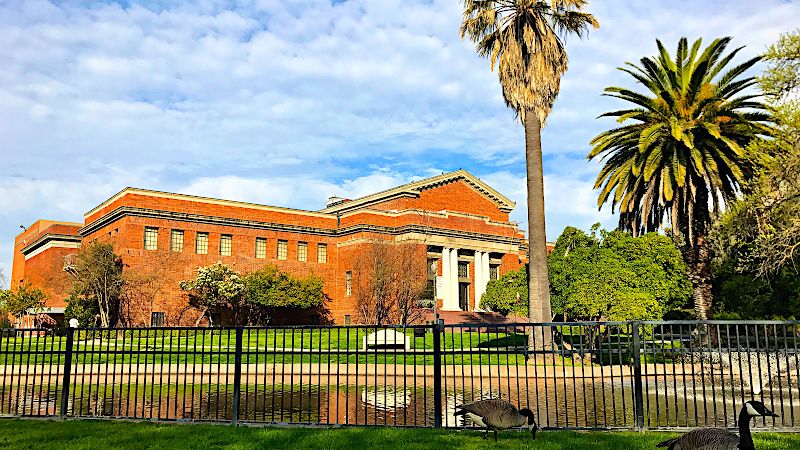
Haggin Museum
About Haggin Museum
Description
The Haggin Museum isn’t the kind of place you rush through. It’s the sort of museum that quietly pulls you in, floor by floor, until you realize you’ve been there way longer than planned. Three full stories of galleries stretch out before you, packed with paintings from notable 20th-century artists alongside deep dives into local history that actually feels alive, not dusty. And honestly, that balance is what makes this museum special. It’s not trying to be trendy or flashy. It’s confident in what it offers.
For travelers, especially those curious about how art and regional history intersect, the Haggin Museum delivers a layered experience. One minute you’re standing in front of a luminous landscape painting, the next you’re reading about the people who shaped the area, their industries, their everyday lives. I’ve always believed museums work best when they tell stories rather than just display objects, and this one gets that right more often than not.
The building itself has a calm, almost contemplative energy. Natural light filters into the galleries in a way that makes you slow down. And slow down you should. This isn’t a museum built for selfies every ten seconds. It’s built for wandering, for pausing, for maybe sitting on a bench and letting a painting work on you for a while. I once came here thinking I’d kill an hour before dinner. Three hours later, my stomach was growling and I was still on the second floor. Oops.
There’s also a strong educational thread running through the museum. As a learning center, it does a solid job explaining context without overwhelming you. Placards are readable. Exhibits don’t assume you already have an art history degree. And if you’re traveling with kids, that matters. I’ve seen plenty of young visitors genuinely engaged here, asking questions, pointing things out, not just dragging their feet.
The Haggin Museum also functions as a cultural hub. Live performances pop up from time to time, adding a whole other layer to the experience. There’s something unexpectedly lovely about listening to live music after spending time with visual art. It makes the place feel lived-in, current, not frozen in time.
Key Features
- Three stories of spacious galleries featuring 20th-century paintings and rotating exhibits
- Strong focus on local and regional history, presented in an engaging, accessible way
- Live performances that add energy and variety beyond traditional exhibits
- Family-friendly atmosphere that welcomes kids without dumbing things down
- On-site gift shop with art-inspired items, books, and thoughtful souvenirs
- Guided tours available for visitors who want deeper insight and storytelling
- Wheelchair accessible entrances, restrooms, and parking for inclusive access
- Free on-site and street parking, which travelers always appreciate
- Reliable Wi‑Fi for those who like to look things up as they explore
Best Time to Visit
Timing your visit to the Haggin Museum can make a noticeable difference in how relaxed your experience feels. Weekday mornings tend to be the quietest, especially if school groups aren’t scheduled. If you’re like me and prefer hearing your own footsteps echo a little in a gallery, that’s the sweet spot.
Weekends bring more families and casual visitors, which isn’t a bad thing. The museum handles crowds fairly well, and the three-story layout means people spread out naturally. Still, mid-day on a Saturday can feel busy around the most popular exhibits. If that kind of buzz energizes you, great. If not, aim earlier or later in the day.
Seasonally, there’s no bad time, but warmer months tend to draw more tourists overall. On hot afternoons, the museum becomes a kind of refuge. Cool, quiet, and mentally stimulating. I’ve ducked in on scorching days just to cool off and ended up staying for an entire exhibit I hadn’t planned on seeing.
If live performances interest you, it’s worth checking the schedule before your visit. Those events can change the whole vibe of the museum, making it feel more like a community gathering place than a traditional gallery space.
How to Get There
Getting to the Haggin Museum is refreshingly straightforward, which is not something I say lightly after years of travel mishaps. Whether you’re driving or using local transportation, the route is generally uncomplicated and well-marked once you’re close.
For drivers, having both on-site and free street parking is a big win. You don’t have to circle the block ten times muttering under your breath. I’ve found parking spots without much stress, even on moderately busy days. Just remember to check any posted time limits on street parking, because that’s one of those small things that can ruin an otherwise great afternoon.
If you’re relying on public transportation, nearby stops make the museum reasonably accessible. It may involve a short walk, but it’s manageable and often pleasant. And honestly, a little walk helps clear your head before diving into art and history.
Once you arrive, the entrance is easy to spot, and accessibility features are thoughtfully integrated. Wheelchair users won’t feel like an afterthought here, which sadly isn’t always the case with older museum buildings.
Tips for Visiting
First tip, and I can’t stress this enough: give yourself more time than you think you’ll need. The Haggin Museum has a way of expanding your curiosity. You’ll plan for an hour and then realize you’ve only scratched the surface.
Wear comfortable shoes. This sounds obvious, but three stories of galleries add up. I made the mistake once of wearing shoes that looked great but felt awful after the first floor. Learn from my pain.
If you enjoy guided experiences, take a tour. The docents often share stories you won’t find on the wall text, little anecdotes that humanize the art and the history. It’s one of those extras that can transform a good visit into a memorable one.
Traveling with kids? Let them lead sometimes. The museum is genuinely good for children, and letting them choose which exhibits to linger on can spark real interest. I’ve watched kids become fascinated by historical artifacts I would’ve breezed past on my own.
Don’t skip the gift shop. Even if you think you’re not a gift shop person. It’s curated with care, not stuffed with cheap trinkets. I’ve picked up books there that I still reference years later.
Use the Wi‑Fi if you’re curious about an artist or historical figure. Looking things up on the spot can deepen your understanding and keep the experience interactive.
And finally, allow yourself to just sit and observe. Museums often feel like places where you need to keep moving, checking things off. But some of my favorite moments at the Haggin Museum involved sitting quietly, watching how light hit a painting, or listening to snippets of conversation from other visitors. Those small, human moments are part of the experience too.
For travelers seeking an art museum that respects both creativity and history, without feeling intimidating or overly commercial, the Haggin Museum stands its ground. It’s thoughtful, well-loved, and clearly cared for. And while it’s not perfect (few places are), it offers an experience that sticks with you, which, in my book, counts for a lot.
Key Features
- Three stories of spacious galleries featuring 20th-century paintings and rotating exhibits
- Strong focus on local and regional history, presented in an engaging, accessible way
- Live performances that add energy and variety beyond traditional exhibits
- Family-friendly atmosphere that welcomes kids without dumbing things down
- On-site gift shop with art-inspired items, books, and thoughtful souvenirs
- Guided tours available for visitors who want deeper insight and storytelling
- Wheelchair accessible entrances, restrooms, and parking for inclusive access
- Free on-site and street parking, which travelers always appreciate
More Details
Updated December 31, 2025
Table of Contents
Description
The Haggin Museum isn’t the kind of place you rush through. It’s the sort of museum that quietly pulls you in, floor by floor, until you realize you’ve been there way longer than planned. Three full stories of galleries stretch out before you, packed with paintings from notable 20th-century artists alongside deep dives into local history that actually feels alive, not dusty. And honestly, that balance is what makes this museum special. It’s not trying to be trendy or flashy. It’s confident in what it offers.
For travelers, especially those curious about how art and regional history intersect, the Haggin Museum delivers a layered experience. One minute you’re standing in front of a luminous landscape painting, the next you’re reading about the people who shaped the area, their industries, their everyday lives. I’ve always believed museums work best when they tell stories rather than just display objects, and this one gets that right more often than not.
The building itself has a calm, almost contemplative energy. Natural light filters into the galleries in a way that makes you slow down. And slow down you should. This isn’t a museum built for selfies every ten seconds. It’s built for wandering, for pausing, for maybe sitting on a bench and letting a painting work on you for a while. I once came here thinking I’d kill an hour before dinner. Three hours later, my stomach was growling and I was still on the second floor. Oops.
There’s also a strong educational thread running through the museum. As a learning center, it does a solid job explaining context without overwhelming you. Placards are readable. Exhibits don’t assume you already have an art history degree. And if you’re traveling with kids, that matters. I’ve seen plenty of young visitors genuinely engaged here, asking questions, pointing things out, not just dragging their feet.
The Haggin Museum also functions as a cultural hub. Live performances pop up from time to time, adding a whole other layer to the experience. There’s something unexpectedly lovely about listening to live music after spending time with visual art. It makes the place feel lived-in, current, not frozen in time.
Key Features
- Three stories of spacious galleries featuring 20th-century paintings and rotating exhibits
- Strong focus on local and regional history, presented in an engaging, accessible way
- Live performances that add energy and variety beyond traditional exhibits
- Family-friendly atmosphere that welcomes kids without dumbing things down
- On-site gift shop with art-inspired items, books, and thoughtful souvenirs
- Guided tours available for visitors who want deeper insight and storytelling
- Wheelchair accessible entrances, restrooms, and parking for inclusive access
- Free on-site and street parking, which travelers always appreciate
- Reliable Wi‑Fi for those who like to look things up as they explore
Best Time to Visit
Timing your visit to the Haggin Museum can make a noticeable difference in how relaxed your experience feels. Weekday mornings tend to be the quietest, especially if school groups aren’t scheduled. If you’re like me and prefer hearing your own footsteps echo a little in a gallery, that’s the sweet spot.
Weekends bring more families and casual visitors, which isn’t a bad thing. The museum handles crowds fairly well, and the three-story layout means people spread out naturally. Still, mid-day on a Saturday can feel busy around the most popular exhibits. If that kind of buzz energizes you, great. If not, aim earlier or later in the day.
Seasonally, there’s no bad time, but warmer months tend to draw more tourists overall. On hot afternoons, the museum becomes a kind of refuge. Cool, quiet, and mentally stimulating. I’ve ducked in on scorching days just to cool off and ended up staying for an entire exhibit I hadn’t planned on seeing.
If live performances interest you, it’s worth checking the schedule before your visit. Those events can change the whole vibe of the museum, making it feel more like a community gathering place than a traditional gallery space.
How to Get There
Getting to the Haggin Museum is refreshingly straightforward, which is not something I say lightly after years of travel mishaps. Whether you’re driving or using local transportation, the route is generally uncomplicated and well-marked once you’re close.
For drivers, having both on-site and free street parking is a big win. You don’t have to circle the block ten times muttering under your breath. I’ve found parking spots without much stress, even on moderately busy days. Just remember to check any posted time limits on street parking, because that’s one of those small things that can ruin an otherwise great afternoon.
If you’re relying on public transportation, nearby stops make the museum reasonably accessible. It may involve a short walk, but it’s manageable and often pleasant. And honestly, a little walk helps clear your head before diving into art and history.
Once you arrive, the entrance is easy to spot, and accessibility features are thoughtfully integrated. Wheelchair users won’t feel like an afterthought here, which sadly isn’t always the case with older museum buildings.
Tips for Visiting
First tip, and I can’t stress this enough: give yourself more time than you think you’ll need. The Haggin Museum has a way of expanding your curiosity. You’ll plan for an hour and then realize you’ve only scratched the surface.
Wear comfortable shoes. This sounds obvious, but three stories of galleries add up. I made the mistake once of wearing shoes that looked great but felt awful after the first floor. Learn from my pain.
If you enjoy guided experiences, take a tour. The docents often share stories you won’t find on the wall text, little anecdotes that humanize the art and the history. It’s one of those extras that can transform a good visit into a memorable one.
Traveling with kids? Let them lead sometimes. The museum is genuinely good for children, and letting them choose which exhibits to linger on can spark real interest. I’ve watched kids become fascinated by historical artifacts I would’ve breezed past on my own.
Don’t skip the gift shop. Even if you think you’re not a gift shop person. It’s curated with care, not stuffed with cheap trinkets. I’ve picked up books there that I still reference years later.
Use the Wi‑Fi if you’re curious about an artist or historical figure. Looking things up on the spot can deepen your understanding and keep the experience interactive.
And finally, allow yourself to just sit and observe. Museums often feel like places where you need to keep moving, checking things off. But some of my favorite moments at the Haggin Museum involved sitting quietly, watching how light hit a painting, or listening to snippets of conversation from other visitors. Those small, human moments are part of the experience too.
For travelers seeking an art museum that respects both creativity and history, without feeling intimidating or overly commercial, the Haggin Museum stands its ground. It’s thoughtful, well-loved, and clearly cared for. And while it’s not perfect (few places are), it offers an experience that sticks with you, which, in my book, counts for a lot.
Key Highlights
- Three stories of spacious galleries featuring 20th-century paintings and rotating exhibits
- Strong focus on local and regional history, presented in an engaging, accessible way
- Live performances that add energy and variety beyond traditional exhibits
- Family-friendly atmosphere that welcomes kids without dumbing things down
- On-site gift shop with art-inspired items, books, and thoughtful souvenirs
- Guided tours available for visitors who want deeper insight and storytelling
- Wheelchair accessible entrances, restrooms, and parking for inclusive access
- Free on-site and street parking, which travelers always appreciate
Location
Places to Stay Near Haggin Museum
Find and Book a Tour
Explore More Travel Guides
No reviews found! Be the first to review!
Traveler Reviews for Haggin Museum
There are no reviews yet. Be the first one to write one.
Have you visited Haggin Museum? Help other travelers by sharing your review.
You Might Also Like

Joan Darrah Promenade

Stockton Diamond

Adventist Health Arena
Find Accommodations Nearby
Recommended Tours & Activities
Visitor Reviews
There are no reviews yet. Be the first one to write one.
Share Your Experience
Have you visited Haggin Museum? Help other travelers by leaving a review.