
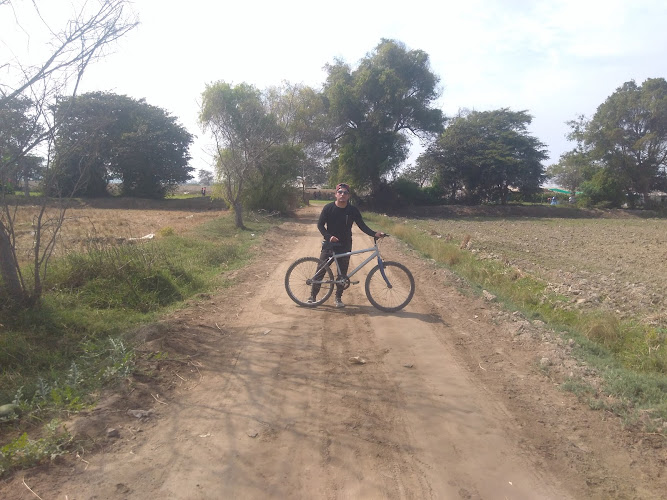
AA.HH San Miguel
About AA.HH San Miguel
Description
AA.HH San Miguel represents one of those places that doesn't necessarily scream "tourist destination" at first glance, and honestly, that's part of its charm. This is a human settlement area where everyday Peruvian life unfolds in its most authentic form. You won't find glossy brochures or tour buses lining up here, which frankly makes it all the more interesting for travelers who've grown tired of the same old manufactured experiences. When I think about places like AA.HH San Miguel, I'm reminded of that time I wandered off the beaten path in Ecuador and stumbled into a neighborhood that wasn't in any guidebook. The real magic happened in those unscripted moments – watching kids play soccer in dusty streets, chatting with vendors at corner shops, seeing how people actually live rather than how tourism boards want you to see them living. This settlement area offers travelers something increasingly rare in our Instagram-filtered world: genuine cultural immersion. The community here goes about their daily routines largely unaffected by tourism, which means visitors get a front-row seat to authentic Peruvian neighborhood culture. Sure, it might not have the polished infrastructure of resort areas, but that's precisely the point. You're stepping into real life, not a curated version of it. The area does face some of the challenges common to developing urban settlements – infrastructure can be inconsistent, and amenities vary considerably from one section to another. But if you're the kind of traveler who values authenticity over convenience (and I'm guessing you might be if you're reading this), then these characteristics become part of the adventure rather than obstacles to it.Key Features
AA.HH San Miguel presents several distinctive qualities that set it apart from conventional tourist destinations: • Authentic residential atmosphere where visitors can observe and participate in everyday Peruvian community life without the tourism industry's typical filters • Local markets and small businesses that cater primarily to residents rather than tourists, offering genuine pricing and interactions • Community-centered public spaces where neighbors gather, children play, and social life unfolds organically throughout the day • Opportunity to practice Spanish language skills in an environment where English isn't commonly spoken, providing immersive language practice • Street food vendors and small eateries serving traditional dishes prepared for local tastes rather than adapted for foreign palates • Residential architecture that reflects genuine settlement patterns and building styles rather than tourist-oriented construction • Limited tourist infrastructure, which paradoxically becomes an asset for travelers seeking unfiltered cultural experiences • Close-knit community dynamics that become visible through observation and respectful engagement • Affordable pricing across the board since the local economy operates independently of tourism • Access to local perspectives on Peruvian life, politics, and culture through conversations with residentsBest Time to Visit
Here's the thing about visiting residential areas like AA.HH San Miguel – the "best time" depends entirely on what you're hoping to experience. Unlike tourist attractions with seasonal variations in crowds or weather-dependent activities, this is a living community that maintains its rhythm year-round. That said, I'd suggest visiting during Peru's dry season, which runs roughly from May through September. The weather makes walking around neighborhoods significantly more pleasant, and you won't be navigating muddy unpaved sections that can appear during rainy months. But honestly, if you're already in the region during the wet season (October through April), don't let that stop you. Just bring appropriate footwear and maybe an umbrella. Weekday mornings offer particularly good visiting opportunities. That's when you'll see the community fully engaged in daily routines – people heading to work, markets bustling with shoppers, schools releasing energetic children during breaks. There's an energy to weekday mornings that weekends don't quite capture. Late afternoons, especially around 4 or 5 PM, provide another sweet spot for visitors. Work and school days are winding down, families emerge into public spaces, and the community's social character becomes most visible. And the evening light in Peru can be absolutely beautiful for photography, if that's your thing. I'd personally avoid major holidays unless you're specifically interested in observing how the community celebrates. During national holidays, many businesses close, and the neighborhood might feel unusually quiet as residents travel to visit family elsewhere.How to Get There
Getting to AA.HH San Miguel requires a bit more planning than reaching mainstream tourist sites, but that's manageable with some preparation. The area isn't typically served by tourist transportation services, so you'll need to use local options. Taxis represent probably the most straightforward approach, particularly if you're unfamiliar with local public transportation systems. Use established taxi apps if they operate in the region, or arrange transportation through your accommodation. Make sure your driver understands exactly where you're going – having the specific area name written down helps avoid confusion. Local buses and combis (shared minivans) serve the area, though routes can be confusing for first-time visitors. If you're comfortable with some uncertainty and adventure, this method offers the most authentic experience and costs just a fraction of taxi rates. Don't be shy about asking locals for help – most people are remarkably patient with confused travelers trying to navigate public transportation. I learned the hard way in Bolivia that assuming bus routes work like they do back home leads to interesting detours. Ask multiple people about which bus to take; you'll often get slightly different answers, but the consensus usually points you in the right direction. Walking from nearby areas might be possible depending on where you're staying, though verify safety and distances beforehand. Peru's urban geography can be deceptive – what looks close on a map might involve challenging terrain or areas better avoided by unfamiliar visitors. Once you arrive, navigation within AA.HH San Miguel works best with a combination of maps apps and asking locals for directions. Street signage might be inconsistent, and addresses don't always follow the logical systems you might be accustomed to. This is where a bit of Spanish really comes in handy.Tips for Visiting
Visiting residential communities like AA.HH San Miguel requires a different mindset than touring conventional attractions. You're entering someone's neighborhood, not a theme park, and your approach should reflect that respect. First and foremost, remember you're a guest in someone's community. The people here didn't choose to live in a tourist destination; they're simply living their lives. Be observant but not intrusive. Taking photographs requires extra sensitivity – always ask permission before photographing people, their homes, or their businesses. I've found that a smile and a simple request in Spanish goes miles toward building positive interactions. Dress modestly and practically. You're not attending a fashion show, and standing out as an obvious tourist can make both you and local residents uncomfortable. Wear sturdy, comfortable shoes since sidewalks might be uneven or partially unpaved. Leave expensive jewelry and equipment at your accommodation. Bring cash in small denominations. Many local businesses operate cash-only, and breaking large bills can be difficult for small vendors. Having exact change shows consideration and makes transactions smoother. Learn at least basic Spanish phrases before visiting. While you might find some English speakers, this isn't an area where catering to English-speaking tourists is common or expected. Even rudimentary Spanish demonstrates respect and significantly enriches your experience. And honestly, struggling through conversations in broken Spanish often leads to the most memorable interactions. Be mindful of your belongings without being paranoid. Use common sense – keep valuables secure, stay aware of your surroundings, and trust your instincts if a situation feels uncomfortable. Most residents are decent people going about their business, but like anywhere, opportunistic theft can occur, particularly when someone obviously unfamiliar with the area appears distracted. Time your visit appropriately. Arriving during early afternoon siesta hours means many businesses might be closed and streets quieter. Similarly, visiting after dark isn't advisable unless you're with local friends who know the area well. Engage with local businesses. Buying from street vendors, eating at neighborhood restaurants, and shopping at local stores directly supports the community and provides authentic interactions. The woman selling fruit on the corner or the family running a small restaurant are often happy to chat with respectful visitors. Don't expect tourism infrastructure. There probably aren't information centers, public restrooms, or English signage. Plan accordingly by using facilities before arriving, bringing water, and doing your research beforehand. Consider connecting with local organizations or community groups if you're interested in more structured engagement. Some areas have community centers or initiatives that welcome respectful visitors interested in learning about the neighborhood. Finally, reflect on what you observe rather than judge it. Developing urban settlements face real challenges, and poverty tourism isn't the goal here. You're visiting to understand and appreciate a different aspect of Peruvian life, not to gawk at how other people live. Approach the experience with humility, curiosity, and genuine interest in the community's strengths and character. If you do all this, AA.HH San Miguel can offer insights into Peruvian life that no resort or tour package could ever provide. It's not always comfortable, it's not always easy, but it's undeniably real – and isn't that what travel should ultimately be about?Key Features
- Community-driven green space used for social gatherings
- Informal recreational areas for children and local sports
- Murals and local street art reflecting neighborhood identity
- Stalls/vendors nearby offering local snacks and drinks
- Authentic everyday Peruvian urban life and people-watching
More Details
Updated January 19, 2026
Table of Contents
- Description
- Key Features
- Best Time to Visit
- How to Get There
- Tips for Visiting
- Key Highlights
- Location
- Places to Stay Near AA.HH San Miguel
- Find and Book a Tour
- Explore More Travel Guides
- AA.HH San Miguel (Chimbote, Perú): what to know before you go
- Where it is
- What to expect on the ground (and what not to assume)
- Safe, practical visiting window (weather-wise)
- Getting there & on-the-ground tips
- Inclusivity & accessibility notes (evidence-based, not assumed)
- Safety: current, general guidance you can act on
- Chimbote essentials at a glance
- How to responsibly include AA.HH San Miguel in a Chimbote day
- Data accuracy & what’s intentionally omitted
- Sources
- Nearby Places You Might Like
- Traveler Reviews for AA.HH San Miguel
- Share Your Experience
Description
AA.HH San Miguel represents one of those places that doesn’t necessarily scream “tourist destination” at first glance, and honestly, that’s part of its charm. This is a human settlement area where everyday Peruvian life unfolds in its most authentic form. You won’t find glossy brochures or tour buses lining up here, which frankly makes it all the more interesting for travelers who’ve grown tired of the same old manufactured experiences.
When I think about places like AA.HH San Miguel, I’m reminded of that time I wandered off the beaten path in Ecuador and stumbled into a neighborhood that wasn’t in any guidebook. The real magic happened in those unscripted moments – watching kids play soccer in dusty streets, chatting with vendors at corner shops, seeing how people actually live rather than how tourism boards want you to see them living.
This settlement area offers travelers something increasingly rare in our Instagram-filtered world: genuine cultural immersion. The community here goes about their daily routines largely unaffected by tourism, which means visitors get a front-row seat to authentic Peruvian neighborhood culture. Sure, it might not have the polished infrastructure of resort areas, but that’s precisely the point. You’re stepping into real life, not a curated version of it.
The area does face some of the challenges common to developing urban settlements – infrastructure can be inconsistent, and amenities vary considerably from one section to another. But if you’re the kind of traveler who values authenticity over convenience (and I’m guessing you might be if you’re reading this), then these characteristics become part of the adventure rather than obstacles to it.
Key Features
AA.HH San Miguel presents several distinctive qualities that set it apart from conventional tourist destinations:
• Authentic residential atmosphere where visitors can observe and participate in everyday Peruvian community life without the tourism industry’s typical filters
• Local markets and small businesses that cater primarily to residents rather than tourists, offering genuine pricing and interactions
• Community-centered public spaces where neighbors gather, children play, and social life unfolds organically throughout the day
• Opportunity to practice Spanish language skills in an environment where English isn’t commonly spoken, providing immersive language practice
• Street food vendors and small eateries serving traditional dishes prepared for local tastes rather than adapted for foreign palates
• Residential architecture that reflects genuine settlement patterns and building styles rather than tourist-oriented construction
• Limited tourist infrastructure, which paradoxically becomes an asset for travelers seeking unfiltered cultural experiences
• Close-knit community dynamics that become visible through observation and respectful engagement
• Affordable pricing across the board since the local economy operates independently of tourism
• Access to local perspectives on Peruvian life, politics, and culture through conversations with residents
Best Time to Visit
Here’s the thing about visiting residential areas like AA.HH San Miguel – the “best time” depends entirely on what you’re hoping to experience. Unlike tourist attractions with seasonal variations in crowds or weather-dependent activities, this is a living community that maintains its rhythm year-round.
That said, I’d suggest visiting during Peru’s dry season, which runs roughly from May through September. The weather makes walking around neighborhoods significantly more pleasant, and you won’t be navigating muddy unpaved sections that can appear during rainy months. But honestly, if you’re already in the region during the wet season (October through April), don’t let that stop you. Just bring appropriate footwear and maybe an umbrella.
Weekday mornings offer particularly good visiting opportunities. That’s when you’ll see the community fully engaged in daily routines – people heading to work, markets bustling with shoppers, schools releasing energetic children during breaks. There’s an energy to weekday mornings that weekends don’t quite capture.
Late afternoons, especially around 4 or 5 PM, provide another sweet spot for visitors. Work and school days are winding down, families emerge into public spaces, and the community’s social character becomes most visible. And the evening light in Peru can be absolutely beautiful for photography, if that’s your thing.
I’d personally avoid major holidays unless you’re specifically interested in observing how the community celebrates. During national holidays, many businesses close, and the neighborhood might feel unusually quiet as residents travel to visit family elsewhere.
How to Get There
Getting to AA.HH San Miguel requires a bit more planning than reaching mainstream tourist sites, but that’s manageable with some preparation. The area isn’t typically served by tourist transportation services, so you’ll need to use local options.
Taxis represent probably the most straightforward approach, particularly if you’re unfamiliar with local public transportation systems. Use established taxi apps if they operate in the region, or arrange transportation through your accommodation. Make sure your driver understands exactly where you’re going – having the specific area name written down helps avoid confusion.
Local buses and combis (shared minivans) serve the area, though routes can be confusing for first-time visitors. If you’re comfortable with some uncertainty and adventure, this method offers the most authentic experience and costs just a fraction of taxi rates. Don’t be shy about asking locals for help – most people are remarkably patient with confused travelers trying to navigate public transportation.
I learned the hard way in Bolivia that assuming bus routes work like they do back home leads to interesting detours. Ask multiple people about which bus to take; you’ll often get slightly different answers, but the consensus usually points you in the right direction.
Walking from nearby areas might be possible depending on where you’re staying, though verify safety and distances beforehand. Peru’s urban geography can be deceptive – what looks close on a map might involve challenging terrain or areas better avoided by unfamiliar visitors.
Once you arrive, navigation within AA.HH San Miguel works best with a combination of maps apps and asking locals for directions. Street signage might be inconsistent, and addresses don’t always follow the logical systems you might be accustomed to. This is where a bit of Spanish really comes in handy.
Tips for Visiting
Visiting residential communities like AA.HH San Miguel requires a different mindset than touring conventional attractions. You’re entering someone’s neighborhood, not a theme park, and your approach should reflect that respect.
First and foremost, remember you’re a guest in someone’s community. The people here didn’t choose to live in a tourist destination; they’re simply living their lives. Be observant but not intrusive. Taking photographs requires extra sensitivity – always ask permission before photographing people, their homes, or their businesses. I’ve found that a smile and a simple request in Spanish goes miles toward building positive interactions.
Dress modestly and practically. You’re not attending a fashion show, and standing out as an obvious tourist can make both you and local residents uncomfortable. Wear sturdy, comfortable shoes since sidewalks might be uneven or partially unpaved. Leave expensive jewelry and equipment at your accommodation.
Bring cash in small denominations. Many local businesses operate cash-only, and breaking large bills can be difficult for small vendors. Having exact change shows consideration and makes transactions smoother.
Learn at least basic Spanish phrases before visiting. While you might find some English speakers, this isn’t an area where catering to English-speaking tourists is common or expected. Even rudimentary Spanish demonstrates respect and significantly enriches your experience. And honestly, struggling through conversations in broken Spanish often leads to the most memorable interactions.
Be mindful of your belongings without being paranoid. Use common sense – keep valuables secure, stay aware of your surroundings, and trust your instincts if a situation feels uncomfortable. Most residents are decent people going about their business, but like anywhere, opportunistic theft can occur, particularly when someone obviously unfamiliar with the area appears distracted.
Time your visit appropriately. Arriving during early afternoon siesta hours means many businesses might be closed and streets quieter. Similarly, visiting after dark isn’t advisable unless you’re with local friends who know the area well.
Engage with local businesses. Buying from street vendors, eating at neighborhood restaurants, and shopping at local stores directly supports the community and provides authentic interactions. The woman selling fruit on the corner or the family running a small restaurant are often happy to chat with respectful visitors.
Don’t expect tourism infrastructure. There probably aren’t information centers, public restrooms, or English signage. Plan accordingly by using facilities before arriving, bringing water, and doing your research beforehand.
Consider connecting with local organizations or community groups if you’re interested in more structured engagement. Some areas have community centers or initiatives that welcome respectful visitors interested in learning about the neighborhood.
Finally, reflect on what you observe rather than judge it. Developing urban settlements face real challenges, and poverty tourism isn’t the goal here. You’re visiting to understand and appreciate a different aspect of Peruvian life, not to gawk at how other people live. Approach the experience with humility, curiosity, and genuine interest in the community’s strengths and character.
If you do all this, AA.HH San Miguel can offer insights into Peruvian life that no resort or tour package could ever provide. It’s not always comfortable, it’s not always easy, but it’s undeniably real – and isn’t that what travel should ultimately be about?
Key Highlights
- Community-driven green space used for social gatherings
- Informal recreational areas for children and local sports
- Murals and local street art reflecting neighborhood identity
- Stalls/vendors nearby offering local snacks and drinks
- Authentic everyday Peruvian urban life and people-watching
Location
Places to Stay Near AA.HH San Miguel
Find and Book a Tour
Explore More Travel Guides
No reviews found! Be the first to review!
AA.HH San Miguel (Chimbote, Perú): what to know before you go
AA.HH San Miguel appears on navigation maps as a small neighborhood area (“Asentamiento Humano San Miguel”) within the coastal city of Chimbote, in the Ancash region of north-western Peru. Online map directories list it in Chimbote, Áncash, without an official municipal park website or published facilities list. oai_citation:0‡Waze
Quick context: In Peru, the abbreviation “AA.HH.” stands for Asentamiento Humano (“human settlement”), a formal term used by planners and researchers to describe established residential settlements that often grew informally and were later recognized by authorities. oai_citation:1‡Frontera Norte
Where it is
- City/Region: Chimbote, Province of Santa, Ancash, Peru. Chimbote is the largest city in Ancash and one of the most populous cities in Peru, located near sea level on the Pacific coast. oai_citation:2‡Wikipedia
- General locator used by drivers: “AA.HH San Miguel, Chimbote, Áncash” as shown in live-map navigation results. (If you’re using app-based directions, search exactly that string.) oai_citation:3‡Waze
- Postal context: Chimbote addresses commonly reference postal codes in the 0280x range; 02801 is one of the codes used within the city. This helps when filling delivery or ride-hail address details that ask for ZIP/postcode. oai_citation:4‡Cybo
Why the labeling matters: Many Peruvian parks and plazas inside AA.HH. neighborhoods are not separately signed at street level. Navigation apps often anchor to the neighborhood name rather than a distinct park authority entry, which is why you’ll typically see “AA.HH San Miguel” rather than a formal “Parque …” listing in public directories. oai_citation:5‡Waze
What to expect on the ground (and what not to assume)
There is no official municipal page publishing opening hours, on-site amenities, or accessibility features for a “Parque AA.HH San Miguel” in Chimbote. Without primary documentation, it’s best not to assume the presence of restrooms, staffed security, lighting, or specific play/sports equipment.
That said, Chimbote’s municipalities have—separately from San Miguel—publicized recent investments in small neighborhood parks and “parques biosaludables” (outdoor fitness/play areas) elsewhere in the metro area. This indicates a broader trend of incremental public-space upgrades across residential zones, though each site differs. Do not generalize those features to San Miguel without seeing them in person. oai_citation:6‡Nuevo Chimbote
Bottom line: Treat AA.HH San Miguel as a residential micro-area that may include a modest communal green or recreation space, rather than a destination park with formal tourist infrastructure.
Safe, practical visiting window (weather-wise)
Chimbote sits in Peru’s desert coast belt with a hot-desert (BWh) climate: mild temperatures most of the year, low rainfall, and frequent overcast along the coast. Typical annual temperatures hover roughly 15–24 °C (59–75 °F), with little seasonal swing and very low annual precipitation by global standards. Multiple climate datasets agree on the dry, equable profile. oai_citation:7‡Climate Top
- Comfortable months: Independent weather syntheses suggest May–August can feel particularly pleasant for outdoor wandering around coastal cities like Chimbote (cooler highs and very low rainfall). If you prefer slightly warmer conditions, September–November still stays moderate by desert-coast standards. oai_citation:8‡Weather Atlas
Sun & UV: Despite cloud cover at times, coastal Peru’s UV index can be high when skies clear. Bring sun protection year-round.
Getting there & on-the-ground tips
- Rides/Navigation: Use a turn-by-turn app and enter “AA.HH San Miguel, Chimbote”. Confirm with your driver you’re heading to Chimbote (Ancash) to avoid confusion with “Nuevo Chimbote,” a separate district just south. oai_citation:9‡Waze
- Address forms: If a booking form requires a postal code and doesn’t accept the neighborhood name, 02801 is a documented Chimbote code used in city areas. (Postal code assignment can vary block by block; this code is widely referenced for central Chimbote.) oai_citation:10‡Cybo
- Language note: On street signage or in casual conversation you may hear “asentamiento” or simply the settlement’s name (San Miguel). The AA.HH abbreviation is standard in planning docs and navigation listings. oai_citation:11‡Frontera Norte
Inclusivity & accessibility notes (evidence-based, not assumed)
- Expect variability across AA.HH public spaces. Because these are local residential areas rather than signature tourist parks, path surfacing, curb cuts, lighting, and seating can vary from block to block. Where municipal upgrades have been done in other Chimbote neighborhoods, authorities have highlighted fitness zones, synthetic-grass play areas, and more trees—but these features are site-specific and shouldn’t be presumed present at San Miguel without verification. oai_citation:12‡Nuevo Chimbote
- Plan for self-sufficiency: Bring drinking water and any accessibility aides you rely on; do not rely on on-site services.
Safety: current, general guidance you can act on
- Country-level advisory: As of May 16, 2025, the U.S. Department of State rates Peru at Level 2 (“Exercise Increased Caution”) due to crime, civil unrest, and kidnapping risk in some areas. Review the full advisory before travel. oai_citation:13‡Travel.gov
- Practical behavior in cities: Reputable, regularly updated safety briefings for Peru emphasize basic urban precautions—minimize display of valuables, keep bags zipped and in front of you, and be extra alert at transport hubs and near bus doors where opportunistic theft occurs. These are prudent habits in any large Peruvian city, including Chimbote. oai_citation:14‡World Nomads
- Local timing: In residential micro-areas, daylight visits are generally more practical for first-time visitors. If you’re unfamiliar with the layout, use a trusted driver or go with a local contact.
Important: The guidance above is general to Peru and coastal cities; it is not a claim about incident rates in AA.HH San Miguel specifically, as neighborhood-level crime statistics are not published publicly for this site.
Chimbote essentials at a glance
- What Chimbote is known for (context): It is a major coastal city—the largest in the Ancash region—and a hub for Pacific-coast industries. That scale explains why navigation apps list many AA.HH neighborhoods in and around the core city. oai_citation:15‡Wikipedia
- Time zone: Peru operates on UTC-5 year-round (no daylight saving). Chimbote follows the national time standard. oai_citation:16‡Wikipedia
How to responsibly include AA.HH San Miguel in a Chimbote day
Because AA.HH San Miguel is a lived-in residential zone, the most respectful way to include it in your day is as a brief walk-through stop while you’re already moving between Chimbote sights, rather than as a primary attraction. Keep voices low, avoid filming identifiable residents without consent, and pack out any trash.
If you’re building a wider Chimbote itinerary, align your outdoor time with the cooler hours (morning and late afternoon) noted in climate summaries for comfort. oai_citation:17‡Weather Spark
Data accuracy & what’s intentionally omitted
- There is no official municipal source publishing a dedicated “Parque AA.HH San Miguel (Chimbote)” page with hours or a feature list; therefore, this guide intentionally avoids claiming amenities (playgrounds, courts, lighting, restrooms) or posting any specific schedule.
- All location references rely on public navigation listings and city-level facts (population status, climate classification, postal code ranges) that have credible public sources. Where data is broad (e.g., climate ranges, national advisories), we cite the source and timeframe.
Sources
- Navigation listing for “AA.HH San Miguel, Chimbote, Áncash”, used to confirm how the site appears in common map apps. oai_citation:18‡Waze
- City background: Chimbote (largest in Ancash; coastal location; UTC-5). oai_citation:19‡Wikipedia
- Meaning of AA.HH = Asentamiento Humano in Peru (planning/academic usage). oai_citation:20‡Frontera Norte
- Climate references for Chimbote (hot-desert BWh; mild temperatures; low rainfall; comfortable months). oai_citation:21‡Climate Top
- City postal-code context (02801 among documented Chimbote codes). oai_citation:22‡Cybo
- Examples of neighborhood-park upgrades elsewhere in the metro area (to highlight that features vary by site). oai_citation:23‡Nuevo Chimbote
- Peru travel advisory (current as of May 16, 2025): Level 2. oai_citation:24‡Travel.gov
If a municipal or community association page for San Miguel publishes concrete park features or hours in the future, update this entry to reflect those verified details.
Traveler Reviews for AA.HH San Miguel
There are no reviews yet. Be the first one to write one.
Have you visited AA.HH San Miguel? Help other travelers by sharing your review.
Nearby Attractions
You Might Also Like
Juventud Park
MUSEO DEL EX FERROCARRIL DE CHIMBOTE
Chancay&Meiggs
Find Accommodations Nearby
Recommended Tours & Activities
Visitor Reviews
There are no reviews yet. Be the first one to write one.
Share Your Experience
Have you visited AA.HH San Miguel? Help other travelers by leaving a review.