

Arch of Hadrian
About Arch of Hadrian
Description
Standing proudly in Athens for nearly two millennia, the Arch of Hadrian represents one of those monuments that somehow manages to sneak up on you with its significance. I remember the first time I stumbled upon it—literally stumbled, because I was too busy looking at my map—and thinking it looked almost too perfect to be ancient. But this 11-meter high gateway has been marking the boundary between ancient Athens and the Roman city since 129 CE, and it's still doing its job of making visitors stop in their tracks. The emperor Hadrian had quite the ego, as Roman emperors tended to, and the Athenians knew exactly how to flatter him. They built this triple-bayed arch to honor his contributions to their city, particularly his completion of the Temple of Olympian Zeus nearby. What makes this monument particularly fascinating is that it wasn't just a thank-you card in stone—it served as an actual boundary marker between two distinct parts of the city. On one side, you had Theseus's ancient Athens, and on the other, Hadrian's shiny new Roman district. The arch stands as a testament to that peculiar moment in history when Greek culture and Roman power were doing this complicated dance together. And honestly? They did a pretty good job with the choreography. The structure blends classical Greek architectural elements with Roman engineering prowess, creating something that feels both familiar and distinctly imperial. Today, this archaeological site sits in a somewhat unusual position—right there on a modern Athens street, with traffic buzzing past and locals treating it like just another part of their daily commute. But that's part of its charm, really. It's not tucked away in some protected archaeological park; it's just there, being magnificent amid the chaos of contemporary urban life.Key Features
The Arch of Hadrian offers visitors several compelling reasons to add it to their Athens itinerary:- Architectural Marvel: The 11-meter structure showcases the triple-bayed design that was characteristic of Roman triumphal architecture, though this particular arch served ceremonial rather than military purposes
- Historical Inscriptions: Two ancient inscriptions grace the arch—one declaring "This is Athens, the ancient city of Theseus" on the northwest side, while the southeast proclaims "This is the city of Hadrian and not of Theseus," which is basically the ancient equivalent of claiming credit in the most obvious way possible
- Pentelic Marble Construction: Built from the same stunning marble used for the Parthenon, the monument has weathered remarkably well considering it's been standing through centuries of wars, occupations, and urban development
- Strategic Location: Positioned perfectly between the Temple of Olympian Zeus and the Acropolis, making it an ideal spot for understanding the layout of ancient Athens and the Roman additions to the cityscape
- Free Access: Unlike many historical sites that require entrance fees, visitors can view and photograph the arch at no cost, any time of day or night
- Accessibility Features: The site provides wheelchair accessible entrance and parking facilities, ensuring that visitors of all mobility levels can experience this ancient monument
- Photographic Opportunities: The arch frames the Acropolis beautifully in one direction and the Temple of Olympian Zeus in the other, creating some truly Instagram-worthy shots if that's your thing
- Illumination at Night: After dark, the monument is beautifully lit, offering a completely different perspective and atmosphere compared to daytime visits
Best Time to Visit
Timing your visit to the Arch of Hadrian requires a bit of strategy, though honestly it's one of those sites where there's really no wrong time to show up. Since it's outdoors and always accessible, you've got flexibility that you don't get with museums and gated archaeological sites. Early morning visits, particularly around sunrise, offer something special. The light hits the Pentelic marble in this golden way that makes you understand why ancient builders were so obsessed with this particular stone. Plus, you'll have the place mostly to yourself, which is increasingly rare in Athens. I've found that the hour between 7 and 8 AM gives you that sweet spot before tour groups start their rounds. Late afternoon, specifically that period the photographers call "golden hour," provides another excellent window. The sun casts long shadows and bathes the monument in warm tones that really bring out the texture of the weathered marble. And if you stick around into the evening, you'll see the transition as the artificial lighting takes over—it's quite dramatic. Season-wise, spring (April through May) and autumn (September through October) are objectively the best periods for visiting Athens, and that holds true for the arch as well. The weather's pleasant without being scorching, and while you'll still encounter crowds, they're more manageable than the summer madness. Summer visits aren't terrible, but standing next to ancient marble in 38-degree heat while trying to appreciate Roman architecture tests your dedication to historical tourism. Winter months get overlooked by many travelers, which is a shame. Yes, it can be rainy and occasionally chilly by Mediterranean standards, but the reduced tourist numbers mean you can actually contemplate the monument without someone's selfie stick photobombing your contemplation. December through February also offers clearer air quality, making for crisper photographs and better views toward the Acropolis. Weekday visits generally provide a calmer experience than weekends, when local families often combine a visit to the arch with time at the nearby Zappeion gardens. Not that the crowds are ever overwhelming here—this isn't the Acropolis we're talking about—but if you prefer solitude with your ruins, Tuesday through Thursday mornings are your best bet.How to Get There
Getting to the Arch of Hadrian ranks among the easier navigational challenges you'll face in Athens, which is saying something because this city can be confusing even for people who've lived here for years. The Athens Metro provides the most straightforward approach. Take the red line (M2) to Akropoli station, and you'll emerge just a short walk from the monument. The walk itself is pleasant, taking you through areas that give you a feel for both ancient and modern Athens. Alternatively, the blue line (M3) stops at Syntagma station, which puts you about 10 minutes away on foot. Bus routes 040, 209, 230, and 550 all stop near the arch, though honestly the metro is more reliable and less dependent on Athens traffic, which can be... let's call it "spirited." If you do take the bus, you want the "Makriyianni" stop. Walking from central Athens locations is entirely feasible and actually recommended if the weather cooperates. From Syntagma Square, it's roughly a 15-minute stroll through the Plaka district. From the Acropolis Museum, you're looking at maybe 5 minutes. The walk from Monastiraki takes about 20 minutes but passes through interesting neighborhoods that give context to what you're about to see. Taxis and ride-sharing services work too, obviously, but seems almost wasteful for such short distances unless mobility issues are a factor. If you do use these services, tell the driver "Hadrian's Arch" or "Pyli tou Adrianou" in Greek, and they'll know the spot. For those renting cars—and I question this decision in Athens but to each their own—parking near the monument exists but isn't abundant. There's a wheelchair accessible parking lot as mentioned earlier, and street parking in the surrounding area, though finding a spot requires patience and possibly divine intervention.Tips for Visiting
Making the most of your time at the Arch of Hadrian doesn't require elaborate planning, but a few insider tips can enhance the experience considerably. First off, combine your visit with the nearby Temple of Olympian Zeus. These two sites are basically neighbors, and they're historically connected anyway since Hadrian completed the temple construction. The arch literally points you toward it. You can purchase a combined ticket for multiple archaeological sites in Athens, which saves money if you're planning to hit several locations. Bring water, especially during warmer months. There's limited shade around the immediate area, and while the visit itself won't take hours, you'll want to explore the surrounding zone and maybe sit in the nearby National Gardens for a bit. The gardens, incidentally, provide a lovely respite and are just a short walk away. Photography enthusiasts should note that the arch photographs beautifully from multiple angles, but the classic shot frames the Acropolis through the archway. For this, position yourself on the Temple of Olympian Zeus side and shoot northwest. Early morning or late afternoon light works best, as harsh midday sun tends to blow out the highlights on that pale marble. The monument looks different at night than during the day—dramatically different. If your schedule allows, consider two quick visits at different times. The nighttime illumination emphasizes different architectural details and creates an almost theatrical atmosphere. Despite being family-friendly and good for kids according to the site information, keeping children engaged here requires some creativity. The arch itself doesn't have the obvious wow-factor of, say, the Parthenon. Framing it as a giant ancient doorway between two cities sometimes helps spark young imaginations. And the open space around it lets energetic kids burn off energy without disturbing other visitors. Don't rush. Yeah, it's "just an arch" in some ways, but if you slow down and really look at it, read the inscriptions (translations are posted), and think about the fact that this thing was already ancient when your great-great-great-grandparents were born, it hits different. Take the time to walk around it completely, examining how the marble has weathered and noticing the construction techniques. The surrounding neighborhood deserves exploration too. This area transitions between tourist zones and residential districts, with local cafes and small shops that give you a break from the more commercialized parts of Athens. Grab a coffee at one of the nearby spots and watch Athenians go about their daily lives with this ancient monument as their backdrop. Finally, manage your expectations appropriately. Some visitors seem disappointed because they've built this up into something more elaborate than it is. It's an arch. A really old, historically significant, beautifully constructed arch, but still—an arch. If you approach it as one piece in the larger puzzle of understanding Athens's evolution from Greek city-state to Roman provincial capital, it becomes much more meaningful than if you expect some standalone spectacular attraction.Key Features
- Triple-arched triumphal gateway commemorating Hadrian’s visit (129–130 AD)
- Imposing original scale (approx. 21–22 m high, ~37 m wide) and central high bay
- Composite capitals and decorative stonework with possible Nabataean influences
- Partially reconstructed but retains authentic ancient fabric and archaeological context
- Serves as dramatic ceremonial entrance to the broader Jerash archaeological park
More Details
Updated March 30, 2026
Table of Contents
Description
Standing proudly in Athens for nearly two millennia, the Arch of Hadrian represents one of those monuments that somehow manages to sneak up on you with its significance. I remember the first time I stumbled upon it—literally stumbled, because I was too busy looking at my map—and thinking it looked almost too perfect to be ancient. But this 11-meter high gateway has been marking the boundary between ancient Athens and the Roman city since 129 CE, and it’s still doing its job of making visitors stop in their tracks.
The emperor Hadrian had quite the ego, as Roman emperors tended to, and the Athenians knew exactly how to flatter him. They built this triple-bayed arch to honor his contributions to their city, particularly his completion of the Temple of Olympian Zeus nearby. What makes this monument particularly fascinating is that it wasn’t just a thank-you card in stone—it served as an actual boundary marker between two distinct parts of the city. On one side, you had Theseus’s ancient Athens, and on the other, Hadrian’s shiny new Roman district.
The arch stands as a testament to that peculiar moment in history when Greek culture and Roman power were doing this complicated dance together. And honestly? They did a pretty good job with the choreography. The structure blends classical Greek architectural elements with Roman engineering prowess, creating something that feels both familiar and distinctly imperial.
Today, this archaeological site sits in a somewhat unusual position—right there on a modern Athens street, with traffic buzzing past and locals treating it like just another part of their daily commute. But that’s part of its charm, really. It’s not tucked away in some protected archaeological park; it’s just there, being magnificent amid the chaos of contemporary urban life.
Key Features
The Arch of Hadrian offers visitors several compelling reasons to add it to their Athens itinerary:
- Architectural Marvel: The 11-meter structure showcases the triple-bayed design that was characteristic of Roman triumphal architecture, though this particular arch served ceremonial rather than military purposes
- Historical Inscriptions: Two ancient inscriptions grace the arch—one declaring “This is Athens, the ancient city of Theseus” on the northwest side, while the southeast proclaims “This is the city of Hadrian and not of Theseus,” which is basically the ancient equivalent of claiming credit in the most obvious way possible
- Pentelic Marble Construction: Built from the same stunning marble used for the Parthenon, the monument has weathered remarkably well considering it’s been standing through centuries of wars, occupations, and urban development
- Strategic Location: Positioned perfectly between the Temple of Olympian Zeus and the Acropolis, making it an ideal spot for understanding the layout of ancient Athens and the Roman additions to the cityscape
- Free Access: Unlike many historical sites that require entrance fees, visitors can view and photograph the arch at no cost, any time of day or night
- Accessibility Features: The site provides wheelchair accessible entrance and parking facilities, ensuring that visitors of all mobility levels can experience this ancient monument
- Photographic Opportunities: The arch frames the Acropolis beautifully in one direction and the Temple of Olympian Zeus in the other, creating some truly Instagram-worthy shots if that’s your thing
- Illumination at Night: After dark, the monument is beautifully lit, offering a completely different perspective and atmosphere compared to daytime visits
Best Time to Visit
Timing your visit to the Arch of Hadrian requires a bit of strategy, though honestly it’s one of those sites where there’s really no wrong time to show up. Since it’s outdoors and always accessible, you’ve got flexibility that you don’t get with museums and gated archaeological sites.
Early morning visits, particularly around sunrise, offer something special. The light hits the Pentelic marble in this golden way that makes you understand why ancient builders were so obsessed with this particular stone. Plus, you’ll have the place mostly to yourself, which is increasingly rare in Athens. I’ve found that the hour between 7 and 8 AM gives you that sweet spot before tour groups start their rounds.
Late afternoon, specifically that period the photographers call “golden hour,” provides another excellent window. The sun casts long shadows and bathes the monument in warm tones that really bring out the texture of the weathered marble. And if you stick around into the evening, you’ll see the transition as the artificial lighting takes over—it’s quite dramatic.
Season-wise, spring (April through May) and autumn (September through October) are objectively the best periods for visiting Athens, and that holds true for the arch as well. The weather’s pleasant without being scorching, and while you’ll still encounter crowds, they’re more manageable than the summer madness. Summer visits aren’t terrible, but standing next to ancient marble in 38-degree heat while trying to appreciate Roman architecture tests your dedication to historical tourism.
Winter months get overlooked by many travelers, which is a shame. Yes, it can be rainy and occasionally chilly by Mediterranean standards, but the reduced tourist numbers mean you can actually contemplate the monument without someone’s selfie stick photobombing your contemplation. December through February also offers clearer air quality, making for crisper photographs and better views toward the Acropolis.
Weekday visits generally provide a calmer experience than weekends, when local families often combine a visit to the arch with time at the nearby Zappeion gardens. Not that the crowds are ever overwhelming here—this isn’t the Acropolis we’re talking about—but if you prefer solitude with your ruins, Tuesday through Thursday mornings are your best bet.
How to Get There
Getting to the Arch of Hadrian ranks among the easier navigational challenges you’ll face in Athens, which is saying something because this city can be confusing even for people who’ve lived here for years.
The Athens Metro provides the most straightforward approach. Take the red line (M2) to Akropoli station, and you’ll emerge just a short walk from the monument. The walk itself is pleasant, taking you through areas that give you a feel for both ancient and modern Athens. Alternatively, the blue line (M3) stops at Syntagma station, which puts you about 10 minutes away on foot.
Bus routes 040, 209, 230, and 550 all stop near the arch, though honestly the metro is more reliable and less dependent on Athens traffic, which can be… let’s call it “spirited.” If you do take the bus, you want the “Makriyianni” stop.
Walking from central Athens locations is entirely feasible and actually recommended if the weather cooperates. From Syntagma Square, it’s roughly a 15-minute stroll through the Plaka district. From the Acropolis Museum, you’re looking at maybe 5 minutes. The walk from Monastiraki takes about 20 minutes but passes through interesting neighborhoods that give context to what you’re about to see.
Taxis and ride-sharing services work too, obviously, but seems almost wasteful for such short distances unless mobility issues are a factor. If you do use these services, tell the driver “Hadrian’s Arch” or “Pyli tou Adrianou” in Greek, and they’ll know the spot.
For those renting cars—and I question this decision in Athens but to each their own—parking near the monument exists but isn’t abundant. There’s a wheelchair accessible parking lot as mentioned earlier, and street parking in the surrounding area, though finding a spot requires patience and possibly divine intervention.
Tips for Visiting
Making the most of your time at the Arch of Hadrian doesn’t require elaborate planning, but a few insider tips can enhance the experience considerably.
First off, combine your visit with the nearby Temple of Olympian Zeus. These two sites are basically neighbors, and they’re historically connected anyway since Hadrian completed the temple construction. The arch literally points you toward it. You can purchase a combined ticket for multiple archaeological sites in Athens, which saves money if you’re planning to hit several locations.
Bring water, especially during warmer months. There’s limited shade around the immediate area, and while the visit itself won’t take hours, you’ll want to explore the surrounding zone and maybe sit in the nearby National Gardens for a bit. The gardens, incidentally, provide a lovely respite and are just a short walk away.
Photography enthusiasts should note that the arch photographs beautifully from multiple angles, but the classic shot frames the Acropolis through the archway. For this, position yourself on the Temple of Olympian Zeus side and shoot northwest. Early morning or late afternoon light works best, as harsh midday sun tends to blow out the highlights on that pale marble.
The monument looks different at night than during the day—dramatically different. If your schedule allows, consider two quick visits at different times. The nighttime illumination emphasizes different architectural details and creates an almost theatrical atmosphere.
Despite being family-friendly and good for kids according to the site information, keeping children engaged here requires some creativity. The arch itself doesn’t have the obvious wow-factor of, say, the Parthenon. Framing it as a giant ancient doorway between two cities sometimes helps spark young imaginations. And the open space around it lets energetic kids burn off energy without disturbing other visitors.
Don’t rush. Yeah, it’s “just an arch” in some ways, but if you slow down and really look at it, read the inscriptions (translations are posted), and think about the fact that this thing was already ancient when your great-great-great-grandparents were born, it hits different. Take the time to walk around it completely, examining how the marble has weathered and noticing the construction techniques.
The surrounding neighborhood deserves exploration too. This area transitions between tourist zones and residential districts, with local cafes and small shops that give you a break from the more commercialized parts of Athens. Grab a coffee at one of the nearby spots and watch Athenians go about their daily lives with this ancient monument as their backdrop.
Finally, manage your expectations appropriately. Some visitors seem disappointed because they’ve built this up into something more elaborate than it is. It’s an arch. A really old, historically significant, beautifully constructed arch, but still—an arch. If you approach it as one piece in the larger puzzle of understanding Athens’s evolution from Greek city-state to Roman provincial capital, it becomes much more meaningful than if you expect some standalone spectacular attraction.
Key Highlights
- Triple-arched triumphal gateway commemorating Hadrian’s visit (129–130 AD)
- Imposing original scale (approx. 21–22 m high, ~37 m wide) and central high bay
- Composite capitals and decorative stonework with possible Nabataean influences
- Partially reconstructed but retains authentic ancient fabric and archaeological context
- Serves as dramatic ceremonial entrance to the broader Jerash archaeological park
Location
Places to Stay Near Arch of Hadrian
Find and Book a Tour
Explore More Travel Guides
No reviews found! Be the first to review!
Arch of Hadrian is a prominent attractions located in Jerash.
Visit us at: 7VCR+WH2, Wasfi At-Tal, Jerash, Jordanie.
Traveler Reviews for Arch of Hadrian
There are no reviews yet. Be the first one to write one.
Have you visited Arch of Hadrian? Help other travelers by sharing your review.
Nearby Attractions
You Might Also Like

Al Ma
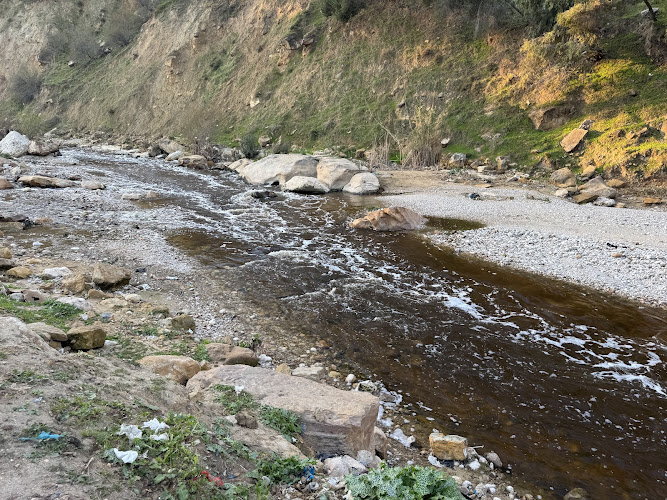
Zarqa River View point

Temple of Zeus
Find Accommodations Nearby
Recommended Tours & Activities
Visitor Reviews
There are no reviews yet. Be the first one to write one.
Share Your Experience
Have you visited Arch of Hadrian? Help other travelers by leaving a review.