
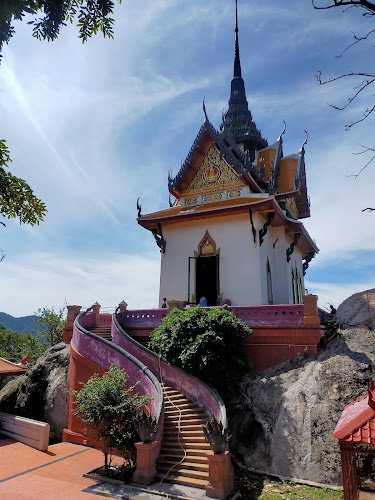
Wat Phra Phutthachai
About Wat Phra Phutthachai
Description
If there’s ever been a temple that felt like a well-kept secret, Wat Phra Phutthachai might just be it. Arriving at this clifftop Buddhist sanctuary, you instantly snag two rare treats: golden statues glinting in the Thai sun and an absolutely knockout view that’ll make you wonder why more guidebooks don’t shout about this place. Now, I’ve seen my fair share of temples, but I’ll admit, Wat Phra Phutthachai leans hard into a certain unpolished charm—there’s an authenticity in the gentle bustle of prayer and the smoky aroma from burning incense sticks that lingers around its stone steps.
What gives this place its real magnetism, apart from its dazzling Buddha statues, is its rather dramatic setting on a rugged cliffside. I’m telling you, even if you showed up on a day when the sky threatens a monsoon and your camera fogs up, the backdrop alone still manages to lift your spirits. There’s a roughness and a calm, both. You can feel it in the cool, shaded corners as cicadas hum. The site gets some love from tourists but has never felt overrun in my experiences—think more of a gentle trickle of families, local devotees, and travelers with curiosity about Buddhist footprints.
And speaking of those footprints—the star of the show here is the revered Buddha Footprint etched into stone. People cross the province for this. There’s something quietly profound about seeing saffron-robed monks pay their respects at a carving that feels, honestly, older than time itself. But perhaps, unexpectedly, what makes this temple linger in your memory isn’t its famous footprint or statues: it’s the way the natural world and Buddhist devotion blend so seamlessly on that breezy cliff. More than one visitor (myself included!) has found themselves lingering, soaking it all up—leaning on a railing just to gaze out at the forest rolling into the horizon.
Don’t expect over-the-top grandeur here. But if you scratch beneath the (sometimes weathered) surface, you’ll find an incredible spirit, friendly locals, and a little bit of that unmistakable Thai magic that causes even seasoned travelers to stop, smile, and snap a hundred photos.
Key Features
- Sacred Buddha Footprint – The site’s beating heart, set into the rock, revered by believers and admired by curious explorers alike.
- Cliffside Panorama – The temple perches on a craggy outcrop, providing expansive, soul-quenching views of green Saraburi countryside—you’ll want your wide angle lens for this.
- Golden Buddha Statues – The statues themselves, modest in scale, shimmer in the sun, creating the perfect mix of tranquility and photo ops.
- Ornate Architecture – Expect intricate spires and vibrantly decorated eaves; not as massive as Bangkok’s temples, but full of character.
- Wheelchair Access – There’s wheelchair accessibility at both the entrance and parking lot—frankly, it’s not something every hilltop temple can claim.
- Serene Atmosphere – Since it’s never mobbed, you’ll usually hear more birdsong than tourist chatter.
- Devotional Sites – Scattered shrines, spirit houses, and well-worn prayer pads give you plenty of little nooks to explore and reflect.
- Wildlife Glimpses – Not everyone notices, but keep an eye out and you might spot butterflies, lizards, and the odd monkey making an appearance.
- Local Vendors – On the approach, small stands sell cold drinks or merit-making flowers; nothing fancy, but they always seem to appear when you need them most.
Best Time to Visit
So, when should you show up to catch Wat Phra Phutthachai at its finest? Honestly, you can visit year-round, but let me save you some sweat—and a lot of wiping your brow. The sweet spot is between November and February. That’s when Thailand’s cooler season drifts in, painting the sky a sharp blue and keeping the air just right for wandering around. If you’re like me and you melt faster than an ice cream cone at noon, steer clear of March and April unless you crave the full Thai sauna experience.
Mornings here have a special magic. If you time your trip for sunrise, the temples practically glow in the early light, and the valley below wakes up misty and dreamlike. Plus, you beat the mid-day heat and most of the foot traffic—nothing quite like having a moment with the Buddha prints almost to yourself. Late afternoons are another good call; I’ve whiled away golden hour watching the sun dip behind the cliffs, wishing every day could end that way.
One thing I learned the hard way: weekends and holidays do pull more local devotees and small tour groups. Don’t get me wrong—it’s never packed like, say, Wat Pho on a weekend—but it does shift from a tranquil retreat to more of a gentle buzz. Whether you lean toward solitude or love the energy of others sharing the space, it’s worth factoring this into your plans.
How to Get There
Alright, let’s talk logistics—because getting to Wat Phra Phutthachai is part of the adventure (and hey, every trip needs a bit of a story, right?). Most travelers will be starting from Bangkok; you’re looking at roughly a 120-kilometer drive, an easy whip up Route 1, then a left toward Saraburi. In decent traffic, you’re there in under two hours—unless you, like me, get sidetracked by an irresistible roadside fruit stand.
If you’re going DIY with a rental car, the roads are pretty straightforward, and you’ll have the freedom to detour—there are some surprisingly photogenic sunflowers in Saraburi certain times of year. Parking is on-site and, bonus, there’s a wheelchair friendly area too.
No car? No issue. The bus from Bangkok’s Mochit Terminal to Saraburi makes for a pleasant journey. From Saraburi you can hop a local songthaew or grab a taxi for the last stretch. Some local guesthouses will even arrange a tuk-tuk or private transfer if you ask (pro tip: negotiate before you get in). And if you fancy a bit of countryside cycling, it’s doable—just pack extra water, the hills might sneak up on you!
Long story short—Wat Phra Phutthachai is accessible without headaches, but a little planning helps, especially if you’re aiming for one of those postcard-perfect early morning arrivals.
Tips for Visiting
Let’s wrap up with a few nuggets that I wish someone had handed me before my first visit. For starters, dress respectfully: shoulders and knees covered, and shoes off before you enter main structures—it’s a sign of respect, and honestly, temple floors can be surprisingly cool and soothing underfoot.
Bring some cash—a small donation at the shrines or for parking goes a long way, and vendors rarely take cards out here. If you’re like me and can’t stand being caught with a dead phone, charge up and carry a power bank—the photo ops just don’t quit, especially with that cliffside vista.
If you don’t speak Thai, don’t fret. Smiles and gestures work wonders (I’ve had whole “conversations” about the weather with toothless grandpas manning snack stalls). But if you can learn “sa-wat-dee” (hello) and “korp khun” (thank you), locals will light up.
And watch your step on the cliff paths—they can be uneven, particularly in the rainy season. If you like to meditate or just need a breather from your travel pals, there are plenty of shaded corners and benches where you can sit and listen to the wind, the birds, and, if you’re lucky, the temple’s gentle bells.
Final tip—don’t rush. Like many spiritual places, Wat Phra Phutthachai rewards the unhurried. Linger. Let the sunlight and the soundscape of prayers drift over you. You might just stumble on a deeper connection than you planned, and that’s the kind of experience you can’t squeeze into an itinerary.
Key Features
- Key Features
- Best Time to Visit
- How to Get There
- Tips for Visiting
Tours & Activities
GetYourGuide provides this tour inventory. We may earn a commission if you book through it; verify current availability, prices, and terms with the provider.
Visitor Reviews
There are no reviews yet. Be the first one to write one.
Share Your Experience
Have you visited Wat Phra Phutthachai? Help other travelers by leaving a review.