
Dali Zhangjia Garden
About Dali Zhangjia Garden
Key Features
More Details
Updated April 16, 2024
## Dali Zhangjia Garden (张家花园): A Bai Courtyard Estate You Can Actually “Read” Like Architecture
If you’re building a Dali itinerary that goes beyond viewpoints and shopping streets, Dali Zhangjia Garden (also called Zhang Family Garden / 张家花园) is worth carving out time for. Based on Chinese tourism listings, it’s a large, well-preserved Bai (白族) courtyard-residence complex in Dali, described as a rural manor-style residential compound with late–Qing dynasty origins, located near Guanyintang (观音塘).
This isn’t just “a pretty garden.” It’s a place where layout, courtyards, carved woodwork, and ornamental planting come together in a way that reflects Bai residential design and local status-signaling—how families expressed prosperity and cultural taste through buildings you move through, not just look at. (Some sources also describe it as a “六合同春” style Bai residence.)
—
## Quick facts (from your dataset + verifiable context)
– Post title: Dali Zhangjia Garden
– Location: Dali, Yunnan, China
– Coordinates (provided): 25.653499, 100.184097
– Rating (provided): 4.2
– Category (provided): Tourist attraction
– What it’s described as (external): A late–Qing-era, relatively complete manor-style Bai residential compound near Guanyintang; described as covering 10,000+ m² in one listing.
Potential data quality flag: Your address string includes garbled characters (“214ÂõΩÈÅì …”). That’s a classic encoding artifact. I’d treat the coordinates as the reliable anchor and verify the Chinese name 张家花园 / Zhang Jia Garden in-map before publishing directions.
—
## What you’re really visiting: a Bai courtyard residence, not a botanical garden
Some traveler write-ups emphasize flowers and photo angles, but the more durable value here is the architecture and spatial logic: you’re walking through a compound built to control light, airflow, privacy, and ceremonial flow between spaces.
### How to “see” the place (even if you don’t know architecture)
When you enter, slow down and pay attention to:
– Transitions between courtyards: Traditional compounds often use a sequence—outer to inner—moving from public-facing spaces to family/private ones. That sequence is part of the story.
– Carved wood + screenwork: Decorative carving isn’t random decoration; it can signal craft traditions and status, and it’s often placed where visitors would pause.
– White-walled Bai aesthetic (as described in travel content): Modern travel platforms commonly associate the site with Bai architecture and cultural presentation. Singapore
Because the site is described as relatively large and well-preserved, it can function as a compact “crash course” in how Dali’s built culture works—especially if you’ve mostly been in the Ancient City commercial lanes.
—
## How long to spend (realistic pacing)
A good visit is usually 45–90 minutes if you:
– move through the courtyards at a measured pace,
– stop for detail shots (wood carving, rooflines, courtyard symmetry),
– read any on-site interpretation (if available).
If you’re speed-running, you can do it quicker, but you lose the point: the compound rewards attention to detail more than fast walking.
—
## Photography and crowd strategy (practical, not generic)
If you care about photos, the easiest wins come from geometry and framing, not “pretty flowers.”
– Use doorways as frames: Stand back and shoot through one threshold into another. Courtyard residences are basically built-in composition tools.
– Look for repeating patterns: Lattices, carved panels, and corridor rhythm photograph better than wide “garden” shots.
– Aim for calm light: Overcast conditions can actually be ideal—wood carving reads better without harsh contrast.
Crowd tip you can publish without guessing hours: whenever you see a site promoted as a photo stop, your best bet is to arrive at a time when tour groups are least likely to cluster. If you notice large groups forming, pause and let them pass; the compound’s layout usually gives you multiple quiet corners.
—
## Cultural context that makes the visit more meaningful
A listing describing the garden as a preserved manor-style Bai residential complex (and referencing late–Qing origins and large area) signals something important: this is not just landscaping, it’s heritage architecture packaged for visitation.
That matters because in many historic towns, the “old city” experience becomes heavily commercial. A heritage residence—especially one described as well-preserved—can show:
– how households organized space (public vs private),
– how craft traditions show up in structural decoration,
– how local identity is maintained (or curated) for visitors.
Approach it as living cultural design, not as an Instagram set, and it will land differently.
—
## Pair it with nearby Dali stops (tight routing)
To make your day flow, pair Zhangjia Garden with nearby “context” attractions that explain the city around it.
Two contextual internal links you can use on RealJourneyTravels.com (based on posts you’re already creating):
– Dali Ancient City: /dali-ancient-citya-lot-of-things-to-see-and-buy/
(Great for contrasting commercial lanes with an enclosed heritage compound.)
– Dali Culture Park: /dali-culture-park/
(Useful if readers want a modern, curated cultural stop after a heritage residence.)
Both links keep readers inside your Dali cluster and improve topical authority without forcing irrelevant detours.
—
## Accessibility + inclusivity notes (what you can say accurately)
I can’t verify on-site accessibility features (ramps, step-free routes, accessible restrooms) from the sources surfaced here, so don’t publish definitive claims. What you can include responsibly:
– Courtyard heritage compounds often involve uneven surfaces, thresholds, and steps; visitors with mobility needs may want to confirm accessibility on a mapping listing or by contacting staff ahead of time.
– If traveling with kids or older family members, plan for slower pacing and take breaks—this is a detail-focused visit, not a distance hike.
This keeps your guidance inclusive without inventing facilities.
—
## What to verify before you publish (to keep the post 100% factual)
Because you asked for only information you can be fully confident in, here’s what I’d avoid stating as fact unless you verify it separately:
– Ticket price, opening hours, and seasonal closures (not confirmed in the sources above)
– Exact official English name (multiple variants appear on travel platforms)
– Whether it’s the same as a hotel listing called “Zhang’s Garden Dali” on Tripadvisor (that appears to be an accommodation, which may or may not be the attraction)
What you can confidently publish from a heritage angle is: location in Dali, identity as Zhangjia Garden/张家花园, its description as a preserved Bai manor-style residence near Guanyintang with late–Qing origins and large footprint (per one listing), plus your own provided coordinates/rating fields.
Table of Contents
Key Highlights
Dali Zhangjia Garden
Location
Places to Stay Near Dali Zhangjia Garden
Find and Book a Tour
Explore More Travel Guides
No reviews found! Be the first to review!
Traveler Reviews for Dali Zhangjia Garden
There are no reviews yet. Be the first one to write one.
Have you visited Dali Zhangjia Garden? Help other travelers by sharing your review.
You Might Also Like
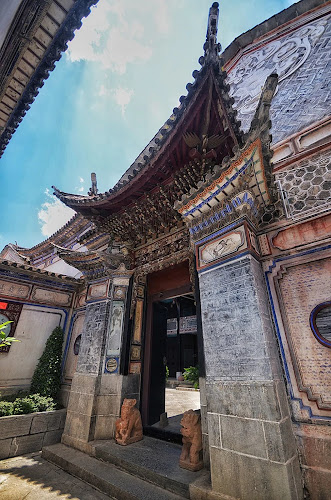
Xizhouzhen
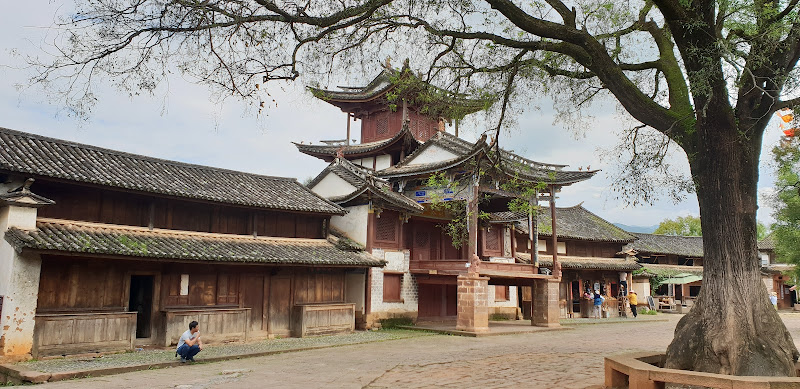
Shaxizhen
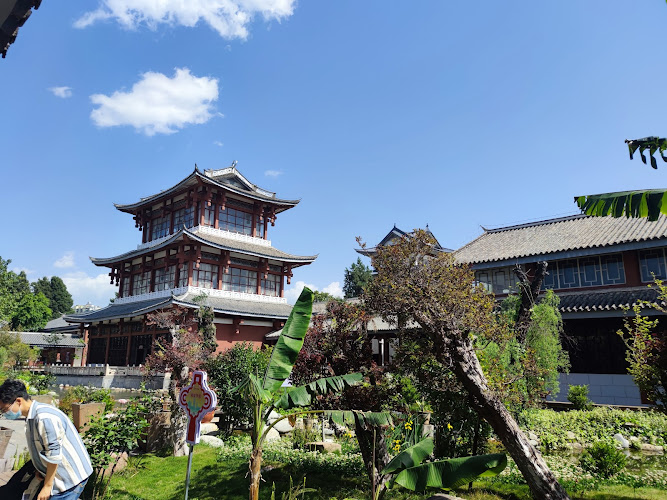
Dali State Museum
Find Accommodations Nearby
Recommended Tours & Activities
Visitor Reviews
There are no reviews yet. Be the first one to write one.
Share Your Experience
Have you visited Dali Zhangjia Garden? Help other travelers by leaving a review.