
Acquedotto di Ferrara
About Acquedotto di Ferrara
Key Features
More Details
Updated October 31, 2025
## Acquedotto di Ferrara: why this “monumental tank” is worth a detour
Location: Piazza XXIV Maggio, Ferrara (Quartiere Giardino) — 44.837624, 11.608028
Type: Monumental aqueduct reservoir (historic utility architecture)
Built: 1930–1932
Architect: Ing. Carlo Savonuzzi, with design support from Enrico Alessandri; precedents by Adamo Boari. di Ferrara
### What it is (and isn’t)
Ferrara’s “Acquedotto Monumentale” isn’t a Roman aqueduct. It’s a 20th-century reinforced-concrete water tower and reservoir conceived to be both functional and ceremonial—the showpiece terminus of an urban axis in the city’s Novecento expansion (“Addizione Novecentista”). It anchors Piazza XXIV Maggio in the Quartiere Giardino, just outside the medieval core. di Ferrara
At the time of completion it was among the largest of its kind in Italy, a modern structure that still borrows Renaissance cues in its massing and classical references—very Ferrara.
### A quick history you can use on-site
– Origins & authorship (1929–1932). The municipality assigned the project to Carlo Savonuzzi around 1929; he drew on earlier ideas by Adamo Boari (who died in 1928). Construction ran 1930–1932 with key drafting work by Enrico Alessandri. The building served as a monumental storage tank within a broader plan to modernize Ferrara. Terra e Acqua
– Names & memory politics of the square. The square opened as Piazza XXVIII Ottobre (to celebrate the 1922 March on Rome) and was renamed after WWII to Piazza XXIV Maggio, recalling Italy’s 1915 entry into WWI. If you see older plaques or references, that’s why.
– From waterworks to community hub. After new water plants at Pontelagoscuro took over, the tank and internal plant were decommissioned and the first-floor apartments were converted to public use. Today the complex hosts spaces for “Isola del Tesoro”, a municipal family/children’s center; the surrounding piazza doubles as an event ground (e.g., Estate Bambini in early September). Confirm dates locally; programming changes year to year.
> Bias/accuracy note: Interpretations that frame the project strictly as “Renaissance revival” or “fascist monumentalism” reflect 20th-century politics and taste. The municipal and museum sources above focus on urban function and Novecento planning; cross-read if you’re researching ideology. di Ferrara
### What to look for (architectural checklist)
– Reinforced-concrete monumentality. A clean, almost proto-rationalist volume with a sculptural tank crown—modern materials presented with Renaissance-tinged symmetry. It’s textbook interwar civic architecture in Emilia-Romagna.
– Urban set-piece. Stand on Corso Vittorio Veneto and read the long view: the aqueduct is the perspective terminus of the axis, framed by trees and lawns of the Giardino district. di Ferrara
– Landscape & play space. The piazza is a green, open forecourt—benches, shade, and a children’s area when active programs are running. It’s a good breather between the station and Castello Estense. Terra e Acqua
### Planning your visit
Where it is & how long to budget
– Address: Piazza XXIV Maggio (Quartiere Giardino).
– Walking times (approximate): ~10 minutes from Ferrara train station, ~15 minutes from Castello Estense. Build in a short stop for photos and a park break. Terra e Acqua
When to go
– Golden hour flatters the concrete textures and tree canopy. Midday is harsher but works for stark black-and-white shots of the tank and shadow play. (No special lighting is guaranteed; seasonal events may add installations—check local listings.) Terra e Acqua
Access & inclusivity
– The piazza is level and open, suitable for wheelchairs and strollers; benches and shade trees are present. Interior access is not routine (the complex is used for community services, not a daily museum), so expect an outdoor visit unless a public program is listed. Verify current accessibility or program hours with the municipality or Isola del Tesoro before planning an interior stop.
Family angle
– If you’re visiting with kids, look up the “Estate Bambini” festival and other family-center activities that sometimes animate the area around early September. Dates and formats vary; check the current year’s calendar.
### Context: Ferrara through water and the Novecento
Ferrara’s identity has long been shaped by hydraulic engineering—from Renaissance canals to 20th-century public works. The aqueduct belongs to the Novecento addition, a set of projects that modernized the city’s western edge while dialoguing with its Renaissance plan. For a thematic thread on “water & Ferrara”, the local tourism board curates articles tying historic hydraulics to today’s urban experience.
### Photography & on-site tips
– Framing: Best full-height portraits from the north side of the piazza; use the tree line as a natural frame.
– Details: Bring a short telephoto to isolate cornice lines and the tank rim; you’ll see how the Renaissance allusions soften the concrete mass.
– Combinations: Pair this stop with a Novecento walk taking in nearby civic buildings and the Giardino district grid, ending back toward the castle.
### Practicalities (what changes, what to double-check)
– Programming & interior access can change with municipal use (Isola del Tesoro). Treat it as an outdoor landmark unless a specific event is advertised.
– Tourism portals list wayfinding times and basic info; some pages carry older update stamps (e.g., 2015–2021). Cross-check dates for special openings and events. Terra e Acqua
—
### Fast facts (for your guide box)
– Name: Acquedotto Monumentale / Serbatoio dell’Acquedotto
– Built: 1930–1932 (projected from 1929)
– Architects/engineers: Carlo Savonuzzi; with Enrico Alessandri; precedents by Adamo Boari
– District: Quartiere Giardino, Piazza XXIV Maggio
– Role today: Landmark piazza + community hub (Isola del Tesoro spaces); events periodically in the square. di Ferrara
—
#### Sources used for verification
Museo Ferrara (IT/EN) entries; the InFerrara tourism portal; Ferrara Terra e Acqua (official tourism) with walking times; municipal notes on reuse and family programming; and the Italian Wikipedia page for historical naming and decommissioning context. di Ferrara
Data flagged as potentially outdated: some tourism pages show last edits in 2015–2021 and event schedules vary; confirm current programs and any interior visits with the municipality before publishing event times. Terra e Acqua
(Internal-link opportunities for your site: a Ferrara city walk focused on Novecento architecture; a thematic “Ferrara & Water” piece tying the aqueduct to historic canals and the Po di Volano.)
Table of Contents
- Key Highlights
- Location
- Places to Stay Near Acquedotto di Ferrara
- Find and Book a Tour
- Explore More Travel Guides
- Acquedotto di Ferrara: why this “monumental tank” is worth a detour
- What it is (and isn’t)
- A quick history you can use on-site
- What to look for (architectural checklist)
- Planning your visit
- Context: Ferrara through water and the Novecento
- Photography & on-site tips
- Practicalities (what changes, what to double-check)
- Fast facts (for your guide box)
- Nearby Places You Might Like
- Traveler Reviews for Acquedotto di Ferrara
- Share Your Experience
Key Highlights
Origins & authorship (1929–1932). The municipality assigned the project to Carlo Savonuzzi around 1929; he drew on earlier ideas by Adamo Boari (who died in 1928). Construction ran 1930–1932 with key drafting work by Enrico Alessandri. The building served as a monumental storage tank within a broader plan to modernize Ferrara. oai_citation:3‡Ferrari Terra e Acqua
Names & memory politics of the square. The square opened as Piazza XXVIII Ottobre (to celebrate the 1922 March on Rome) and was renamed after WWII to Piazza XXIV Maggio, recalling Italy’s 1915 entry into WWI. If you see older plaques or references, that’s why. oai_citation:4‡Wikipedia
From waterworks to community hub. After new water plants at Pontelagoscuro took over, the tank and internal plant were decommissioned and the first-floor apartments were converted to public use. Today the complex hosts spaces for “Isola del Tesoro”, a municipal family/children’s center; the surrounding piazza doubles as an event ground (e.g., Estate Bambini in early September). Confirm dates locally; programming changes year to year. oai_citation:5‡Wikipedia
Location
Places to Stay Near Acquedotto di Ferrara
Find and Book a Tour
Explore More Travel Guides
No reviews found! Be the first to review!
Acquedotto di Ferrara: why this “monumental tank” is worth a detour
Location: Piazza XXIV Maggio, Ferrara (Quartiere Giardino) — 44.837624, 11.608028
Type: Monumental aqueduct reservoir (historic utility architecture)
Built: 1930–1932
Architect: Ing. Carlo Savonuzzi, with design support from Enrico Alessandri; precedents by Adamo Boari. oai_citation:0‡Museo di Ferrara
What it is (and isn’t)
Ferrara’s “Acquedotto Monumentale” isn’t a Roman aqueduct. It’s a 20th-century reinforced-concrete water tower and reservoir conceived to be both functional and ceremonial—the showpiece terminus of an urban axis in the city’s Novecento expansion (“Addizione Novecentista”). It anchors Piazza XXIV Maggio in the Quartiere Giardino, just outside the medieval core. oai_citation:1‡Museo di Ferrara
At the time of completion it was among the largest of its kind in Italy, a modern structure that still borrows Renaissance cues in its massing and classical references—very Ferrara. oai_citation:2‡Wikipedia
A quick history you can use on-site
- Origins & authorship (1929–1932). The municipality assigned the project to Carlo Savonuzzi around 1929; he drew on earlier ideas by Adamo Boari (who died in 1928). Construction ran 1930–1932 with key drafting work by Enrico Alessandri. The building served as a monumental storage tank within a broader plan to modernize Ferrara. oai_citation:3‡Ferrari Terra e Acqua
- Names & memory politics of the square. The square opened as Piazza XXVIII Ottobre (to celebrate the 1922 March on Rome) and was renamed after WWII to Piazza XXIV Maggio, recalling Italy’s 1915 entry into WWI. If you see older plaques or references, that’s why. oai_citation:4‡Wikipedia
- From waterworks to community hub. After new water plants at Pontelagoscuro took over, the tank and internal plant were decommissioned and the first-floor apartments were converted to public use. Today the complex hosts spaces for “Isola del Tesoro”, a municipal family/children’s center; the surrounding piazza doubles as an event ground (e.g., Estate Bambini in early September). Confirm dates locally; programming changes year to year. oai_citation:5‡Wikipedia
Bias/accuracy note: Interpretations that frame the project strictly as “Renaissance revival” or “fascist monumentalism” reflect 20th-century politics and taste. The municipal and museum sources above focus on urban function and Novecento planning; cross-read if you’re researching ideology. oai_citation:6‡Museo di Ferrara
What to look for (architectural checklist)
- Reinforced-concrete monumentality. A clean, almost proto-rationalist volume with a sculptural tank crown—modern materials presented with Renaissance-tinged symmetry. It’s textbook interwar civic architecture in Emilia-Romagna. oai_citation:7‡InFerrara
- Urban set-piece. Stand on Corso Vittorio Veneto and read the long view: the aqueduct is the perspective terminus of the axis, framed by trees and lawns of the Giardino district. oai_citation:8‡Museo di Ferrara
- Landscape & play space. The piazza is a green, open forecourt—benches, shade, and a children’s area when active programs are running. It’s a good breather between the station and Castello Estense. oai_citation:9‡Ferrari Terra e Acqua
Planning your visit
Where it is & how long to budget
– Address: Piazza XXIV Maggio (Quartiere Giardino). oai_citation:10‡InFerrara
– Walking times (approximate): ~10 minutes from Ferrara train station, ~15 minutes from Castello Estense. Build in a short stop for photos and a park break. oai_citation:11‡Ferrari Terra e Acqua
When to go
– Golden hour flatters the concrete textures and tree canopy. Midday is harsher but works for stark black-and-white shots of the tank and shadow play. (No special lighting is guaranteed; seasonal events may add installations—check local listings.) oai_citation:12‡Ferrari Terra e Acqua
Access & inclusivity
– The piazza is level and open, suitable for wheelchairs and strollers; benches and shade trees are present. Interior access is not routine (the complex is used for community services, not a daily museum), so expect an outdoor visit unless a public program is listed. Verify current accessibility or program hours with the municipality or Isola del Tesoro before planning an interior stop. oai_citation:13‡Wikipedia
Family angle
– If you’re visiting with kids, look up the “Estate Bambini” festival and other family-center activities that sometimes animate the area around early September. Dates and formats vary; check the current year’s calendar. oai_citation:14‡Wikipedia
Context: Ferrara through water and the Novecento
Ferrara’s identity has long been shaped by hydraulic engineering—from Renaissance canals to 20th-century public works. The aqueduct belongs to the Novecento addition, a set of projects that modernized the city’s western edge while dialoguing with its Renaissance plan. For a thematic thread on “water & Ferrara”, the local tourism board curates articles tying historic hydraulics to today’s urban experience. oai_citation:15‡travelhoo.it
Photography & on-site tips
- Framing: Best full-height portraits from the north side of the piazza; use the tree line as a natural frame.
- Details: Bring a short telephoto to isolate cornice lines and the tank rim; you’ll see how the Renaissance allusions soften the concrete mass. oai_citation:16‡InFerrara
- Combinations: Pair this stop with a Novecento walk taking in nearby civic buildings and the Giardino district grid, ending back toward the castle.
Practicalities (what changes, what to double-check)
- Programming & interior access can change with municipal use (Isola del Tesoro). Treat it as an outdoor landmark unless a specific event is advertised. oai_citation:17‡Wikipedia
- Tourism portals list wayfinding times and basic info; some pages carry older update stamps (e.g., 2015–2021). Cross-check dates for special openings and events. oai_citation:18‡Ferrari Terra e Acqua
Fast facts (for your guide box)
- Name: Acquedotto Monumentale / Serbatoio dell’Acquedotto
- Built: 1930–1932 (projected from 1929)
- Architects/engineers: Carlo Savonuzzi; with Enrico Alessandri; precedents by Adamo Boari
- District: Quartiere Giardino, Piazza XXIV Maggio
- Role today: Landmark piazza + community hub (Isola del Tesoro spaces); events periodically in the square. oai_citation:19‡Museo di Ferrara
Sources used for verification
Museo Ferrara (IT/EN) entries; the InFerrara tourism portal; Ferrara Terra e Acqua (official tourism) with walking times; municipal notes on reuse and family programming; and the Italian Wikipedia page for historical naming and decommissioning context. oai_citation:20‡Museo di Ferrara
Data flagged as potentially outdated: some tourism pages show last edits in 2015–2021 and event schedules vary; confirm current programs and any interior visits with the municipality before publishing event times. oai_citation:21‡Ferrari Terra e Acqua
(Internal-link opportunities for your site: a Ferrara city walk focused on Novecento architecture; a thematic “Ferrara & Water” piece tying the aqueduct to historic canals and the Po di Volano.)
Traveler Reviews for Acquedotto di Ferrara
There are no reviews yet. Be the first one to write one.
Have you visited Acquedotto di Ferrara? Help other travelers by sharing your review.
You Might Also Like
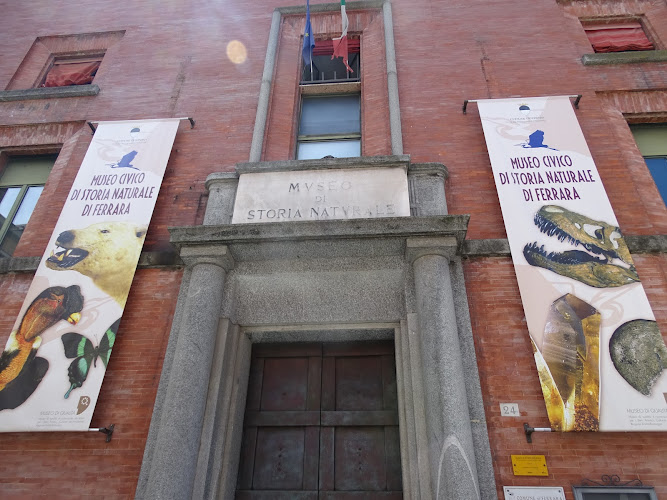
Civic Museum of Natural History of Ferrara
House of Ludovico Ariosto
Diamanti Palace
Find Accommodations Nearby
Recommended Tours & Activities
Visitor Reviews
There are no reviews yet. Be the first one to write one.
Share Your Experience
Have you visited Acquedotto di Ferrara? Help other travelers by leaving a review.