
Diamanti Palace
About Diamanti Palace
Key Features
More Details
Updated April 15, 2024
Palazzo dei Diamanti | Arte a Ferrara
## Diamanti Palace (Palazzo dei Diamanti), Ferrara: why this “diamond” façade matters
Diamanti Palace—better known locally as Palazzo dei Diamanti—is one of Ferrara’s signature Renaissance buildings, sitting at Corso Ercole I d’Este, 21, 44121 Ferrara (FE), Italy. dei Diamanti With an average 4.5 rating in your dataset, it’s widely treated as both an architectural landmark and a working museum space rather than “just” a photo stop.
At a glance, the building is famous for a single, unforgettable idea: an exterior skin made from more than 8,500 diamond-shaped marble blocks (“rustication”) that catch light differently depending on where you stand. dei Diamanti But it’s the urban logic behind it—how the palace was positioned to be seen in perspective at a key crossroads—that turns it into a lesson in Renaissance city-making, not just decoration.
—
## Quick facts for planning your stop
– Address: Corso Ercole I d’Este, 21, 44121 Ferrara (FE), Italy dei Diamanti
– Coordinates: 44.8420894, 11.6212295 (from your provided data)
– What it is today: A major exhibition venue on the ground floor, with the Pinacoteca Nazionale di Ferrara (National Painting Gallery) on the first floor. dei Diamanti
– Why the name “Diamanti”: the palace is “so called” because of the diamond-like shape of those 8,500+ marble blocks. dei Diamanti
Time-sensitive note: opening hours, exhibitions, ticketing, and “what’s on” change frequently—always verify on the official site before you go.
—
## The real story: Ferrara’s Renaissance expansion, built into one façade
Palazzo dei Diamanti isn’t a random noble residence that later became a museum. It was born from Ferrara’s late-15th-century ambition to physically expand and modernize the city.
The palace was designed by Biagio Rossetti and built starting in 1493 on behalf of Sigismondo d’Este, brother of Duke Ercole I d’Este. dei Diamanti The official Palazzo dei Diamanti site frames it as the ideal “center” of the Addizione Erculea—the planned urban expansion Rossetti conceived for Ercole I, effectively doubling the city. dei Diamanti
Here’s what that means on the ground: the building wasn’t designed only to look good from one “front.” Ferrara’s tourism board emphasizes that Rossetti concentrated the most important decoration on the corner, intentionally highlighting the crossroads and making the building something you experience in perspective as you move through the streets.
That corner-first logic is easy to miss if you arrive focused on a single photo angle. The palace is basically telling you: “Stop thinking in façades—think in city geometry.”
—
## Architecture you can actually read while standing there
### The diamond rustication: not just ornament, but optics
The palace’s exterior is famously clad in roughly 8,500 diamond-shaped marble blocks. dei Diamanti Beyond the flex of wealth and craftsmanship, multiple sources note the blocks are arranged to maximize reflected light, shifting the surface from crisp to soft depending on sun angle and your position.
### Details people walk past
Wikipedia and the official site both point out additional sculptural features, including candelabra motifs and plant-like (“phytomorphic”) corner decorations. Those details matter because they reinforce the palace’s identity as a statement building—one meant to be recognized instantly in a city that was actively branding itself as modern.
### Inside: the Renaissance courtyard logic
Inside, the palace includes a Renaissance courtyard and a marble well, a feature described as characteristic of Ferrara’s gardens. Even if you’re there for an exhibition, it’s worth treating the courtyard as part of the visit—not filler between galleries.
—
## What you’ll find inside: exhibitions + the National Painting Gallery
The official “About us” page is very clear about how the building functions today:
– Ground floor: spaces used for important temporary exhibitions, organized by Ferrara Arte and the city’s modern/contemporary art structures. dei Diamanti
– First floor: home to the Pinacoteca Nazionale di Ferrara, holding a historical-artistic collection described as “of exceptional value.” dei Diamanti
Wikipedia summarizes the Pinacoteca’s focus as paintings from the Ferrarese School, spanning from the Middle Ages to the 18th century.
Time-sensitive note: specific exhibitions rotate. For example, the official site lists scheduled shows (with dates) and daily opening hours for the exhibition program. Treat those as accurate at the time of publication and re-check before planning around them.
—
## A few historically grounded milestones (without the fluff)
– 1493: construction begins (official site: “starting in 1493”). dei Diamanti
– 1832: the building was purchased by the Municipality of Ferrara. dei Diamanti
– 1944: the palace suffered serious damage from bombing, followed by restoration campaigns after the war. dei Diamanti
That 1944 note is a useful lens while you’re inside: you’re not walking through an untouched Renaissance capsule. You’re seeing a monument that has had to be actively preserved.
—
## How to fit Palazzo dei Diamanti into a smarter Ferrara day
If you’re building a Ferrara itinerary that isn’t just “check the landmark boxes,” use Palazzo dei Diamanti as an anchor for two themes:
1. Renaissance city planning (Addizione Erculea): approach the palace as a corner landmark designed for a crossroads view, not as a symmetrical façade to “stand in front of.”
2. Ferrarese identity through art: pair the building’s exterior symbolism (Este “diamond” emblem) with what’s preserved upstairs in the Pinacoteca’s Ferrarese School collection.
—
## Contextual internal links for RealJourneyTravels.com
– If you’re comparing city vibes and trip-planning tradeoffs, this site has: Lucca vs Ferrara: 7 Key Differences, Travel Tips & Must-Know Facts Journey Travels
– For another Ferrara stop to round out an “art + institutions” theme: Civic Museum of Natural History of Ferrara Journey Travels
—
## Inclusivity + accuracy checks (what to verify before publishing)
– Exhibitions, opening hours, and special event nights change and should be checked on the official Palazzo dei Diamanti site immediately before travel.
– Leadership/staff listings on institutional pages can change; if you cite named roles from an “About” page, confirm they’re current on the official site. dei Diamanti
Table of Contents
Key Highlights
Diamanti Palace
Location
Places to Stay Near Diamanti Palace
Find and Book a Tour
Explore More Travel Guides
No reviews found! Be the first to review!
Traveler Reviews for Diamanti Palace
There are no reviews yet. Be the first one to write one.
Have you visited Diamanti Palace? Help other travelers by sharing your review.
You Might Also Like
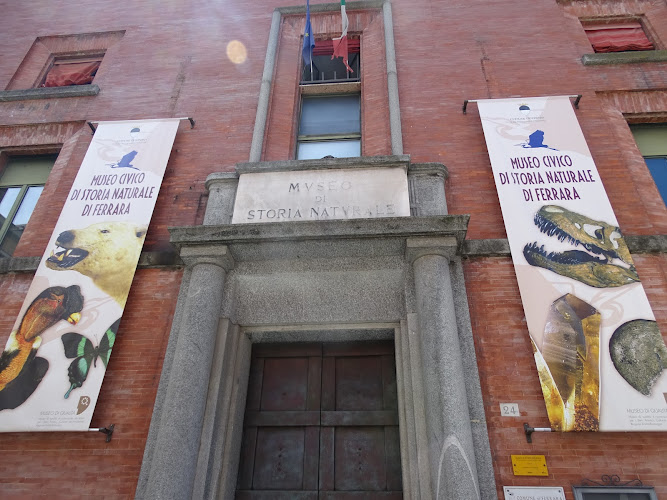
Civic Museum of Natural History of Ferrara
House of Ludovico Ariosto
Acquedotto di Ferrara
Find Accommodations Nearby
Recommended Tours & Activities
Visitor Reviews
There are no reviews yet. Be the first one to write one.
Share Your Experience
Have you visited Diamanti Palace? Help other travelers by leaving a review.