
Traboule et Cour des Voraces
About Traboule et Cour des Voraces
Description
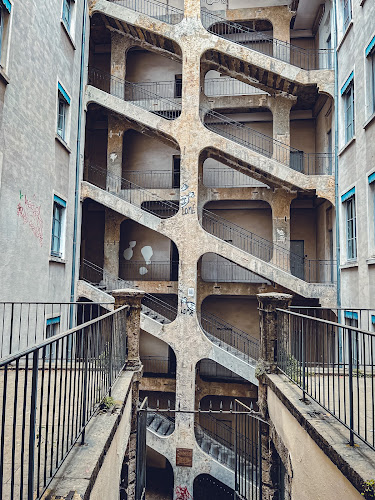
The Traboule et Cour des Voraces stands as one of Lyon's most fascinating architectural secrets, tucked away in the Croix-Rousse district where silk workers once lived and labored. Built around 1840, this urban passageway represents a distinctive piece of French industrial history that continues to captivate visitors from around the world. I've always been drawn to places that tell stories through their weathered stones and spiral staircases, and this location delivers that experience in spades. What makes this spot truly remarkable is its six-story open-air staircase that winds dramatically upward through the heart of a residential building. The traboule—a uniquely Lyonnaise architectural feature consisting of passageways through buildings that connect parallel streets—served practical purposes for silk workers who needed to transport their delicate fabrics while keeping them dry from rain. But the Cour des Voraces takes this concept to another level entirely. The sheer verticality of the space creates an almost theatrical atmosphere, with natural light filtering down through the levels above. The building earned its intriguing name, which translates to "Court of the Voracious," from the workers who lived here during Lyon's silk-weaving heyday. These residents were known for their fierce appetite—both for food and for fair wages during the famous Canuts revolts of the 1830s. Walking through these passages, you can almost hear the echoes of those revolutionary times when silk workers stood up against oppressive working conditions. Today, the walls showcase various pieces of street art that add contemporary character to the historical architecture. Photographers absolutely love this place, and it's easy to see why. The geometric patterns created by the staircases, balconies, and windows offer endless compositional possibilities. And honestly, even if you're not particularly into photography, just standing at the bottom and looking up through those layers of balconies creates a moment of genuine awe.Key Features
- Magnificent six-story spiral staircase that serves as the centerpiece of the courtyard, offering spectacular views from multiple angles and levels
- Authentic traboule architecture dating back to 1840, providing genuine insight into Lyon's industrial heritage and the daily lives of silk workers
- Street art installations that change periodically, blending modern urban culture with historical preservation in unexpected ways
- Open-air courtyard design that creates dramatic light and shadow patterns throughout the day, particularly stunning during golden hour
- Free access to the public courtyard areas, making it an budget-friendly attraction for travelers exploring Lyon on any spending plan
- Multiple interconnected passageways that demonstrate the full traboule system, showing how workers moved efficiently through the dense urban fabric of Croix-Rousse
- Original architectural details including worn stone steps, wrought-iron railings, and period windows that have survived nearly two centuries of use
- Residential authenticity—this is still a working apartment building where real people live, adding genuine character you won't find in sanitized tourist attractions
- Connection to Lyon's UNESCO World Heritage status, as the traboules of Croix-Rousse contributed to the city's recognition for its exceptional urban planning
- Compact footprint that makes it easy to visit as part of a larger walking tour of the Croix-Rousse neighborhood
Best Time to Visit
Timing your visit to the Cour des Voraces can honestly make or break your experience. I learned this the hard way on my first visit when I showed up on a rainy Tuesday afternoon and found the courtyard surprisingly empty—which was actually perfect, but not everyone wants that solitary experience. The golden rule for visiting is to go during weekday mornings, particularly between 9 AM and 11 AM. You'll encounter fewer tour groups, and the morning light filtering down through the staircase levels creates absolutely magical conditions for photography or simply soaking in the atmosphere. The place tends to fill up significantly after lunch, especially during summer months when Lyon attracts substantial tourist crowds. Seasonally speaking, spring and early autumn offer the best overall experience. The weather in Lyon during April, May, September, and early October provides comfortable temperatures for exploring on foot, and you won't be competing with peak summer tourism. Plus, the natural light during these seasons hits the courtyard just right—not too harsh, not too dim. Summer can get crowded, particularly in July and August when European vacation season peaks. If you're visiting during these months, seriously consider early morning visits before 9 AM or later evening visits after 6 PM. The courtyard doesn't have artificial lighting that makes it particularly special at night, but the late afternoon light can be stunning. Winter brings its own charm, though. The bare architectural bones of the place stand out more dramatically, and you'll definitely have more space to yourself. Just dress warmly because that open-air staircase means you're essentially outside, and Lyon winters can bite. Avoid Sunday afternoons if possible, as this becomes a popular time for local families and weekend photographers to visit. It's not terrible, but you might find yourself waiting for clear shots or personal space to appreciate the architecture.How to Get There
Getting to the Cour des Voraces requires a bit of navigation, but that's part of the adventure really. The Croix-Rousse neighborhood sits on a steep hill above Lyon's city center, and reaching this hidden gem means embracing the urban exploration aspect of travel. The most straightforward approach involves taking Lyon's metro system to the Croix-Rousse station on Line C. From there, you'll walk approximately 10-12 minutes through the neighborhood streets. The walk itself offers character and charm, passing through areas where you'll see locals going about their daily routines, small cafes, and shops that cater to residents rather than tourists. Alternatively, you can take the metro to Hôtel de Ville on Line A or Line C, then walk uphill through the lower traboules of the Croix-Rousse slopes. This route takes longer—about 20-25 minutes—but rewards you with a more comprehensive traboule experience along the way. Just be prepared for some serious uphill walking. Lyon wasn't built on flat land, and this neighborhood definitely proves that point. Bus lines also service the area, with several routes stopping near the site. The TCL bus system in Lyon is reliable and extensive, though the metro tends to be more straightforward for first-time visitors. For those who prefer a more active approach, Lyon's Vélo'v bike-sharing system has stations throughout Croix-Rousse. However, be warned that cycling uphill to reach the area can be quite challenging unless you're comfortable with steep grades. Coming back down is significantly easier, naturally. Taxis and ride-sharing services will get you close, though the narrow streets mean drivers might drop you a short walk away from the actual entrance. This isn't a major attraction with obvious signage and tour buses parked outside—it's a residential building with historical significance, so you'll need to know where you're going. The entrance itself can be tricky to locate on your first visit. Look for the address on Montée Saint-Sébastien, but don't be surprised if you walk past it initially. The entrance doesn't scream "tourist attraction," which is part of its authentic appeal but also means you need to pay attention.Tips for Visiting
Let me share some hard-won wisdom about visiting the Cour des Voraces that guidebooks don't always mention. First and foremost, remember that this is an active residential building where people actually live. I can't stress this enough because I've witnessed tourists behaving as if they've entered a museum rather than someone's home. Keep noise levels reasonable, especially if you're visiting with a group. The residents have been remarkably tolerant of tourist traffic, but respecting their space ensures this place remains accessible for future visitors. The accessibility situation is something to address honestly. There's no wheelchair-accessible entrance, and the stairs are the main attraction, which unfortunately means visitors with mobility challenges will struggle here. The steps are worn from nearly two centuries of use, and they're not uniform in height or depth. If you have any balance concerns, use the handrails and take your time. Photography is generally permitted in the courtyard areas, but avoid photographing into apartment windows or trying to access restricted residential areas. The courtyard itself provides plenty of material for photography enthusiasts. A wide-angle lens works wonders here if you're into serious photography, but phone cameras capture the space quite well too. Consider bringing a small tripod or stabilizer if you want to experiment with longer exposures or video. Watch your footing constantly. Those historic stone steps are beautiful but can be slippery, particularly if there's been rain or morning condensation. Wear appropriate footwear—this isn't the place for smooth-soled dress shoes or flip-flops. I learned this lesson after a near-tumble that would have made for a much different kind of memorable visit. Don't expect facilities like restrooms, gift shops, or information desks. This isn't a commercialized attraction, which is part of its charm but also means you need to plan accordingly. Use facilities before arriving, and bring water if you're spending time exploring the broader Croix-Rousse area. The lighting changes dramatically throughout the day, so if you have flexibility in your schedule, consider visiting at different times to see how the space transforms. Morning light tends to come from above, creating sharp contrasts between illuminated and shadowed areas. Late afternoon brings warmer tones that soften the industrial character of the architecture. Combine your visit with exploration of other traboules in the neighborhood. The Cour des Voraces represents just one example of this architectural tradition, and Croix-Rousse contains numerous other passageways worth discovering. Some are more modest, others nearly as impressive, but seeing multiple examples helps you understand the broader context of how these spaces functioned in Lyon's urban fabric. Local etiquette matters here. If a door is closed, don't force it open. Some traboules have specific opening hours or may be temporarily closed for maintenance or at residents' requests. If you encounter locals entering or exiting, step aside and give them priority—they live here, and you're essentially a guest in their neighborhood. Consider hiring a local guide for your first visit if you really want to understand the historical and cultural significance. While it's perfectly possible to visit independently, knowledgeable guides share stories and details that bring the architecture to life in ways that simply wandering through cannot match. Finally, manage your expectations appropriately. Some visitors expect a massive monument or elaborately decorated space and feel disappointed when they encounter what is essentially a functional staircase in a residential building. The beauty here lies in the subtle interplay of light, architecture, and history rather than obvious grandeur. If you approach it with an open mind and appreciation for authentic preservation over tourist-oriented spectacle, you'll likely find the experience genuinely memorable.Key Features
- Monumental six‑storey stone staircase visible from the courtyard
- Classic Croix‑Rousse traboule linking Place Colbert, Montée Saint‑Sébastien and Rue Imbert‑Colomès
- 19th‑century canut (silk worker) architecture and ironwork
- Intimate covered courtyard providing photographic vantage points
- Historical resonance with Lyon’s labor and republican movements
More Details
Updated March 30, 2026
Table of Contents
Description
The Traboule et Cour des Voraces stands as one of Lyon’s most fascinating architectural secrets, tucked away in the Croix-Rousse district where silk workers once lived and labored. Built around 1840, this urban passageway represents a distinctive piece of French industrial history that continues to captivate visitors from around the world. I’ve always been drawn to places that tell stories through their weathered stones and spiral staircases, and this location delivers that experience in spades.
What makes this spot truly remarkable is its six-story open-air staircase that winds dramatically upward through the heart of a residential building. The traboule—a uniquely Lyonnaise architectural feature consisting of passageways through buildings that connect parallel streets—served practical purposes for silk workers who needed to transport their delicate fabrics while keeping them dry from rain. But the Cour des Voraces takes this concept to another level entirely. The sheer verticality of the space creates an almost theatrical atmosphere, with natural light filtering down through the levels above.
The building earned its intriguing name, which translates to “Court of the Voracious,” from the workers who lived here during Lyon’s silk-weaving heyday. These residents were known for their fierce appetite—both for food and for fair wages during the famous Canuts revolts of the 1830s. Walking through these passages, you can almost hear the echoes of those revolutionary times when silk workers stood up against oppressive working conditions.
Today, the walls showcase various pieces of street art that add contemporary character to the historical architecture. Photographers absolutely love this place, and it’s easy to see why. The geometric patterns created by the staircases, balconies, and windows offer endless compositional possibilities. And honestly, even if you’re not particularly into photography, just standing at the bottom and looking up through those layers of balconies creates a moment of genuine awe.
Key Features
- Magnificent six-story spiral staircase that serves as the centerpiece of the courtyard, offering spectacular views from multiple angles and levels
- Authentic traboule architecture dating back to 1840, providing genuine insight into Lyon’s industrial heritage and the daily lives of silk workers
- Street art installations that change periodically, blending modern urban culture with historical preservation in unexpected ways
- Open-air courtyard design that creates dramatic light and shadow patterns throughout the day, particularly stunning during golden hour
- Free access to the public courtyard areas, making it an budget-friendly attraction for travelers exploring Lyon on any spending plan
- Multiple interconnected passageways that demonstrate the full traboule system, showing how workers moved efficiently through the dense urban fabric of Croix-Rousse
- Original architectural details including worn stone steps, wrought-iron railings, and period windows that have survived nearly two centuries of use
- Residential authenticity—this is still a working apartment building where real people live, adding genuine character you won’t find in sanitized tourist attractions
- Connection to Lyon’s UNESCO World Heritage status, as the traboules of Croix-Rousse contributed to the city’s recognition for its exceptional urban planning
- Compact footprint that makes it easy to visit as part of a larger walking tour of the Croix-Rousse neighborhood
Best Time to Visit
Timing your visit to the Cour des Voraces can honestly make or break your experience. I learned this the hard way on my first visit when I showed up on a rainy Tuesday afternoon and found the courtyard surprisingly empty—which was actually perfect, but not everyone wants that solitary experience.
The golden rule for visiting is to go during weekday mornings, particularly between 9 AM and 11 AM. You’ll encounter fewer tour groups, and the morning light filtering down through the staircase levels creates absolutely magical conditions for photography or simply soaking in the atmosphere. The place tends to fill up significantly after lunch, especially during summer months when Lyon attracts substantial tourist crowds.
Seasonally speaking, spring and early autumn offer the best overall experience. The weather in Lyon during April, May, September, and early October provides comfortable temperatures for exploring on foot, and you won’t be competing with peak summer tourism. Plus, the natural light during these seasons hits the courtyard just right—not too harsh, not too dim.
Summer can get crowded, particularly in July and August when European vacation season peaks. If you’re visiting during these months, seriously consider early morning visits before 9 AM or later evening visits after 6 PM. The courtyard doesn’t have artificial lighting that makes it particularly special at night, but the late afternoon light can be stunning.
Winter brings its own charm, though. The bare architectural bones of the place stand out more dramatically, and you’ll definitely have more space to yourself. Just dress warmly because that open-air staircase means you’re essentially outside, and Lyon winters can bite.
Avoid Sunday afternoons if possible, as this becomes a popular time for local families and weekend photographers to visit. It’s not terrible, but you might find yourself waiting for clear shots or personal space to appreciate the architecture.
How to Get There
Getting to the Cour des Voraces requires a bit of navigation, but that’s part of the adventure really. The Croix-Rousse neighborhood sits on a steep hill above Lyon’s city center, and reaching this hidden gem means embracing the urban exploration aspect of travel.
The most straightforward approach involves taking Lyon’s metro system to the Croix-Rousse station on Line C. From there, you’ll walk approximately 10-12 minutes through the neighborhood streets. The walk itself offers character and charm, passing through areas where you’ll see locals going about their daily routines, small cafes, and shops that cater to residents rather than tourists.
Alternatively, you can take the metro to Hôtel de Ville on Line A or Line C, then walk uphill through the lower traboules of the Croix-Rousse slopes. This route takes longer—about 20-25 minutes—but rewards you with a more comprehensive traboule experience along the way. Just be prepared for some serious uphill walking. Lyon wasn’t built on flat land, and this neighborhood definitely proves that point.
Bus lines also service the area, with several routes stopping near the site. The TCL bus system in Lyon is reliable and extensive, though the metro tends to be more straightforward for first-time visitors.
For those who prefer a more active approach, Lyon’s Vélo’v bike-sharing system has stations throughout Croix-Rousse. However, be warned that cycling uphill to reach the area can be quite challenging unless you’re comfortable with steep grades. Coming back down is significantly easier, naturally.
Taxis and ride-sharing services will get you close, though the narrow streets mean drivers might drop you a short walk away from the actual entrance. This isn’t a major attraction with obvious signage and tour buses parked outside—it’s a residential building with historical significance, so you’ll need to know where you’re going.
The entrance itself can be tricky to locate on your first visit. Look for the address on Montée Saint-Sébastien, but don’t be surprised if you walk past it initially. The entrance doesn’t scream “tourist attraction,” which is part of its authentic appeal but also means you need to pay attention.
Tips for Visiting
Let me share some hard-won wisdom about visiting the Cour des Voraces that guidebooks don’t always mention. First and foremost, remember that this is an active residential building where people actually live. I can’t stress this enough because I’ve witnessed tourists behaving as if they’ve entered a museum rather than someone’s home. Keep noise levels reasonable, especially if you’re visiting with a group. The residents have been remarkably tolerant of tourist traffic, but respecting their space ensures this place remains accessible for future visitors.
The accessibility situation is something to address honestly. There’s no wheelchair-accessible entrance, and the stairs are the main attraction, which unfortunately means visitors with mobility challenges will struggle here. The steps are worn from nearly two centuries of use, and they’re not uniform in height or depth. If you have any balance concerns, use the handrails and take your time.
Photography is generally permitted in the courtyard areas, but avoid photographing into apartment windows or trying to access restricted residential areas. The courtyard itself provides plenty of material for photography enthusiasts. A wide-angle lens works wonders here if you’re into serious photography, but phone cameras capture the space quite well too. Consider bringing a small tripod or stabilizer if you want to experiment with longer exposures or video.
Watch your footing constantly. Those historic stone steps are beautiful but can be slippery, particularly if there’s been rain or morning condensation. Wear appropriate footwear—this isn’t the place for smooth-soled dress shoes or flip-flops. I learned this lesson after a near-tumble that would have made for a much different kind of memorable visit.
Don’t expect facilities like restrooms, gift shops, or information desks. This isn’t a commercialized attraction, which is part of its charm but also means you need to plan accordingly. Use facilities before arriving, and bring water if you’re spending time exploring the broader Croix-Rousse area.
The lighting changes dramatically throughout the day, so if you have flexibility in your schedule, consider visiting at different times to see how the space transforms. Morning light tends to come from above, creating sharp contrasts between illuminated and shadowed areas. Late afternoon brings warmer tones that soften the industrial character of the architecture.
Combine your visit with exploration of other traboules in the neighborhood. The Cour des Voraces represents just one example of this architectural tradition, and Croix-Rousse contains numerous other passageways worth discovering. Some are more modest, others nearly as impressive, but seeing multiple examples helps you understand the broader context of how these spaces functioned in Lyon’s urban fabric.
Local etiquette matters here. If a door is closed, don’t force it open. Some traboules have specific opening hours or may be temporarily closed for maintenance or at residents’ requests. If you encounter locals entering or exiting, step aside and give them priority—they live here, and you’re essentially a guest in their neighborhood.
Consider hiring a local guide for your first visit if you really want to understand the historical and cultural significance. While it’s perfectly possible to visit independently, knowledgeable guides share stories and details that bring the architecture to life in ways that simply wandering through cannot match.
Finally, manage your expectations appropriately. Some visitors expect a massive monument or elaborately decorated space and feel disappointed when they encounter what is essentially a functional staircase in a residential building. The beauty here lies in the subtle interplay of light, architecture, and history rather than obvious grandeur. If you approach it with an open mind and appreciation for authentic preservation over tourist-oriented spectacle, you’ll likely find the experience genuinely memorable.
Key Highlights
- Monumental six‑storey stone staircase visible from the courtyard
- Classic Croix‑Rousse traboule linking Place Colbert, Montée Saint‑Sébastien and Rue Imbert‑Colomès
- 19th‑century canut (silk worker) architecture and ironwork
- Intimate covered courtyard providing photographic vantage points
- Historical resonance with Lyon’s labor and republican movements
Location
Places to Stay Near Traboule et Cour des Voraces
Find and Book a Tour
Explore More Travel Guides
No reviews found! Be the first to review!
Traboule et Cour des Voraces is a prominent attractions located in Lyon.
Visit us at: 9 Pl. Colbert, 69001 Lyon, France.
Traveler Reviews for Traboule et Cour des Voraces
There are no reviews yet. Be the first one to write one.
Have you visited Traboule et Cour des Voraces? Help other travelers by sharing your review.
Nearby Attractions
You Might Also Like
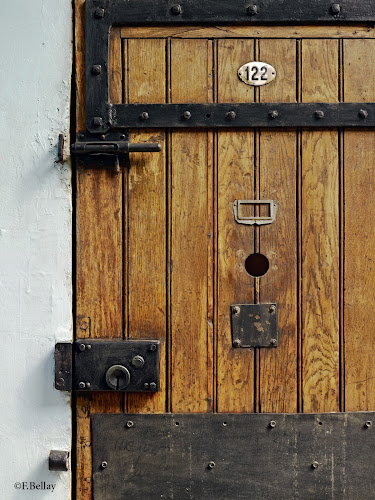
Mémorial National de la Prison de Montluc
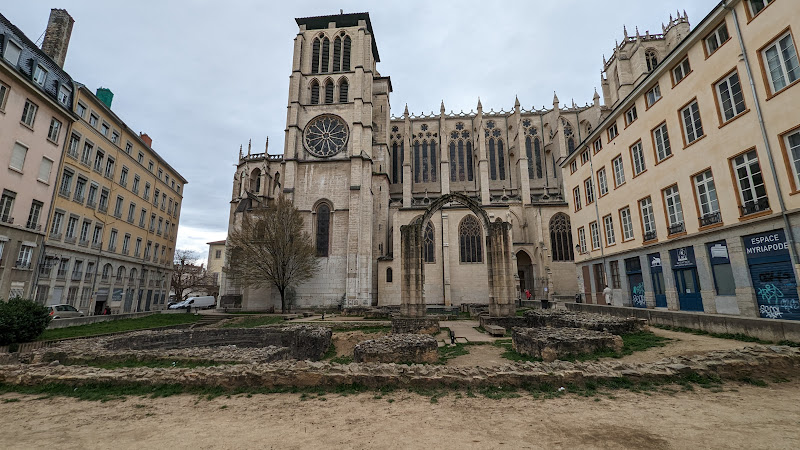
Jardin Archéologique

MAM - Musée des Arts de la Marionnette
Find Accommodations Nearby
Recommended Tours & Activities
Visitor Reviews
There are no reviews yet. Be the first one to write one.
Share Your Experience
Have you visited Traboule et Cour des Voraces? Help other travelers by leaving a review.