
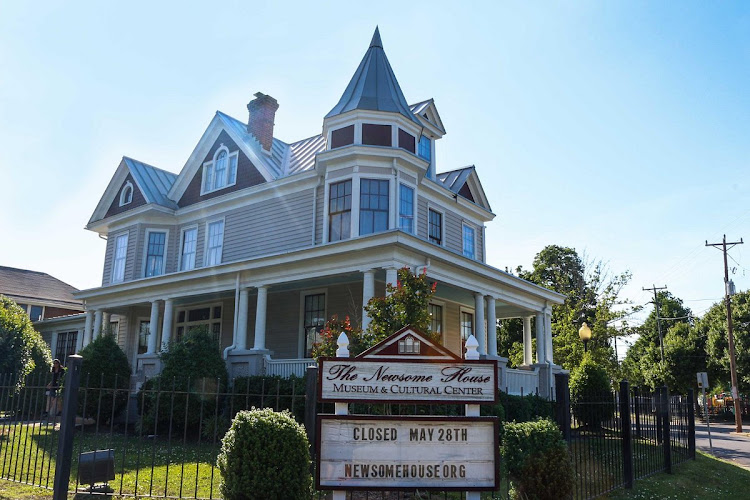
The Newsome House Museum & Cultural Center
About The Newsome House Museum & Cultural Center
Description
The Newsome House Museum & Cultural Center is a compact but compelling local history museum and cultural hub in Newport News that focuses on preserving and interpreting the community's stories through objects, photos, and first-person narratives. The museum functions both as a restored house museum and as a working cultural center — so visitors will encounter period rooms and household artifacts alongside rotating exhibits, performances in a small theater space, and community-focused programming. That mix gives the place an immediacy that larger institutions sometimes miss: visitors feel closer to the people behind the displays.
Visitors typically find the atmosphere inviting and unpretentious. The building itself reads like a neighborhood landmark; it’s intimate rather than monumental, and that intimacy is part of its charm. Interpretive materials lean on personal stories and oral histories as much as on dates and artifacts, which helps bring regional history to life in a relatable way. And, because the museum offers guided tours, the experience often becomes conversational — guests ask questions and guides answer with anecdotes and local context, making each tour slightly different.
Accessibility is a real, practical feature here. The site provides a wheelchair-accessible entrance, accessible parking, and an accessible restroom, which means that visitors with mobility needs can participate in tours and events with fewer barriers than at many small museums. That attention to practical details is good news for families and older travelers who appreciate spaces that think ahead about comfort and access.
Inside, the museum balances historical interpretation with cultural programming. There’s a small theater used for lectures, film showings, and performances; it’s not a multiplex but it’s perfectly suited to intimate talks, oral history nights, and community theater. For travelers who enjoy local arts, catching a scheduled performance or a community event here can be a highlight — it makes the visit feel like more than a passive museum stop.
Families will find the site notably kid-friendly. Exhibits and programs are designed to be accessible to younger visitors, with interactive elements and storytelling that keep children engaged. It’s the kind of museum where a child can touch a reproduction, hear a story about the neighborhood, and leave with a clearer picture of how ordinary people lived in the past. Because the museum focuses on local narratives, school groups and family visits both tend to come away feeling they’ve learned something immediately relevant to the community.
For planners and small groups, tours are offered and generally tailored to the size and interest of the party. Group tours give more depth than a quick self-guided walkthrough; expect docents to point out lesser-known artifacts, to explain the architecture of the house, and to share local anecdotes that aren’t in guidebooks. Those stories are often the part that sticks with visitors long after they leave — the names of neighbors, a surprising family connection to regional events, or a donated item that has a fascinating provenance. If the visitor is curious about genealogy or local social history, staff and volunteers can frequently point to resources or suggest ways to continue the research after the visit.
Operationally, the museum keeps things simple. There’s no on-site restaurant, so plan to eat before or after the visit, or to pack a snack if the schedule is tight. Restrooms are available, which matters more than it might sound when you’re traveling with kids or a group. Parking is generally available onsite or nearby, and the presence of accessible parking spots makes arrival easier for visitors who need them.
One distinctive attribute that visitors often remember is the way the museum functions as a neighborhood space. It’s used for community meetings, cultural workshops, and small-scale performances as well as traditional exhibits. That dual role — museum plus cultural center — means the calendar can include everything from historical lectures to children’s storytelling sessions to small concerts. Travelers who check the program schedule before their trip can sometimes catch events that offer a deeper, more contemporary glimpse into local life.
Another aspect not always obvious from a quick listing: the staff and volunteers tend to be local and passionately invested in the place. That can translate into unexpectedly personal encounters — a docent who grew up in the neighborhood, or a curator who shares family photos related to an exhibit. Those human connections often make the visit feel like being welcomed into a local living room rather than touring a distant institution.
The interpretive approach here favors narrative and context over overwhelming chronology. The displays emphasize how ordinary people shaped the community over time, using artifacts, photographs, and recorded memories to trace daily life, education, work, and cultural practices. For travelers who prefer learning through stories rather than through long lists of dates, this approach works very well. It’s educational without being dry.
Practical visit planning tips that come up again and again: allow about an hour to 90 minutes for a thorough visit, more if there’s a scheduled event or performance; ask about guided tour availability when planning a group visit; and call ahead if accessibility accommodations beyond the standard features are needed. Because there’s no restaurant at the site, pairing the visit with a nearby cafe or park visit makes for a pleasant half-day itinerary.
Finally, the experience rewards people who arrive curious and willing to ask questions. The museum’s size and community ties mean staff can often point visitors toward neighborhood landmarks, local historians, or related cultural institutions nearby. In short, The Newsome House Museum & Cultural Center works best when it’s part of a broader exploration of local history — but even as a standalone stop, it’s a memorable, human-scaled museum that leaves most travelers feeling both informed and genuinely connected to the place they just visited.
Key Features
More Details
Updated August 30, 2025
Table of Contents
Description
The Newsome House Museum & Cultural Center is a compact but compelling local history museum and cultural hub in Newport News that focuses on preserving and interpreting the community’s stories through objects, photos, and first-person narratives. The museum functions both as a restored house museum and as a working cultural center — so visitors will encounter period rooms and household artifacts alongside rotating exhibits, performances in a small theater space, and community-focused programming. That mix gives the place an immediacy that larger institutions sometimes miss: visitors feel closer to the people behind the displays.
Visitors typically find the atmosphere inviting and unpretentious. The building itself reads like a neighborhood landmark; it’s intimate rather than monumental, and that intimacy is part of its charm. Interpretive materials lean on personal stories and oral histories as much as on dates and artifacts, which helps bring regional history to life in a relatable way. And, because the museum offers guided tours, the experience often becomes conversational — guests ask questions and guides answer with anecdotes and local context, making each tour slightly different.
Accessibility is a real, practical feature here. The site provides a wheelchair-accessible entrance, accessible parking, and an accessible restroom, which means that visitors with mobility needs can participate in tours and events with fewer barriers than at many small museums. That attention to practical details is good news for families and older travelers who appreciate spaces that think ahead about comfort and access.
Inside, the museum balances historical interpretation with cultural programming. There’s a small theater used for lectures, film showings, and performances; it’s not a multiplex but it’s perfectly suited to intimate talks, oral history nights, and community theater. For travelers who enjoy local arts, catching a scheduled performance or a community event here can be a highlight — it makes the visit feel like more than a passive museum stop.
Families will find the site notably kid-friendly. Exhibits and programs are designed to be accessible to younger visitors, with interactive elements and storytelling that keep children engaged. It’s the kind of museum where a child can touch a reproduction, hear a story about the neighborhood, and leave with a clearer picture of how ordinary people lived in the past. Because the museum focuses on local narratives, school groups and family visits both tend to come away feeling they’ve learned something immediately relevant to the community.
For planners and small groups, tours are offered and generally tailored to the size and interest of the party. Group tours give more depth than a quick self-guided walkthrough; expect docents to point out lesser-known artifacts, to explain the architecture of the house, and to share local anecdotes that aren’t in guidebooks. Those stories are often the part that sticks with visitors long after they leave — the names of neighbors, a surprising family connection to regional events, or a donated item that has a fascinating provenance. If the visitor is curious about genealogy or local social history, staff and volunteers can frequently point to resources or suggest ways to continue the research after the visit.
Operationally, the museum keeps things simple. There’s no on-site restaurant, so plan to eat before or after the visit, or to pack a snack if the schedule is tight. Restrooms are available, which matters more than it might sound when you’re traveling with kids or a group. Parking is generally available onsite or nearby, and the presence of accessible parking spots makes arrival easier for visitors who need them.
One distinctive attribute that visitors often remember is the way the museum functions as a neighborhood space. It’s used for community meetings, cultural workshops, and small-scale performances as well as traditional exhibits. That dual role — museum plus cultural center — means the calendar can include everything from historical lectures to children’s storytelling sessions to small concerts. Travelers who check the program schedule before their trip can sometimes catch events that offer a deeper, more contemporary glimpse into local life.
Another aspect not always obvious from a quick listing: the staff and volunteers tend to be local and passionately invested in the place. That can translate into unexpectedly personal encounters — a docent who grew up in the neighborhood, or a curator who shares family photos related to an exhibit. Those human connections often make the visit feel like being welcomed into a local living room rather than touring a distant institution.
The interpretive approach here favors narrative and context over overwhelming chronology. The displays emphasize how ordinary people shaped the community over time, using artifacts, photographs, and recorded memories to trace daily life, education, work, and cultural practices. For travelers who prefer learning through stories rather than through long lists of dates, this approach works very well. It’s educational without being dry.
Practical visit planning tips that come up again and again: allow about an hour to 90 minutes for a thorough visit, more if there’s a scheduled event or performance; ask about guided tour availability when planning a group visit; and call ahead if accessibility accommodations beyond the standard features are needed. Because there’s no restaurant at the site, pairing the visit with a nearby cafe or park visit makes for a pleasant half-day itinerary.
Finally, the experience rewards people who arrive curious and willing to ask questions. The museum’s size and community ties mean staff can often point visitors toward neighborhood landmarks, local historians, or related cultural institutions nearby. In short, The Newsome House Museum & Cultural Center works best when it’s part of a broader exploration of local history — but even as a standalone stop, it’s a memorable, human-scaled museum that leaves most travelers feeling both informed and genuinely connected to the place they just visited.
Key Highlights
The Newsome House Museum & Cultural Center
Location
Places to Stay Near The Newsome House Museum & Cultural Center
Find and Book a Tour
Explore More Travel Guides
No reviews found! Be the first to review!
Traveler Reviews for The Newsome House Museum & Cultural Center
There are no reviews yet. Be the first one to write one.
Have you visited The Newsome House Museum & Cultural Center? Help other travelers by sharing your review.
You Might Also Like
Longleaf Pine Garden at The Mariners

Surge Adventure Park
King-Lincoln Park
Find Accommodations Nearby
Recommended Tours & Activities
Visitor Reviews
There are no reviews yet. Be the first one to write one.
Share Your Experience
Have you visited The Newsome House Museum & Cultural Center? Help other travelers by leaving a review.