
The D.H. Lawrence Birthplace Museum
About The D.H. Lawrence Birthplace Museum
Description
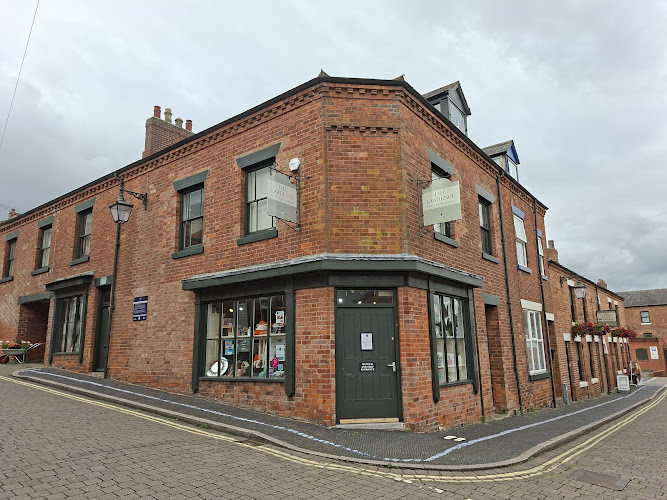
The D.H. Lawrence Birthplace Museum in Eastwood, Nottinghamshire is one of those small, quietly powerful places that sneaks up on you. It occupies the simple Victorian terraced house where David Herbert Lawrence was born and spent his early years — a modest miner's family home that now displays personal items, paintings and carefully curated information about his childhood and formative experiences. If literature is your thing, this is a tiny pilgrimage site: you can almost feel the creak of the floorboards under the feet of a future novelist, and that odd, intimate thrill of standing where a writer once lived and breathed.
Walk in and the museum does not try to dazzle with marble or grand architecture. Instead it presents a series of rooms set out as a historically informed Victorian family home, complete with period furniture, household objects and reproduction photographs. There are original personal items relating to Lawrence and his family, plus paintings and documents that map out how his early life in a Nottinghamshire mining town shaped his view of social class, nature and human relationships. For many visitors, seeing the actual objects associated with Lawrence makes the literature suddenly feel less abstract — more human, more immediate.
One of the things visitors notice right away is the scale. This is an intimate, small museum rather than a big city gallery. That is part of its charm. It encourages slow looking and quiet thought. Guided and self-guided experiences are available; the staff are friendly and usually keen to chat. On my first visit I lingered longer than planned because an enthusiastic volunteer told a story about Lawrence and his dog, and I ended up learning more than I expected from a fifteen-minute aside. Those human moments — the kind you can't schedule — are what make a visit memorable.
Accessibility here is mixed, so a quick heads up: there is an assistive hearing loop for talks and guided sessions, which is excellent for anyone who needs that extra support. However, the original Victorian layout and narrow interiors mean that the entrance is not wheelchair accessible in the same way a modern building might be. The museum does what it can within the constraints of the historic structure; staff are willing to help and to explain alternative ways to experience the collection if mobility is a concern. There are clean restrooms on site, including a gender-neutral option, but do not expect a café or restaurant — bring water or plan a stop nearby if you think you'll want more than a quick snack.
Families tend to like the museum because it makes a serious literary figure approachable. Children, particularly those aged 7–14 who are studying literature or local history, often find the rooms intriguing; there are ways for younger visitors to engage through simple storytelling and hands-on activities at particular times of year. It's one of those rare museums that balances academic interest with family-friendly programming so that you can bring relatives of different ages and have something worthwhile for everyone, without the forced, flashy gimmicks some tourist spots lean on.
For people who love context, the museum does a fine job of situating Lawrence in his place and time. Exhibits explain his family's involvement in coal mining, local social conditions, and the early influences that appear in works like Sons and Lovers. There are interpretive panels, original manuscripts or facsimiles, and paintings that offer visual clues to his imagination. If you come with the expectation of a sprawling literary hall of fame you might be surprised — this is a focused, thoughtful house museum that rewards curiosity. Come prepared to read, to ask questions, and to let the atmosphere sink in.
Something not everyone knows, and a detail that appealed to me personally, is how the museum highlights the everyday domestic life of the period rather than only celebrating the celebrity of the author. It emphasizes how the rhythms of a miner's household — meals, chores, the seasons of work and rest — feed into Lawrence's themes of belonging and alienation. That domestic angle is refreshing and makes the place more than a shrine; it's a social-history site as much as a literary one.
Practical information that will help you plan: the museum usually offers a choice of guided or self-guided visits. Guided tours can add charming local color — volunteers frequently tell stories that you won't find in the display text. Self-guided visitors, meanwhile, can take their time with the objects and illustrations. Onsite services are available for basic visitor needs, but remember that there's no restaurant, and space can be limited during school holiday periods or on local event days. If you like quiet, try midweek or mornings when school groups are less likely to be present.
Another small but important point — the museum has a tactile, human feel to it. There are displays that invite you to consider the sensory world of a Victorian child: the smell of coal dust, the weight of work clothes, the creak of wooden stairs. It makes Lawrence's early environment tactile in a way that reading alone doesn't always convey. A few of the objects are original to the family; others are period-appropriate pieces that help reconstruct the life of the household. That mix is handled with respect and a light curatorial touch.
Visitors often couple a trip here with other local attractions in Nottinghamshire. Eastwood has its own local heritage stories, and the surrounding area offers green spaces and smaller museums that help you broaden your appreciation of the region that shaped Lawrence. If you enjoy tracing literary trails, combine this visit with a wander around the town to get a sense of the landscape and built environment that Lawrence knew as a boy. I once spent an afternoon poking into the nearby streets and found a little bookshop where the owner, a retired teacher, gave me a run-down of local authors — those accidental conversations are part of the joy of traveling slowly.
For those who like numbers: the museum is highly regarded by visitors, and most feedback is positive. That said, opinions vary — some guests wish for larger exhibition spaces or a café, while many others praise the authenticity and warmth of the displays. If you judge it on intimacy and historical resonance, it scores very well. If you judge it like a large metropolitan institution, you might walk away wanting more. For what it is — the preserved childhood home of an important English novelist and poet — it delivers insight and atmosphere in spades.
When planning, consider pairing the visit with a focused reading of one of Lawrence's short pieces or an excerpt from Sons and Lovers. Having a small mental map of his themes — such as family dynamics, class tension, and the natural world — transforms the objects from curios into clues. And if you are traveling with teenagers studying Lawrence at school, this place can turn abstract exam prep into something concrete and memorable. I once saw a student who had been struggling with a passage suddenly light up when she stood in the very room mentioned in her coursework. You don't get that in a lecture hall.
Finally, don't underestimate the value of the staff and volunteers. They are local, knowledgeable, and often brimming with anecdotes and recommended reads or walks. If you like insider tips, ask them about the lesser-known paintings in the collection, or about local events tied to Lawrence's legacy. I admit I always ask for a recommendation for nearby places to eat or a quiet park to sit and read; locals usually point to spots that are off the tourist radar and, frankly, better for a lazy afternoon.
In short: the D.H. Lawrence Birthplace Museum is an intimate, thoughtfully presented historic house that illuminates the early life of a complex writer. It is especially rewarding for literary fans, families, and anyone interested in the social history of a working-class Victorian town. Pack a curious mind, a light jacket (those old houses can be cool), and maybe a bit of patience for the snug spaces, and the museum will likely reward you with a deeper, human sense of one of England's most studied — and sometimes misunderstood — literary voices.
Key Features
More Details
Updated August 29, 2025
Table of Contents
Description
The D.H. Lawrence Birthplace Museum in Eastwood, Nottinghamshire is one of those small, quietly powerful places that sneaks up on you. It occupies the simple Victorian terraced house where David Herbert Lawrence was born and spent his early years — a modest miner’s family home that now displays personal items, paintings and carefully curated information about his childhood and formative experiences. If literature is your thing, this is a tiny pilgrimage site: you can almost feel the creak of the floorboards under the feet of a future novelist, and that odd, intimate thrill of standing where a writer once lived and breathed.
Walk in and the museum does not try to dazzle with marble or grand architecture. Instead it presents a series of rooms set out as a historically informed Victorian family home, complete with period furniture, household objects and reproduction photographs. There are original personal items relating to Lawrence and his family, plus paintings and documents that map out how his early life in a Nottinghamshire mining town shaped his view of social class, nature and human relationships. For many visitors, seeing the actual objects associated with Lawrence makes the literature suddenly feel less abstract — more human, more immediate.
One of the things visitors notice right away is the scale. This is an intimate, small museum rather than a big city gallery. That is part of its charm. It encourages slow looking and quiet thought. Guided and self-guided experiences are available; the staff are friendly and usually keen to chat. On my first visit I lingered longer than planned because an enthusiastic volunteer told a story about Lawrence and his dog, and I ended up learning more than I expected from a fifteen-minute aside. Those human moments — the kind you can’t schedule — are what make a visit memorable.
Accessibility here is mixed, so a quick heads up: there is an assistive hearing loop for talks and guided sessions, which is excellent for anyone who needs that extra support. However, the original Victorian layout and narrow interiors mean that the entrance is not wheelchair accessible in the same way a modern building might be. The museum does what it can within the constraints of the historic structure; staff are willing to help and to explain alternative ways to experience the collection if mobility is a concern. There are clean restrooms on site, including a gender-neutral option, but do not expect a café or restaurant — bring water or plan a stop nearby if you think you’ll want more than a quick snack.
Families tend to like the museum because it makes a serious literary figure approachable. Children, particularly those aged 7–14 who are studying literature or local history, often find the rooms intriguing; there are ways for younger visitors to engage through simple storytelling and hands-on activities at particular times of year. It’s one of those rare museums that balances academic interest with family-friendly programming so that you can bring relatives of different ages and have something worthwhile for everyone, without the forced, flashy gimmicks some tourist spots lean on.
For people who love context, the museum does a fine job of situating Lawrence in his place and time. Exhibits explain his family’s involvement in coal mining, local social conditions, and the early influences that appear in works like Sons and Lovers. There are interpretive panels, original manuscripts or facsimiles, and paintings that offer visual clues to his imagination. If you come with the expectation of a sprawling literary hall of fame you might be surprised — this is a focused, thoughtful house museum that rewards curiosity. Come prepared to read, to ask questions, and to let the atmosphere sink in.
Something not everyone knows, and a detail that appealed to me personally, is how the museum highlights the everyday domestic life of the period rather than only celebrating the celebrity of the author. It emphasizes how the rhythms of a miner’s household — meals, chores, the seasons of work and rest — feed into Lawrence’s themes of belonging and alienation. That domestic angle is refreshing and makes the place more than a shrine; it’s a social-history site as much as a literary one.
Practical information that will help you plan: the museum usually offers a choice of guided or self-guided visits. Guided tours can add charming local color — volunteers frequently tell stories that you won’t find in the display text. Self-guided visitors, meanwhile, can take their time with the objects and illustrations. Onsite services are available for basic visitor needs, but remember that there’s no restaurant, and space can be limited during school holiday periods or on local event days. If you like quiet, try midweek or mornings when school groups are less likely to be present.
Another small but important point — the museum has a tactile, human feel to it. There are displays that invite you to consider the sensory world of a Victorian child: the smell of coal dust, the weight of work clothes, the creak of wooden stairs. It makes Lawrence’s early environment tactile in a way that reading alone doesn’t always convey. A few of the objects are original to the family; others are period-appropriate pieces that help reconstruct the life of the household. That mix is handled with respect and a light curatorial touch.
Visitors often couple a trip here with other local attractions in Nottinghamshire. Eastwood has its own local heritage stories, and the surrounding area offers green spaces and smaller museums that help you broaden your appreciation of the region that shaped Lawrence. If you enjoy tracing literary trails, combine this visit with a wander around the town to get a sense of the landscape and built environment that Lawrence knew as a boy. I once spent an afternoon poking into the nearby streets and found a little bookshop where the owner, a retired teacher, gave me a run-down of local authors — those accidental conversations are part of the joy of traveling slowly.
For those who like numbers: the museum is highly regarded by visitors, and most feedback is positive. That said, opinions vary — some guests wish for larger exhibition spaces or a café, while many others praise the authenticity and warmth of the displays. If you judge it on intimacy and historical resonance, it scores very well. If you judge it like a large metropolitan institution, you might walk away wanting more. For what it is — the preserved childhood home of an important English novelist and poet — it delivers insight and atmosphere in spades.
When planning, consider pairing the visit with a focused reading of one of Lawrence’s short pieces or an excerpt from Sons and Lovers. Having a small mental map of his themes — such as family dynamics, class tension, and the natural world — transforms the objects from curios into clues. And if you are traveling with teenagers studying Lawrence at school, this place can turn abstract exam prep into something concrete and memorable. I once saw a student who had been struggling with a passage suddenly light up when she stood in the very room mentioned in her coursework. You don’t get that in a lecture hall.
Finally, don’t underestimate the value of the staff and volunteers. They are local, knowledgeable, and often brimming with anecdotes and recommended reads or walks. If you like insider tips, ask them about the lesser-known paintings in the collection, or about local events tied to Lawrence’s legacy. I admit I always ask for a recommendation for nearby places to eat or a quiet park to sit and read; locals usually point to spots that are off the tourist radar and, frankly, better for a lazy afternoon.
In short: the D.H. Lawrence Birthplace Museum is an intimate, thoughtfully presented historic house that illuminates the early life of a complex writer. It is especially rewarding for literary fans, families, and anyone interested in the social history of a working-class Victorian town. Pack a curious mind, a light jacket (those old houses can be cool), and maybe a bit of patience for the snug spaces, and the museum will likely reward you with a deeper, human sense of one of England’s most studied — and sometimes misunderstood — literary voices.
Key Highlights
The D.H. Lawrence Birthplace Museum
Location
Places to Stay Near The D.H. Lawrence Birthplace Museum
Find and Book a Tour
Explore More Travel Guides
No reviews found! Be the first to review!
Traveler Reviews for The D.H. Lawrence Birthplace Museum
There are no reviews yet. Be the first one to write one.
Have you visited The D.H. Lawrence Birthplace Museum? Help other travelers by sharing your review.
You Might Also Like
Bestwood Country Park
Nottingham Natural History Museum

Colwick Country Park
Find Accommodations Nearby
Recommended Tours & Activities
Visitor Reviews
There are no reviews yet. Be the first one to write one.
Share Your Experience
Have you visited The D.H. Lawrence Birthplace Museum? Help other travelers by leaving a review.