
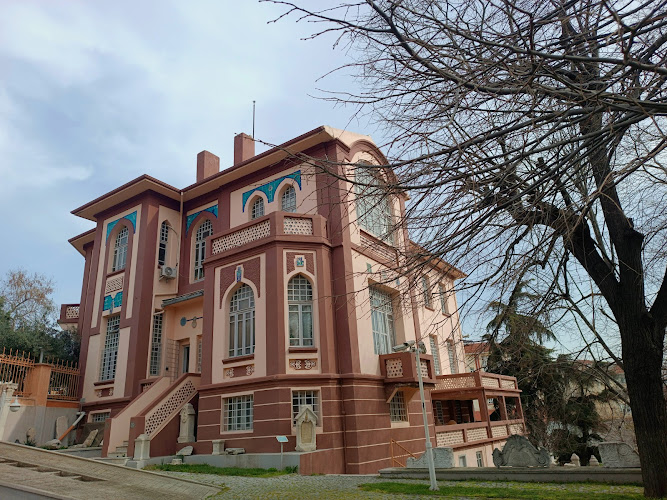
Tekirdağ Arkeoloji ve Etnografya Müzesi
About Tekirdağ Arkeoloji ve Etnografya Müzesi
Description
The Tekirdağ Arkeoloji ve Etnografya Müzesi is presented as a compact, quietly proud museum that chronicles the layered history of the Tekirdağ region — from prehistoric and Thracian roots through Hellenistic, Roman and Byzantine periods, and into Ottoman everyday life. The museum's appeal is not loud or showy; it whispers. For travelers who enjoy unhurried discovery, it offers a satisfying blend of archaeology, art and material culture that often surprises those who arrive expecting a standard provincial museum.
Approached in a third-person, slightly opinionated way: the visitor will notice immediately that this museum favors substance over spectacle. Galleries are thoughtfully arranged; artifacts are displayed with clear labels and context. The stonework, pottery shards, coins and funerary stelae tell a regional story that is more intimate than grand. The ethnographic rooms give a window into domestic life, clothing, tools and handicrafts of the local Ottoman and rural communities. It is the kind of place where a simple loom or an embroidered apron can prompt curiosity and spark conversations about daily life a century ago.
There is an approachable authenticity to the place. It does not try to be larger than life, but the collection feels coherent. The archaeological section includes pottery fragments and complete vessels, small sculptural elements and funerary items that reveal trade routes, influences and local tastes. The museum does a decent job explaining how the shores of the Sea of Marmara and the crossroads of Thrace contributed to the cultural mix — Hellenistic styles intermingling with Roman practicality, Byzantine religious art giving way to Ottoman domestic designs. This interplay is visible in the ceramics and small finds that, when taken together, form a narrative rather than a disjointed assortment.
Practical details matter here. The museum has an accessible entrance and a wheelchair-accessible parking lot, which is not something every regional museum can boast. This means a traveler with mobility concerns will likely find the visit feasible without drama. Restrooms are available on site; there is no on-site restaurant, so plan accordingly. Families will find the museum kid-friendly: exhibits are arranged so that children can see artifacts at various heights, and the subject matter — from ancient tools to vividly patterned textiles — tends to spark questions and little hands-on-like imagination. The museum staff generally present information in a clear manner and, when asked, can point out highlights or suggest related local sites to explore.
Visitors with a curious appetite for detail will appreciate the labels and small interpretive displays. Still, it is not a tech-heavy experience. There are few flashy multimedia installations; instead, the museum trusts the artifacts to tell their story. That can be refreshing. For a traveler who loves to linger over a single pot or to trace the design on a bronze buckle with their eyes, this museum rewards slow looking. For those who prefer immersive audio-visual storytelling, be prepared for a more traditional cabinet-style experience.
One of the less obvious charms is how the museum situates everyday objects as cultural evidence. A set of household implements or a collection of embroidered garments might feel mundane at first, but they reveal migration patterns, gender roles, and economic life in surprising ways. The ethnography section can feel like stepping into a slow conversation across time: a wooden chest here, a child's crib there, and suddenly you imagine meals, celebrations, and the rhythms of seasonal work. This quiet interpretive approach often leaves a stronger impression than the big-ticket monumental artifacts, because it connects to daily human experience — which, honestly, is what travelers tend to remember most.
The building itself is modest; it won’t make travel guides swoon, but internal circulation is comfortable. Lighting is used to highlight objects without overwhelming them with glare. Those who pay attention will notice small curatorial choices that indicate care: a well-placed map, a thoughtfully chosen comparison object, or an explanatory panel that helps stitch a local find into a broader historical pattern. Translation is sometimes patchy; most labels are in Turkish and there is often an English summary for the major rooms. Don’t expect every single placard to be bilingual, but the main narratives are usually available in both languages.
Atmosphere-wise, the museum tends to be calm. Peak tourist buses are not a common sight here; many visitors are families, school groups, or history-leaning travelers exploring the region. That quieter footfall means one can take time, make notes, or take photos for personal use without feeling hurried. And if the traveler likes to combine museum time with a walk along the nearby coastline or a snack in a small café, the layout of Süleymanpaşa offers those options within a short distance.
There are small surprises that reward attention. For example, items from local tombs or farmhouses pinpoint how Tekirdağ connected with larger trade networks in antiquity. Coins with distant mints, pottery styles borrowed from neighboring regions, or a Mediterranean motif on a locally made vase — these are the minute clues that together map the town’s historical personality. The ethnographic exhibits also include work tools and textiles that show continuity of craft and local adaptation, hinting at how communities preserved identity while encountering change.
From a practical traveler’s perspective, it helps to set expectations. This is not a mega-national museum; it is a regional institution that excels in contextual storytelling. The ideal visit lasts between 45 minutes and 1.5 hours depending on curiosity level. A short visit will still feel satisfying; a longer one allows the kind of deep-dive that rewards the attentive. The museum’s layout makes it easy to prioritize: start with the archaeological section to build a historical backbone, then move to the ethnographic galleries for color and daily-life details.
Some candid observations, because the writer — who visited and trailed around with a tea afterward — believes travelers benefit from real talk: museums like this often improve with modest investment. Lighting, a few more bilingual labels, and small interactive elements for kids would boost the experience significantly. But the core content is strong and the human stories embedded in the objects are compelling. One memorable moment for the writer was standing before a simple, slightly cracked oil lamp and thinking about the hands that held it a thousand years ago; it’s the kind of quiet connection that lingers.
For those who plan to include this museum on an itinerary, combining it with nearby historical sites or a stroll along the sea adds value. It is also a fine stop on a broader Thrace route that looks at ancient settlement patterns and Ottoman rural life. Travelers who like to collect a mix of archaeological evidence and ethnographic snapshots will find this place especially rewarding. And frankly, if you like museums that let you imagine daily lives across centuries without loud narration, this will feel like a small treasure.
In sum, the Tekirdağ Arkeoloji ve Etnografya Müzesi is a practical, honest museum that favors nuance over fanfare. It is accessible, family-friendly, and well-suited to visitors who enjoy reading labels, lingering, and connecting dots between artifacts and local history. The experience is best approached with a curious mindset and a little time on the hands — because once the details start to line up, the museum reveals a surprisingly rich portrait of the Tekirdağ region through the humble but revealing objects people left behind.
Key Features
More Details
Updated August 30, 2025
Table of Contents
Description
The Tekirdağ Arkeoloji ve Etnografya Müzesi is presented as a compact, quietly proud museum that chronicles the layered history of the Tekirdağ region — from prehistoric and Thracian roots through Hellenistic, Roman and Byzantine periods, and into Ottoman everyday life. The museum’s appeal is not loud or showy; it whispers. For travelers who enjoy unhurried discovery, it offers a satisfying blend of archaeology, art and material culture that often surprises those who arrive expecting a standard provincial museum.
Approached in a third-person, slightly opinionated way: the visitor will notice immediately that this museum favors substance over spectacle. Galleries are thoughtfully arranged; artifacts are displayed with clear labels and context. The stonework, pottery shards, coins and funerary stelae tell a regional story that is more intimate than grand. The ethnographic rooms give a window into domestic life, clothing, tools and handicrafts of the local Ottoman and rural communities. It is the kind of place where a simple loom or an embroidered apron can prompt curiosity and spark conversations about daily life a century ago.
There is an approachable authenticity to the place. It does not try to be larger than life, but the collection feels coherent. The archaeological section includes pottery fragments and complete vessels, small sculptural elements and funerary items that reveal trade routes, influences and local tastes. The museum does a decent job explaining how the shores of the Sea of Marmara and the crossroads of Thrace contributed to the cultural mix — Hellenistic styles intermingling with Roman practicality, Byzantine religious art giving way to Ottoman domestic designs. This interplay is visible in the ceramics and small finds that, when taken together, form a narrative rather than a disjointed assortment.
Practical details matter here. The museum has an accessible entrance and a wheelchair-accessible parking lot, which is not something every regional museum can boast. This means a traveler with mobility concerns will likely find the visit feasible without drama. Restrooms are available on site; there is no on-site restaurant, so plan accordingly. Families will find the museum kid-friendly: exhibits are arranged so that children can see artifacts at various heights, and the subject matter — from ancient tools to vividly patterned textiles — tends to spark questions and little hands-on-like imagination. The museum staff generally present information in a clear manner and, when asked, can point out highlights or suggest related local sites to explore.
Visitors with a curious appetite for detail will appreciate the labels and small interpretive displays. Still, it is not a tech-heavy experience. There are few flashy multimedia installations; instead, the museum trusts the artifacts to tell their story. That can be refreshing. For a traveler who loves to linger over a single pot or to trace the design on a bronze buckle with their eyes, this museum rewards slow looking. For those who prefer immersive audio-visual storytelling, be prepared for a more traditional cabinet-style experience.
One of the less obvious charms is how the museum situates everyday objects as cultural evidence. A set of household implements or a collection of embroidered garments might feel mundane at first, but they reveal migration patterns, gender roles, and economic life in surprising ways. The ethnography section can feel like stepping into a slow conversation across time: a wooden chest here, a child’s crib there, and suddenly you imagine meals, celebrations, and the rhythms of seasonal work. This quiet interpretive approach often leaves a stronger impression than the big-ticket monumental artifacts, because it connects to daily human experience — which, honestly, is what travelers tend to remember most.
The building itself is modest; it won’t make travel guides swoon, but internal circulation is comfortable. Lighting is used to highlight objects without overwhelming them with glare. Those who pay attention will notice small curatorial choices that indicate care: a well-placed map, a thoughtfully chosen comparison object, or an explanatory panel that helps stitch a local find into a broader historical pattern. Translation is sometimes patchy; most labels are in Turkish and there is often an English summary for the major rooms. Don’t expect every single placard to be bilingual, but the main narratives are usually available in both languages.
Atmosphere-wise, the museum tends to be calm. Peak tourist buses are not a common sight here; many visitors are families, school groups, or history-leaning travelers exploring the region. That quieter footfall means one can take time, make notes, or take photos for personal use without feeling hurried. And if the traveler likes to combine museum time with a walk along the nearby coastline or a snack in a small café, the layout of Süleymanpaşa offers those options within a short distance.
There are small surprises that reward attention. For example, items from local tombs or farmhouses pinpoint how Tekirdağ connected with larger trade networks in antiquity. Coins with distant mints, pottery styles borrowed from neighboring regions, or a Mediterranean motif on a locally made vase — these are the minute clues that together map the town’s historical personality. The ethnographic exhibits also include work tools and textiles that show continuity of craft and local adaptation, hinting at how communities preserved identity while encountering change.
From a practical traveler’s perspective, it helps to set expectations. This is not a mega-national museum; it is a regional institution that excels in contextual storytelling. The ideal visit lasts between 45 minutes and 1.5 hours depending on curiosity level. A short visit will still feel satisfying; a longer one allows the kind of deep-dive that rewards the attentive. The museum’s layout makes it easy to prioritize: start with the archaeological section to build a historical backbone, then move to the ethnographic galleries for color and daily-life details.
Some candid observations, because the writer — who visited and trailed around with a tea afterward — believes travelers benefit from real talk: museums like this often improve with modest investment. Lighting, a few more bilingual labels, and small interactive elements for kids would boost the experience significantly. But the core content is strong and the human stories embedded in the objects are compelling. One memorable moment for the writer was standing before a simple, slightly cracked oil lamp and thinking about the hands that held it a thousand years ago; it’s the kind of quiet connection that lingers.
For those who plan to include this museum on an itinerary, combining it with nearby historical sites or a stroll along the sea adds value. It is also a fine stop on a broader Thrace route that looks at ancient settlement patterns and Ottoman rural life. Travelers who like to collect a mix of archaeological evidence and ethnographic snapshots will find this place especially rewarding. And frankly, if you like museums that let you imagine daily lives across centuries without loud narration, this will feel like a small treasure.
In sum, the Tekirdağ Arkeoloji ve Etnografya Müzesi is a practical, honest museum that favors nuance over fanfare. It is accessible, family-friendly, and well-suited to visitors who enjoy reading labels, lingering, and connecting dots between artifacts and local history. The experience is best approached with a curious mindset and a little time on the hands — because once the details start to line up, the museum reveals a surprisingly rich portrait of the Tekirdağ region through the humble but revealing objects people left behind.
Key Highlights
Tekirdağ Arkeoloji ve Etnografya Müzesi
Location
Places to Stay Near Tekirdağ Arkeoloji ve Etnografya Müzesi
Find and Book a Tour
Explore More Travel Guides
No reviews found! Be the first to review!
Traveler Reviews for Tekirdağ Arkeoloji ve Etnografya Müzesi
There are no reviews yet. Be the first one to write one.
Have you visited Tekirdağ Arkeoloji ve Etnografya Müzesi? Help other travelers by sharing your review.
You Might Also Like

İskenderun Monument Square
Apachee National Team Park

Çukurbağ Arkeolojik Kazı Alanı
Find Accommodations Nearby
Recommended Tours & Activities
Visitor Reviews
There are no reviews yet. Be the first one to write one.
Share Your Experience
Have you visited Tekirdağ Arkeoloji ve Etnografya Müzesi? Help other travelers by leaving a review.